whatsapp web gets
|

WhatsApp web gets voice and video calling


WhatsApp has introduced a major update that brings voice and video calling to WhatsApp Web, allowing users to make and receive calls directly through their web browsers. Previously, these features were available only on the mobile app and the native desktop application. With this latest expansion, WhatsApp Web now offers a more complete communication experience, making it easier for users to stay connected without switching devices.

The update significantly enhances the web version by introducing a dedicated Calls tab, where users can view their recent call history, access favorite contacts, and start voice or video calls with ease. WhatsApp Web also now supports features such as screen sharing and emoji reactions during calls, bringing it closer to the experience already available on the desktop application.

According to Meta, these improvements are designed to make conversations more convenient for both personal and professional use. Whether users are catching up with friends and family or participating in work meetings, the new calling features aim to provide a smoother and more interactive experience.

One of the most notable additions is the ability to transfer an ongoing call between devices without disconnecting. For example, a user who answers a call on a computer can seamlessly continue the conversation on a smartphone without interruption. This feature offers greater flexibility for people who frequently switch between devices during the day.

WhatsApp has also introduced waiting rooms for group calls. When creating a call link, hosts can enable the “Require approval to join” option, allowing them to decide who can enter the call. This added layer of control is expected to be especially useful for business meetings, online classes, and large group discussions.

The latest update also improves call quality by introducing background noise suppression, helping reduce unwanted sounds during voice and video calls made in noisy environments. In addition, Meta has enhanced video performance by enabling high-definition (HD) video streaming within the first few seconds of a call, providing users with a clearer and sharper video experience much sooner than before.

The announcement comes as Meta continues to expand WhatsApp beyond traditional messaging. The company is also developing WhatsApp usernames, which will allow users to connect and make calls without relying solely on phone numbers, offering greater privacy and convenience.

The new calling features are being rolled out gradually to WhatsApp users around the world. As the update reaches more devices, users will gain access to a more powerful communication platform that combines messaging, voice calls, video conferencing, and collaboration tools in a single service.

Similar Posts

  • | | |

    Heavy rains trigger flash floods in Gilgit-Baltist…

    Torrential rainfall has caused widespread destruction across Gilgit-Baltistan, disrupting transportation networks as flash floods and landslides washed away roads, bridges, and vital infrastructure in several districts. The extreme weather conditions have left thousands of people, including tourists, stranded as major routes connecting different parts of the mountainous region were blocked. Authorities have advised travelers to avoid unnecessary journeys due to ongoing risks from floods and landslides. According to officials, several important roads, including the Karakoram Highway, Babusar Road, Baltistan Road, Naltar Highway, Ghizer-Shandur Road, and Astore Valley Road, have been affected by flooding and landslides. The Gilgit-Baltistan Disaster Management Authority (GBDMA) reported that the Karakoram Highway was blocked at multiple locations between Dassu and the Hunza-Nagar areas, creating difficulties for commuters and relief teams. In Skardu’s Rondu subdivision, severe flooding in the Tormak Nallah area damaged important communication bridges, including the Malan Bridge. Several roads, agricultural lands, crops, and other infrastructure were also affected in Kharmang, Ghanche, and Shigar districts. Flooding also disrupted electricity and water supply systems in areas including Astore, Tangir, and Thore in Diamer district. Communication services were affected, while irrigation channels, drinking water schemes, and protective structures suffered damage. Several villages were cut off, and dozens of families were forced to leave their homes due to floods and landslides. Authorities moved vulnerable residents to safer locations and started relief operations in affected areas. The situation also affected Ghizer district, where temporary road closures, localized flooding, and damage to houses were reported. Rising water levels in the Hunza-Nagar River increased risks for residents in Gilgit’s Jutal area. The Pakistan Meteorological Department has forecast further rainfall in the region and warned about the possibility of glacial lake outburst floods (GLOFs) until July 26. The Gilgit-Baltistan Disaster Management Authority, district administrations, Rescue 1122, and other departments are working together to provide emergency assistance. Officials said affected families are being provided with tents, food supplies, medicines, and clean drinking water. Heavy machinery has also been deployed to restore damaged roads, bridges, and other infrastructure. Gilgit-Baltistan Chief Minister Amjad Hussain has directed authorities to speed up relief and rehabilitation activities and remain alert around the clock to protect lives and property. The chief minister also emphasized the need for stronger disaster preparedness, saying that climate change has increased the risks of flash floods, landslides, and glacial lake outburst floods in the region. Authorities are coordinating with the National Disaster Management Authority (NDMA) to improve emergency response measures and monitor glacier-related risks through scientific and technological systems. The ongoing situation highlights the growing impact of climate-related disasters in Gilgit-Baltistan, where communities continue to face increasing threats from extreme weather events.

  • | | |

    12 militants killed in Balochistan intelligence op…

    Pakistan’s security forces killed 12 suspected militants during two intelligence-based operations carried out in separate districts of Balochistan as part of the ongoing counterterrorism campaign, the Inter-Services Public Relations (ISPR) said on Thursday. According to the military’s media wing, the operations were conducted on August 5 and 6 in Washuk and Mastung districts under the third phase of Operation Rad-ul-Fitna, which targets militant groups allegedly backed by hostile foreign elements. The ISPR said the first operation was launched on August 5 after intelligence agencies detected the movement of six suspected militants in Washuk district. Security forces swiftly moved to the area and engaged the suspects in a targeted operation. Following an exchange of fire, all six militants were killed. A second intelligence-based operation was conducted on August 6 in Mastung district after security forces received information about the presence of armed militants. The ISPR said another six suspected militants were killed during an intense firefight. Security personnel also destroyed a militant hideout during the operation. The military stated that both operations were based on credible intelligence and were part of continuous efforts to eliminate militant networks operating in Balochistan. It added that security forces carried out the missions with precision, preventing the militants from escaping. According to the ISPR, the operations form part of Pakistan’s broader counterterrorism strategy being implemented under Azm-e-Istehkam, the national security initiative approved by the Federal Apex Committee under the National Action Plan. The military reaffirmed that Pakistan’s armed forces, together with law enforcement agencies, will continue intelligence-led operations across the country to eliminate terrorism and dismantle militant infrastructure.

  • | |

    ‘I’ll lead from the front’: Sohail Afridi vo…

    Khyber Pakhtunkhwa Chief Minister Sohail Afridi has announced a major march towards Islamabad on September 27, saying he will personally lead the protest demanding the release of PTI founder Imran Khan. Addressing a public gathering in Bannu on Sunday, Afridi urged supporters not to be afraid and said more than two million people would take part in the planned demonstration. “I will be at the front of the march for Imran Khan’s release,” Afridi said, assuring supporters that he would stand with them throughout the protest. He called on people to remain determined and claimed that a large turnout would make it difficult for authorities to stop the protesters. He also said that those who use oppression are often afraid when confronted by a large public movement. The chief minister also criticised the federal government, alleging that the people of Khyber Pakhtunkhwa had repeatedly been used as “scapegoats” in the past. He accused the authorities of treating the province as an experimental ground and said his administration was independent in making decisions. Speaking about law and order, Afridi said maintaining peace was a shared responsibility. He assured police personnel that his government stood firmly behind them and was providing funds for modern weapons and improvements to police infrastructure. Afridi also compared the current security situation with the period between 2018 and 2022, when Imran Khan was prime minister. He claimed that there had been peace and stability across the region during that period and said terrorism had not been a major threat. According to Afridi, violence and terrorism have returned to the province, with southern districts, particularly Bannu, among the worst affected areas. He held the federal government and those he alleged were responsible for bringing it to power accountable for the deteriorating security situation.

  • | | | |

    Israeli settlers torch two mosques in West Bank as…

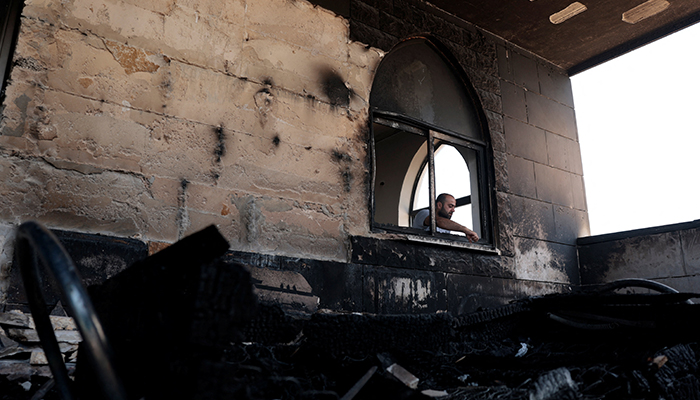
    WEST BANK: Two mosques were set ablaze in the occupied West Bank overnight, Palestinian officials said on Sunday, in the latest escalation of violence that has sharply raised tensions across the territory. The attacks targeted a mosque under construction in Qusra, south of Nablus, and another mosque in the village of Kour, near Tulkarm. The incidents came only days after a deadly confrontation in the nearby village of Tal that left four Palestinians and two Israelis dead. In Qusra, Mayor Abdel Azim Wadi said settlers set fire to the mosque’s entrance and damaged parts of its stonework. Hebrew graffiti, including the word “revenge,” was reportedly sprayed across the walls. The Israeli military said troops were sent to the area after receiving reports of the fire. According to the army, the suspected attackers had already fled when soldiers arrived. Israeli police were expected to collect evidence and investigate the incident. The second attack took place in Kour, where Palestinian officials said a mosque was set alight and racist slogans were written on its walls. Worshippers and local residents managed to prevent the fire from causing further destruction, according to reports. The mosque attacks have added another disturbing chapter to a widening cycle of violence in the West Bank, where clashes, arson attacks and raids have intensified since the Gaza war began in October 2023. The latest incidents also follow a deadly confrontation in Tal on Friday, where four Palestinians and two Israelis were killed. The aftermath has triggered further arrests, raids and attacks in surrounding Palestinian communities. With tensions already running high, the torching of places of worship has raised fresh fears that the latest violence could fuel further retaliation and deepen an already volatile situation across the occupied territory.

  • |

    ICC confirms 12 host venues for Cricket World Cup 2027

    The International Cricket Council (ICC) has officially confirmed the 12 venues that will host matches during the ICC Men’s Cricket World Cup 2027, taking a major step forward in preparations for the prestigious tournament. The host cities were unveiled during a launch event in Johannesburg, where tournament officials also introduced the event’s official branding, theme and slogan. South Africa will host the majority of the matches across eight venues, while Zimbabwe will stage fixtures at three venues. Namibia will make history by hosting Cricket World Cup matches for the first time, with games scheduled to be played in its capital, Windhoek. The launch ceremony featured several prominent cricket personalities, including former South Africa captain Graeme Smith, legendary fast bowler Makhaya Ntini, batting great Hashim Amla, current Proteas captain Temba Bavuma and fast bowler Kagiso Rabada. Former Zimbabwe captain Hamilton Masakadza and Namibia representative Rudolf Jansen van Vuuren also attended the event, highlighting the partnership between the three host nations. The 2027 edition will mark the return of the men’s 50-over Cricket World Cup to Africa for the first time since 2003, when South Africa, Zimbabwe and Kenya jointly hosted the tournament. A total of 14 teams will compete in the expanded competition, offering more matches and greater opportunities for emerging cricketing nations to participate on the global stage. Tournament organizers also revealed the official theme, “Three Nations, One Heartbeat,” representing the unity and shared vision of South Africa, Namibia and Zimbabwe as co-hosts. The tournament’s visual identity is inspired by the African philosophy of Ubuntu, which emphasizes humanity, togetherness and collective strength. Often expressed through the phrase, “I am because we are,” Ubuntu reflects the spirit of unity the hosts hope to showcase throughout the event. Organizers also introduced the official slogan, “Make the Circle Bigger,” symbolizing inclusivity, community and the ambition to welcome more people into the global cricket family. With the venues confirmed and the tournament identity officially launched, preparations for the ICC Men’s Cricket World Cup 2027 are set to gather pace as the three host nations prepare to welcome teams and fans from around the world.

  • |

    Turkish Vice President, top officials join Pakistan Day celebration in Ankara

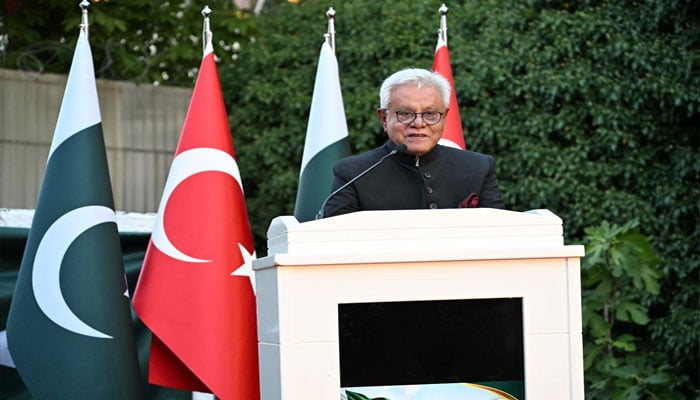
    ANKARA: Pakistan’s 79th Independence Day was celebrated with a grand ceremony at Pakistan House in Ankara, where Türkiye’s senior leadership joined Pakistani officials, diplomats and members of the community to highlight the deep and enduring friendship between the two countries. Türkiye’s Vice President Cevdet Yilmaz attended the event as chief guest, joined by senior political, military and diplomatic officials. The high-level participation underscored the importance Ankara attaches to its relationship with Islamabad and the longstanding bonds between the two nations. Among those attending were Turkish Defence Minister Yaşar Güler, Chief of General Staff Gen Selçuk Bayraktaroğlu, Naval Forces Commander Adm Ercüment Tatlıoğlu, Land Forces Commander Gen Metin Tokel and Air Force Commander Gen Ziya Cemal Kadıoğlu. Former senior officials, members of parliament, ambassadors, diplomatic representatives, Pakistani community members and media representatives also attended the ceremony. The event began with the recitation of the Holy Quran, followed by the national anthems of Pakistan and Türkiye. Students from the Pakistan Embassy International Study Group School added a colourful touch to the celebrations with national songs and traditional performances. Guests warmly applauded the cultural presentation. A documentary showcasing Pakistan’s history, cultural heritage, natural beauty, tourism potential and social and economic development was also screened. Yilmaz: Pakistan-Türkiye ties go beyond diplomacy Addressing the gathering, Vice President Yilmaz conveyed greetings from President Recep Tayyip Erdogan and the Turkish people to the government and people of Pakistan. He emphasised that the relationship between Pakistan and Türkiye went far beyond conventional diplomatic ties, describing it as a unique brotherly bond rooted in shared history and mutual solidarity. Yilmaz recalled the support shown by Muslims of the subcontinent to the Turkish people during the Turkish War of Independence, saying the historic connection continued to shape relations between the two countries. He reaffirmed Türkiye’s commitment to expanding bilateral cooperation with Pakistan and said both countries would continue working together to promote peace and stability in the region. The Turkish vice president also highlighted the importance of strengthening strategic cooperation and exploring new avenues for regional collaboration, including greater trilateral cooperation among Türkiye, Pakistan and Saudi Arabia. Pakistan envoy highlights sacrifices behind independence Pakistan’s Ambassador to Türkiye, Dr Yousaf Junaid, paid tribute to Quaid-i-Azam Muhammad Ali Jinnah and the sacrifices made during the Pakistan Movement. He said Pakistan’s independence was achieved through extraordinary courage, perseverance, determination and sacrifice. The ambassador urged Pakistanis to strengthen national unity and work collectively for the country’s stability, prosperity and development. Referring to Pakistan-Türkiye relations, Junaid said the partnership was based not merely on formal diplomacy but on shared values, history, mutual trust and strong public sentiment. He said cooperation between the two countries was expanding across defence, trade, investment, education, culture and people-to-people contacts. Jinnah exhibition adds historic touch The ceremony also featured a special photographic exhibition marking the 150th birth anniversary of Quaid-i-Azam Muhammad Ali Jinnah. Vice President Yilmaz, Ambassador Junaid and other dignitaries jointly inaugurated the exhibition, which highlighted Jinnah’s life, political vision, leadership and historic role in the creation of Pakistan. The event concluded with a traditional Pakistani dinner hosted in the gardens of Pakistan House. Against the backdrop of Pakistan’s green and white flags and warm Turkish hospitality, the Ankara celebration became more than an Independence Day ceremony. It served as a vivid reminder of a relationship built on history, affection and mutual trust — and of the two countries’ shared ambition to take that friendship into a stronger and broader future.

Leave a Reply

Your email address will not be published. Required fields are marked *