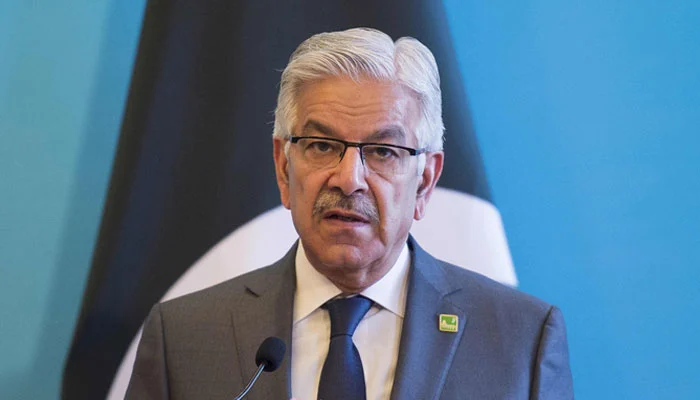
balochistan becomes regular
| |

Balochistan becomes regular police area after Levi…

QUETTA: The Balochistan cabinet has approved several major measures aimed at improving security, governance, education and public services across the province.

One of the key decisions was to declare the entire province a regular police area following the integration of the Levies Force into the police system.

The decisions were taken during a cabinet meeting chaired by Chief Minister Mir Sarfraz Bugti at the Chief Minister’s Secretariat on Wednesday.

The meeting reviewed several matters linked to law and order, development, administrative reforms and public welfare.

The cabinet also approved the third phase of the Chief Minister Scholarship Programme. Under the programme, 300 children of registered workers from Balochistan will receive admission to a quality boarding school in Islamabad.

The initiative aims to provide better educational opportunities to children of workers and help them build stronger prospects for the future.

The cabinet approved the appointment of Superintendent of Police Nabeel Ahmed as chief operating officer of the Balochistan Safe City Authority.

It also approved the establishment of a Provincial Parole Board on the recommendation of the Home Department.

A new police station was approved for Hub Marble City. The move is aimed at improving security in the growing industrial and commercial area.

The cabinet also approved a Service Level Agreement for the Quetta Safe City Project. The project will support the expansion of modern surveillance systems and technology-based policing in the provincial capital.

Several decisions were also taken to strengthen local government institutions.

Union Council Mesi Zai and Union Council Mai Zai were upgraded to municipal committees. The cabinet also approved a new Municipal Committee in Gulistan.

The measures are intended to improve administrative services and strengthen local governance.

For improved planning of development schemes, the cabinet approved the Balochistan Planning Manual.

The meeting also endorsed the Balochistan Child Protection Rules 2026. The rules are aimed at strengthening safeguards for children and improving their welfare across the province.

The cabinet approved amendments to the Balochistan Cadet Colleges Act 2026. It also extended the contract of the prosecutor general for another two years.

Another major decision involved approval of the Balochistan Hybrid Weighted Procurement Policy 2026. The policy is intended to improve transparency and efficiency in government procurement.

The cabinet also approved a financing proposal for the Harnai-Sibi Road Project.

Other decisions included approval of the Gwadar Development Authority Service Rules 2024 and the creation of a new tehsil and subdivision in Nasirabad district.

Officials said the administrative changes would help improve public service delivery and make development planning more effective.

The meeting began with prayers for security personnel and civilians who lost their lives in recent incidents.

Cabinet members paid tribute to those who died and expressed sympathy with their families.

Speaking at the meeting, Chief Minister Sarfraz Bugti said his government was focused on improving law and order across Balochistan.
Similar Posts

  • |

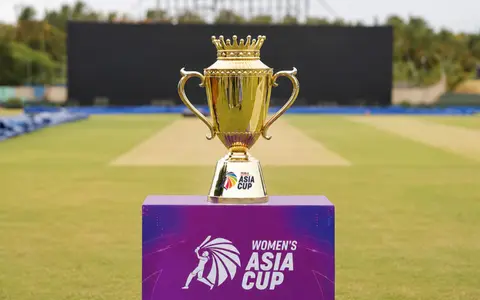
    Women’s T20 Asia Cup 2026 likely to be held in UAE

    DUBAI: The Women’s T20 Asia Cup 2026 is expected to be staged in the United Arab Emirates, with participating teams reportedly being informally notified about the tournament window ahead of the official announcement by the Asian Cricket Council (ACC). According to cricket media reports, the ACC is expected to confirm both the venue and the complete schedule in the coming days. The tournament is likely to run from August 28 to September 13, featuring eight of Asia’s leading women’s cricket teams. The competing nations are expected to include Pakistan, India, Sri Lanka, Bangladesh, Nepal, Malaysia, Thailand and hosts UAE, promising an exciting contest as teams battle for continental supremacy ahead of future ICC events. The UAE has emerged as the frontrunner to host the tournament due to its world-class cricket infrastructure, favorable playing conditions and extensive experience in organizing major international events. Several global tournaments have previously been held in the Emirates, making it a reliable venue for multinational competitions. The tournament is expected to showcase some of Asia’s biggest women’s cricket stars, with traditional rivals Pakistan and India likely to attract significant attention if they meet during the competition. Meanwhile, the Board of Control for Cricket in India has already announced India’s squad for the tournament. Veteran batter Harmanpreet Kaur will continue to lead the Indian side as captain, reflecting the board’s confidence in her leadership and experience. Other participating teams are also expected to finalize and announce their squads in the coming weeks as preparations gather pace. With the official schedule still awaited, anticipation continues to build among cricket fans across Asia. The Women’s Asia Cup is regarded as one of the region’s premier tournaments and provides teams with valuable international competition while helping them prepare for upcoming global events. If confirmed, the UAE will once again become the center of Asian cricket, hosting another high-profile tournament that promises thrilling matches, emerging talent and intense regional rivalries.

  • | |

    AJK assembly to elect prime minister on August 27

    MUZAFFARABAD: The Azad Jammu and Kashmir (AJK) Legislative Assembly will elect the new prime minister on August 27, with the Pakistan Muslim League-Nawaz (PML-N) in a strong position to secure the top office. The election schedule was issued on Wednesday, setting out the timeline for nomination papers, scrutiny, withdrawal and polling. Under the schedule, candidates will submit their nomination papers between 9:30am and 10:30am. The scrutiny process will take place from 10:30am to 10:45am. The list of candidates will be displayed at 11am. Candidates will have 30 minutes, from 11am to 11:30am, to withdraw their nominations. The final list of candidates will be issued at noon. Polling for the office of prime minister will begin at 12:30pm in the Legislative Assembly. The newly elected prime minister is scheduled to take the oath between 4pm and 5pm on the same day. The PML-N has nominated party president Shah Ghulam Qadir for the position. Based on the current strength of the assembly, he is considered the leading candidate for the office. The recent AJK elections were conducted in three phases between July 27 and August 10. Polling was held in 38 of the 45 directly contested constituencies. The PML-N emerged as the largest parliamentary group by winning 25 seats, while the Pakistan Peoples Party (PPP) secured 12 seats. The PML-N’s position was further strengthened after the lone elected member of the Awami Dast-o-Bazu party joined the ruling alliance. The PML-N currently has the backing of 32 members, compared with 14 members supporting the PPP. The numbers give the PML-N a clear advantage ahead of the prime ministerial election. The political balance was also reflected in the recent elections for the assembly’s top offices. PML-N AJK Secretary General Chaudhry Tariq Farooq was elected speaker with 32 votes. Ahmed Raza Qadri also secured 32 votes to become deputy speaker. PPP nominee Qasim Majid received 13 votes in the speaker’s election, while PPP candidate Amir Abdul Ghaffar Lone secured 13 votes in the deputy speaker’s contest. One PPP vote was declared invalid. The new assembly formally began its parliamentary term on August 24, when 46 newly elected members took their oaths. Outgoing Speaker Latif Akbar administered the oath during the inaugural sitting.

  • |

    Trump’s look-alike spotted behind president sparks internet frenzy

    President Donald Trump has a doppelganger, and the internet can not stop talking about it. A mystery man bearing a striking resemblance to Trump has gone viral online. His face does not actually look like Trump’s but his height, posture, and signature style all seem to match perfectly. The clip first caught attention during a World Cup event. Trump was speaking to reporters about the tournament’s final and oddly enough, his words were not what stole the spotlight. It was the man standing behind him who grabbed everyone’s focus. Jon Stewart picked up on the moment during a segment on The Daily Show. He could not hide his shock at the resemblance and jokingly asked if there was a backup version of Trump on standby. He kept replaying the clip, clearly stunned by how much the man’s build and stance matched the president’s. Stewart even joked he was not sure which one was the real Trump anymore. The clip quickly spread across social media, and users had their own theories. Some pointed to a popular show called Inside Job, which features a fictional robotic clone of a president. One viewer even suggested fans check it out, calling some of its ideas surprisingly close to reality. Other users had simpler explanations. Someone suggested the man was likely a body double hired for security reasons. Another commenter guessed the man could be John Solomon, a controversial political figure known for his election-related claims tied to the White House. Despite the wave of guesses, most people online landed on one theory. Many believe the man is actually Viktor Knavs, Melania Trump’s father. Reports note that Knavs was indeed present at the World Cup final, which lines up with the timing of the viral clip. Still, nobody has officially confirmed who the man really is. The White House has not commented on the viral footage, and the mystery man himself has not come forward. For now, the internet is left buzzing with speculation, memes, and half-joking conspiracy theories. Whether it is a security double, a family member, or simply an odd coincidence, the resemblance has proven impossible to ignore. One thing is certain, the video has given social media plenty to talk about this week.

  • | |

    FBR collects record Rs44bn income tax from salarie…

    ISLAMABAD: The Federal Board of Revenue (FBR) collected Rs44 billion in income tax from the salaried class during July, the first month of the current financial year. The collection was higher than the amount collected from salaried individuals during the same month in the previous two years. FBR had collected Rs42 billion from the salaried class in July 2025 and Rs30 billion in July 2024. According to sources, the higher collection from salaried individuals came despite an overall decline in income tax collection in some sectors. The figures indicate that the salaried class continued to contribute a significant share of income tax revenue at the beginning of the new financial year. Sources said property buying and selling transactions increased during July this year. However, tax collection from property transactions remained lower compared with the corresponding period last year. The development comes after the government introduced changes to income tax rates for several salaried income brackets in the federal budget for the current financial year. The government reduced tax rates on annual incomes above Rs2.2 million as part of its budget measures. Under the revised tax structure, the income tax rate for individuals earning between Rs2.2 million and Rs3.2 million annually was reduced from 23 per cent to 20 per cent. Similarly, the tax rate for the annual income bracket of Rs3.2 million to Rs4.1 million was reduced from 30 per cent to 25 per cent. For individuals earning between Rs4.1 million and Rs5.6 million annually, the income tax rate was reduced from 35 per cent to 29 per cent. The tax rate for people earning between Rs5.6 million and Rs7 million annually was also reduced from 35 per cent to 32 per cent. Despite these reductions in tax rates, FBR’s collection from salaried individuals increased in July compared with the previous two years. The figures show that the tax contribution from the salaried class remained strong despite changes in the tax slabs.

  • | |

    PTI leader Abdullah Tahir murder case: Police unco…

        LAHORE – In a significant development in the high-profile murder case of Pakistan Tehreek-e-Insaf (PTI) leader Abdullah Tahir, the police investigation has uncovered shocking details involving a sophisticated honey-trap operation and the use of drone cameras for surveillance. Abdullah Tahir, a prominent political figure, was gunned down in the upscale Gulberg area of Lahore just a few days ago, sending shockwaves through the political landscape and prompting widespread calls for a swift and transparent investigation. According to official police sources and investigative reports, the murder was not a random act of violence but a meticulously planned assassination that leveraged technology and human manipulation to track the victim’s movements. The breakthrough in the case came when investigators zeroed in on the victim’s personal driver, who has become a pivotal figure in the unfolding narrative. Police interrogation and digital forensics have revealed that the driver was systematically honey-trapped by a female accomplice working in tandem with the primary suspects. The investigation has established that the female suspect initiated contact with Abdullah Tahir’s driver through a popular social media application. Over a period of several days, she allegedly cultivated a rapport with the driver, gaining his trust and extracting crucial information about his employer’s daily routines, security arrangements, and travel schedules. The use of social media as a tool for reconnaissance highlights the increasing sophistication of criminal networks in Pakistan, which are now exploiting digital platforms to orchestrate targeted killings. The most damning evidence, however, emerged from the timeline of the day of the murder. Police sources confirm that on the fateful day, after the driver had accompanied Abdullah Tahir to his clinic, a video call was placed between the driver and the female suspect. During this call, the suspects are believed to have instructed the driver to confirm the victim’s presence at the clinic in real-time. The video call effectively served as a live verification mechanism, allowing the hitmen to ensure that their target was indeed on the premises before they moved in to execute the attack. This revelation underscores the calculated and cold-blooded nature of the conspiracy. Furthermore, the investigative team has uncovered evidence that the suspects deployed a drone camera to conduct aerial surveillance of the clinic and its surroundings prior to the assassination. The drone was reportedly used to map out the location, identify potential escape routes, and monitor the movement of security personnel or any other individuals who could interfere with the operation. The use of drone technology in this case represents a disturbing new trend in criminal activity, indicating that the perpetrators had access to advanced equipment and technical expertise, possibly hinting at a larger network behind the killing. The recovery of digital data from the driver’s mobile phone, including chat logs, call records, and multimedia files, has been instrumental in piecing together the conspiracy. The police have also detained the female suspect for interrogation, and efforts are underway to trace the other accomplices who participated in the planning and execution of the murder. Preliminary investigations suggest that the suspects operated with a high degree of coordination, using encrypted communication methods to avoid detection.   Abdullah Tahir’s murder has already become a politically charged issue, with his party, the PTI, demanding a high-level judicial inquiry and condemning what they describe as a failure of state institutions to protect their leaders. The party has also alleged that the killing may be linked to political vendettas, though the police have so far refrained from assigning a political motive to the crime, stating that all angles are being explored. As the investigation continues, the focus remains on capturing the masterminds and executing the attack. The police have assured the public and the political leadership that no effort will be spared in bringing the culprits to justice. The use of honey-trapping and drone surveillance in this case has not only complicated the investigation but has also raised serious questions about the safety of public figures in an era of rapidly evolving technological threats. The authorities are now reviewing security protocols for VIPs and considering stricter regulations on the use of drones and surveillance equipment to prevent similar incidents in the future.

  • | |

    Khawaja Asif accuses PTI of supporting PPP candida…

    Pakistan’s Defence Minister Khawaja Asif has claimed that the Pakistan Tehreek-e-Insaf (PTI) supported candidates of the Pakistan Peoples Party (PPP) during the recent elections. He alleged that in several constituencies, it appeared that both political parties had made joint efforts to influence the electoral outcome. Khawaja Asif stated that there were visible signs of cooperation between PTI and PPP in certain areas. According to him, the political activities and election strategies of both parties suggested that they were working together against other candidates. However, he did not provide specific evidence to support his claim. The Defence Minister said that he had been observing elections in Azad Kashmir for the past 55 years and had witnessed many political developments over different periods. He described the current election as significant, particularly because voter participation in urban areas was higher compared to previous elections. Khawaja Asif praised the efforts of his party’s workers, saying that they had worked hard during the election campaign. He claimed that the increased voter turnout in cities reflected greater public engagement and interest in the electoral process. He stated that urban areas recorded a turnout of more than 45 percent, describing it as an important achievement. According to Asif, the higher participation rate demonstrated that voters had actively participated in the democratic process and responded positively to his party’s campaign efforts. While discussing the performance of the Pakistan Peoples Party, Khawaja Asif claimed that the party’s popularity had declined among voters. He pointed out that the PPP had last won an election from the city in 1970, suggesting that the party had lost much of its previous political influence in the region. Asif argued that the current political landscape in Azad Kashmir was different from previous decades. He suggested that changing voter preferences and recent electoral trends indicated that political support for traditional parties had shifted over time. The Defence Minister’s remarks came amid political debate following the Azad Kashmir elections, where opposition parties raised concerns about the fairness of the electoral process. The PPP and other opposition groups have alleged irregularities, while government representatives have defended the transparency of the elections. Khawaja Asif maintained that his party’s success was the result of extensive political efforts and public support. He credited party workers for their dedication and said that the election outcome reflected the changing political dynamics of the region. The allegations regarding PTI’s support for PPP candidates have added another layer to the ongoing political discussions. Both PTI and PPP have their own positions regarding the election process, and any claims of coordination between them remain a subject of political debate. As the political situation develops, statements from different parties are expected to continue shaping discussions about the election results, voter trends, and the future direction of politics in Azad Kashmir.

Leave a Reply

Your email address will not be published. Required fields are marked *