rejects irans hormuz
| | |

US rejects Iran’s Hormuz demands

The United States has rejected Iran’s demands concerning the management and monitoring of maritime traffic in the strategically important Strait of Hormuz, with US officials saying that Tehran’s proposals have not received approval from Oman or the broader international community.

American officials said the agreement under discussion focuses only on coordination between the countries involved and does not include any taxes, transit fees, or other financial charges. They described Iran’s demands as unnecessary and maintained that the proposed arrangement should remain limited to practical coordination aimed at facilitating the movement of vessels through the strategic waterway.

The US officials’ remarks came after Iranian Deputy Foreign Minister Kazem Gharibabadi revealed that Tehran had proposed a joint monitoring mechanism with Oman for shipping activity in the Strait of Hormuz.

According to Gharibabadi, Iran has suggested that each country should manage maritime traffic on its respective side of the strait. Under the proposal, Iranian authorities would oversee vessels and shipping movements in the section under Iran’s responsibility, while Oman would monitor traffic moving through the opposite side.

Gharibabadi presented the proposal as an effort to improve coordination and maintain smooth maritime traffic through the strategically located waterway. The Iranian government has long emphasized the importance of regional countries taking greater responsibility for security and navigation in the Gulf and surrounding waters.

However, US officials have challenged Iran’s position and said the demands made by Tehran do not form part of the limited coordination framework currently under discussion. They also indicated that neither Oman nor the wider international community has accepted Iran’s proposed conditions.

The Strait of Hormuz plays a crucial role in global energy trade. The narrow waterway connects the Persian Gulf with the Gulf of Oman and the Arabian Sea, making it a key route for international oil and gas shipments. Any disruption or uncertainty surrounding navigation in the strait could have consequences for global energy markets, shipping costs, and regional security.

The latest disagreement comes amid broader tensions between Iran and the United States over regional security and maritime activity. Tehran has repeatedly stressed its role in maintaining security in the Gulf, while Washington has continued to monitor developments in the area and protect freedom of navigation for commercial and international shipping.

The dispute over the proposed arrangement highlights the continuing differences between the two sides over the management of maritime traffic in the Strait of Hormuz. While Iran views its proposal as a framework for shared regional oversight and coordination, the United States maintains that any agreement should focus strictly on coordination and should not impose additional demands, taxes, or fees on international shipping.

The issue remains significant because of the strait’s importance to the global economy. Any escalation between Iran and the United States or disagreement over maritime access could draw international attention and raise concerns about the safety and uninterrupted movement of commercial vessels through one of the world’s most important shipping corridors.

Similar Posts

  • |

    India files charges against 13 in medical exam paper leak case

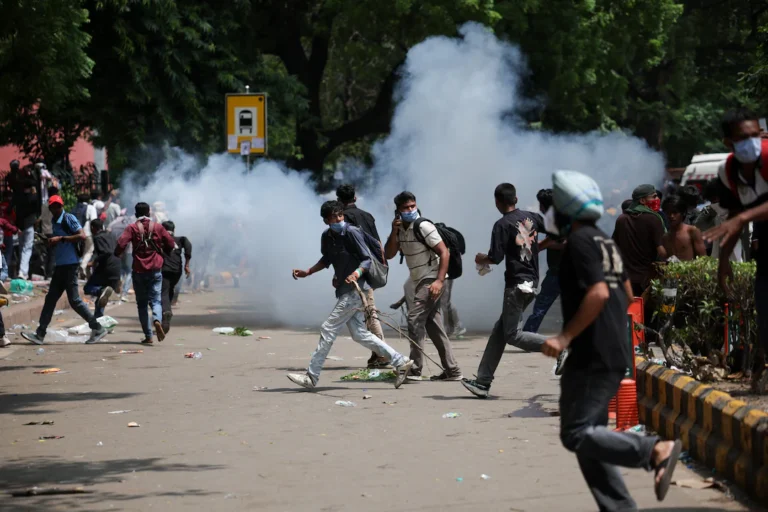
    India’s federal investigation agency has filed charges against 13 people accused of involvement in the leak of question papers for the country’s national medical entrance examination, following weeks of protests over the scandal. The Central Bureau of Investigation (CBI) said the accused include subject experts linked to the National Testing Agency, intermediaries who allegedly distributed leaked papers, and individuals associated with coaching institutes. The charges include criminal conspiracy, cheating, breach of trust, and destruction of evidence. All 13 accused are currently in custody, according to the investigation agency. The case relates to the National Eligibility cum Entrance Test (NEET), which was taken by nearly two million students in May. The examination was cancelled after allegations emerged that questions had been leaked in several areas. A fresh test was later conducted on June 21. The controversy triggered nationwide protests led by students and young activists, with thousands gathering in New Delhi and other cities demanding accountability. The demonstrations intensified after protesters marched towards parliament and faced clashes with police. The unrest eventually led to the resignation of Education Minister Dharmendra Pradhan, who stepped down after mounting pressure over the handling of the examination crisis. India’s Supreme Court has also intervened in the matter, ordering authorities not to take strict action against protesters and directing the release of detained minors. The court further instructed officials to preserve surveillance footage related to alleged police action during demonstrations. In response to the controversy, Prime Minister Narendra Modi’s government has introduced proposed amendments to public examination laws. The changes seek tougher punishments, including longer prison sentences and heavier fines for those involved in exam fraud. Under the proposed rules, those found guilty could face imprisonment of up to 10 years and fines reaching 50 million Indian rupees.

  • |

    Four Pakistanis killed in shooting incident in South Africa

      JOHANNESBURG: Four Pakistani nationals were shot dead by unidentified gunmen in the Sebenza area of South Africa, according to local police. Authorities have launched an investigation into the deadly attack, which they believe appears to be a targeted killing. Police said the incident occurred on Saturday evening when the four victims were returning home. As their vehicle stopped at a traffic signal, another car approached them. According to preliminary investigations, armed assailants opened fire from both sides of the victims’ vehicle, leaving the four men with fatal gunshot wounds. All four victims died at the scene before emergency responders could provide medical assistance. Law enforcement officials quickly secured the crime scene and began collecting evidence. Police recovered multiple 9mm pistol shell casings, which are expected to play an important role in the forensic investigation. Investigators are examining the evidence to determine the type of weapons used and to identify those responsible for carrying out the attack. Police officials stated that, based on the circumstances surrounding the shooting, the incident appears to be a targeted killing rather than a random act of violence. However, authorities emphasized that the investigation is still in its early stages and that no motive has yet been officially established. Detectives are reviewing surveillance footage from nearby locations, interviewing potential witnesses, and searching for the suspects involved in the attack. The identities of the victims have not yet been officially released, and police have not confirmed whether the deceased were related or connected through business or personal activities. Authorities are working closely with relevant agencies to notify the victims’ families and gather additional information that may assist in the investigation. The tragic incident has caused concern within the Pakistani community in South Africa, where many Pakistanis are engaged in businesses such as retail, wholesale trade, and other commercial activities. Community members have expressed shock over the killings and called on local authorities to ensure a thorough investigation and bring those responsible to justice. The shooting also drew a response from Pakistan. Punjab Chief Minister Maryam Nawaz expressed deep sorrow over the deaths of the four Pakistani nationals. In a statement, she extended her heartfelt condolences to the bereaved families and prayed for strength and patience for them during this difficult time. She also expressed sympathy with the families of the victims, acknowledging the pain caused by the tragic loss. Her message reflected solidarity with the Pakistani community affected by the incident and emphasized the importance of supporting the victims’ loved ones. Meanwhile, Pakistani diplomatic officials are expected to remain in contact with South African authorities to monitor the progress of the investigation and assist the families of the deceased where necessary. Such assistance may include facilitating documentation, coordinating with local officials, and helping arrange the repatriation of the victims’ remains if requested by their families. As investigations continue, South African police have urged anyone with information about the attack to come forward. Authorities hope that witness statements, forensic evidence, and surveillance footage will help identify the attackers and determine the motive behind the shooting. The case remains under active investigation, and police have pledged to pursue all available leads to ensure that those responsible are arrested and brought before the courts. The tragic deaths of the four Pakistani nationals have once again highlighted concerns about violent crime and the safety of expatriate communities in parts of South Africa.

  • |

    Youth protests challenge Modi’s image ahead of key state elections

    A growing youth protest movement in India has delivered one of the biggest political setbacks to Prime Minister Narendra Modi’s government in recent years, raising questions about the ruling Bharatiya Janata Party’s appeal among younger voters ahead of crucial state elections. What began as demonstrations over alleged examination paper leaks has developed into a wider expression of frustration over unemployment, education and economic uncertainty. The protests were led by the Cockroach Janta Party, or CJP, a youth movement that quickly gained massive attention on social media. Within days of launching its campaign in May, the group attracted around 22 million followers on Instagram, most of them from Generation Z. The movement demanded the resignation of Education Minister Dharmendra Pradhan after allegations that a medical entrance examination had been compromised. As protests spread across India, thousands of students gathered in central Delhi despite heavy police action. In an effort to calm public anger, Prime Minister Modi posted a rare selfie video on Instagram, saying he understood the concerns of young people and promising action to address their grievances. However, the message failed to ease the demonstrations. Days later, Education Minister Pradhan resigned, fulfilling the protesters’ main demand and handing the movement a significant political victory. The resignation is considered unusual because Modi’s government has generally resisted removing senior ministers in response to public pressure. Political observers say the outcome has encouraged many young Indians who believe their voices can influence government decisions. Analysts say the protests extend far beyond the issue of examination leaks. Many young people are increasingly worried about unemployment, rising competition for limited jobs and the possible impact of artificial intelligence on employment opportunities, particularly in India’s large information technology and business services sectors. While the exam controversy sparked the demonstrations, experts believe it exposed much deeper concerns among the country’s youth. Political analyst Amitabh Tiwari said the paper leak became a symbol of wider frustration felt by many young Indians who are anxious about their future. He noted that disappointment over employment prospects and economic opportunities has created growing dissatisfaction that cannot be ignored. Senior government officials have acknowledged these concerns. Defence Minister Rajnath Singh said the government remains committed to understanding students’ problems and ensuring that their concerns are addressed. However, critics argue the ruling party has struggled to connect with younger generations, particularly on social media platforms where political discussions are rapidly evolving. Demographic trends also highlight the challenge facing India’s political establishment. People between the ages of 18 and 40 make up roughly 40 percent of the country’s population but hold only a small share of seats in the lower house of Parliament. The average age of members of the federal cabinet remains above 60, leading some analysts to argue that younger voices are underrepresented in national decision making. Although the CJP is not officially a political party, opposition groups have openly supported the student protests and attempted to capitalize on growing public dissatisfaction. The first major political test could come during next year’s state elections in Uttar Pradesh, Punjab and Gujarat. The BJP currently governs both Uttar Pradesh and Gujarat, making those contests particularly important. Some analysts believe the movement could have an even greater impact if it eventually enters electoral politics before the 2029 national election. CJP founder Abhijeet Dipke has said no decision has been made about transforming the movement into a political party, but its rapid popularity has already attracted widespread attention across the political spectrum. Observers also believe political campaigning in India is changing. For years, the BJP built a strong digital presence on platforms such as X and Facebook. However, younger audiences have increasingly shifted to Instagram, where authenticity and informal communication often attract greater engagement than carefully managed political messaging. While the BJP has around 10 million Instagram followers, the CJP gained more than twice that number in only a few days. Modi personally continues to command a much larger audience across multiple social media platforms, but analysts say younger users are responding differently to newer forms of political communication. Writers and political commentators argue that Generation Z is less influenced by traditional political authority and more willing to openly question established leaders. They believe successful politicians will increasingly need to engage directly with young voters rather than relying on conventional campaign strategies. For Modi, the protests represent a reminder that public expectations are changing. During much of his time in office, he built a reputation as a decisive leader who rarely reversed government decisions. Political analysts now say that demonstrating a willingness to listen and respond to public concerns may become increasingly important as India moves toward another cycle of state and national elections.

  • | |

    Iranian photojournalist Yalda Moayeri sentenced to…

    An Iranian court has reportedly sentenced prominent photojournalist Yalda Moayeri to 15 years in prison in absentia, in a case involving allegations of activities against Iran and working in the interests of Israel and the United States. According to reports, the case was brought under an Iranian espionage-related law introduced in 2025. The allegations reportedly include giving interviews to foreign media outlets and providing photographs to organizations allegedly connected with the United States and Israel. Authorities also accused Moayeri of using her journalistic work and material published online to advance what they described as the interests of Israel and the United States. However, Reuters reportedly noted that the contents of the court documents could not be independently verified. The court handed down the 15-year sentence while Moayeri was not present at the proceedings. She has reportedly been given 10 days to appeal the decision. In addition to the prison sentence, the court ordered the confiscation of her cameras, mobile phones and other electronic equipment. The ruling also reportedly restricts her from participating in cultural and media activities, holding public office and posting on social media. Moayeri has disputed the circumstances of the proceedings. She said she was unable to attend the trial because she had not received formal notification about the hearing. According to her account, when she went to Tehran’s Revolutionary Court, she was not given complete case documents, while a colleague had to copy details of the charges by hand. The photojournalist also said Iranian security forces raided her Tehran home in February and confiscated her mobile phone, laptop, cameras and other equipment. A press freedom organization reported that personnel affiliated with the Islamic Revolutionary Guard Corps searched her home on February 3 and seized electronic devices. Moayeri has previously faced legal action in Iran because of her journalistic work. She was arrested in September 2022 while covering nationwide protests that followed the death of Mahsa Amini in police custody. Her arrest occurred during the protests that became associated with the “Woman, Life, Freedom” movement. She was released on bail in December 2022. She has continued documenting political developments and protests in Iran. In early 2026, her photographs from protests were published by the French newspaper Le Monde, while reports indicated that authorities subsequently searched her home and continued legal proceedings against her. The latest sentence has drawn attention because of its potential implications for press freedom and the ability of journalists to document events in Iran. The case remains subject to appeal, while independent verification of the Iranian court’s allegations remains limited.

  • | | |

    Rakhi Sawant talks about Pakistani fans, sparks cr…

    Indian actress and social media personality Rakhi Sawant has once again become a topic of discussion after sharing her thoughts about the support she has received from Pakistani fans. Known for her outspoken personality and frequent appearances in entertainment news, Rakhi often attracts public attention with her personal views and social media presence. In a recent interview with BBC Hindi, Rakhi Sawant reportedly spoke about her connection with fans from Pakistan and expressed appreciation for the affection and support she receives from across the border. Her comments highlighted the personal relationships that can develop between celebrities and audiences despite political differences between countries. Rakhi said that Pakistani fans have shown her kindness and support during difficult moments. She described the relationship between people on both sides of the border as complex but emphasized the importance of human connections and compassion. Her remarks quickly gained attention on social media, where users from both India and Pakistan shared their opinions. Many people welcomed the message of friendship and suggested that ordinary citizens often share cultural similarities despite political disagreements. Others discussed the complicated nature of India-Pakistan relations and how public figures influence conversations about peace and understanding. The discussion also reflects the wider impact of celebrity voices in the digital age. With millions of followers online, entertainers often become part of broader conversations about culture, identity, and relationships between communities. A simple statement from a public figure can quickly generate reactions and debates across social media platforms. Rakhi Sawant has frequently remained in the spotlight due to her bold statements, entertainment projects, and active online presence. Her latest comments have once again placed her at the center of public discussion, particularly around the themes of friendship, humanity, and cross-border connections. While political relations between India and Pakistan have experienced periods of tension, cultural exchanges and personal connections between people continue to remain an important part of public conversation. Rakhi Sawant’s comments have added another chapter to the ongoing discussion about how celebrities can influence social dialogue.

  • |

    Representative Max Miller defies Republican pressure to remain on Ohio ballot despite abuse allegations

    Republican Representative Max Miller has confirmed he will remain in the race for Ohio’s 7th Congressional District after letting Saturday evening’s withdrawal deadline pass, ignoring widespread calls from fellow party leaders to step down amid abuse allegations. Miller has repeatedly denied accusations raised by his former wife, Emily Moreno. A spokesperson for the congressman confirmed on Sunday that he intends to proceed as a candidate in the upcoming November 3 midterm election. The ongoing controversy threatens Republican efforts to secure a congressional seat long considered a GOP stronghold. Party officials had privately lobbied Miller to abandon his campaign out of concern that the scandal could harm Republican prospects in the region. Allies of President Donald Trump also advised the former president to intervene and urge Miller to exit the contest. Prominent Ohio Republicans have publicly disavowed Miller’s candidacy. US Senator Bernie Moreno, Miller’s former father-in-law, stated that Miller should not serve in Congress, describing him as a danger to his daughter. Ohio Senator Jon Husted also called on Miller to withdraw from the ballot and resign his current seat immediately. Miller acknowledged in a statement last week that Trump characterised his re-election battle as tough, but maintained he would stay in the race to clear his name. The political fallout deepened after Miller released hundreds of private text messages, photos, and video files intended to bolster his defence. His legal team subsequently acknowledged that the archive inadvertently contained sensitive family information. Miller will face Democratic nominee Brian Poindexter, a local ironworker, in the November 3 election.

Leave a Reply

Your email address will not be published. Required fields are marked *