pope leo xiv
|

Pope Leo XIV expresses deep concern over rising violence in the middle East, Gaza, and the occupied West Bank

Pope Leo XIV, the spiritual leader of the Catholic Christian community, has expressed deep concern over the recent escalation of violent actions and the increasing loss of civilian lives in the Middle East, particularly in the occupied West Bank and Gaza. He called on all parties involved in the ongoing conflicts to immediately halt attacks and work towards restoring peace through dialogue, diplomacy, and a fair political resolution.

In his weekly prayer address, Pope Leo XIV highlighted the devastating impact of continued violence on innocent civilians in Gaza and the West Bank. He expressed sorrow over the loss of human lives and emphasized that every effort must be made to protect civilians, reduce suffering, and prevent further escalation of tensions in the region.

The Pope urged all sides involved in the conflict to reopen channels of communication and negotiations, stressing that lasting peace cannot be achieved through violence or military action alone. According to him, a sustainable solution requires political dialogue, mutual respect, and a commitment to justice for all communities affected by the conflict.

Pope Leo XIV also condemned military operations that violate the dignity and sanctity of religious and historical sites. He emphasized that places considered sacred by different faiths must be respected and protected during times of conflict. He called for an end to actions that threaten the security and spiritual importance of these locations.

The Catholic leader stressed the importance of finding a political solution that guarantees equal rights, security, and respect for all people living in the region. He stated that peace should be based on justice and recognition of the rights and dignity of every individual, regardless of their background or identity.

The Pope’s statement comes amid growing international concerns over the humanitarian situation in Gaza and the occupied West Bank. The continued violence has resulted in significant civilian casualties, displacement, and worsening living conditions for many people. International organizations and humanitarian groups have repeatedly called for measures to protect civilians and ensure access to essential aid.

Pope Leo XIV’s appeal reflects the Vatican’s long-standing position that conflicts should be resolved through peaceful means rather than armed confrontation. The Catholic Church has consistently called for dialogue between opposing sides and encouraged efforts aimed at achieving a just and lasting peace in the Middle East.

During his address, the Pope also encouraged the international community to support diplomatic initiatives and humanitarian efforts designed to reduce suffering and create conditions for peace. He emphasized that the protection of human life and respect for human rights should remain the priority of all governments and organizations involved.

The Pope’s remarks serve as a renewed call for an immediate reduction in violence and the beginning of meaningful negotiations. He urged world leaders and regional actors to work together to find a solution that allows all communities to live with security, equality, and dignity.

As tensions continue in Gaza and the West Bank, Pope Leo XIV’s message highlights the urgent need for peaceful engagement, humanitarian responsibility, and political efforts to address the root causes of the conflict. His appeal aims to encourage reconciliation and hope for a future where justice and peace can prevail across the region.

Similar Posts

  • | | |

    Balochistan attack: sessions judge Abdul Hakeem Ka…

    District and Sessions Judge Abdul Hakeem Kakar and his security guard were killed in an armed attack while traveling toward Mastung from Quetta, officials confirmed on Thursday. According to officials, Judge Kakar was traveling with Additional Sessions Judge Tariq Lashari when unidentified armed men targeted their vehicles near Wali Khan crossing. The attack resulted in the deaths of Judge Kakar and his guard, while Judge Lashari and another person sustained injuries. Balochistan Home Department officials said the injured victims were shifted to a hospital in Mastung for medical treatment. Authorities have launched an investigation into the attack and are collecting evidence from the crime scene. Balochistan Chief Minister Sarfraz Bugti took notice of the incident and directed authorities to investigate all aspects of the attack. Officials said strict action would be taken if any negligence was found during security arrangements. The provincial government described the attack as a targeted assault against the judicial community. Officials said such incidents were aimed at creating fear and challenging the authority of state institutions. President Asif Ali Zardari strongly condemned the attack and expressed grief over the deaths of the judge and his guard. He said the sacrifices of those killed in such attacks would not go in vain and reaffirmed the country’s commitment to fighting terrorism. Interior Minister Mohsin Naqvi also condemned the incident, saying such acts could not weaken the nation’s determination against terrorism. PPP Chairman Bilawal Bhutto-Zardari expressed solidarity with the victims’ families and vowed that those responsible would be brought to justice. The attack comes amid heightened security concerns in Balochistan, where several violent incidents have recently taken place. Just a day earlier, three people were killed and several others injured in an attack on a passenger bus in Mastung, while a bridge on the national highway was damaged in a separate incident. Security forces have intensified operations across the province following a rise in militant activities. Authorities say counterterrorism efforts are continuing to restore peace and prevent further attacks. The investigation into the killing of Judge Abdul Hakeem Kakar and his guard remains ongoing, with security agencies working to identify and arrest those responsible.

  • | | |

    Iran unleashes drone barrage on US bases

    The conflict between Iran and the United States intensified on Friday as Iranian military officials claimed to have carried out drone attacks on several military facilities used by US forces in Kuwait, Bahrain and Jordan. The developments came after fresh US airstrikes on Iranian targets, signalling another major escalation in the months-long regional confrontation. According to Iranian military statements, “Arash” attack drones targeted US military warehouses and troop positions at Camp Udairi, Camp Doha and Camp Arifjan in Kuwait. Iranian officials said the attacks focused on weapons storage sites, military equipment and logistical facilities. They warned that further military action would continue if attacks against Iran persisted. Iran also claimed responsibility for drone strikes on Sheikh Isa Air Base in Bahrain and Al-Azraq Air Base in Jordan. Iranian state media reported that fuel storage areas, aircraft hangars, maintenance facilities and accommodation used by US personnel were among the intended targets. However, there was no immediate confirmation from the United States, Bahrain, Jordan or Kuwait regarding the reported attacks. Officials in those countries also did not immediately report casualties or significant damage. Meanwhile, US forces reportedly carried out fresh airstrikes on an Islamic Revolutionary Guard Corps (IRGC) naval headquarters in the northern Iranian town of Zibakenar. Iranian authorities said the facility was hit but added that initial assessments showed no casualties. In Iraq, several explosions were reported near Erbil International Airport, where US-led coalition forces are stationed. Witnesses reported hearing air defence systems in operation while drones were seen flying over the area. Smoke was later observed rising near the airport complex. Iranian Foreign Minister Abbas Araghchi warned that any country assisting the United States in military operations against Iran would be held responsible under international law. He said Tehran reserved the right to respond with measures permitted under self-defence. Araghchi also criticised Washington over comments suggesting frozen Iranian assets could be used to compensate for damage caused to commercial shipping. He warned that confiscating another country’s assets would create a dangerous international precedent and undermine global financial stability. The military escalation has also affected global energy markets. Concerns over security in the Strait of Hormuz and the Red Sea have sharply reduced tanker traffic through key shipping routes. Shipping data indicated that only one oil tanker crossed the Strait of Hormuz on Thursday, the lowest daily figure in more than two months. The situation worsened after attacks on Saudi oil tankers in the Red Sea increased fears of further disruption to global energy supplies. Rising tensions pushed international oil prices above $100 per barrel, raising fresh concerns about inflation and the global economy. US President Donald Trump warned that Iran and the Iran-backed Houthi movement would face severe military consequences if attacks on commercial shipping continued. He said Washington was prepared to respond forcefully to any further threats against regional security and international maritime trade.

  • |

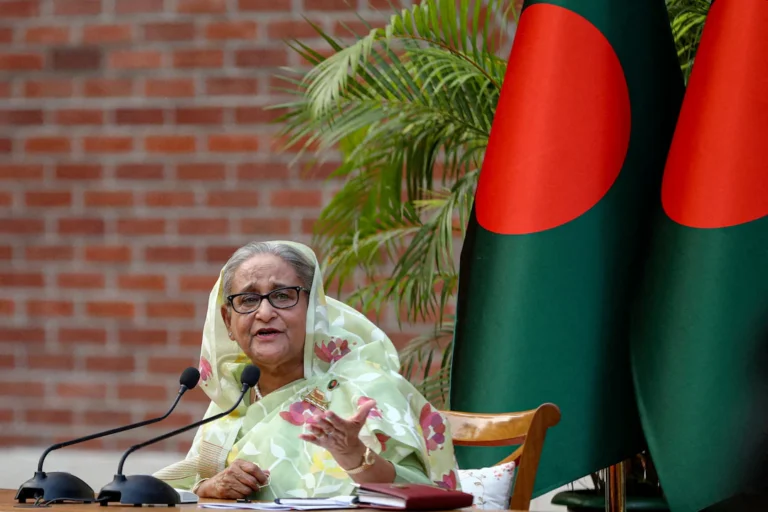
    Bangladesh seeks India’s clarification over Hasina speech

    DHAKA: Bangladesh has asked India to clarify its position over a planned virtual address by former prime minister Sheikh Hasina, saying political activities by a fugitive could undermine efforts to improve relations between the two neighboring countries. The request comes ahead of an event scheduled for August 5 in New Delhi, where Hasina is expected to deliver a video address alongside her son, Sajeeb Wazed Joy, during a programme organized by the Foreign Correspondents’ Club of South Asia. Bangladesh’s State Minister for Foreign Affairs Shama Obaed Islam said Dhaka is committed to strengthening ties with India but believes New Delhi should clearly explain its stance regarding political activities by individuals wanted by Bangladeshi authorities. She said Bangladesh has repeatedly expressed concerns over Hasina and other leaders of the Awami League making political statements while residing in India. According to the minister, Dhaka does not want such activities to negatively affect the progress made in bilateral relations. The minister noted that the event is not being organized by the Indian government but added that Bangladesh is prepared to raise the matter through diplomatic channels if required. India’s Ministry of External Affairs had not issued an official response to the remarks at the time of reporting. Relations between Bangladesh and India have remained under strain since Hasina left Bangladesh in August 2024 following a student-led uprising that ended her tenure in office. Although both countries have recently indicated a willingness to rebuild diplomatic engagement, the issue of Hasina’s stay in India continues to be a sensitive matter. Bangladesh has formally requested Hasina’s extradition to face legal proceedings. In 2025, she was sentenced to death in absentia over crimes against humanity linked to the 2024 crackdown on anti-government protests. Hasina has rejected the verdict, describing it as politically motivated and without legal validity. Despite the legal cases against her, Hasina has said she intends to return to Bangladesh in the future, while her planned virtual appearance has once again brought the issue of her presence in India into the diplomatic spotlight.

  • | | | |

    Four Palestinians killed in Israeli raid on West B…

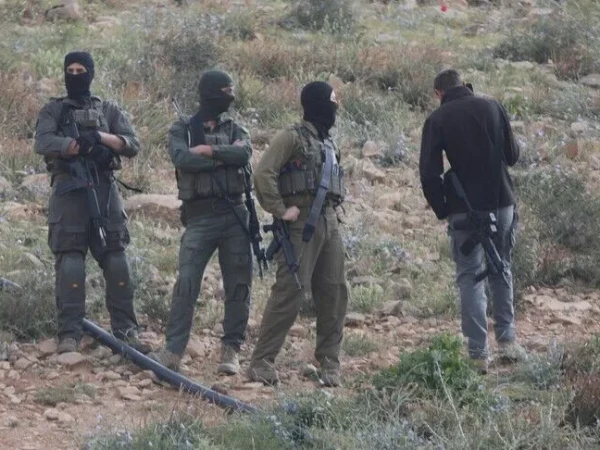
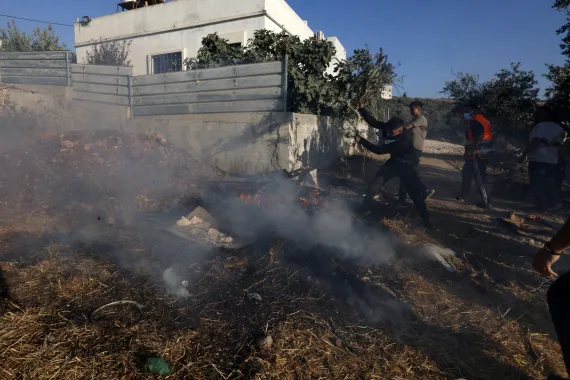
    JERUSALEM: At least four Palestinians were killed and four others wounded after Israeli forces, accompanied by Israeli settlers, launched a raid on a town in the occupied West Bank on Friday, according to Palestinian health officials and local sources. The latest violence took place in the town of Tell, located southwest of Nablus in the northern occupied West Bank, where tensions have continued to escalate amid repeated military operations and attacks by Israeli settlers. The Palestinian Ministry of Health confirmed in a statement that the death toll from the incident had risen to four. It added that four more Palestinians were injured during the assault, with three of the wounded reported to be in critical condition and receiving emergency medical treatment. According to local residents and security sources, Israeli settlers entered the town before Israeli troops moved in, triggering panic among residents. Witnesses said the attackers targeted several residential neighborhoods and opened direct fire at two Palestinian homes. Residents described scenes of chaos as families rushed to take shelter while ambulances struggled to reach the wounded. Emergency crews and local volunteers evacuated the injured under difficult conditions as sporadic gunfire continued in parts of the town. The incident marks another deadly episode in the occupied West Bank, where confrontations between Israeli forces, settlers and Palestinians have intensified in recent months. Rights groups and humanitarian organizations have repeatedly expressed concern over the growing number of civilian casualties and attacks on residential areas. The Palestinian Ministry of Health condemned the killings and called on the international community to take immediate steps to protect civilians in the occupied territories. Palestinian officials have also urged international organizations to investigate the latest incident and hold those responsible accountable. Israeli authorities had not immediately issued a detailed statement regarding the operation or responded to the allegations made by Palestinian officials at the time of reporting. The occupied West Bank has witnessed a sharp rise in violence alongside the ongoing conflict in Gaza, with frequent Israeli military raids, armed confrontations and settler attacks contributing to worsening security conditions across the territory. Friday’s deadly raid in Tell adds to growing international concern over the deteriorating humanitarian situation in the Palestinian territories, as calls for restraint and renewed diplomatic efforts continue to mount. With casualties increasing and tensions showing little sign of easing, fears remain that violence could spread further across the region in the coming days.

  • | |

    Oman oil spill spreads dramatically, nearing scale…

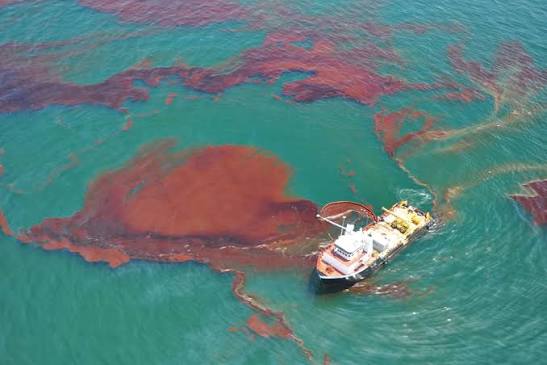
    An oil spill off the coast of Oman is rapidly expanding into one of the worst maritime environmental disasters in years after weeks of largely unchecked spread, according to international agencies, satellite imagery and environmental organizations. The slick, which originated from a grounded tanker carrying Russian crude, had reached Oman’s mainland by Wednesday, the United Nations shipping agency confirmed. John Amos, an oil spill specialist who reviewed satellite imagery, said the affected area now covers more than 2,000 square kilometers. The vessel involved, the Caroline Bezengi, was carrying an estimated 800,000 barrels of Russian oil and operates under international sanctions. It ran aground on June 30 near an Omani island that forms part of a protected marine nature reserve. The tanker first reported trouble off the coast of Yemen on June 8, and maritime sources said an explosion appeared to have occurred on board. No party has claimed responsibility for any attack, though the ship was navigating waters tied to two separate conflicts during its voyage from Russia to India. The tanker departed the Black Sea port of Novorossiysk in April, a region central to the ongoing war between Russia and Ukraine. Ukrainian forces have targeted vessels belonging to the so called shadow fleet used to transport Russian oil, a network that includes the Caroline Bezengi. Ship tracking data shows the tanker then passed through the Suez Canal in late May before sailing near Yemen, where Iran aligned Houthi forces have become entangled in the broader regional conflict involving the United States, Israel and Iran. A tangled set of war related and sanctions related shipping regulations is already complicating the emergency response and could further delay efforts to contain the disaster, according to insurers and analysts. The IOPC Funds, the intergovernmental body responsible for compensating tanker spill damages, told a foreign news agency it will not cover cleanup costs since the incident is being classified as an act of war rather than an ordinary accident. The 25 year old tanker also lacks coverage from any recognized Western insurer. Amos, who serves as chief executive of the environmental nonprofit SkyTruth, said the worst case outcome would involve no adequate response capable of preventing further damage. He said the spill’s scale could ultimately rival the 1989 Exxon Valdez disaster and noted that the tanker is comparable in size to the Sanchi, an Iranian vessel that collided with a freighter off China in 2018 in what became the world’s worst tanker disaster in decades. Slick accelerates toward mainland The spill was first identified by analysts in early July and has since begun reaching Oman’s mainland, according to the International Maritime Organization. A spokesperson for the agency said oil is drifting offshore northeast of Al Qibliyyah Island, with some already washing ashore, and confirmed that contingency planning for the spill is underway. The IMO said seasonal monsoon weather has restricted access to the tanker and delayed salvage efforts. Satellite images show the vessel grounded at Al Qibliyyah Island, part of a nature reserve that includes the Hallaniyat Islands and provides habitat for endangered sea turtles, humpback whales and coral reef ecosystems, all of which now face heightened risk from the spreading oil. Omani officials said Monday the slick covers nearly 400 square kilometers, though they have not responded to requests for additional detail on containment efforts beyond confirming the use of booms to limit the spread. Environmental groups and independent specialists estimate the true size at several times that figure, and say the rate of spread has accelerated sharply since early August. Greenpeace reported Tuesday that the affected area grew from around 45 square kilometers at the end of July to 150 square kilometers by early August, then quadrupled to roughly 600 square kilometers within just two days, according to Hanen Keskes, the group’s political campaigns lead for the Middle East. Amos’s estimate of 2,000 square kilometers suggests the spill has grown more than 40 times larger since the start of August alone. Amos said containing the disaster will require more than floating booms, including stabilizing the grounded vessel and transferring any remaining crude to another tanker. He warned that delays in salvage operations will only worsen the tanker’s condition and make the eventual recovery effort more complicated and dangerous.

  • | | | |

    US ‘locked and loaded’ as Iran talks continue

    US President Donald Trump has said Washington is engaged in direct talks with Iran, signalling that diplomacy remains active despite rising tensions in the Middle East. However, he warned that the United States remains fully prepared for military action if negotiations fail. Speaking at the White House, Trump said discussions with Tehran are ongoing and described Iranian officials as becoming “very serious” in the negotiations. He stressed that while the US is not rushing to reach an agreement, preventing Iran from acquiring a nuclear weapon remains a top priority. The US president also stated that a previously mentioned “massive” military strike against Iran may not be necessary if diplomatic efforts produce results. Nevertheless, he made it clear that American forces remain on high alert and are fully prepared to respond if required. Trump said senior administration officials, including Secretary of State Marco Rubio and Vice President JD Vance, are involved in the ongoing diplomatic contacts with Iran. He did not provide further details about the negotiations or any possible timeline for an agreement. Iranian Foreign Minister Abbas Araghchi responded by saying Tehran would not be intimidated by threats or external pressure. Speaking during a regional meeting in Kyrgyzstan, he said Iran would continue defending its national interests and would not change its policies under pressure. Meanwhile, regional tensions remain high. Air raid sirens were reported in Bahrain as Iran claimed it continued targeting US military bases in Bahrain, Kuwait and Jordan. The situation has added to concerns over a wider conflict in the Gulf region. The Saudi-led coalition also announced military operations against Houthi positions in Yemen. Coalition officials said the strikes targeted military sites, while Houthi media reported damage to telecommunications and port facilities in Hodeidah and claimed that one civilian was injured. Violence also escalated in the occupied West Bank, where clashes involving Israeli settlers and Palestinians left several people dead. Rights groups have urged the international community to take immediate steps to prevent further violence and protect civilians.

Leave a Reply

Your email address will not be published. Required fields are marked *