general assembly extends
|

UN General Assembly extends rights chief’s term despite US objections

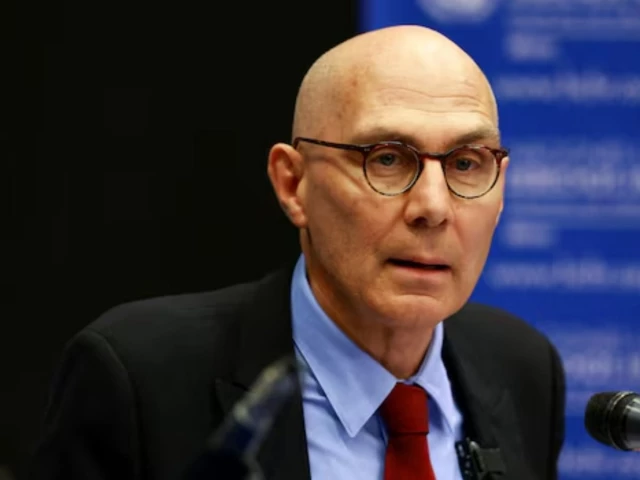
The United Nations General Assembly has voted by a large majority to grant UN High Commissioner for Human Rights Volker Turk a second four-year term, despite strong opposition from the United States, Russia and Israel. The decision came after member states rejected calls to delay the vote and instead backed Secretary General Antonio Guterres’ recommendation to keep Turk in office when his current term expires in October.

The 193-member General Assembly approved the extension with 144 countries voting in favor, while 10 countries voted against the proposal and 13 abstained. Before the final vote, member states also rejected a Russian proposal that would have extended Turk’s mandate only until the end of 2026 instead of giving him another full term.

Turk has become one of the UN’s most outspoken voices on global human rights issues during his first term. He has repeatedly criticized Russia’s military actions in Ukraine and raised concerns over Israel’s conduct during the conflict in Gaza. He has also called for investigations into deaths that occurred in US immigration detention facilities. His willingness to publicly challenge major world powers has drawn criticism from several governments, including Washington, Moscow and Tel Aviv.

The vote reflected growing tensions between the United States and the United Nations under President Donald Trump’s administration. In recent years, Washington has reduced financial support for several UN agencies and withdrawn from multiple international bodies. The administration has argued that reforms are needed before the United States continues its current level of participation and funding.

Before the vote, the United States urged the General Assembly to postpone the decision for further consultations. US Representative for UN Management and Reform Jeff Bartos warned member states that approving the appointment without additional debate would damage the organization’s credibility. He said the United States would review its future engagement, participation and financial contributions if the assembly ignored its concerns.

The US State Department also criticized the process before the vote, describing it as rushed and lacking sufficient discussion among member countries. Officials argued that member states should have been given more time to examine the proposal before making a final decision.

Despite those objections, a broad coalition of countries supported Turk’s reappointment. The European Union strongly backed the extension, along with many African and Latin American nations. China also voted in favor of the proposal, helping secure the overwhelming majority needed for approval.

UN Secretary General Antonio Guterres nominated Turk for a second term after working closely with him for several years. Guterres, who is due to leave office in December, praised Turk’s experience and commitment to defending human rights around the world. Turk, an Austrian lawyer, has spent decades working within the United Nations in senior positions based in Geneva as well as field assignments, including Kosovo. With the latest vote, he will become the first UN High Commissioner for Human Rights to serve two full four-year terms since the position was established in 1993.

Human Rights Watch welcomed the decision, arguing that strong and independent leadership is needed at a time when democratic freedoms are facing increasing pressure in many parts of the world. The organization’s UN director, Louis Charbonneau, said the global human rights situation requires a commissioner willing to challenge powerful governments regardless of their influence.

Russia and Israel strongly criticized the outcome after the vote. Russia’s deputy ambassador to the United Nations accused Turk of showing political bias and making unfair allegations against Moscow. Israeli officials also condemned the decision, describing it as a mistake and arguing that the appointment should have been left to the next UN secretary general rather than being decided during Guterres’ final months in office.

The result highlights the continuing divisions within the United Nations over human rights issues and the organization’s relationship with some of its most influential member states. While a large majority of countries supported Turk’s leadership, the objections raised by the United States, Russia and Israel suggest that debates over the UN’s role and future direction are likely to continue throughout his second term.


Similar Posts

  • |

    Electricity tariff may rise by Rs2.50 per unit as July FCA pushes recovery above Rs34bn

    ISLAMABAD: Electricity consumers across Pakistan could face an additional burden of around Rs2.50 per unit as the government moves to recover more than Rs34 billion through the July 2026 monthly Fuel Charges Adjustment (FCA), according to sources. The proposed increase is expected to affect consumers of distribution companies (Discos) as well as K-Electric, with the final adjustment to be determined by the National Electric Power Regulatory Authority (Nepra) after reviewing the relevant power purchase and generation costs. Sources said the expected positive FCA for July has largely been driven by higher electricity consumption during the peak summer season and greater reliance on expensive generation sources. Among the key factors behind the anticipated increase are the use of liquefied natural gas (LNG) procured from the spot market and furnace oil to meet additional electricity requirements, particularly during periods of high demand. June FCA already approved The expected July adjustment comes after Nepra approved a positive FCA of Re0.7503 per unit for electricity consumed in June 2026. The adjustment was lower than the Rs1.20 per unit sought by the Central Power Purchasing Agency-Guaranteed (CPPA-G). Under the FCA mechanism, variations in fuel costs and other electricity generation and purchase-related expenses are passed on to consumers through periodic adjustments. For July, CPPA-G will submit its relevant claims to Nepra, which will examine the costs and determine the admissible adjustment before issuing separate decisions for the respective distribution companies. Multiple costs to be examined The regulator is expected to assess several components included in the FCA claim before determining the final amount recoverable from consumers. Separate adjustments will subsequently be calculated for each Disco after taking into account electricity purchased through CPPA-G, bilateral arrangements with small power producers and captive power producers, as well as electricity supplied under net-metering arrangements. The final impact on consumers could therefore vary depending on the individual power procurement mix and applicable tariff structure of each distribution company. Expensive generation raises concerns The expected tariff increase has emerged at a challenging time for Pakistan’s industrial sector, where electricity prices remain a major concern for manufacturers and exporters. Industrial consumers are already facing pressure from elevated production costs, while exporters are also dealing with uncertainty caused by deteriorating security and economic conditions in the Middle East. The latest FCA discussion has also brought the issue of partial-loading charges under scrutiny. During a recent hearing, Nepra raised questions over approximately Rs4.9 billion in partial-loading costs and asked CPPA-G to explain the reasons behind the additional expenditure and measures being considered to control it. Solar power changes demand pattern CPPA-G told the regulator that the partial-loading charges were not primarily the result of inefficient operation by power plants. Instead, the agency attributed the costs largely to changes in electricity consumption patterns caused by the rapid expansion of rooftop solar generation. According to CPPA-G, daytime demand from the national grid has declined as more consumers generate electricity through rooftop solar systems. Conventional power plants are consequently required to operate below their optimum capacity during solar-generation hours. However, demand rises again in the evening when solar generation falls, forcing grid-connected power plants to increase generation quickly. This change in the daily demand curve has created additional operational costs for the power system. The authority noted that partial-loading charges recorded in June 2026 were around Rs1 billion higher than the corresponding amount in June 2025, highlighting the growing financial impact of the changing electricity demand pattern. Plant shutdowns could increase costs The Independent System and Market Operator (ISMO) also informed the regulator that shutting down power plants during periods of lower demand would not necessarily provide a cheaper solution. According to ISMO, taking plants completely offline to avoid partial-loading charges could result in substantial start-up expenses when the units are required again to meet evening demand. The issue has therefore become increasingly important as the rapid growth of distributed solar generation continues to alter the traditional pattern of electricity consumption. Exporters seek cheaper fuel options Amir Sheikh, a prominent textile exporter, called for the removal of the levy imposed on high-speed diesel and furnace oil-related generation costs, arguing that furnace-oil-based power plants could offer an alternative to expensive RLNG-fired generation under certain circumstances. He maintained that allowing more flexible use of available generation sources could help reduce the overall cost of electricity, particularly during periods when LNG prices remain elevated. Sheikh also proposed a change in the way FCA-related surcharges are calculated. He suggested that the additional charges should be recovered on the basis of projected electricity consumption rather than only through the conventional mechanism, similar to the approach followed under quarterly tariff adjustments (QTA). Falling demand creates another challenge Another concern raised during the discussion was the continuing decline in electricity demand and its possible implications for future tariff adjustments. Rehan Javed highlighted the potential impact of lower electricity consumption on the power sector’s financial structure, particularly as fixed system costs are spread over a smaller volume of electricity sales. The Ministry of Energy’s Power Division, however, said the decline in demand was largely linked to the increasing number of consumers using net-metering facilities. The ministry maintained that although distributed solar generation was changing electricity consumption patterns, its impact on future quarterly tariff adjustments would not necessarily be as severe as feared by industrial consumers. Government seeks to avoid costly LNG purchases The Power Division further explained that electricity demand was being managed in a manner designed to reduce dependence on expensive RLNG spot-market cargoes. Officials said excessive reliance on spot LNG during the summer could significantly increase power generation costs and ultimately translate into higher electricity tariffs for consumers. The government is therefore attempting to balance electricity availability, fuel costs and demand management while dealing with the changing structure of Pakistan’s power market. If Nepra ultimately approves an FCA close to the expected Rs2.50 per unit, consumers could face another substantial increase in their electricity bills. The final adjustment, however, will depend on Nepra’s assessment of CPPA-G’s July claim and the costs deemed

  • | |

    South Indian actress Shakeela undergoes neck surgery after excessive phone use

      South Indian actress Shakeela has revealed that her excessive use of mobile phones left her with a serious neck problem that eventually required surgery costing around Rs300,000 Indian rupees. The 53-year-old actress shared her experience in a video posted on her YouTube channel and urged people, especially parents, to limit unnecessary mobile phone use. Shakeela, who has worked in Malayalam, Tamil, Kannada and Telugu films, said her habit of playing games and watching videos on her phone for several hours caused significant damage to her neck. She explained that she would often lie on her side in bed for long periods while using her phone. “I used to play games on my phone continuously for four hours while lying on my side in bed,” Shakeela said. She added that she would only get up occasionally to have tea or coffee before returning to her phone. After playing games, she would spend hours watching reels on YouTube and Instagram. According to the actress, maintaining an incorrect posture while using her phone, combined with prolonged screen time, affected important blood vessels in her neck and eventually led to serious health complications. She underwent surgery in Chennai and said that a titanium screw was also used during the procedure. After returning home, doctors advised Shakeela to wear a neck collar until she recovered. She said that following the surgery, she has needed assistance even with basic activities such as getting out of bed and eating. Shakeela stressed that mobile phones are useful devices when used responsibly, but excessive use can have serious consequences. She advised people not to spend unnecessary hours watching videos or playing games, even if the content is entertaining. She also issued a warning to parents, urging them to avoid giving mobile phones to children unnecessarily. According to her, children should use phones only for essential activities and educational or useful content rather than spending long periods watching short videos and playing games. The actress said that people could end up paying a heavy financial and physical price for excessive phone use, adding that her own experience had cost her around Rs300,000 and caused considerable pain and difficulty. Shakeela Begum was born in Chennai. Her mother, Chand Bee, was from Andhra Pradesh, while her father, Chand Basha, was from Tamil Nadu. She began her acting career with a Tamil film in 1995. However, she gained widespread recognition after appearing in the Malayalam film Kinnarathumbikal, released in 2000. Over the years, Shakeela became a well-known name in South Indian cinema, particularly for her work in Malayalam films. Her latest health experience has now prompted her to use her public platform to raise awareness about responsible mobile phone use and the potential health risks associated with prolonged screen time and poor posture.

  • |

    Govt approves 16 pension fund managers for new pension scheme

    The federal government has taken a significant step towards implementing its newly introduced contributory pension system by approving 16 eligible Pension Fund Managers (PFMs) under the Defined Contribution Pension Fund Scheme-2024 for newly recruited federal employees. According to an official notification issued by the Ministry of Finance, the approved Pension Fund Managers have successfully completed all required legal and administrative agreements with the federal government. Following the completion of these formalities, they are now authorized to receive, manage, and invest pension contributions under the new pension framework. The move marks an important milestone in the government’s broader pension reform agenda, aimed at ensuring the long-term financial sustainability of the country’s pension system while reducing the growing fiscal burden associated with traditional pension payments. The Defined Contribution Pension Fund Scheme-2024 was introduced under the Federal Government Defined Contribution Pension Fund Scheme Rules, 2024, replacing the long-standing defined benefit pension model for newly appointed federal government employees. Under the previous system, retired employees received pensions funded entirely by the government. The new framework, however, shifts to a contributory model in which both employees and the government make regular monthly contributions toward retirement savings. As per the scheme, every newly recruited federal employee will contribute 10 percent of their pensionable salary each month to an individual pension account. In addition, the federal government will contribute 12 percent of the employee’s pensionable salary, creating a combined retirement fund that will be professionally managed by the approved Pension Fund Managers. The accumulated contributions will be invested in a diversified portfolio of financial instruments and investment opportunities with the objective of generating long-term returns. Upon retirement, employees will receive pension benefits based on the total value of their accumulated savings and the investment returns earned over the course of their service, rather than relying on a fixed government-funded pension. Officials believe the reform will help establish a financially sustainable pension system by encouraging long-term savings and reducing future pension liabilities on the national exchequer. The appointment of the 16 Pension Fund Managers is expected to facilitate the smooth rollout of the scheme and provide newly inducted federal employees with multiple professionally managed investment options for their retirement savings.

  • |

    UAE to charge music licensing fees at cafes, hotels and malls

    DUBAI: The United Arab Emirates is set to introduce licensing fees for playing music at cafes, hotels, malls and other commercial venues. According to UAE authorities, a music licence will be required for commercial use of music from December. The new fee will apply to businesses and commercial establishments that play music for customers. The licence will remain valid for one year. Businesses will be required to renew it annually to continue using music commercially. Authorities said educational institutions and government organisations will be exempt from the licensing fee. Non-commercial events will also not be required to pay the fee. The new licensing system has been introduced to protect the copyright and intellectual property rights of singers and other music creators. Officials said the system is intended to ensure that artists and rights holders receive appropriate protection when their music is used commercially. Authorities have also warned that action may be taken against establishments that play music without obtaining the required licence. The new rules are expected to affect a wide range of commercial venues across the UAE, including hospitality and retail businesses.

  • |

    Former boxing star Prichard Colon dies at 33 after brain injury

    Former professional boxer Prichard Colon, once regarded as one of boxing’s most promising young talents, has died at the age of 33, years after suffering a devastating brain injury during a fight. Colon, who was born in Puerto Rico, sustained severe trauma during his October 2015 bout against American boxer Terrel Williams. The injury left him in a coma and ultimately brought a sudden and heartbreaking end to a career that had appeared destined for success. Before the fight, Colon had built an impressive unbeaten record. He won all 16 of his professional bouts, including 13 victories by knockout, and had emerged as a rising name in the sport. However, the contest against Williams changed his life forever. Following the bout, Colon required emergency brain surgery after doctors discovered the seriousness of his injuries. He later regained consciousness, but the neurological damage was severe. Colon needed round-the-clock care for the remainder of his life and was unable to return to the professional career that had once promised so much. His family had remained by his side throughout the difficult years. His father, Richard Colon, announced his son’s death on Facebook, expressing his sorrow while also saying that Prichard was now in a better place. Colon had been living with his family in Florida, where he died. His story has remained one of boxing’s most painful reminders of the risks fighters face inside the ring. His rapid rise, unbeaten record and promising future were abruptly overshadowed by a single fight and its devastating consequences. For fans who followed his career, Colon’s legacy extends beyond his record. He will be remembered as a talented young boxer whose career was cut tragically short and whose long battle after his injury drew attention to the potentially life-changing dangers of combat sports.

  • | |

    Cardi B hits back at critics demanding more from h…

    Cardi B is making it clear that fan complaints will not push her to release more music or create more music videos. Instead, the rapper says constant criticism may have the exact opposite effect. During an X Spaces conversation on August 11, Cardi addressed listeners who have questioned her recent release schedule and wondered why some of her songs receive music videos and more promotional attention than others. Rather than promising to step up her output, the Grammy-winning artist responded with her trademark honesty. (People.com⁠) Cardi explained that complaints do not motivate her to return to the studio. In fact, they can make her want to stop working altogether. She made it clear that she is not interested in allowing outside pressure to dictate her creative process. The rapper also pushed back against the idea that every song needs the same level of promotion. According to Cardi, different tracks can have different aesthetics, visuals and promotional strategies. She does not believe every release needs to receive identical treatment simply because fans expect it. Her comments come as she deliberately takes a break from music. Cardi revealed that she had already planned to take the summer off and spend more time enjoying herself and being with her family. She also acknowledged that she has not been spending as much time in the studio recently. (The Grio⁠) The decision follows an especially busy period for the rapper. Cardi released her long-awaited second studio album, Am I the Drama?, in September 2025. The 23-track project debuted at No. 1 on the Billboard 200, giving her another major career milestone. (People.com⁠) She then took the album on her first full headlining arena tour, the Little Miss Drama Tour. The North American run began in February and wrapped in April, giving the star plenty of reason to slow down afterward. (People.com⁠) Still, Cardi has not completely stepped away from music. On July 31, she released “AH HA,” a solo track that also marked her 30th career top 10 on Billboard’s Hot Rap Songs chart. (People.com⁠) For now, however, Cardi appears determined to enjoy her downtime on her own terms. Her message to critics is simple: demanding more will not speed up her creative process. Instead, the outspoken rapper is choosing rest, family and enjoying her summer — proving once again that she is not afraid to do things her own way.

Leave a Reply

Your email address will not be published. Required fields are marked *