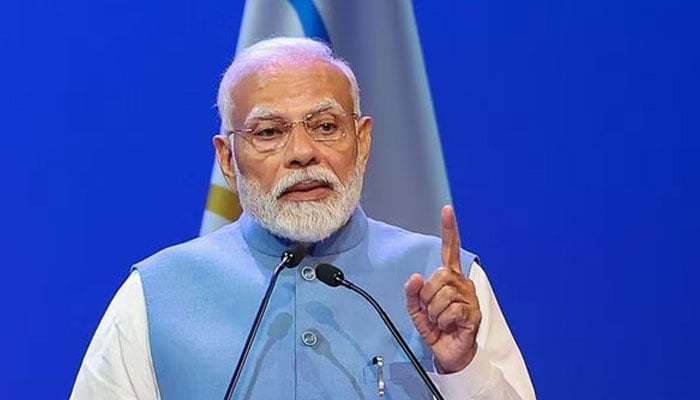
salman khan urges
|

Salman Khan urges students to stay calm amid NEET protest

Bollywood superstar Salman Khan has shared an important message amid the ongoing student protests over the alleged NEET examination paper leak, urging students to remain calm and reassuring them that the matter is receiving attention at the highest level.

In a statement posted on his Instagram account, the actor addressed students participating in demonstrations related to the controversy surrounding the national medical entrance examination. He emphasized that the education and safety of young people should remain the country’s top priority.

Salman Khan encouraged students not to let the situation create additional stress for themselves or their families. According to the actor, students should avoid unnecessary anxiety and trust that the authorities will investigate the matter thoroughly.

He also referred to the Prime Minister’s public remarks on the issue, saying that he believes strict action will be taken against anyone found responsible for the alleged examination paper leak. Salman expressed confidence that those involved would be held accountable through the legal process.

The actor appealed to students to return home and focus on their well-being while allowing the authorities to complete their investigation. He said that students should prioritize their health and avoid placing further emotional strain on their parents during this difficult period.

In the same message, Salman Khan also addressed education reform activist Sonam Wangchuk, who has reportedly been observing a hunger strike for nearly 25 days.

Speaking directly to Wangchuk, Salman requested that he end his fast, saying that enough time had passed and that continuing the hunger strike could put his health at serious risk. While acknowledging Wangchuk’s commitment to raising awareness through peaceful protest, the actor suggested that preserving his health was equally important.

Salman added that if public demonstrations become necessary again in the future, Wangchuk could always continue his activism. However, he said he did not believe there was a need to prolong the hunger strike at the present moment

In a light-hearted remark, the Bollywood star even offered to send food from his own home if Wangchuk agreed to end his fast, a gesture that quickly drew attention across social media.

This was Salman Khan’s second public appeal on the issue within 24 hours. Earlier, he had also expressed concern over the alleged irregularities in the NEET examination process and stressed the importance of protecting students’ interests while ensuring that the investigation proceeds fairly and transparently.

The NEET controversy has triggered widespread demonstrations in different parts of India, with students demanding a transparent inquiry into the alleged paper leak. Protesters have called for accountability, stricter measures against those responsible, and reforms aimed at safeguarding the credibility of the country’s examination system.

The alleged paper leak has sparked a broader debate about the integrity of competitive examinations, with students and education advocates urging authorities to strengthen security measures and restore confidence in the examination process.

As the investigation continues, the issue remains one of the most closely watched education-related developments in India, with thousands of students hoping for a fair resolution and stronger safeguards for future examinations.
Similar Posts

  • |

    Bank of Punjab Board approves Up to Rs30bn equity injection by Punjab government

    LAHORE: The Board of Directors of The Bank of Punjab (BOP) has approved a proposal for an equity injection of up to Rs30 billion by the Government of Punjab, a move aimed at strengthening the bank’s capital position and supporting its next phase of expansion. The decision was taken at a board meeting held on August 7, 2026. Under the proposal, the Punjab government will subscribe to ordinary shares to be issued by the bank through a mechanism other than a rights issue. The proposed transaction will not take effect immediately and remains conditional on obtaining all required statutory, corporate, shareholder and regulatory approvals. According to the bank, the planned capital injection is an important step in its broader transformation strategy and will provide additional financial capacity to support sustainable growth across its key business segments. Share issuance price The ordinary shares will initially be issued at Rs38.20 per share. However, if the market price of BOP shares is higher than this amount at the time of issuance, the shares will be issued at the prevailing market price plus a premium of 5 percent. As a result, Rs38.20 will serve as the minimum or floor price for the proposed share issuance. The transaction is expected to reinforce the bank’s capital base and provide greater flexibility to manage balance-sheet expansion while maintaining prudent financial and risk-management standards. BOP expands its market presence The Bank of Punjab has undergone significant changes in recent years, with the institution expanding its balance sheet, improving financial performance and strengthening its position across several sectors of Pakistan’s economy. The bank has developed a strong presence in areas including small and medium-sized enterprise (SME) financing, agricultural lending, affordable housing, digital banking and credit cards. It has also increased its focus on women’s participation and leadership in banking and financial services. BOP is further expanding its activities in commercial and corporate banking, particularly in areas linked to export-oriented businesses. The bank said these business segments have positioned it as an important participant in supporting economic activity, employment creation and financial inclusion across the country. Capital requirements rise with expansion Despite the bank’s growth, the rapid expansion of its operations has increased pressure on its existing capital base. BOP said its capital position has historically remained relatively limited compared with the size of its operations and the growth opportunities available to the institution. The proposed Rs30 billion injection is therefore expected to provide the bank with additional capacity to expand its core businesses while maintaining financial resilience. The additional capital could also enable BOP to increase its low-cost deposit base and grow lending operations without facing the same level of capital constraints. The bank said strengthening its capital position would allow it to pursue growth while maintaining a balanced and prudent approach to balance-sheet management. Strong financial performance The proposed capital injection comes as BOP continues to report strong underlying financial performance. During 2025, the bank recorded revenue growth of around 29 percent, while its earnings increased by more than 40 percent year on year. The bank also witnessed significant appreciation in the value of its shares during the period. According to the bank, the proposed capital raise should therefore be viewed primarily as growth capital rather than a measure aimed at addressing immediate financial weakness. The additional equity is expected to provide the financial foundation required for BOP to continue expanding its operations and investing in new business opportunities. International expansion in focus Another important component of the bank’s future strategy is its international expansion. The capital injection is expected to support the next phase of BOP’s growth, including an international venture that has recently received approval from the State Bank of Pakistan. The move could provide the bank with an opportunity to broaden its geographical footprint and develop new sources of business and revenue. With the proposed equity injection, BOP aims to strengthen its financial position, support expansion in priority sectors and improve its ability to serve businesses, consumers and other customers as demand for banking and financial services continues to grow.

  • | |

    Pakistan keeps petrol and diesel prices unchanged …

    The Government of Pakistan has decided to keep petrol and diesel prices unchanged for the next two days after implementing fuel price increases over five consecutive days. The Petroleum Division of the Ministry of Energy issued an official notification confirming that current prices will remain in effect on July 26 and 27, 2026. According to the notification, the price of petrol will remain at Rs. 335.18 per litre, while high-speed diesel (HSD) will continue to be sold at Rs. 383.46 per litre during the two-day period. The decision comes after a series of recent adjustments to petroleum prices under the government’s revised pricing mechanism. Authorities said no further changes would be made during the specified period, providing temporary stability for consumers following multiple increases. The latest notification confirms that the existing fuel rates announced on July 25 will remain effective through July 27. Officials from the Petroleum Division stated that the move is in line with the government’s current fuel pricing policy. Just a day earlier, the government had raised petrol prices by Rs. 3.66 per litre and high-speed diesel prices by Rs. 4.80 per litre. Those increases followed another hike in which petrol became Rs. 4.40 per litre more expensive and diesel increased by Rs. 3.62 per litre. Before the latest revisions, petrol was priced at Rs. 331.52 per litre, while high-speed diesel was available at Rs. 378.66 per litre on July 24. The recent adjustments reflect ongoing fluctuations in petroleum pricing driven by changes in international oil markets and domestic pricing policies. Fuel prices play a significant role in Pakistan’s economy, influencing transportation costs, industrial production, and the prices of essential goods and services. Any increase or decrease in petroleum prices has a direct impact on businesses and household budgets across the country. The government’s decision to maintain current prices for two days is expected to provide short-term certainty for consumers and businesses. However, future revisions will continue to depend on global oil prices, exchange rate movements, and the government’s fuel pricing framework. Motorists and businesses are advised to follow official announcements from the Petroleum Division for any future changes in fuel prices. The current notification confirms that petrol and diesel rates will remain unchanged until the end of July 27, unless a new directive is issued by the government.

  • |

    West Indies face World Cup qualifier after missing direct spot

    The West Indies face another difficult route to the ICC Men’s Cricket World Cup 2027 after failing to secure automatic qualification for the tournament. The two-time world champions are currently 10th in the ICC ODI rankings and cannot move into the required top-eight positions before the September 30, 2026 cut-off date. Their remaining two ODI matches against India will therefore not be enough to rescue their hopes of direct qualification. Under the qualification system, the top eight ranked teams, excluding hosts South Africa and Zimbabwe, will earn automatic places in the 2027 World Cup. The tournament will be hosted by South Africa, Zimbabwe and Namibia. Afghanistan recently became the latest side to secure automatic qualification after defeating Ireland in a thrilling contest in Belfast. They join defending champions Australia, India, New Zealand, Pakistan, Sri Lanka, England and Bangladesh among the teams already assured of their places. South Africa, Zimbabwe and Namibia will also feature as hosts. For the West Indies, however, the road to the World Cup will now become considerably longer. They are set to compete in the World Cup Qualifier in February 2027, where they will need to perform strongly to secure a place in the main tournament. The situation is particularly painful because the Caribbean side experienced a similar setback during the qualification campaign for the 2023 World Cup. The West Indies entered the Qualifier in Zimbabwe but failed to reach the tournament after finishing fifth in the Super Six stage. It was a historic disappointment as the Caribbean team had previously appeared in every ODI World Cup since the competition began in 1975. The West Indies won the first two editions of the World Cup in 1975 and 1979, establishing themselves as one of cricket’s earliest dominant forces. Their failure to qualify for the 2023 tournament also resulted in their absence from the 2025 Champions Trophy, ending a long sequence of appearances dating back to 2013. Now, with another Qualifier ahead, the West Indies face a crucial opportunity to avoid repeating recent history. Their performance in February 2027 could determine whether one of cricket’s most celebrated teams returns to the global stage—or suffers another major setback.

  • |

    Petrol prices may bring relief in two days if global oil rates stay stable

    LAHORE: Federal Petroleum Minister Ali Pervaiz Malik has indicated that consumers could receive some relief in petroleum prices within the next two days if international crude oil rates remain stable, while acknowledging that elevated fuel costs continue to place pressure on households and the wider economy. Speaking in Lahore, the petroleum minister said the government was closely monitoring developments in the international oil market and would take the prevailing global prices into account during the next petroleum price review. Malik explained that petroleum prices in Pakistan are linked to international market trends and are calculated on the basis of a seven-day average. He said the Oil and Gas Regulatory Authority (OGRA) is responsible for determining the prices under the existing mechanism. He added that the movement of global oil prices during the next couple of days would be particularly important in determining whether consumers could receive positive news in the upcoming review. Government averts fuel supply crisis The minister said Pakistan had managed to maintain uninterrupted supplies of petroleum products despite severe pressure created by regional tensions and volatility in international energy markets. According to Malik, Prime Minister Shehbaz Sharif and his team took measures on both the economic and diplomatic fronts to ensure that the country did not experience a fuel shortage. He said the government had continued supplying petroleum products across the country even during a period when uncertainty in the region was creating serious risks for energy-importing nations. “There was no shortage of petroleum products in Pakistan during the tension,” Malik said, stressing that maintaining fuel supplies remained one of the government’s key priorities. He acknowledged, however, that preventing a shortage did not eliminate the financial burden caused by high international oil prices. International oil market remains a major concern Malik said the recent regional conflict created extraordinary volatility in global energy markets. He pointed to sharp increases in crude oil, petrol and diesel prices during the period of heightened tensions. He said crude oil prices had at one stage climbed as high as $170 per barrel, while diesel prices reached around $280 and petrol prices also touched $170. The minister further referred to periods when market expectations pointed towards even more dramatic increases, with petrol and diesel prices moving towards levels of around $500. Such volatility, he said, demonstrated the difficulties faced by countries that rely heavily on imported energy to meet domestic requirements. Pakistan, being an energy-importing country, remains particularly vulnerable to sudden increases in international oil prices because changes in global rates can quickly affect domestic fuel prices, transportation expenses and industrial costs. Expensive fuel putting pressure on people The petroleum minister conceded that high fuel prices are creating difficulties for ordinary citizens and businesses. He said an increase in petroleum prices does not remain confined to fuel stations, as higher transportation and energy costs eventually affect the prices of goods and services throughout the economy. According to Malik, expensive petroleum products increase the cost of moving agricultural produce, industrial raw materials and finished goods, thereby adding to inflationary pressure. “The people are suffering” because petroleum products are expensive, he said, while maintaining that the government was making efforts to provide relief within its available financial capacity. Petroleum levy collection exceeds target Malik also disclosed that the government collected around Rs1,900 billion through the petroleum levy during the previous year, exceeding the official target of Rs1,700 billion. The collection represents an important source of government revenue, but the minister acknowledged the broader economic implications of relying on petroleum-related revenues while consumers are already facing high fuel costs. He said the government had to balance revenue requirements with the need to protect consumers from excessive increases in petroleum prices. Prices cut when conditions allowed The minister said the government reduced petroleum prices whenever international market conditions and other relevant factors created room for downward revisions. He said Prime Minister Shehbaz Sharif had ordered reductions when an agreement was reached and circumstances permitted the government to pass on the benefit to consumers. Malik said the administration was attempting to manage fuel prices within the limits imposed by international markets and domestic economic conditions. He also recalled the prime minister’s commitment to introducing greater transparency in the petroleum pricing mechanism. The minister said the government had been required to make difficult decisions as part of broader efforts to stabilise the economy and place Pakistan on a sustainable development path. Heavy reliance on imported energy questioned Malik also raised concerns over Pakistan’s longstanding dependence on imported energy. He questioned why the country had continued relying on overseas energy supplies for decades despite having significant potential for developing domestic oil and gas resources. The minister said Pakistan obtains around 90% of its energy requirements from foreign sources, leaving the economy exposed to fluctuations in global energy prices and geopolitical developments. He argued that reducing this dependence should be treated as a long-term national priority. According to Malik, Pakistan has promising gas resources in areas such as Waziristan and Balochistan, and greater efforts are required to explore, develop and utilise domestic reserves. He said increasing local production could eventually reduce pressure on the country’s import bill and provide greater protection against international price shocks. Focus shifts towards domestic energy development The minister said Pakistan could not continue responding to every international energy crisis after it had already occurred. Instead, he stressed the need for long-term investment in exploration, infrastructure and domestic energy production. He said the government wants to move the country away from a cycle in which international price increases immediately translate into domestic economic difficulties. Malik described development of local energy resources as an important component of Pakistan’s broader economic strategy. He said the government was working towards an environment in which energy availability could support industrial expansion, investment and economic growth. Major energy infrastructure initiative planned Malik also referred to a new infrastructure initiative, saying the prime minister and the field marshal had assigned a major internationally recognised company to undertake energy infrastructure work within a

  • |

    Police file case against Meta India chief over Modi videos

    Police in the southern Indian city of Hyderabad have registered a criminal case against the head of Meta India over videos shared on Facebook that allegedly portrayed Prime Minister Narendra Modi in an abusive manner. Officials said the cybercrime unit has initiated legal proceedings and is preparing to issue a formal notice to Meta Platforms as part of the investigation. The notice had not been served as of Friday. Authorities have not disclosed further details about the videos but said the case relates to content published on Facebook that allegedly violated Indian laws. Meta did not immediately comment on the development. The latest case adds to growing friction between the Indian government and the social media company over content involving Prime Minister Modi. Earlier this week, India’s Ministry of Electronics and Information Technology summoned Meta representatives after Facebook briefly restricted one of Modi’s posts. The government sought an explanation from the company, calling for accountability over the incident. Meta later stated that the restriction was the result of an unintended error and restored the post. The message was Modi’s first public response to nationwide student protests that eventually led to the resignation of India’s education minister. In recent weeks, the Indian prime minister has faced intense criticism on social media, with users sharing protests, satire, and political commentary related to the ongoing unrest.

  • | |

    Danish-Anmol’s Nishtar teaser sets screens on fire

    Pakistani actors Danish Taimoor and Anmol Baloch are set to share the screen in an upcoming drama serial, Nishtar, which is expected to be another major television project for the two stars. The first teaser of the drama has been released, giving viewers a glimpse into what appears to be an intense story filled with power, ambition, pride and romance. Danish Taimoor will reportedly play a powerful and confident young man whose life revolves around wealth, influence and authority. His character appears to have a strong personality and an attitude shaped by his privileged background. Anmol Baloch, meanwhile, will portray a fearless woman who enters his life and challenges his established way of thinking. The teaser suggests that her arrival could become a turning point for the central character and dramatically change the direction of his life. The drama has been written by renowned writer Maha Malik and directed by Seraj Ul Haq, who is known for his work on popular television projects. Abdullah Kadwani and Asad Qureshi are serving as producers. The project features a large ensemble cast, including Usman Peerzada, Haroon Shahid, Yousuf Bashir Qureshi, Shahnawaz Zaidi, Mahmood Aslam, Nida Mumtaz, Ali Dayyan Walji, Muhammad Faizan Sheikh, Ramsha Salahuddin, Syed Afzal Ali, Fatima Gohar, Ayesha Gul, Laiba Rehman Butt, Zarafshan Amir, Annie Zaidi, Muhammad Asad Gojar and Talia Jan. Danish Taimoor is among Pakistan’s well-known television actors and has appeared in several successful dramas over the years. His performances in projects such as Deewangi, Kaisi Teri Khudgarzi, Jaan Nisar and Ishq Hai have earned him a large following. Anmol Baloch has also gained recognition through her performances in dramas including Siyani, Sirf Tum and Iqtidar. Her pairing with Danish Taimoor has already generated interest among television audiences. The teaser has sparked excitement among fans, particularly those looking forward to seeing Danish return in an intense role. Many viewers have also expressed curiosity about the chemistry between the two lead actors.

Leave a Reply

Your email address will not be published. Required fields are marked *