fast tasty monsoon

Fast and tasty monsoon tea time snacks

As soon as the rainy season begins many people crave a hot cup of tea with crispy tasty snacks.

While favorites like samosas and bread pakoras are always a great choice they usually take more time to prepare.

If you want something quick and delicious, there are many snacks you can make in just 15 minutes.

These easy snacks are perfect for evening tea family gatherings or even unexpected guests during the weekend.

•Onion Pakoras

Onion pakoras are one of the most popular monsoon snacks.  Thinly sliced onions are mixed with a spiced gram flour (besan) batter and deep fried until golden and crispy.

They taste best with mint chutney and hot tea.

•Bread Rolls

Bread rolls are filled with a spicy mashed potato mixture then fried until crispy on the outside and soft inside.

They are a simple and filling snack for rainy evenings.

•Chili garlic potato bites

These crispy potato bites are coated with chili garlic and flavorful spices before being cooked until golden.  They are quick to make and loved by both children and adults.

•Paneer cutlets

Paneer cutlets are another fast and tasty option.

Made with paneer and mild spices they are lightly fried to create a crispy outside while staying soft inside.  They are rich in protein and make a satisfying snack.

•Onion rings

Onion rings are coated in a seasoned batter and fried until crisp and golden.  They pair perfectly with ketchup chili sauce or your favorite dip making them a great choice for tea time.

Whether you are relaxing at home while enjoying the rain or serving guests these simple snacks let you enjoy the monsoon without spending hours in the kitchen.

With only 15 minutes of preparation they can make your evening tea even more enjoyable.

Similar Posts

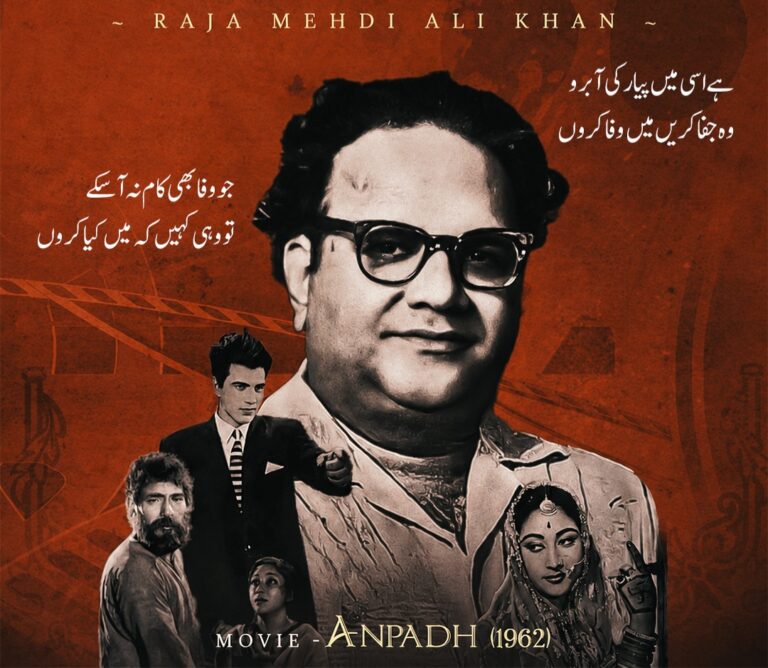
  • The unforgettable legacy of Raja Mehdi Ali Khan

    Twentieth-century Urdu literature and Indian cinema was shaped by figures whose creativity crossed literary traditions and popular entertainment. Among these luminaries, Raja Mehdi Ali Khan stands out as a unique persona connecting high-art literary satire and immortal Bollywood melodies. This legend was born in 1915 in the historical town of Wazirabad. Khan was an observer of culture. He inherited a formidable poetic pedigree that caused him to be one of the most celebrated humorists and lyricists of his era. Raja Mehdi Ali Khan’s literary inclinations were virtually coded into his lineage. He was related to the renowned journalist and political figure Maulana Zafar Ali Khan. He was raised in an environment saturated with verse and socio-political commentary. Moreover, his mother was a recognized poetess in her own right. She taught him a deep reverence for language and rhythmic expression from an early age. This environment nurtured his inherent talent, allowing him to absorb classical Urdu poetic conventions while developing an understated wit that would define his future work. Before making a name for himself in the cinema, Khan began his journey in print journalism. He contributed prolifically to prominent periodicals and literary magazines of the era. The names included Monthly Alamgir, Weekly Khayyam, Tehzeeb-e-Niswan and Do Phool. His early journalistic writings allowed him to polish his observational skills. Whether analyzing social norms or painting witty portraits of everyday life, his prose stood out for its accessibility and warmth. Later, he transitioned into radio broadcasting. It’s considered a medium that further refined his sense of auditory storytelling and lyrical timing. He was driven by creative ambition. Later, Khan relocated to Bombay (now Mumbai) during a transformative era for Indian cinema. His entry into the film industry marked the beginning of a golden age for Hindi film music. He partnered with legendary music composers such as Madan Mohan. Khan penned lyrics that transcended simple movie themes, capturing profound emotional truths. His songs have proved to be timeless masterpieces, continuing to resonate across generations. Among his most iconic works are: hai isi mein pyaar ki aabru wo jafa karen main wafa karun jo wafa bhi kaam na aa sake to wahi kahen ki main kya karun Raja Mehdi Ali Khan, Anpadh (1962) His celebrated catalog includes evergreen classics. Lag Jaa Gale (Woh Kaun Thi?): Widely regarded as one of the greatest romantic ballads in Hindi cinema. Aapki Nazron Ne Samjha (Anpadh): A masterpiece of subtle expression and devotion. Jhumka Gira Re (Mera Saaya): A vibrant classic in popular culture. Tu Jahan Jahan Chalega (Mera Saaya): A hauntingly beautiful exploration of love and devotion. Agar Mujh Se Mohabbat Hai (Aap Ki Khaatir): A poignant reflection on romantic commitment. What set Raja Mehdi Ali Khan apart from many of his contemporaries was his dual identity.  Film audiences revered him for his deeply romantic and melancholic lyrics. On contrary, the literary world celebrated him as an exceptionally gifted humorist and satirist. Even amidst his demanding schedule in Bombay’s competitive cinematic landscape, Khan never abandoned his literary roots. His satirical essays and humorous poems were regularly featured in leading newspapers and journals across both India and Pakistan. His humor was rarely cynical. Instead, it offered a gentle, witty critique of human flaws, societal absurdities, and the complexities of modern living. Khan proved that high literary craft could flourish alongside popular music. Raja Mehdi Ali Khan passed away leaving behind a rich archive of literary contributions and cinematic songs that continue to be sung, reimagined, and loved today. His life journey from the quiet streets of Wazirabad to the recording studios of Bombay embodies the shared cultural heritage of the Indian subcontinent. His art remains vibrant and melodious whether delivered in a literary journal or sung by iconic playback singers.  

  • | |

    The rise of Alfred, Lord Tennyson

    On August 6, 1809, one of the defining literary voices of the 19th century was born: Alfred, Lord Tennyson. Tennyson came to embody the doubts, solemnity, and romantic ideals of the Victorian era. He served as Britain’s Poet Laureate for more than four decades during the height of Queen Victoria’s reign. Early Brilliance and Sharp Criticism Tennyson’s journey to becoming a beloved national figure was anything but smooth. Raised in a large, tumultuous household by a clergyman father, young Alfred sought escape through verse. His talents surfaced early; while studying at Cambridge, he won the prestigious Chancellor’s Gold Medal in 1829 for his poem Timbuktu. Shortly thereafter, he published early collections containing works such as Mariana and Claribel. These early publications showcased his extraordinary musicality and eye for detail, yet contemporary critics were not entirely impressed. Severe reviews dismissed his work as overly melancholic, affected, and sentimental. The hostility of these early critiques shook Tennyson deeply, prompting a decade-long period of publishing silence. A phase scholars often refer to as his ten years’ silence. Crafting the Masterpieces Rather than abandoning his craft, Tennyson spent those quiet years refining his technique, studying philosophy, and confronting personal tragedy. The sudden death of his closest friend, Arthur Henry Hallam, plunged Tennyson into profound grief. This loss became the catalyst for his most famous masterpiece, In Memoriam A.H.H. Published in 1850, the massive elegy explored faith, mortality, and scientific progress, striking a deep chord with a Victorian public navigating rapid industrialization and societal change. The immense success of In Memoriam transformed his standing almost overnight. That same year, following the death of William Wordsworth, Queen Victoria appointed Tennyson as Poet Laureate. He went on to compose iconic works that defined the national consciousness, including The Charge of the Light Brigade, Ulysses, and his epic Arthurian cycle, Idylls of the King. A Lasting Literary Legacy While early critics painted him as a sentimentalist, history remembers Tennyson as a master craftsman of English rhythm and sound. Lines like; “To strive, to seek, to find, and not to yield” (Ulysses) have woven themselves permanently into the modern lexicon. His ability to blend intimate personal emotion with grand societal themes elevated him from a criticized young poet to an enduring pillar of world literature. Key Milestones in Tennyson’s Career 1809: Born in Somersby, Lincolnshire on August 6. 1829: Wins the Chancellor’s Gold Medal at Cambridge for Timbuktu. 1830: Publishes Poems, Chiefly Lyrical, introducing works like Mariana and Claribel. 1850: Publishes In Memoriam A.H.H. and is appointed Poet Laureate by Queen Victoria. 1854: Pens The Charge of the Light Brigade, capturing national sentiment during the Crimean War. 1892: Passes away at age 83, buried in Poets’ Corner at Westminster Abbey.

  • Low magnesium? Don’t ignore these warning signs

    Health experts say magnesium is an essential mineral that helps keep the bones muscles nerves and heart healthy. A lack of magnesium can lead to several physical and mental health problems, so it is important to recognize the early warning signs. According to experts low magnesium levels may affect the nervous system causing anxiety nervousness irritability and mood changes. If these symptoms continue for a long time magnesium deficiency could be one possible reason. Magnesium deficiency can also affect emotions making some people more sensitive to stress or more likely to overreact to small problems. Experts recommend eating beans nuts leafy green vegetables fish and whole grains to help maintain healthy magnesium levels. Feeling tired weak or low on energy even after getting enough sleep may also be a sign of low magnesium.  Doctors suggest getting a blood test to check vitamin and mineral levels if these symptoms continue. Health experts also say that frequent nausea and vomiting can sometimes be linked to magnesium deficiency and should not be ignored. Low magnesium may also cause muscle weakness leg pain cramps muscle tightness or spasms as the mineral is important for normal muscle function.  While magnesium rich foods can help experts advise speaking to a doctor before taking any magnesium supplements.

  • “A Glimpse After Twenty-One Days”

    By Amar Qawi If, someday, the entire sky were covered in darkness—without a moon, without stars, without even the faintest sparkle—would a lover whose heart glows like moonlight still be able to live beneath such a sky? That day, I sat on the rooftop of my house searching for the moon. But fate had something else in store. Instead of appearing in the heavens, the moon descended into the street below to grant me a glimpse after twenty-one long days. I did not dwell much on that radiance because something similar had happened to me earlier, on the fifteenth of July. Therefore, I took it as nothing more than an unfulfilled dream rather than believing that the moon belonged to me. In truth, even considering someone as one’s possession is itself a form of poverty. Since childhood, society has taught us that air, fire, and water are the necessities of life. Yet I feel sorry for those teachers who remain unaware of a deeper truth: human beings do not survive by air, fire, and water alone. Love, inspiration, and moonlight are equally essential for the soul to remain alive. A person may survive in this highly technical age amidst bombs and weapons, but without the sight of the beloved, the soul can never truly live. Just as air, fire, and water are essential to human existence, so too is the vision of the beloved. The truth is, I was not sitting on the rooftop in search of the moon in the sky. I was waiting for that moon from whom my moonbird-like heart had been separated for what felt like centuries. And yet, even when I found that moon, it was only within my dreams. Twenty-one days after the fifteenth of July, as I walked through that familiar street, she passed by me just as a shadow silently slips along a wall in the darkness. She is my shadow, and I am her reflection. She is my reflection, and I am her moonbird. She is the full moon to me. Whenever she shines like the full moon, my heart, like a restless chakor bird, longs to fly toward her and kiss her beauty. But alas, those delicate butterfly-like wings eventually grow weary from endless flights inspired by love. When I saw her in that street after twenty-one days, the fallen Taj Mahal of my imagination began to rebuild itself. The shy poet hidden within me blossomed with the spirit of Sheikh Ayaz’s immortal lines: “O moon! Who has stolen your sleep? Surely the chakor birds have enchanted you.” Just as Sheikh Ayaz expressed, something similar happened to me. When I first met her, I had no intention of falling in love. Yet I vividly remember that when we parted, dryness had settled upon our lips while tears embraced our eyes. It was as though the Urdu poet had written about our separation: “When we parted, my poem remained within her eyes— A poem that had never yet been recited to anyone.” When she passed beside me after twenty-one days, my eyes swore by the little golden nose ornament she wore and silently recalled the beautiful verse of Shah Abdul Latif: “Who says, my beloved, that you should walk gently? Place your feet upon my eyelashes without hesitation. Leave behind all fear of causing pain, For your passage itself is my greatest joy.” When even her tongue could not gather the courage to speak to me, my own eyes, too, denied themselves the permission of truly beholding her after those twenty-one days. Love is not dependent upon union; it longs for the meeting of souls. Therefore, for a lover like me, a glimpse after twenty-one days carries no real meaning if the beloved merely passes by like a silent shadow in the darkness. In the end, I wish to encourage the young people of our society who lose their dreams and their future while chasing someone who does not value their love. As an Urdu poet beautifully said: “If you have changed, then so be it. If not you, then someone else. And if not someone else, then another.” Thus, that glimpse after twenty-one days holds no value for me if it is wrapped in deception, falsehood, and unfaithfulness. To me, that meeting means nothing if pride and arrogance overshadow love. She merely appeared in the street and passed by like a shadow. Yet even today, I continue to wait for her, because my heart still loves that moon-like beloved with the devotion of a chakor bird. Even after twenty-one days, she remains steadfast in her pride. Still, the beloved’s pride is a matter of honor for the lover, for the beloved herself is both the lover’s pride and the most precious treasure he possesses. He can be reached at alikareemshaikh123@gmail.com

  • 80 Years, still no justice

    Chiniot: A family in Chiniot is still waiting for justice in a theft case that was reportedly registered shortly after Pakistan came into being in 1947. The case dates back nearly 80 years. According to the affected family, a large amount of gold silver expensive clothes and other valuables were stolen from their home on the night between August 14 and 15, 1947. The family says the case was among the first cases registered in Chiniot after independence and was recorded as FIR No. 8. According to the family, around 112 to 120 tolas of gold, silver items, Boski fabric and other expensive clothes were stolen.  The value of these items would be worth millions of rupees today. Despite the passage of almost eight decades the stolen property has never been recovered and the family says there is still no clear record of what happened to the case. To mark 80 years of waiting for justice the family held a unique protest. They had a cake made featuring the text of the old FIR and cut it to draw the attention of the authorities. Family members say their elders spent years visiting police stations and courts in the hope of recovering their belongings.  However several generations have passed without any clear result. A family member Sajid Ismail Dar, said that applications had also been submitted to senior Punjab Police officials in the past.  Some officials took notice of the matter but the case later went quiet again. The family has now appealed to the Inspector General of Punjab Police and the Chief Minister of Punjab to review the decades old case investigate whether the stolen property can still be traced and provide justice to the family.

  • Political Crisis in Pakistan

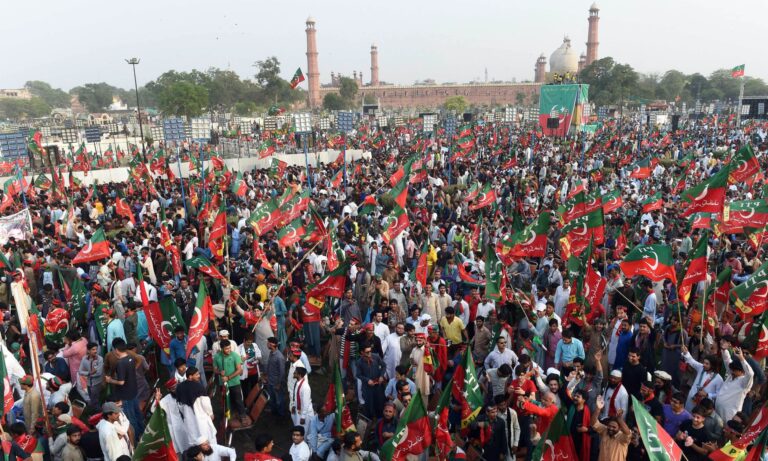
    By Granaz Assa A nation cannot move forward when its leaders are divided. Political stability is the backbone of every successful country, but when conflict, corruption, and power struggles become more important than public welfare, a nation begins to suffer. Unfortunately, Pakistan has faced a political crisis for many years. A political crisis is a situation in which a country’s political system becomes unstable, making it difficult for the government to run the country properly. It is mainly caused by conflicts between the government and the military, political disagreements, corruption, and weak leadership, which lead to instability, loss of public trust, and slow development in the country. Pakistan’s future depends on strong and fair leadership, but the ongoing political crisis is slowing the country down. Moreover, the people are facing hardships because of this. As a result, Pakistan is experiencing an economic slowdown, a poor international image, and low development. When leaders fight for power and control, it divides the country and creates confusion. Corruption also makes the situation worse because some leaders misuse public money for their own benefit instead of serving the citizens. If the government is weak, it cannot make good decisions or effectively help the people. A political crisis has many negative impacts on the country. It creates instability, weakens the economy, increases prices, and raises unemployment. Development projects such as schools, hospitals, and roads may be delayed. Public services can also be affected. As a result, the country’s overall progress becomes slow, and the daily lives of citizens become more difficult. In this way, a country cannot move forward. To solve the political crisis in Pakistan, some important steps are needed. First, corruption must be reduced, and leaders should work honestly for the people. Moreover, the country needs strong and fair leadership to make good decisions and guide the nation. Political parties should work peacefully and respect one another instead of engaging in conflicts. These steps can bring stability, improve the country’s economy, and build a better future for Pakistan. The political crisis is a serious problem that affects the country in many ways. The country needs to promote peace and unity among its people. Pakistan can overcome this crisis if all political parties and their leaders work together for the country instead of pursuing their personal interests. Free and fair elections, respect for the Constitution, and peaceful dialogue can help resolve political disagreements. The government must focus on the needs of the people. Citizens should also vote responsibly and support peace, unity, and democracy. By working together, the country can achieve political stability, economic growth, and a brighter future.

Leave a Reply

Your email address will not be published. Required fields are marked *