low magnesium don8217t

Low magnesium? Don’t ignore these warning signs

Health experts say magnesium is an essential mineral that helps keep the bones muscles nerves and heart healthy.

A lack of magnesium can lead to several physical and mental health problems, so it is important to recognize the early warning signs.

According to experts low magnesium levels may affect the nervous system causing anxiety nervousness irritability and mood changes.

If these symptoms continue for a long time magnesium deficiency could be one possible reason.

Magnesium deficiency can also affect emotions making some people more sensitive to stress or more likely to overreact to small problems.

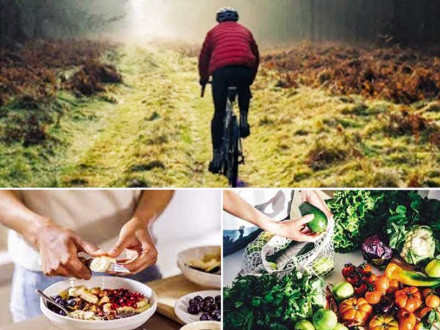
Experts recommend eating beans nuts leafy green vegetables fish and whole grains to help maintain healthy magnesium levels.

Feeling tired weak or low on energy even after getting enough sleep may also be a sign of low magnesium.  Doctors suggest getting a blood test to check vitamin and mineral levels if these symptoms continue.

Health experts also say that frequent nausea and vomiting can sometimes be linked to magnesium deficiency and should not be ignored.

Low magnesium may also cause muscle weakness leg pain cramps muscle tightness or spasms as the mineral is important for normal muscle function.  While magnesium rich foods can help experts advise speaking to a doctor before taking any magnesium supplements.

Similar Posts

  • How to empower women economically

    Women often face social pressure traditional restrictions and limited opportunities that can slow down their personal and professional growth.  Creating more opportunities for women and supporting their independence is important for building a stronger society. Economic independence can bring greater confidence stability and freedom to women’s lives. It allows them to use their skills make important decisions and contribute to the progress of their families and communities. When more women take part in economic activities the overall economy can also benefit.  Financially independent women are better able to make decisions about their education careers health and future. Education and skill development Education and professional skills are important steps toward economic independence.  Women should have access to education at every level along with training in areas such as technical skills digital skills and business management. Skill based training can help women find jobs start businesses or work independently according to their abilities. Support women entrepreneurs Women should have better opportunities to start and grow their own businesses.  Small loans and microfinance programs with reasonable conditions can help women invest in their business ideas. Government agencies and private organizations can also provide business training mentoring investment opportunities and networking programs. Such support can help women learn from other successful entrepreneurs and grow their businesses. Use digital platforms The internet has created new ways for women to earn money from home or work with people around the world. Women can learn skills such as freelancing e-commerce digital marketing graphic design and other online services. Online courses can help them improve their abilities while social media can be used to promote their products services and talents. Strong policies and legal protection Government policies also play an important role in supporting women at work.  Women should have equal opportunities fair pay and safe working environments. Strong laws against workplace harassment should be properly implemented. Maternity leave and other workplace facilities can also make it easier for women to continue their careers. Change social attitudes economic empowerment is difficult without changing social attitudes.  Families and communities should support women who want to study work start businesses or make financial decisions. Awareness campaigns and positive media messages can also help challenge outdated ideas and highlight the valuable role women play in society. Building a stronger society Women’s economic empowerment is not only about helping individual women. It can also benefit families communities and the wider economy. By improving education skills business opportunities digital access legal protection and social support women can create better opportunities for themselves while contributing to a stronger and more successful society.

  • Which plane seat is safest?

    Many people choose to travel by air because it is fast comfortable and one of the safest ways to get from one place to another.  However when an airplane accident happens many passengers wonder. Is there a seat that offers a better chance of survival? The good news is that air travel remains far safer than traveling by road or rail. Although plane crashes often receive worldwide attention because they are rare and serious the number of deaths from aviation accidents is much lower than from road accidents. According to global aviation safety data flying has one of the lowest accident and death rates of any form of transportation. Is there a safest seat? There is no seat that can guarantee survival in every accident.  Aviation experts say the outcome depends on many factors including the type of crash the speed of the aircraft and where the impact occurs. However studies of past accidents suggest that some seats may provide a slightly better chance of survival in certain situations. What research shows A review of airplane crashes over 35 years found that middle seats in the rear section of the aircraft had the lowest death rate, around 28%.  By comparison seats in the middle section of the plane had a higher death rate. Another study by Popular Mechanics which examined crashes between 1971 and 2005 found that passengers sitting in the back of the plane were up to 40% more likely to survive than those sitting closer to the front. Why the back may be safer Aviation experts explain that the front of the aircraft often absorbs the first impact during some types of crashes.  Because of this passengers seated in the rear may have a better chance of surviving in certain accidents. The back of the aircraft is also closer to the rear emergency exits which may help passengers leave the plane more quickly if an evacuation is needed. But every crash is different Experts also warn that there is no “perfect” seat. Some crashes affect the rear of the aircraft first while others damage the front or middle section. In accidents involving mountains the ocean or explosions survival may depend more on the nature of the crash than on where a passenger is sitting. For example if a plane crashes into a mountain or falls into the sea the chances of survival are often very low regardless of seat location. Emergency exit seats can help Passengers sitting near emergency exits may be able to leave the aircraft faster after a crash provided the exits remain usable.  Quick evacuation is often an important factor in survival. What Aviation Authorities Say The US Federal Aviation Administration (FAA) says no part of an airplane is officially considered safer than another. Survival depends on many factors, including the type of accident the force of the impact fire and how quickly passengers can evacuate. Research suggests that seats near the back of the aircraft especially the middle seats in the rear section may offer a slightly better chance of survival in some crashes. However no seat can guarantee safety. The most important thing passengers can do is wear their seat belt listen to the safety briefing and follow the cabin crew’s instructions.  These simple steps can make a big difference in an emergency.

  • |

    Pashtun identity in modern South Asia

    The Pashtuns represent one of the most populous indigenous groups across South and Central Asia, predominantly in Afghanistan and Pakistan. Their social backbone relies on interconnected lineages, extended families, clans, and tribal alliances rather than a centralized political authority. From major confederations like the Durrani and Ghilzai to influential communities such as the Yusufzai, Afridi, Mohmand, Khattak, Wazir, and Mahsud, Pashtun society is a rich tapestry of overlapping regional, religious, and civic loyalties. At the core of their culture is Pashtunwali, an ancient honor code governing daily life through principles of hospitality, courage, asylum, and restorative justice. Historically, community issues and disputes were negotiated collectively through jirgas, or assemblies of local elders, maintaining order through consensus. Empire Builders and Cultural Crossroads Beyond tribal structure, Pashtuns have repeatedly reshaped the political landscape of the Indian subcontinent and Central Asia. Sultanate Dynasties: The Lodi dynasty established its rule over the Delhi Sultanate, paving the way for intricate South Asian governance structures. Administrative Reforms: Imperial leader Sher Shah Suri founded the Sur Empire in North India, pioneering sweeping reforms in taxation, infrastructure development, and currency. Empire Founding: In the 18th century, Mirwais Hotak challenged Safavid Persian dominance, while Ahmad Shah Durrani established the Durrani Empire in 1747, laying the groundwork for modern Afghanistan. This history is far more than military conquest. Pashtun territories served as vital crossroads where Persian, Turkic, Indian, and Islamic traditions converged. Consequently, their heritage spans beyond warrior traditions. It thrives in rich oral poetry, musical compositions, complex embroidery, craftsmanship, and trade networks. The Borderlands and Modern Challenges The 19th century brought prolonged conflict with British imperial forces along the northwestern frontier. A pivotal turning point arrived with the demarcation of the Durand Line in 1893. By drawing an artificial boundary between Afghanistan and British India (now Pakistan), the British divided ancestral Pashtun communities, establishing a geopolitically sensitive frontier that continues to spark debate and shape regional politics today.   In recent weeks, administrative re-alignments and border disputes in provinces like Balochistan and Khyber Pakhtunkhwa have reignited local debate. Prominent political and tribal leaders have voiced strong resistance to state restructuring, asserting that top-down administrative decisions risk erasing historical identities. Through renewed calls for broad political dialogue rather than bureaucratic divisions, modern Pashtun communities continue to rely on unified assemblies to safeguard their cultural heritage, self-determination, and historical voice in a changing region.

  • Ecolinguistics and the Role of Media

    The role of media should not be confined to disseminating news and information but must also highlight public awareness regarding climate change. The media, in its reporting, is required to use appropriate terminology and diction to raise awareness, highlight the causes, and provide a way forward. The media, in its reporting, is expected to project the environment not as a resource to be used by humans but as a living environmental and ecological process that must not be disturbed by humans. For example, while writing such reports, if the media says that natural resources are diminishing or facing extinction, it must similarly highlight that the environmental system is being affected or impacted negatively . Recent studies have also reinforced this perspective. Penz and Fill (2022) observe that ecolinguistics promotes and fosters environmental awareness while supporting and strengthening the connection between humans and nature for sustainable development. In this context, Alexander and Stibbe (2014) argue that ecolinguistics plays a key role in highlighting the relationship between humans and the environment, as well as its impact on addressing environmental challenges and shaping a sustainable future. It is pertinent to highlight that while reporting any incident about environmental degradation or natural disasters, the media, apart from reporting, is also expected to provide solutions and a way forward to help face such incidents in the future. In reports about floods, wildfires, and rising temperatures, the media is also required to provide guidance and suggestions on how to combat or lessen the impacts of such environmental changes. The reporting must not be based only on presenting news and subsequently creating fear or chaos but must also give a sense of hope among people that through various techniques and the use of technology, such natural disasters can be managed effectively. The media must not consider floods, droughts, fires, or other environmental disasters merely as natural disasters but should link such impacts with environmental changes, industrial pollution, deforestation, human intervention with nature, and so on. Fairclough (1995), in his study, states that media should cover and highlight the areas that , on the other hand, are ignored and not given consideration by the masses. Therefore, the media is expected to sensitize the masses regarding such disasters and create a way forward to combat or tackle such environmental change disasters and their impacts on people and society as a whole. On the other hand, equally important is environmental equity or justice in society. It has been widely observed and noted that in floods, droughts, disasters, and environmental changes, the major impacts are faced by the underprivileged in society. It is the role and responsibility of the media to highlight and become a voice for such voiceless people, representing them and creating a sense of ownership among the poor and marginalized sections of society. The media is also required to highlight and create awareness among people about science and technology related to the environment and provide them with knowledge that through the use of such technology, they can tackle the horrors of disasters. The study of ecolinguistics reminds the media that humans are, in no way, different from society and can never be detached from society and vice versa. Hence, media reports are also expected to discuss humans, rivers, oceans, flora, fauna, biodiversity, and the ecosystem as a whole to give them significance and bring them into the limelight of the coverage. Media reporting is also required to use environment related terminology and diction, such as environmental war, ecological emergency, and other relevant terms, in its reports to highlight environment related information. Recent studies highlight that similes and metaphors have a significant impact on human thinking. Hence, the media is encouraged to resort to this method to mould public opinion towards environmental conservation and protection. Moreover, media personnel are required to engage in investigative journalism and cover incidents and events from different angles , examining their pros and cons deeply. If there are frequent flash floods in any area, the media is expected to discuss the causes and the role of concerned authorities in handling the incidents . Media houses, along with environmental protection organizations and other stakeholders, are required to impart knowledge and training to journalists. There is also a significant role for environmental funding organizations in sensitizing media personnel. In training sessions, they are expected to invite environmental experts, scientists, and scholars who have made significant contributions in this area. Media reports and the diction used therein have great significance. They must highlight a green and stable future through sustainable development initiatives and become partners in facing the challenges and effects of environmental degradation. They must give hope to people that the media stands with them and will continue contributing its responsible and positive role. This is the major objective of ecolinguistics. Societies such as ours widely need the use of ecolinguistics in the media.

  • | | |

    Parliament should focus on Pakistan’s real c…

    Pakistan is an Islamic republic whose Constitution defines not only the structure of the state but also its ideological foundation. It explicitly states that the country should create an environment in which Muslims can live their lives in accordance with the teachings of the Quran and Sunnah. Against this constitutional backdrop, it is surprising that the issue of women wearing the abaya—or an Islamic financial institution including the abaya in its employee dress code—has become a matter of concern for a parliamentary committee. This naturally raises an important question: Who is setting the country’s priorities, and are these truly the issues that deserve Parliament’s attention? Pakistan continues to face pressing challenges, including rising inflation, unemployment, an unequal tax system, a struggling economy, and serious shortcomings in education and healthcare. These are the issues that directly affect the daily lives of millions of citizens. If a parliamentary standing committee, whose primary responsibility is financial oversight, chooses to focus instead on the dress code of Islamic banks, it is reasonable for the public to question whether legislative priorities are aligned with the country’s most urgent needs. The debate also raises questions about consistency. Critics have objected to the abaya as part of an institutional dress code, yet there is little discussion about uniforms in many government departments that follow Western styles of dress. Women serving in the police, the Federal Investigation Agency (FIA), and several other public institutions are commonly required to wear trousers and shirts as part of their official uniforms. If clothing is to become a matter of parliamentary debate, then similar standards should apply across the board. Selective criticism can create the perception of bias. Supporters of Islamic dress codes argue that the issue extends beyond clothing itself and reflects broader concerns about cultural and religious identity. From this perspective, the concern is not simply about the abaya but about a mindset that views visible expressions of religious identity as obstacles to modernization. They question whether institutions with an Islamic identity should be expected to abandon their traditions in the name of progress. This leads to a broader debate: Who defines what it means to be modern? Does modernization necessarily require reducing the public expression of religious values or adopting Western cultural norms? For institutions operating within Pakistan’s Islamic banking framework, supporters argue that their identity is rooted not only in financial principles but also in ethical and religious values. If such institutions adopt internal policies that comply with Pakistani law and reflect constitutional and religious principles, they contend that those choices should be respected. The discussion also draws comparisons with international examples. In countries such as France, restrictions on religious clothing have generated significant criticism from human rights advocates. Supporters of religious freedom argue that Pakistan, which was established with a distinct religious and cultural identity, should carefully consider whether adopting similar approaches is consistent with its own constitutional framework and historical foundations. Ultimately, the central argument is that Parliament should devote its time and resources to addressing issues that directly affect governance, economic stability, and public welfare. Matters of personal attire, religious belief, and institutional identity, many argue, should not become subjects of unnecessary official intervention when the country faces far more pressing social and economic challenges.

  • Why you crave fried foods

    Have you ever finished a full meal but still wanted to eat fries samosas fried chicken, or pakoras? Many people think it is simply a lack of self control but scientists say there is much more to it. Research suggests that our brain taste buds and eating habits all work together to make fried foods hard to resist. When food is fried its texture smell and flavor change.  According to research from the University of São Paulo in Brazil, frying removes water from food making the outside crispy and crunchy. At the same time proteins and starches change through a process called the Maillard reaction which gives fried foods their golden color rich aroma and delicious taste. Scientists say the brain also plays an important role.  A study published in Nature Reviews Neuroscience found that eating favorite foods activates the brain’s dopamine system. Dopamine is not just linked to pleasure it also helps the brain remember enjoyable experiences and encourages us to repeat them. This is why the smell or sight of French fries samosas or fried chicken can make you want to eat them even if you are not hungry. Experts also say that craving fried foods does not usually mean your body is missing a specific nutrient. These cravings are more often influenced by habits tempting smells emotions memories and the foods around you. Does this mean fried food is bad for your health? •Not necessarily Eating fried foods occasionally is generally not a problem.  However making them a regular part of your diet may increase health risks. In a large study by researchers at the Harvard T.H. Chan School of Public Health more than 110,000 adults were followed for over 20 years. People who ate fried foods seven or more times a week had a higher risk of developing type 2 diabetes and a slightly higher risk of heart disease than those who ate fried foods less than once a week. Researchers believe that weight gain high blood pressure, and unhealthy cholesterol levels may partly explain this increased risk. Experts do not recommend giving up fried foods completely. Instead they suggest eating balanced meals avoiding skipping meals and enjoying fried foods only in moderation. This approach may help reduce cravings while supporting better overall health. Scientists say the attraction of fried food comes from a powerful combination of crispy texture rich flavor tempting smell and the brain’s memory of enjoyable eating experiences. That’s why even after a full meal one hot and crispy bite can still be hard to resist.

Leave a Reply

Your email address will not be published. Required fields are marked *