pakistan rejects indias
| |

Pakistan rejects India’s statements at UN securi…


ISLAMABAD: Pakistan has strongly rejected India’s remarks at the United Nations Security Council (UNSC) concerning the Indus Waters Treaty (IWT) and allegations of terrorism, describing them as an attempt to misrepresent facts and divert attention from issues raised by Pakistan.

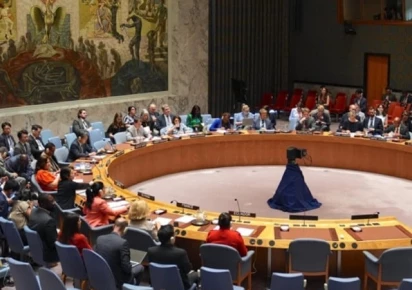
The response came after India’s Permanent Representative to the United Nations, Ambassador Harish Parvathaneni, accused Pakistan of supporting cross-border terrorism and suggested that the issue had affected bilateral cooperation under the Indus Waters Treaty. Pakistan dismissed these allegations during the UNSC’s High-Level Open Debate on “Natural Resource Governance: The Foundation of Peace, Security and Prosperity.”

Speaking in a right of reply, Pakistan’s First Secretary to the UN, Ansar Shah, said India’s statement was misleading and represented a futile effort to distort the facts surrounding the treaty and regional security issues. He maintained that the Indus Waters Treaty remains legally valid and binding, rejecting India’s claim that the agreement could be placed in abeyance through unilateral action.

Shah stated that the treaty contains no provision allowing either party to suspend or set it aside on its own. He referred to the Court of Arbitration’s August 2025 award, which, according to Pakistan, reaffirmed that the treaty continues to remain fully in force along with its dispute resolution mechanisms. He argued that India’s unilateral approach violated the terms of the agreement as well as established principles of international law.

Pakistan also accused India of using shared water resources as a political tool. Shah said any attempt to weaponise water for political pressure or to restrict water access would amount to a serious breach of international legal obligations and norms. He added that such actions could undermine regional stability and pose risks to international peace and security, making the issue relevant to discussions at the Security Council.

Responding to India’s allegations regarding terrorism, Shah rejected the accusations and instead claimed that India was attempting to conceal its own involvement in activities that Pakistan says have contributed to terrorism within its borders. He alleged that militant groups such as the Tehreek-e-Taliban Pakistan (TTP), the Balochistan Liberation Army (BLA), and the Majeed Brigade had been responsible for attacks that claimed the lives of thousands of Pakistani civilians and security personnel, including women and children. Pakistan reiterated its long-standing allegation that India supports and finances these groups, a claim India has consistently denied.

Shah also referred to reports of alleged extraterritorial operations involving India, saying such incidents had raised international concerns. He further argued that India could not portray itself solely as a victim of terrorism while ignoring accusations directed against it.

Addressing the situation in Indian Illegally Occupied Jammu and Kashmir, Shah said the people of the region continue to be denied their right to self-determination. He maintained that the territory remains internationally recognised as disputed and asserted that no unilateral measures could alter its legal or historical status. He also urged India to fulfil its obligations under the UN Charter and implement relevant UN Security Council resolutions.

Earlier in the debate, Pakistan’s Permanent Representative to the United Nations, Ambassador Asim Iftikhar, reaffirmed that the Indus Waters Treaty remains effective and legally binding. He called on the UN Security Council to remain vigilant against the misuse or weaponisation of natural resources and encouraged greater use of preventive diplomacy, peaceful dispute resolution, monitoring mechanisms, and other international measures to prevent disputes over shared resources from escalating into broader conflicts.

Similar Posts

  • | |

    Jon Bon Jovi cuts concert short over sudden illnes…

    Jon Bon Jovi was forced to end his concert at New York City’s Madison Square Garden earlier than planned after experiencing unexpected vocal problems during the performance. The legendary rock singer apologized to fans before leaving the stage, saying, “I’m gonna have to call it for the night,” bringing an emotional end to what had started as an energetic evening. The incident immediately sparked concern among concertgoers, many of whom praised the singer for putting his health first. (people.com⁠) Bon Jovi and his band had been performing a set packed with their greatest hits when the frontman began showing signs of vocal strain. According to fan videos shared online, the 64-year-old singer paused several times while performing and appeared to be struggling with his voice. After completing a few more songs, he addressed the audience directly and admitted that he could not continue. “I’m gonna have to call it for the night,” he told the crowd. “You deserve the best, and I can’t give it to you tonight.” The audience responded with loud applause and cheers, showing support for the rock icon despite the shortened performance. (people.com⁠) The sudden interruption comes after Bon Jovi has spent the past few years recovering from a serious vocal cord issue that required reconstructive surgery in 2022. The operation, known as vocal fold medialization, was performed to help restore his singing voice after years of strain. Since then, the musician has worked extensively with vocal coaches and medical specialists while gradually returning to live performances. (people.com⁠) Despite the setback, Bon Jovi has repeatedly expressed his determination to continue performing as long as he can meet his own high standards. Earlier this year, he explained that he would only tour regularly again if he felt confident he could deliver the quality performance fans expect. His decision to stop the concert rather than push through vocal discomfort reflected that commitment to protecting both his voice and the audience’s experience. (people.com⁠) Fans quickly took to social media to send messages of support, with many encouraging the singer to prioritize his recovery over finishing the show. Others praised his honesty, noting that ending the performance was a responsible decision rather than risking further damage to his voice. The overwhelming reaction highlighted the strong bond Bon Jovi has built with his audience over more than four decades in music. (people.com⁠) While no official update has suggested a long-term health concern, the incident serves as a reminder of the physical demands that live performances place on artists, particularly those with a history of vocal injuries. For now, fans remain hopeful that Jon Bon Jovi’s latest setback is only temporary and that he will soon return to the stage with the powerful voice that has defined one of rock’s most enduring careers. (people.com⁠)

  • | |

    Nolan’s Odyssey explores the cost of flawed choices

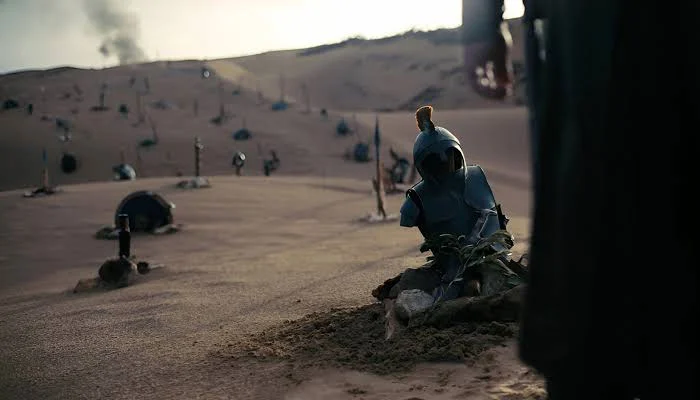
    Christopher Nolan’s The Odyssey explores a character who is far from a conventional hero. Odysseus is brave, intelligent and determined. He is also deeply flawed. That complexity appears to be at the centre of Nolan’s interest in the ancient Greek epic. The nearly 3,000-year-old story follows Odysseus as he attempts to return to Ithaca after the Trojan War. His journey is filled with violence, loss, temptation and encounters with powerful gods and mythical creatures. Yet the film is not simply about a warrior trying to find his way home. It is also about the consequences of his decisions. Odysseus repeatedly makes choices that produce consequences he struggles to control. His actions often begin with understandable motives. Revenge, anger, pride and a desire to protect his men push him into increasingly dangerous situations. His treatment of the Trojans is one example. Odysseus considers himself a man who respects the rules of combat. However, the Trojan War forces him into tactics that contradict his personal principles. The wooden horse becomes the most striking example of this conflict. His deception helps the Greeks defeat Troy, but it also establishes a chain of events that follows him long after the war ends. His encounter with the Cyclops Polyphemus further exposes his weaknesses. Odysseus and his crew manage to escape the Cyclops’ cave. But instead of leaving quietly, Odysseus attacks again. His decision is driven by anger and revenge. The consequences are devastating. Polyphemus calls upon his father, Poseidon, to punish Odysseus. The resulting curse turns the journey home into an extended ordeal. Odysseus continues trying to save his men. However, his efforts repeatedly end in tragedy. One decision leads to another, and the consequences gradually become impossible to contain. His crew members begin to lose faith in their commander. The man determined to bring them home becomes the leader whose decisions ultimately contribute to their deaths. This moral conflict is familiar territory for Nolan. The director has repeatedly built stories around protagonists whose choices carry enormous consequences. Bruce Wayne, for example, attempts to protect Gotham by allowing a dangerous lie surrounding Harvey Dent to survive. The consequences eventually force him to confront the price of that decision. In Oppenheimer, the central character develops the atomic bomb in an attempt to help defeat Nazi Germany. Yet his success leaves him haunted by the destructive power he helped unleash. Dunkirk presents another interpretation of home. For the soldiers trapped on the beaches of France, home represents survival, safety and the possibility of returning with their dignity intact. For Oppenheimer, however, home becomes something more complicated. It represents the peace of mind he can no longer recover after witnessing the consequences of his work. For Odysseus, home is deeply personal. Ithaca represents his family, his kingdom and the identity he lost during two decades away. Returning home is therefore more than reaching a physical destination. His journey changes him. He leaves as a king and eventually returns disguised as a beggar. Along the way, he encounters monsters, hostile forces and divine punishment. He also watches his companions disappear one by one. By the time Odysseus reaches the end of his journey, the question is no longer simply whether he can return home. The bigger question is whether a man who has experienced so much violence can ever truly return as the person he once was. That question sits comfortably within Nolan’s broader storytelling style. His characters often achieve their goals but pay an enormous personal price. Their victories rarely come without consequences. The Odyssey brings that recurring theme to one of its most ancient and powerful forms. Odysseus survives the journey, but survival does not erase what happened along the way. His homecoming becomes a reckoning with the violence, losses and choices that shaped him. Nolan’s interpretation therefore turns the epic into more than an adventure story. It becomes a meditation on guilt, responsibility, identity and the lasting cost of extraordinary choices. At its heart, The Odyssey asks what happens when a man spends years fighting to return home, only to discover that the journey has changed the meaning of home itself.

  • |

    North Korean hackers develop AI tools for cyberattacks

    SEOUL: A North Korean-linked hacking group has reportedly expanded its use of artificial intelligence to strengthen cyberattacks, automate operations and analyse stolen data. The group, identified as Kimsuky, has developed and collected a range of AI-related tools that could help its operators conduct attacks more efficiently, according to a South Korean cybersecurity company. The company said it discovered infrastructure linked to Kimsuky containing several programs designed to run and manage artificial intelligence models locally. These included Ollama, GPT4All and Msty. The hackers also appeared to be using retrieval-augmented generation technology. The system can help AI models search and process large collections of documents. Researchers said the use of locally operated AI models could allow the group to analyse sensitive information without sending data to external AI services. This could give hackers greater control over stolen material and reduce their reliance on third-party platforms. The investigation also uncovered AI agent development frameworks, speech-to-text software and an AI-assisted coding tool called Cursor. According to the cybersecurity firm, the findings indicate that Kimsuky may be moving beyond the simple use of generative AI for creating phishing messages. The group could now be seeking to integrate existing AI models into different stages of its cyber operations. These may include malware development, stolen-data analysis and attack automation. Researchers also identified documents related to finance and cryptocurrency on the infrastructure. Some of the files appeared to have been generated using artificial intelligence. The documents were designed to look like legitimate investment reports and other professional workplace material. Such files could potentially be used as decoys or to make malicious campaigns appear more credible. The findings have not been independently verified. However, cybersecurity researchers and government agencies have repeatedly linked North Korean state-backed groups to international cyber operations. North Korean cyber units have been accused of conducting espionage campaigns, stealing money and targeting cryptocurrency-related assets. Authorities in the United States and South Korea have previously warned about the activities of such groups. Kimsuky has long been associated with cyber-espionage operations targeting governments, organisations and individuals. The group has also been accused of gathering intelligence to support North Korea’s strategic interests. The latest findings point to a growing role for artificial intelligence in cyber operations. Security researchers have warned that AI tools can make phishing campaigns more convincing and help attackers process information and develop malicious software more quickly.

  • |

    Nick Jonas reveals daughter Malti’s unusual ‘Camp Rock’ order

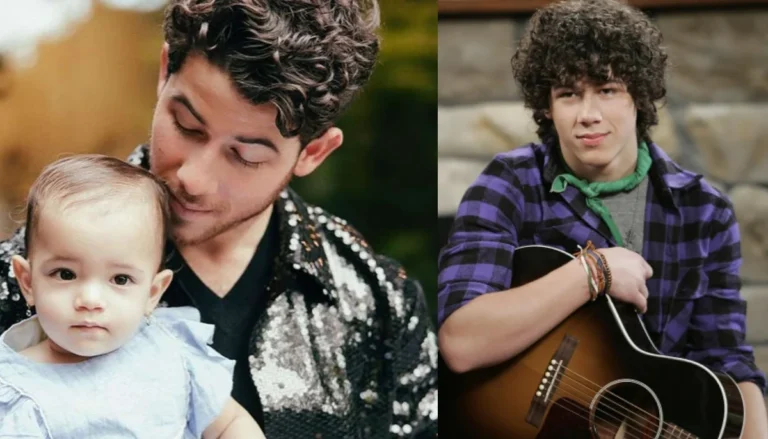
    Nick Jonas has shared a heartwarming update about his daughter Malti’s introduction to the “Camp Rock” franchise. He opened up about the moment during the premiere of the highly anticipated “Camp Rock 3.” Speaking with E! News on Monday, August 10, the 33-year-old revealed that he and wife Priyanka Chopra decided to show their four-year-old the third film first. Nick joked that this unconventional approach actually works in her favour. He explained that Malti has not seen the first two instalments yet, but called that part of the charm. According to him, she’ll essentially be discovering the franchise backwards. Nick predicted that Malti will likely move on to “Camp Rock 2: The Final Jam” next. He suggested this reverse-order approach might actually become how many newcomers discover the franchise going forward. He added that plenty of families will probably start with the newest film before circling back to the originals. Nick said Malti loved it, and he expects young viewers worldwide will feel the same way. “Camp Rock 3” marks a major reunion for the Jonas Brothers, with Nick, Joe and Kevin returning as Connect 3 members Nate, Shane and Jason Gray. Demi Lovato is also making her comeback as Mitchie Torres, eight years after the original film helped launch her Disney career. Maria Canals-Barrera returns as well, reprising her role as Mitchie’s mother and camp director. Lovato has described her return as deeply nostalgic, saying the character holds a special place in her heart. The film’s plot follows Connect 3 after their opening act unexpectedly drops out ahead of a reunion tour. That forces the band to return to Camp Rock in search of fresh new talent. The new cast is led by Liamani Segura and Malachi Barton, joined by Lumi Pollack, Sherry Cola and Hudson Stone. Together, they bring a fresh generation of characters into the long-running franchise. “Camp Rock 3” is set to premiere on Disney Channel on August 13. It will become available for streaming on Disney+ the following day, giving fans multiple ways to catch the long-awaited sequel.

  • | |

    Rawal dam spillway gates to open saturday as water…

    The spillway gates of Rawal Dam will be opened on Saturday at 6:00 a.m. after the reservoir’s water level reached 1,748.30 feet, prompting authorities to release excess water as a precautionary measure. According to the National Disaster Management Authority (NDMA), the controlled release of water is expected to increase the flow in Korang Nullah. Officials have urged residents living along the nullah to remain alert and take necessary precautions to ensure their safety. The NDMA advised the public to avoid crossing Korang Nullah or using temporary bridges if the water level rises following the opening of the spillway gates. Authorities warned that stronger water currents could pose serious risks to commuters and nearby communities. Local administration and emergency response teams have been placed on alert to monitor the situation and respond promptly to any emergencies. Residents in low-lying areas have been encouraged to stay informed through official weather and disaster management updates. The opening of spillway gates is a routine safety measure carried out to regulate reservoir levels and reduce pressure on the dam during periods of increased rainfall or rising inflows. Timely water releases help maintain the structural safety of the dam while minimizing the risk of flooding downstream. Authorities have emphasized the importance of following official advisories and avoiding unnecessary travel near Korang Nullah until water levels stabilize. Motorists and pedestrians are advised to exercise caution, particularly in areas where temporary crossings may become unsafe due to the increased flow. The NDMA continues to monitor water levels and weather conditions closely in coordination with local authorities. Any further changes in the situation will be communicated through official channels. Residents are encouraged to remain vigilant, cooperate with emergency officials, and report any signs of flooding or hazardous conditions. By following safety guidelines and avoiding high-risk areas, the public can help reduce the risk of accidents during the controlled release of water from Rawal Dam.

  • | |

    Hilaria Baldwin takes hilarious dig at troll after…

    Hilaria Baldwin has found a funny way to respond to an online troll after initially misunderstanding a comment that was meant as criticism. The businesswoman and wife of actor Alec Baldwin addressed the exchange on Instagram on Aug. 8, turning an awkward moment into a lighthearted joke about her dyslexia and ADHD. Hilaria thought the comment was a compliment The social media comment described Baldwin as “vacuous,” a word meaning empty, lacking ideas or showing little intelligence. However, Baldwin initially read the word differently and thought the commenter had called her “vivacious,” which means lively or energetic. (People.com⁠) In an Instagram video, Baldwin explained that it took her some time to read and understand the unfamiliar word. She then shared the definition with her followers, making the situation even more amusing. Baldwin joked that she had to search for the meaning before she could even become offended by the comment. Her caption added another playful twist, saying that her dyslexia and ADHD had read the word as “vivacious” anyway. (People.com⁠) Instead of responding with anger, Baldwin appeared to embrace the misunderstanding and use humor to turn the negative interaction into something lighter. Baldwin speaks openly about dyslexia The incident also reflects Baldwin’s previous discussions about being neurodivergent. She has spoken publicly about having ADHD and dyslexia, including in her 2025 book Manual Not Included. Baldwin has explained that these conditions can affect different parts of her daily life, including reading, listening, focus, memory and confidence. She has also described how she spent years feeling that she had to work harder in school and struggled with the idea that she was not “smart in the right way.” (People.com⁠) Her latest Instagram post shows how those challenges can sometimes lead to unexpected and humorous moments. Turning internet criticism into humor Social media criticism is nothing new for public figures, and Baldwin has frequently faced comments about her public life. This time, however, the situation took an unexpected turn because she initially interpreted an insult as praise. By laughing about the misunderstanding, Baldwin avoided giving the comment the reaction its writer may have expected. Her response also gave followers a glimpse into how her dyslexia can affect everyday communication. What began as an attempt to criticize Baldwin ultimately became a humorous story she could share with her audience. For the businesswoman, the mix-up became a reminder that sometimes the easiest response to an internet troll is simply to laugh it off.

Leave a Reply

Your email address will not be published. Required fields are marked *