google slapped 1bn
| |

Google slapped with $1bn EU fine, holds talks to dodge further penalties

The European Union has fined Google about €890 million, or $1 billion. The fine punishes Google for breaking EU rules meant to control the power of big tech companies. But regulators also hinted that no more fines are coming soon, because Google is making good progress toward following the rules.

The fine has two parts. The first part, €460 million, is for Google favoring its own products. When people search for things like shopping, hotels, flights, or sports scores, Google often showed its own results first instead of treating competitors fairly. The second part, €430 million, is about the Google Play app store. Google had stopped app makers from telling users about cheaper deals outside the app store.

This is the first time Google has been fined under this specific EU law, called the Digital Markets Act. But counting older cases, Google has now paid six fines for unfair business practices. In total, the company has paid more than €10 billion in EU fines over about twenty years.

EU officials said they are just enforcing the law. “Our job is to make sure the rules are followed,” said Teresa Ribera, the EU’s top antitrust official. Another official, Henna Virkkunen, said the goal is fair competition. Google now has 60 days to fix its practices.

Google is not happy. A company spokesperson said the changes will hurt features people like, such as quick pricing for hotels and flights. He said the ruling is not really about fair competition, it is making Google’s products worse to please a small number of complainers.

Even so, there is good news for Google too. The EU said Google has already started testing new ways of showing search results more fairly. It called this real progress. The EU may also apply the same rules to Google’s AI tools, like AI Overviews. Talks about this are still ongoing. Google’s changes to its app store rules were also seen as a step in the right direction.

This fight is happening while tensions rise between the US and EU. The Trump administration says Europe is unfairly targeting American companies and has threatened tariffs in response. Some US lawmakers agree.

Google’s fine comes after the EU already fined Apple and Meta last year under the same law. It shows the EU is serious about controlling big tech, even as pressure grows from the US side.

Similar Posts

  • | |

    Iran shifts to offensive posture as Hormuz standof…

    Iran has moved from a defensive to what a senior Iranian official called a fully offensive strategy, citing a deadlock in efforts to reach a lasting end to its war with the United States, according to a person familiar with the matter who spoke to a foreign news agency on Monday. Progress toward peace talks and the resumption of oil tanker traffic through the Strait of Hormuz has stalled, with no indication that either side is moving closer to ending the conflict the United States and Israel launched on February 28. The official said Iranian entities must prepare to escalate tensions in the strait and across the wider region, adding that Tehran stands ready to make difficult decisions and would carry out a precise military strike to break the US naval blockade if diplomacy collapses. Washington did not immediately respond to those remarks, though President Donald Trump told Fox News earlier in the day that Iran should raise the white flag of surrender. Throughout the conflict, Trump has swung between threats of further escalation and claims that a peace deal sits within reach. Iran’s Islamic Revolutionary Guard Corps pushed back hard on one such claim Monday, rejecting as false Trump’s assertion that Washington maintains backchannel contact with IRGC officials on matters related to the war. Spokesman Hossein Mohibbi told Iran’s Tasnim news agency that no talks are taking place between IRGC officials and American counterparts, describing Trump’s claims as fantasies stemming from desperation over battlefield setbacks. Mohibbi said diplomatic matters fall to other Iranian institutions and remain outside the Guard’s purview, adding that current information from the Foreign Ministry confirms no talks are underway even at that level. He argued Trump’s statements amount to an attempt to influence global energy prices. Trump had told reporters earlier Monday that his administration keeps a backchannel with the IRGC and speaks directly with its officials inside Iran. Trump also issued a separate warning aimed at Oman, saying Washington would respond with force if the sultanate interferes with US Iran negotiations. Asked about Oman’s role in talks touching on Iran and the Strait of Hormuz, Trump told Fox News the United States would bomb Oman if it gets in the way. The comment came after Iran said Saturday that it had reached agreement with Oman on a shipping route map for the strait following weeks of technical talks. Trump separately confirmed the administration’s direct channel with the IRGC and repeated that Tehran should surrender, calling Iranian officials skilled negotiators who are nonetheless losing ground. Fighting also intensified elsewhere in the region. Yemen’s Houthi movement claimed Monday that it struck several Saudi naval vessels along with a weapons depot in a broad missile and drone assault. Spokesman Yahya Saree said a Saudi amphibious transport ship and accompanying vessels were hit in a precise aerial attack involving multiple ballistic missiles, claiming several ships sank while others caught fire. He said Houthi forces also used multiple drones to strike a Saudi weapons depot at the Sahn al Jin camp in Yemen’s Marib province. Saudi authorities had not confirmed the claims as of publication. Separately, Yemen’s army said Monday it detected two hypersonic ballistic missiles fired by Houthi forces toward the city of Mocha and the Red Sea, launched from a former air defense brigade headquarters east of Taiz. No information on casualties or damage was immediately available, and the Houthis did not comment. The launch followed a claim from Yemen’s National Resistance Forces that Houthi fighters had targeted Mocha with seven drones a day earlier, adding to fears of renewed full scale conflict in a country that had seen relative calm since April 2022 following nearly twelve years of civil war. On the Iranian side, IRGC Deputy Commander in Chief Major General Mostafa Izadi said Iranian forces shot down more than 200 enemy aircraft during the recent war with the United States and Israel, according to Iran’s Fars news agency. Izadi said the conflict left the Islamic system undamaged and demonstrated Iran’s strength to the world. Parliament speaker Mohammad Bagher Ghalibaf went further, declaring both a military and political victory over Washington and Israel on the day a 60 day ceasefire under the Islamabad memorandum was set to expire. Ghalibaf said the US and Israel failed to achieve any of nine publicly stated objectives in the war, calling it their biggest failure. Trump, meanwhile, reiterated on his Truth Social platform that Iran cannot possess a nuclear weapon in any form, describing this as Washington’s permanent top priority. Iran also pressed a separate grievance Monday, with Foreign Ministry spokesman Esmaeil Baghaei blaming pollution in Gulf waters on decades of US military presence and operations in the region. Baghaei said the environmental damage stems from American military activity over the past five decades and called for Washington to be held accountable, estimating losses in the trillions of dollars. His comments followed Iran’s request last week for compensation after an oil slick reached the island of Qeshm, which officials said has since been cleaned up. Separately, salvage efforts continued for a grounded tanker leaking Russian crude off Oman’s coast, with officials citing monsoon weather and the shallow, rocky seabed as major obstacles. Mohammed bin Abdullah al Rawahi of Oman’s transport ministry said the conditions expose salvage vessels to operational and navigational risks, compounded by flooding damage to one side of the tanker. Diplomatic efforts on Gaza also advanced Monday, with Israeli Prime Minister Benjamin Netanyahu due to meet Trump envoy Jared Kushner a day after a rare meeting between Kushner and Hamas officials in Cairo. A diplomatic source said Hamas leader Khalil Al Hayya attended some sessions with Kushner and Gaza peace envoy Nickolay Mladenov. Trump said in late July that a deal had been reached on the complete disarmament of Hamas and other armed groups, though Netanyahu, facing an October re election vote, has publicly rejected the plan. Trump separately welcomed the signing of the Makkah Joint Defence Agreement by Turkiye, Pakistan and Saudi Arabia, saying on Truth

  • | | |

    US General warns more warships are needed to defen…

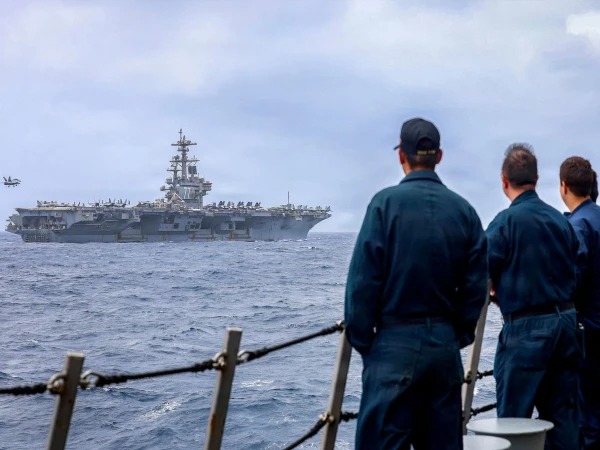
    A senior US military commander has reportedly warned the Pentagon that without additional naval resources, the United States may be forced to prioritize its own national defense over the defense of Israel. The reported warning underscores the growing strain on American military capabilities amid the ongoing conflict involving Iran. According to a report by The Washington Post, General Alexus Grynkewich, the top US military commander in Europe, informed Pentagon officials this week that the number of US Navy destroyers currently available is insufficient to continue defending Israel against ballistic missile threats while maintaining broader US security commitments. The report states that General Grynkewich submitted a written assessment to senior Pentagon leaders, warning that unless another guided-missile destroyer is assigned to his command, he may have no choice but to give priority to defending the United States rather than supporting Israel’s missile defense. US defense officials quoted in the report said the message reflects a long-standing military practice in which commanders notify the Pentagon when operational demands begin to exceed available resources. Such assessments are intended to help civilian and military leaders make decisions about force allocation and strategic priorities. The reported warning comes as the conflict involving Iran has placed increasing pressure on US military assets over the past several months. Continuous naval operations, missile defense missions, and regional security responsibilities have stretched the availability of key warships and other defense resources. US Navy destroyers stationed in the eastern Mediterranean have played a significant role in supporting Israel’s defense by helping intercept ballistic missiles and other aerial threats. Equipped with advanced radar systems and missile defense capabilities, these vessels have also been used to counter attacks launched by Iran-backed Houthi forces operating from Yemen. The report noted that US European Command is responsible for coordinating military operations across Europe and the Mediterranean while also maintaining readiness to respond to potential security challenges involving NATO allies. Balancing these commitments with operations in the Middle East has become increasingly difficult as demand for naval assets continues to grow. Despite plans to expand the US naval presence in Europe with an additional destroyer later this year, officials reportedly remain concerned about maintenance requirements and operational fatigue affecting the existing fleet. The report also said additional US naval forces, including aircraft carriers and multiple destroyers, remain deployed in the Arabian Sea and the Red Sea to support regional operations and safeguard commercial shipping routes. The reported warning highlights the strategic challenges facing US defense planners as they seek to balance commitments to allies with broader national security priorities amid rising tensions in the Middle East

  • | |

    Rahat Fateh Ali Khan’s qawali at Nusrat’s shri…

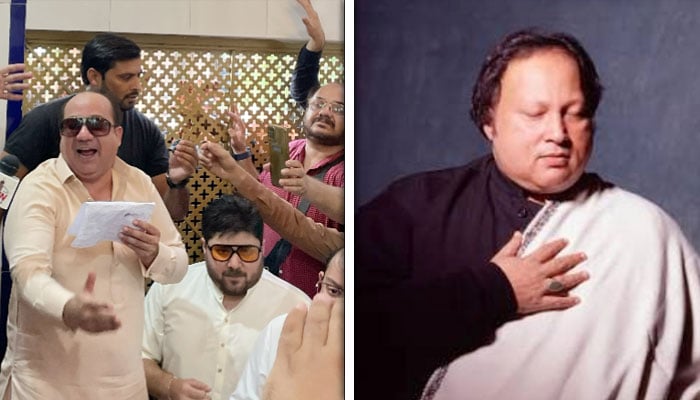
    Renowned Pakistani qawwal Rahat Fateh Ali Khan has come under criticism on social media following a Qawwali performance held at the mausoleum of legendary singer Nusrat Fateh Ali Khan on his death anniversary. Three decades after Nusrat Fateh Ali Khan’s death, his powerful voice and musical legacy continue to resonate with fans around the world. To commemorate the occasion, Rahat Fateh Ali Khan visited the late qawwal’s mausoleum along with his son, Shah Zaman Ali Khan. The father-son duo performed Kalam and Qawwali at the shrine in the presence of a large gathering of fans and visitors. During the performance, currency notes were also showered as offerings, a practice that became a prominent feature of videos shared online. Footage of the gathering quickly spread across social media, triggering mixed reactions from users. While some viewed the performance as a tribute to Nusrat Fateh Ali Khan’s enduring musical legacy, others questioned the manner in which the Qawwali was conducted at the shrine. Rahat Fateh Ali Khan and his son’s performance has since sparked a heated online debate, with social media users expressing differing views over the appropriateness of the event and the customs observed during the tribute.

  • |

    Pakistan secures US $629.5 million in agreements following landmark Pakistan-China Pharmaceutical B2B Conference

    Syed Mustafa Kamal, Federal Minister for National Health Services, Regulations and Coordination has announced a major breakthrough for Pakistan’s pharmaceutical sector following the successful Pakistan-China Pharmaceutical Business-to-Business (B2B) Conference held in Islamabad on 17–18 July. Addressing a press conference, the Minister said the conference marks a significant milestone in the government’s efforts to transform Pakistan’s pharmaceutical industry into a globally competitive sector, attract foreign investment, strengthen local manufacturing, and reduce dependence on imported pharmaceutical products. “The purpose of sharing this success is to present a positive image of Pakistan to our people and the world. While challenges exist, it is equally important to highlight our achievements that restore confidence in Pakistan’s economy and its investment potential,” the Minister said. The two-day conference brought together 240 Chinese delegates representing 140 leading Chinese pharmaceutical companies and 430 Pakistani delegates from 210 local companies, making it one of the largest Pakistan-China engagements ever held exclusively for the pharmaceutical sector. To maximize business outcomes, the Ministry of National Health Services facilitated six weeks of virtual business matchmaking before the conference, ensuring participating companies entered the event with well-developed business discussions rather than first-time introductions. As a result, the conference generated 340 bilateral business meetings, culminating in: 22 commercial agreements worth US$629.5 million 84 Memoranda of Understanding (MoUs) with an estimated value of approximately US$800 million, many of which are expected to mature into formal investment agreements. The signed agreements span six strategic sub-sectors critical to the future of Pakistan’s healthcare industry: Active Pharmaceutical Ingredients (APIs) – 2 agreements Local Vaccine Production – 8 agreements Clinical Trials – 2 agreements Generic Formulations & Injectables – 2 agreements Medical Devices Manufacturing – 8 agreements The Minister emphasized that the government’s objective extends beyond signing MoUs, focusing instead on legally binding commercial agreements that lead to tangible investments, technology transfer, industrial growth, and employment generation. Highlighting the government’s broader pharmaceutical reforms, the Minister noted that Pakistan has, for the first time, developed and approved a National Local Vaccine Production Policy, creating the policy framework necessary for domestic vaccine manufacturing. Currently, Pakistan administers 13 vaccines under its national immunization programme, all of which are imported. The new policy aims to establish local production capacity, improve health security, and reduce import dependence. The Minister also identified several strategic priorities being pursued jointly with Chinese partners, including: Development of Pakistan’s clinical trials ecosystem; Promotion of Traditional Chinese Medicine and herbal medicines; Local manufacturing and export of medical devices; Establishment of vocational and technical training programmes for the pharmaceutical and biotechnology workforce; and Indigenous production of Active Pharmaceutical Ingredients (APIs), as Pakistan currently imports approximately 95% of the raw materials used to manufacture medicines despite producing nearly 85% of its pharmaceutical products locally. The Minister observed that healthcare is a permanent and growing global industry, and with Pakistan’s population exceeding 250 million, strengthening domestic pharmaceutical manufacturing has become both an economic and strategic necessity. He further highlighted the government’s regulatory reforms, particularly within the Drug Regulatory Authority of Pakistan (DRAP), where approximately 85% of regulatory processes have now been digitized. The reforms have substantially reduced processing times, enhanced transparency, minimized human intervention, and improved ease of doing business. As an example, the Minister noted that the registration of medical devices, which previously required years to complete, can now be processed entirely online, with approvals being issued within 20 days, significantly improving investor confidence. The Minister acknowledged the collective efforts of the Embassy of Pakistan in Beijing, led by Ambassador Khalil Hashmi, the Ministry of National Health Services, DRAP, the Trade Development Authority of Pakistan (TDAP), the Board of Investment (BOI), the Ministry of Information and Broadcasting, Islamabad Police, law enforcement agencies, and all public officials whose coordinated efforts ensured the successful organization of the conference. He also appreciated the active participation of the Pakistani pharmaceutical industry and Chinese business partners, whose collaboration translated business dialogue into concrete investment commitments. Concluding the press conference, the Minister described the conference as the beginning of a long-term strategic partnership between Pakistan and China in the healthcare and pharmaceutical sectors. He reaffirmed the government’s commitment to ensuring that the signed agreements are implemented expeditiously and translated into operational projects that strengthen Pakistan’s pharmaceutical manufacturing capacity, create employment opportunities, increase exports, and contribute to national economic growth.


  • |

    Two more Pakistan cricketers join LPL as Shaheen Afridi withdraws

    Two more Pakistani cricketers have secured contracts for the upcoming Lanka Premier League (LPL), while Pakistan fast bowler Shaheen Shah Afridi has withdrawn from the tournament due to personal reasons. Young Pakistani batter Khawaja Nafay has signed with Jaffna Kings ahead of the new LPL season. The promising right-handed batter has been drafted into the squad as a replacement for Afghanistan opener Ibrahim Zadran, who is unavailable for the competition. Naafay’s inclusion provides the Jaffna Kings with an exciting batting option as they prepare for the tournament. The youngster has been regarded as one of Pakistan’s emerging talents and will have the opportunity to showcase his skills in one of South Asia’s premier T20 leagues. Playing alongside experienced international cricketers is expected to provide him with valuable exposure and help accelerate his development. Meanwhile, Pakistan all-rounder Iftikhar Ahmed has also earned an LPL contract after being signed by Dambulla Sixers. He joins the franchise as the replacement for Afghanistan fast bowler Fazalhaq Farooqi. Iftikhar brings considerable experience to the Dambulla squad with his ability to contribute in multiple departments. Known for his powerful middle-order batting and useful off-spin bowling, he has represented Pakistan in all three international formats and has featured in numerous T20 leagues around the world. His versatility is expected to strengthen the team’s balance as it aims to challenge for the LPL title. The addition of Khawaja Nafay and Iftikhar Ahmed further increases Pakistan’s representation in the Lanka Premier League, highlighting the growing demand for Pakistani players in franchise cricket. Their participation also provides another platform for both players to perform against international opposition and gain valuable match experience ahead of future assignments. In a separate development, Kandy Royals have confirmed that Pakistan pace spearhead Shaheen Shah Afridi will no longer participate in this year’s Lanka Premier League. According to tournament officials, Afridi informed the organizers that he would be unavailable because of personal reasons. As a result, the left-arm fast bowler has withdrawn from the competition before its start. Shaheen’s absence is a significant setback for Kandy Royals, who were expected to rely heavily on his pace, experience and ability to strike with the new ball. Widely regarded as one of the leading fast bowlers in international cricket, Afridi has consistently delivered match-winning performances for both Pakistan and various franchise teams around the world. The franchise has yet to announce a replacement for the star pacer, and further details regarding his withdrawal have not been disclosed. Tournament organizers have respected the player’s decision and stated only that his absence is due to personal reasons. Despite Afridi’s withdrawal, the presence of Khawaja Nafay and Iftikhar Ahmed ensures continued Pakistani representation in the Lanka Premier League. Fans will now be eager to see how the two players perform as they begin a new chapter in one of the region’s most competitive T20 tournaments.

  • |

    Passengers recount terrifying turbulence on Air India flight

    At least 17 passengers and crew members were injured after an Air India flight encountered severe turbulence while travelling from Phuket, Thailand, to New Delhi, prompting frightened passengers to fear the aircraft might crash. According to Indian media, the flight was carrying 137 passengers and eight crew members when it was hit by sudden and intense turbulence mid-air. The violent shaking reportedly caused the aircraft to drop abruptly, leaving several passengers and crew members injured. The aircraft also sustained minor damage during the incident. The flight landed safely at Indira Gandhi International Airport in New Delhi, where emergency medical teams were waiting. Injured passengers were taken from the aircraft on stretchers and transported to nearby hospitals for treatment. An Italian passenger described the ordeal as one of the most terrifying experiences of her life. She said the turbulence was so powerful that her sister was thrown out of her seat, while her mother suffered a head injury. She added that several passengers were hurt, including one man whose face was covered in blood. “We thought we were going to die,” the passenger said, recalling the frightening moments during the flight. Air India, however, said none of the passengers or crew members suffered life-threatening injuries. The airline stated that those injured were taken to hospital as a precaution for medical evaluation. According to the airline, five people were discharged shortly after receiving treatment, while the remaining injured passengers continue to receive medical care. The incident has once again drawn attention to the dangers posed by severe in-flight turbulence, although aviation experts note that such events are relatively rare and commercial aircraft are designed to withstand extreme weather conditions.

Leave a Reply

Your email address will not be published. Required fields are marked *