iran warns tankers
| | |

Iran warns tankers over Strait of Hormuz passage

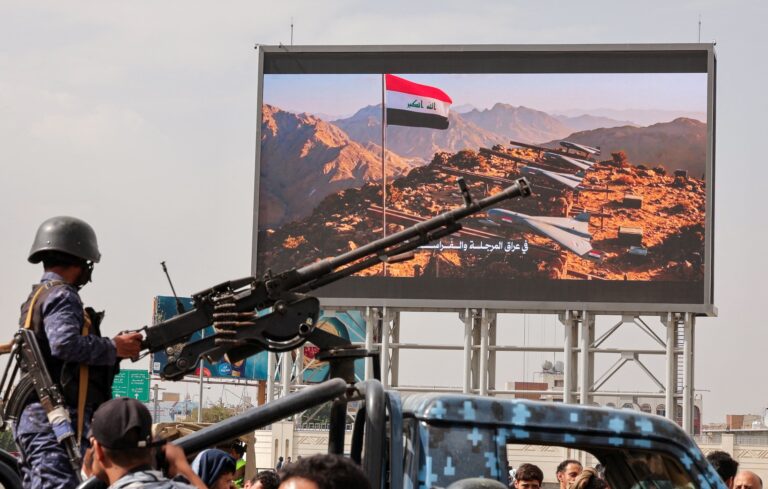
Iran’s Islamic Revolutionary Guard Corps (IRGC) has claimed that one of three oil tankers caught fire after an explosion while attempting to navigate a route reportedly surrounded by naval mines south of the Strait of Hormuz. According to the IRGC, the other two tankers turned back and abandoned their attempt to continue through the area.

The Iranian force said the incident occurred amid heightened tensions in the strategically important waterway, which serves as a major route for global energy shipments. The IRGC maintains that Iran controls the Strait of Hormuz and has closed the passage completely in response to what it describes as increased US military activity in the region.

The IRGC also issued a warning to commercial vessels, saying that no tanker would receive permission to enter or pass through the strait without Iran’s approval. The statement signals a further escalation in tensions surrounding one of the world’s most important oil transit routes.

The Strait of Hormuz connects the Persian Gulf with the Gulf of Oman and remains a crucial corridor for international energy supplies. Any disruption to shipping through the waterway could affect global oil markets and raise concerns over the security of maritime trade.

The reported tanker incident and Iran’s warning come as regional tensions remain high, increasing uncertainty for shipping companies and energy markets operating in and around the Gulf.

Similar Posts

  • |

    Man admits transporting body of Scottish woman in suitcase in Athens

    Greek authorities have arrested a 26-year-old man who confessed to transporting the body of 38-year-old Scottish woman Elisabeth-Jane Ross in a suitcase to an abandoned building in Athens. The victim’s body was discovered on 18 July in the Kypseli district following a missing person report, with subsequent investigations leading police to identify the suspect via video footage. Law enforcement officers arrested the suspect on suspicion of manslaughter, robbery, and weapons offences after finding he had used the victim’s bank cards and seized a knife and replica pistol at his home. Greek police are fast-tracking toxicology reports to determine the precise cause of death while continuing efforts to trace American acquaintances Ross was scheduled to visit before her disappearance. The Scottish Government confirmed it is providing official support to the victim’s family alongside the Foreign, Commonwealth and Development Office.

  • |

    Australia introduces mandatory pay floor and injury coverage for gig workers

    In a major shift for gig economy rights, Australia’s industrial umpire has ordered delivery platforms to pay food and grocery couriers a mandatory minimum rate alongside compulsory personal accident insurance. The Fair Work Commission (FWC) ruled late on Tuesday that gig delivery workers must earn a minimum rate for active delivery time. The order, set to take effect on 17 August, is expected to benefit roughly 250,000 workers across the country. Beyond baseline wages, platforms such as Uber Eats and DoorDash will now be legally required to provide personal accident cover for couriers on duty, though workers will remain responsible for third-party vehicle insurance. The reform stems from workplace legislation passed by Australia’s Labor government in 2023 and 2024, which empowered the FWC to regulate conditions for independent contractors previously excluded from traditional employment protections. In a joint statement, the Transport Workers Union (TWU), Uber Eats, and DoorDash welcomed the determination. TWU National Secretary Michael Kaine hailed the order as a landmark moment that establishes new standards for a workforce long left outside national workplace systems.

  • |

    Senior Ghana opposition leader jailed for 20 years over illegal mining

    A Ghanaian court has sentenced senior opposition politician Bernard Antwi Boasiako to 20 years in prison with hard labour after finding him guilty of illegal mining related offences, triggering a strong political reaction and renewed debate over the country’s fight against unlawful mining. Boasiako, widely known as Chairman Wontumi, is the Ashanti regional chairman of the opposition New Patriotic Party and the first high profile politician to be convicted since Ghana launched a nationwide crackdown on illegal mining in 2017. In addition to the prison sentence, the court ordered him to pay fines exceeding 10,000 dollars. Reports from the courtroom said Boasiako appeared visibly stunned as the verdict and sentence were announced. He had denied all charges throughout the trial. The court found him guilty of transferring mineral rights without official approval and facilitating unlicensed mining operations through his company, Akonta Mining. Prosecutors argued that the company allowed two individuals to carry out mining activities on its concession without the required authorisation from the Ministry of Lands and Natural Resources. The ruling has sparked anger within the New Patriotic Party, which described the conviction as politically motivated. Party officials accused the government of selectively targeting opposition figures while ignoring evidence they believe would have cleared Boasiako of wrongdoing. NPP General Secretary Justin Kodua Frimpong criticised the judgement and said the campaign against illegal mining would lose credibility if it focused only on political opponents. He confirmed that the party’s legal team has already started the appeal process in an effort to overturn the conviction. Illegal mining, commonly known in Ghana as galamsey, has remained one of the country’s biggest environmental challenges for years. The activity has polluted rivers, damaged forests and destroyed large areas of farmland despite repeated government efforts to stop it. As Africa’s largest gold producer, Ghana has struggled to balance economic interests with environmental protection. Successive governments have launched military operations and stricter enforcement measures to curb illegal mining, but the practice continues to spread in many parts of the country. Environmental activists welcomed the court’s decision, describing it as a major step towards greater accountability. They argued that the conviction sends a clear message that politicians and influential business figures are not above the law when it comes to environmental crimes. Adib Saani, Executive Director of the Jatikay Centre for Human Security and Peace Building, said the verdict demonstrates the importance of holding powerful individuals accountable if Ghana hopes to protect its forests, rivers and natural resources from further destruction. The case is expected to remain politically sensitive as Boasiako’s legal appeal moves forward. It also places renewed attention on Ghana’s campaign against illegal mining, with many observers watching closely to see whether similar cases involving influential figures will be pursued in the future.

  • |

    Human rights organizations file federal lawsuit challenging Trump administration sanctions on ICC

    Four prominent non-governmental organizations filed a joint federal lawsuit contesting executive sanctions imposed by the Trump administration on the International Criminal Court, arguing the penalties unlawfully disrupt global war crimes prosecutions. The legal challenge, brought by Human Rights Watch, the Center for Constitutional Rights, the Open Society Institute, and the American Friends Service Committee, targets an executive order enacted in February 2025. The presidential directive established financial sanctions and travel bans against ICC officials, judges, and affiliated advocacy groups involved in investigating alleged war crimes in Palestinian territory, including cases involving senior Israeli officials. Attorneys representing the civil rights organizations contend that the broad scope of the sanctions violates First Amendment protections regarding free speech and association. The suit asserts that the threat of severe civil and criminal penalties has effectively forced US-based legal advocates to suspend representation of victims before the tribunal, while halting formal collaborations with sanctioned international rights groups. The filing marks the latest in a series of legal challenges against the administration’s broader push to limit the jurisdiction of the Hague-based court. Representatives for the US Department of State and Department of Justice did not immediately issue formal statements regarding the lawsuit.

  • | |

    Russia and Ukraine trade overnight strikes as thre…

    Russia and Ukraine launched a fresh wave of overnight strikes against each other on Saturday, leaving three people dead and ten injured across multiple regions on both sides of the border, according to officials from both countries. Kyiv suburb bears the brunt of Russian strikes Three people died and three others suffered injuries when Russian forces struck three separate locations in the Brovary district on the outskirts of Kyiv, said Tymur Tkachenko, head of the Kyiv City Military Administration, in a statement posted on Telegram. Falling debris from the strikes damaged a private residential building along with several outbuildings and parked cars, while a fire broke out at a nonresidential structure in the area, Tkachenko said. Emergency crews rushed to the scene to contain the damage and assist residents. “Rescuers and all necessary services are working on the ground,” Tkachenko said. “The elimination of the consequences is ongoing.” Russia’s Defence Ministry confirmed carrying out the strike on the Ukrainian capital, stating on Telegram that its forces had targeted a military-industrial facility along with a fuel and lubricants depot located in Kyiv. The ministry additionally claimed that two dry cargo ships, which it alleged were transporting weapons and military equipment bound for Ukrainian ports, came under attack from drones while passing through waters south and east of the port city of Odesa. Russian regions report drone damage and injuries On the Russian side, five people sustained injuries and a fire erupted at the Ilsky Oil Refinery in the Krasnodar region after debris from a downed drone fell onto the facility, regional authorities reported. The Krasnodar Operational Headquarters said on Telegram that the injured were receiving all necessary medical care while emergency and special services worked at the scene. Separately, two people were injured when a drone crashed in the Russian city of Zadonsk, according to Lipetsk Governor Igor Artamonov, who posted details of the incident on Telegram. The crash damaged four private homes, a vehicle and a power line, Artamonov said, adding that power workers had already begun restoration efforts in the affected area. In the Samara region further east, one of the area’s industrial enterprises came under attack from a Ukrainian drone, said regional Governor Vyacheslav Fedorishchev in a post on the Russian social media platform Max. Fedorishchev said authorities were currently working to address the aftermath of the strike but did not immediately provide further details on the extent of the damage. Moscow claims mass drone interception Russia’s Defence Ministry also announced that its air defence systems had shot down and destroyed 397 Ukrainian drones over the course of the strikes, with the interceptions occurring over Russian territory, annexed Crimea and the Sea of Azov. Independent verification of the claims made by both Moscow and Kyiv remains difficult given the ongoing conflict, and neither side’s figures on damage, casualties or intercepted drones could be confirmed through independent sources. Latest strikes reflect continuing pattern of cross-border attacks The overnight exchange adds to a long running pattern of tit-for-tat strikes between the two countries, with Ukraine frequently targeting Russian energy infrastructure, including refineries deep inside Russian territory, while Russia continues to strike Ukrainian cities and industrial sites. Both countries have increasingly relied on long-range drones to strike targets far from the front line, a tactic that has expanded the geographic scope of the war well beyond the immediate combat zones in eastern and southern Ukraine. The strikes come as diplomatic efforts to end the war have shown little sign of producing a breakthrough, with both Moscow and Kyiv continuing large-scale military operations even as international mediators push for a negotiated settlement. Attacks on energy facilities, in particular, have become a recurring feature of the conflict, with both sides accusing the other of deliberately targeting civilian infrastructure and disrupting fuel supplies ahead of the winter months. As the war grinds on, Saturday’s strikes underscore the continued volatility along multiple fronts, from Kyiv’s outskirts to refineries deep inside Russian territory, with civilians on both sides bearing the brunt of the ongoing hostilities.

Leave a Reply

Your email address will not be published. Required fields are marked *