russia ukraine trade
| |

Russia and Ukraine trade overnight strikes as thre…

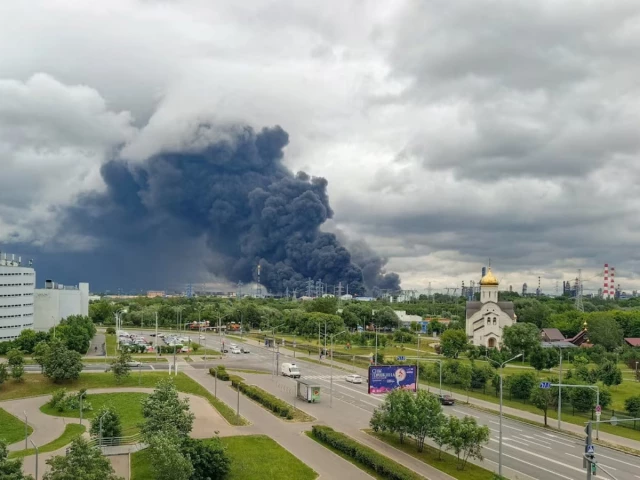
Russia and Ukraine launched a fresh wave of overnight strikes against each other on Saturday, leaving three people dead and ten injured across multiple regions on both sides of the border, according to officials from both countries.

Kyiv suburb bears the brunt of Russian strikes

Three people died and three others suffered injuries when Russian forces struck three separate locations in the Brovary district on the outskirts of Kyiv, said Tymur Tkachenko, head of the Kyiv City Military Administration, in a statement posted on Telegram.

Falling debris from the strikes damaged a private residential building along with several outbuildings and parked cars, while a fire broke out at a nonresidential structure in the area, Tkachenko said. Emergency crews rushed to the scene to contain the damage and assist residents.

“Rescuers and all necessary services are working on the ground,” Tkachenko said. “The elimination of the consequences is ongoing.”

Russia’s Defence Ministry confirmed carrying out the strike on the Ukrainian capital, stating on Telegram that its forces had targeted a military-industrial facility along with a fuel and lubricants depot located in Kyiv.

The ministry additionally claimed that two dry cargo ships, which it alleged were transporting weapons and military equipment bound for Ukrainian ports, came under attack from drones while passing through waters south and east of the port city of Odesa.

Russian regions report drone damage and injuries

On the Russian side, five people sustained injuries and a fire erupted at the Ilsky Oil Refinery in the Krasnodar region after debris from a downed drone fell onto the facility, regional authorities reported. The Krasnodar Operational Headquarters said on Telegram that the injured were receiving all necessary medical care while emergency and special services worked at the scene.

Separately, two people were injured when a drone crashed in the Russian city of Zadonsk, according to Lipetsk Governor Igor Artamonov, who posted details of the incident on Telegram. The crash damaged four private homes, a vehicle and a power line, Artamonov said, adding that power workers had already begun restoration efforts in the affected area.

In the Samara region further east, one of the area’s industrial enterprises came under attack from a Ukrainian drone, said regional Governor Vyacheslav Fedorishchev in a post on the Russian social media platform Max. Fedorishchev said authorities were currently working to address the aftermath of the strike but did not immediately provide further details on the extent of the damage.

Moscow claims mass drone interception

Russia’s Defence Ministry also announced that its air defence systems had shot down and destroyed 397 Ukrainian drones over the course of the strikes, with the interceptions occurring over Russian territory, annexed Crimea and the Sea of Azov.

Independent verification of the claims made by both Moscow and Kyiv remains difficult given the ongoing conflict, and neither side’s figures on damage, casualties or intercepted drones could be confirmed through independent sources.

Latest strikes reflect continuing pattern of cross-border attacks

The overnight exchange adds to a long running pattern of tit-for-tat strikes between the two countries, with Ukraine frequently targeting Russian energy infrastructure, including refineries deep inside Russian territory, while Russia continues to strike Ukrainian cities and industrial sites. Both countries have increasingly relied on long-range drones to strike targets far from the front line, a tactic that has expanded the geographic scope of the war well beyond the immediate combat zones in eastern and southern Ukraine.

The strikes come as diplomatic efforts to end the war have shown little sign of producing a breakthrough, with both Moscow and Kyiv continuing large-scale military operations even as international mediators push for a negotiated settlement. Attacks on energy facilities, in particular, have become a recurring feature of the conflict, with both sides accusing the other of deliberately targeting civilian infrastructure and disrupting fuel supplies ahead of the winter months.

As the war grinds on, Saturday’s strikes underscore the continued volatility along multiple fronts, from Kyiv’s outskirts to refineries deep inside Russian territory, with civilians on both sides bearing the brunt of the ongoing hostilities.
Similar Posts

  • | |

    Govt increases fuel prices as international oil ra…

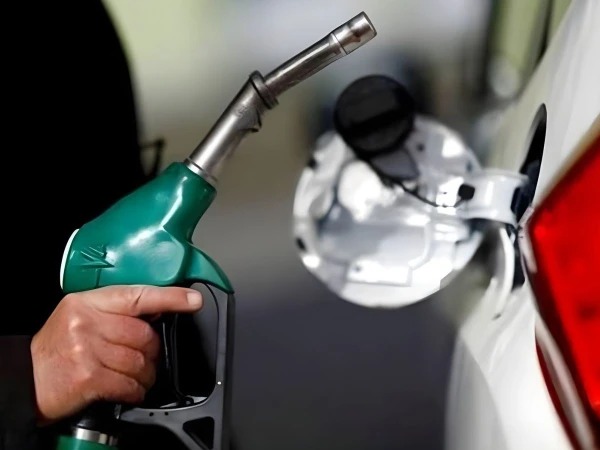
    The Government of Pakistan has announced a fresh increase in petroleum prices, raising the price of petrol by Rs. 1.63 per litre and high-speed diesel (HSD) by Rs. 1.55 per litre. The revised prices will come into effect from July 29, according to a notification issued by the Petroleum Division. Following the latest revision, petrol will now cost Rs. 335.81 per litre, while high-speed diesel will be available at Rs. 388.38 per litre. Officials said the increase reflects fluctuations in international crude oil prices caused by renewed tensions in the Persian Gulf, which have affected global energy markets. The government continues to collect substantial taxes and duties on petroleum products. Consumers currently pay around Rs110 per litre in taxes and levies on petrol, while diesel carries approximately Rs96 per litre in taxes and duties. Fuel prices have remained volatile throughout the year. Diesel had previously reached a record Rs520.35 per litre in early April after rising sharply from Rs281 per litre during the escalation of the US-Iran conflict. Similarly, petrol climbed to a peak of Rs458.41 per litre after increasing from Rs266 per litre in early March. Petroleum Minister Ali Pervaiz Malik recently announced that fuel prices would now be reviewed daily instead of weekly. The decision aims to ensure domestic fuel prices better reflect international market trends, especially during periods of global uncertainty. Under the new policy, the Oil and Gas Regulatory Authority (Ogra) will determine daily fuel prices based on changes in international oil markets. However, the move has faced criticism from the All Pakistan Dealers Association, which has warned that it may launch protests against the daily pricing mechanism. Petrol is primarily used by private vehicle owners, motorcycles, rickshaws, and small transport operators. As a result, any increase directly impacts middle- and lower-income households. High-speed diesel is widely used in heavy transport, agriculture, power generation, and industrial sectors, meaning price hikes can also increase transportation and production costs, contributing to inflation. With monthly sales of 700,000 to 800,000 tonnes, petrol and diesel remain Pakistan’s largest petroleum products by consumption and are significant contributors to government revenue. As global oil prices continue to fluctuate, consumers should expect further adjustments in domestic fuel prices in the coming weeks.

  • | |

    Pakistan pushes for US-Iran dialogue under Islamab…

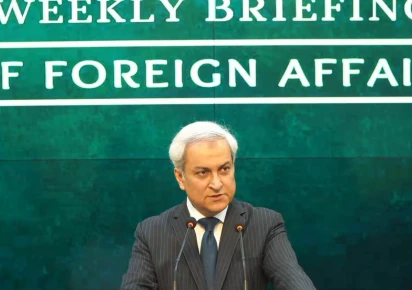
    Pakistan is continuing diplomatic efforts to bring the United States and Iran back to the framework of the Islamabad Memorandum of Understanding (MoU) in a bid to ease regional tensions and promote dialogue, the Foreign Office (FO) said on Thursday. Speaking at the weekly media briefing, Foreign Office spokesperson Tahir Hussain Andrabi said Pakistan remains actively engaged with all relevant parties to encourage the implementation of the Islamabad MoU and the Pakistan-Qatar joint understanding aimed at reducing tensions. He said negotiations are continuing to restore stability, particularly in the Strait of Hormuz, and to support efforts for de-escalation through dialogue and diplomacy. The spokesperson noted that although the region had witnessed a brief period of relative calm, the security situation remains fragile. He said Pakistan hopes the reduction in hostilities will pave the way for a lasting ceasefire and meaningful negotiations. Reaffirming Islamabad’s position, Andrabi said dialogue and diplomacy remain the only practical solution to the ongoing crisis. He added that Pakistan welcomes every initiative aimed at resuming talks between Iran and the United States and will continue to play a constructive role in regional peace efforts. He urged all sides to exercise maximum restraint and honour their commitments to resume technical-level discussions under the Islamabad MoU. Highlighting Pakistan’s recent diplomatic engagements, Andrabi said Prime Minister Shehbaz Sharif and Saudi Crown Prince Mohammed bin Salman agreed to continue close coordination for regional peace, stability and the uninterrupted movement of lawful maritime trade through the Red Sea and the Strait of Hormuz. He said Deputy Prime Minister and Foreign Minister Ishaq Dar also held separate telephone conversations with Saudi Foreign Minister Prince Faisal bin Farhan and Jordanian Foreign Minister Ayman Safadi. The discussions focused on the evolving regional situation, diplomatic cooperation and efforts to maintain peace and stability. The spokesperson said Pakistan and Kuwait also reaffirmed their longstanding partnership and agreed to expand cooperation in trade, investment, energy, information technology, agriculture, education and healthcare. He added that Kuwait’s ratification of the Pakistan-Kuwait Defence Cooperation Agreement would further strengthen defence collaboration between the two countries. Andrabi also highlighted Pakistan’s participation in the Shanghai Cooperation Organisation (SCO) Council of Foreign Ministers meeting, where Islamabad reaffirmed its commitment to regional connectivity, the China-Pakistan Economic Corridor (CPEC) and the Belt and Road Initiative while expressing readiness to assume the SCO chairmanship for 2026-27. On Pakistan-US relations, he said Ishaq Dar recently met a visiting US congressional delegation and an American business delegation, reaffirming Pakistan’s commitment to expanding bilateral cooperation through stronger parliamentary, economic and people-to-people engagement. Addressing the situation in Palestine, Andrabi said Pakistan joined several Arab and Islamic countries in condemning Israeli actions in Jerusalem and called on the international community to uphold international law, protect Palestinian rights and preserve the historical and religious status of Al-Aqsa Mosque.

  • |

    Perez Hilton’s hospital scare sparks bizarre Ariana Grande conspiracy

    Perez Hilton was hospitalized this week after a concerning livestream, and the internet wasted no time turning it into a conspiracy theory. Social media users quickly linked the incident to Ariana Grande’s newly released “Petal” music video. According to reports, authorities responded after receiving multiple calls about the livestream. Hilton was found alone at his residence and taken to a hospital for treatment. It did not take long for online speculation to spiral. Some users pointed to dark, horror-inspired imagery in Grande’s “Petal” video, claiming a connection between the two events. A handful of posts went further, suggesting Hollywood promotes what they called “demonic influences.” Screenshots from Grande’s video were circulated as supposed evidence, though the claims remain unverified and speculative. The timing added fuel to the online chatter. The theories emerged just two days after Ariana Grande announced she is stepping away from the public eye once her current tour wraps up next month. A representative for the pop star explained that her public-facing work had left her dealing with constant scrutiny. That announcement, paired with the Hilton incident, seems to have given conspiracy theorists exactly the storyline they were looking for. As of now, there is no credible evidence connecting the two events. The theory appears to be another case of the internet linking unrelated stories to create a viral narrative out of thin air.

  • |

    Pakistan boxer Qudratullah goes missing in Glasgow

    Pakistani boxer Qudratullah Khan has reportedly gone missing in Glasgow after representing the country at the Commonwealth Games, raising fresh concerns for sports authorities ahead of upcoming international events. The Quetta-born boxer, who competed as part of Pakistan’s national boxing squad, did not return with the team after the conclusion of the tournament. The squad was scheduled to travel back to Pakistan on Sunday, but Qudratullah was missing when the team prepared for departure. Officials familiar with the matter said the boxer could not be located in his hotel room before the team’s departure. However, his luggage and personal belongings were reportedly found inside the room, leaving team officials uncertain about his whereabouts. Pakistan Boxing Federation officials confirmed that the athlete failed to return with the national contingent. They said the boxer had been selected solely on merit due to his performances and described the incident as unfortunate. Officials added that the matter would now be handled by the department the boxer represents. The incident has created an unexpected challenge for the team management and has once again drawn attention to the recurring issue of Pakistani athletes going missing during international sporting events. This is not the first such case involving Pakistani athletes. In recent years, several sportsmen disappeared while competing abroad. During the 2022 Commonwealth Games in Birmingham, boxers Suleman Baloch and Nazirullah Khan also went missing after the competition. Earlier that year, swimmer Faizan Akbar disappeared in Hungary before the FINA World Championships. In 2024, boxer Zohaib Rasheed left his team hotel in Italy before an Olympic qualifying event. He later stated that financial difficulties had influenced his decision. The latest disappearance is expected to increase concerns among sports authorities regarding athlete management and monitoring during overseas tours. Pakistan is preparing to send another sporting contingent to Japan next month for the Asian Games, and officials are likely to review existing protocols to prevent similar incidents in the future.

  • |

    EU calls emergency meeting following mass migrant crossings into Ceuta

    The European Union has convened an emergency meeting after 22 member states issued a joint letter demanding coordinated action to strengthen the bloc’s external borders following the arrival of 60,000 migrants in Spain’s North African enclave of Ceuta. The influx has triggered severe political friction within the EU, leading Italy, Finland, and Denmark to suspend or question passport-free Schengen travel arrangements with Spain. Spanish Prime Minister Pedro Sánchez condemned the unilateral measures as unlawful and selfish, maintaining that border control was fully restored within 48 hours and preventing onward movement into continental Europe. EU officials confirmed the death toll from the crossing attempt has risen to at least 67 while the vast majority of individuals who entered the enclave have since returned to Morocco. The joint letter addressed to EU leadership stresses that uncoordinated responses risk creating a perception that illegal entry into the bloc is possible, which would encourage further crossing attempts across member states. In response to the crisis, Spanish authorities have installed floating security barriers off the Ceuta coastline while working alongside international partners to secure the border perimeter.

  • |

    Independent experts confirm pellet-gun injuries among protesters in Delhi

    Independent ballistic and forensic experts have confirmed to the BBC that injuries sustained by protesters during the 20 July demonstrations in Delhi were caused by birdshot from 12-gauge pellet guns. The protests, led by the Cockroach Janta Party over repeated exam paper leaks, faced a heavy police and paramilitary crackdown near parliament. While government ministers and Delhi Police have denied deploying pellet guns, insisting only batons and tear gas were used, hospital records, X-rays, and multiple victims verify dozens of small metal pellets embedded in bodies. Among the injured is 19-year-old student Sahil Lochab, who risks losing an eye, and a journalist who documented 30 pellet wounds. If officially verified, this represents the first instance of Indian security forces using pellet guns for crowd control within the capital.

Leave a Reply

Your email address will not be published. Required fields are marked *