great tragedy partitionvii

The Great Tragedy of Partition—VII Cabinet Missi…

Some constitutional settlements fail because they are unjust. Others fail because those who might have accepted them cease to trust one another before the settlement can take effect

The failure of the Simla Conference did not persuade Britain to abandon the search for a united constitutional settlement. On the contrary, it convinced the newly elected Labour Government that another and far more comprehensive initiative had become indispensable. The Second World War had ended.

Britain emerged victorious, but financially exhausted and politically transformed. The question confronting Prime Minister Clement Attlee’s government was no longer, whether India would become independent. Independence had become inevitable. The remaining question was whether it could be achieved without Partition.

The responsibility for answering that question fell upon one of the most significant constitutional delegations ever sent to British India. In March 1946, the Cabinet Mission, comprising Lord Pethick-Lawrence, Sir Stafford Cripps and A. V. Alexander, arrived in India with instructions not merely to negotiate the transfer of power but to devise a constitutional framework capable of reconciling profoundly different political aspirations within a single state. 

Unlike earlier initiatives, the Cabinet Mission did not attempt to persuade one side to surrender its constitutional claims to another. Instead, it sought to construct a constitutional architecture that would allow competing visions of India to coexist. The Mission recognised two political realities that earlier proposals had struggled to reconcile.

Indian National Congress continued to insist upon the unity of India, while the Muslim League maintained that Muslim political nationhood required constitutional recognition. The challenge lay in accommodating both principles without destroying either.

The solution proposed by the Mission was both innovative and extraordinarily complex. It rejected the immediate creation of a sovereign Pakistan, arguing that Partition would generate formidable administrative, economic and strategic difficulties. At the same time, it acknowledged that an excessively centralised constitution would be unacceptable to the Muslim League. The Mission, therefore, proposed a three-tier constitutional structure.

At the centre would stand a limited Union Government responsible only for defence, foreign affairs and communications, together with the finances necessary to discharge those functions. The provinces would retain extensive autonomy over most subjects of governance. Between these two levels, the provinces would form three groups reflecting geographical and political realities. Sections A, B and C would be empowered to frame constitutions for their respective groups while participating in the larger Union.

The constitutional ingenuity of the proposal lay precisely in its attempt to preserve India’s international unity while recognising its internal diversity. Neither complete centralisation nor compl therefore sought a middle constitutional path.

Congress interpreted the Plan as preserving the essential unity of India, though many of its leaders remained apprehensive that compulsory provincial grouping might weaken the authority of the future Union. The Muslim League initially accepted the proposal because the grouping arrangements appeared capable of protecting Muslim-majority provinces and preserving the possibility of greater autonomy in the future. For a brief moment, it appeared that a constitutional compromise acceptable to both major political parties had finally emerged. That moment proved remarkably short-lived.

The difficulty did not lie primarily in the constitutional text. It lay in conflicting interpretations of the text. Congress regarded the provincial groupings as temporary arrangements that could subsequently be modified by elected provincial legislatures. The Muslim League regarded them as an essential constitutional guarantee protecting Muslim political autonomy. The same constitutional document, thus, came to embody fundamentally different expectations.

The archival record preserved in the Transfer of Power volumes reveals that British officials themselves recognised this ambiguity. The Mission deliberately employed language capable of attracting acceptance from both Congress and the League. Diplomatic flexibility succeeded in producing initial agreement but left unresolved the deeper question of how the Constitution would actually operate once political power had been transferred. Ambiguity, which had previously served as an instrument of negotiation, now became a source of constitutional instability.

The situation deteriorated further after Jawaharlal Nehru, speaking as President of the Congress, declared that the Constituent Assembly would remain sovereign in determining the future Constitution and would not regard itself as permanently bound by every aspect of the Cabinet Mission Plan. The Muslim League interpreted these remarks as evidence that the constitutional safeguards upon which it had relied could be altered after the transfer of power. Confidence rapidly evaporated.
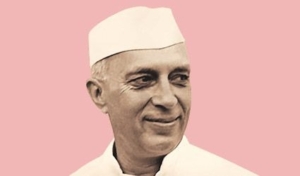
Muhammad Ali Jinnah responded by withdrawing the League’s earlier acceptance and announcing Direct Action. The constitutional conversation increasingly gave way to political confrontation. The tragic communal violence that followed profoundly altered the atmosphere in which constitutional negotiations continued.
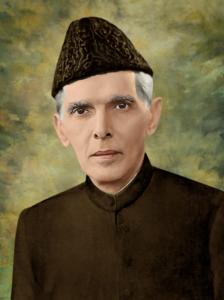
The Cabinet Mission nevertheless occupies a unique place in the constitutional history of South Asia. It represented the most sophisticated attempt to reconcile unity with diversity through constitutional design. It neither denied Muslim political aspirations nor abandoned the ideal of a united India. Instead, it sought to accommodate both within an asymmetrical federal structure unprecedented in British constitutional practice.

Whether the Plan would ultimately have succeeded if fully implemented remains one of the most enduring questions in modern South Asian historiography. Historians continue to disagree. Some regard it as the last realistic opportunity to preserve Indian unity.

Others argue that political distrust had already advanced too far for even the most carefully designed constitutional arrangement to survive. The documentary evidence suggests that the Mission came closer than any previous initiative to securing acceptance from both principal political organisations. Its collapse. Therefore, deserves to be understood not simply as another failed negotiation but as the moment when the possibility of a united constitutional future receded most dramatically.

The tragedy of Partition was still not inevitable. The Indian Independence Act of 1947 had not yet been enacted, the boundaries of the future states had not been drawn, and constitutional alternatives technically remained available. Nevertheless, after the collapse of the Cabinet Mission, the political space for compromise contracted with alarming speed. The search for constitutional reconciliation increasingly yielded to preparations for constitutional separation.

The next article examines the final phase of British rule under Lord Mountbatten. It explores how the acceleration of the transfer of power, the Indian Independence Act and the Radcliffe Boundary Commission transformed constitutional uncertainty into one of the greatest human tragedies of the twentieth century.

References:

Principal Documents

[To be continued]

____________________________________________________________________

Dr. Ikramul Haq, Advocate Supreme Court, Adjunct Faculty at Lahore University of Management Sciences (LUMS), member Advisory Board and Visiting Senior Fellow of Pakistan Institute of Development Economics (PIDE), holds an LLD in tax laws. He was full-time journalist from 1979 to 1984 with Viewpoint and Dawn. He also served Civil Services of Pakistan from 1984 to 1996.
Similar Posts

  • Beyond Riba: Reconstruction of Just Financial Orde…

    The preceding five parts of this series have argued that elimination of riba cannot be achieved by changing the vocabulary of finance. We began with definition, moved to creation of money, separated transaction deposits from investment capital, examined productive finance based on ownership and genuine risk, and then placed Bait-ul-Mal, waqf, zakat and qard hasan within a wider system of social protection. The final question is no longer conceptual. It is legislative. Pakistan now has a date. The Constitution (Twenty-sixth Amendment) Act, 2024 substituted Article 38(f) with the direction to “eliminate riba completely before the first day of January, two thousand twenty-eight”. The constitutional deadline reinforces the Federal Shariat Court’s 2022 judgment in the Riba cases, reported as PLD 2023 FSC 47. The problem is that a deadline does not itself create a new financial order. The Finance Division’s Post-2027 Financial System in Pakistan contains useful work on Sukuk, liquidity facilities, legislation, safety nets, technology and capacity building. It nevertheless remains a strategy, not a Prohibition of Riba law. More importantly, some of its transitional assumptions sit uneasily with the word “completely”. Majority foreign-owned institutions may decide voluntarily whether to convert; conventional obligations contracted before the deadline may continue according to their terms until maturity; and fresh foreign financing is contemplated through Shariah-compliant modes subject to availability of reasonable options. These concerns are understandable from the perspective of financial stability. They cannot become permanent legal exceptions. Pakistan therefore needs an umbrella Prohibition of Riba Act, enacted well before the constitutional cut-off, accompanied by consequential federal and provincial amendments [Who will draft Riba Prohibition Law? Minute Mirror, April 7, 2026]. Its first task must be the one identified in Part I: define what is prohibited. The law should distinguish a loan or debt carrying a stipulated increase because of time from lawful consideration arising from genuine sale, lease, service, partnership or productive risk. Courts and regulators should be empowered to examine connected contracts as one economic arrangement. A murabaha, ijarah, musharakah or Sukuk should not become immune from scrutiny merely because recognised Islamic terminology appears in its documents. The second requirement is a clear cut-off rule. No bank, financial institution, government agency or other regulated person should be permitted to originate a new interest-bearing financial contract in Pakistan after December 31, 2027. The prohibition must be activity-based, not ownership-based. A transaction cannot change its constitutional character because shareholders of the institution happen to be foreign. This is also the weakness we identified earlier in examining the Government’s strategy paper. Existing liabilities require different treatment. Pakistan cannot simply repudiate sovereign bonds, multilateral obligations or private contracts. That would replace one problem with default, litigation and financial isolation. The law should instead require a complete register of every conventional obligation extending beyond the cut-off: principal, return, maturity, governing law, creditor, refinancing possibility and proposed conversion date. Contracts capable of consensual refinancing should be converted. Those that cannot immediately be altered should continue only under a transparent transitional schedule with definite sunset dates, rather than receiving an indefinite exemption merely because they were signed before 2028. The third issue concerns money itself. Part II argued that commercial-bank money creation is not automatically riba. The power to create purchasing power through credit is nevertheless too important to remain outside reform. Parliament should require a time-bound examination of sovereign transaction money, reserve arrangements and separation of monetary creation from productive financial intermediation. This question should be decided upon economic evidence and institutional consequences, not theological assertion. Part III then demonstrated why payment accounts and investment accounts require legal separation. Money held for immediate payment and nominal safety should not be treated as risk capital. Funds deliberately invested for commercial return should carry transparent exposure to the enterprises and assets from which that return arises. Deposit protection against institutional failure must similarly be distinguished from a State guarantee against every commercial investment loss. The fourth area is productive finance. The law should protect genuine murabaha, ijarah, salam, istisna, musharakah, mudarabah and other permissible arrangements while prescribing minimum standards of ownership, possession, disclosure and risk. Shariah audit should examine economic substance rather than merely documentation. Taxation must also become neutral. Equity participation, leasing and genuine asset transactions should not suffer additional fiscal costs merely because legislation was historically designed around conventional debt. Public finance cannot remain outside this discipline. Government should not treat Sukuk merely as a technique for reproducing conventional borrowing against whatever public assets can be placed in a registry. The official strategy itself proposes an Assets Registry Company and expanded hybrid Sukuk issuance. Sovereign instruments must confer genuine economic rights and corresponding responsibilities rather than provide documentary assets solely to support a predetermined financial return. Fiscal reform is inseparable from elimination of riba. No monetary arrangement can remain sound where governments continuously borrow merely to finance structural deficits. Monetary policy requires the same intellectual honesty. The Government’s strategy envisages Shariah-compliant open-market operations, standing facilities and liquidity arrangements. These are necessary developments, but changing contractual forms will not be enough if their sole objective becomes mechanical reproduction of the existing interest-rate corridor. SBP ultimately needs a transparent post-riba monetary framework explaining liquidity creation and absorption, lender-of-last-resort assistance, foreign-exchange operations and monetary transmission. The fifth element takes us beyond banking altogether. Part V argued that riba flourishes not only because creditors seek gain but also because human beings are compelled by need. A successful transition must therefore strengthen Bait-ul-Mal, professionally governed public waqf lillah, independently administered zakat and revolving qard hasan funds. Essential healthcare, education, disability support and subsistence during genuine incapacity should never become markets for financial extraction. Local cooperative institutions should provide the bridge from protection to participation. The lesson drawn from Rabobank was not that Pakistan should import a Dutch banking model. It was that communities can mobilise their resources and build productive institutions from below. Properly regulated cooperatives can gradually shift economic power away from patrons and concentrated financial interests towards citizens themselves. Governance is consequently as important as Shariah nomenclature. Pakistan

  • Nelson Mandela: The Statesman Who Transformed the …

    By Ali Hamza Alvi, Final Year Law Student, SLC, Superior University and Muhammad Imran, Staff Member, SAHSOL-LUMS Some individuals attain prominence because they occupy positions of authority; others earn an enduring place in history because they transform the destiny of humanity. Nelson Rolihlahla Mandela unquestionably belongs to the latter category. His greatness did not arise merely from his election as the first democratically elected President of South Africa; rather, it was forged through his unwavering commitment to justice, equality, human dignity, and reconciliation. Even during the darkest chapters of his life, Mandela remained steadfast in his conviction that freedom and human rights were worth every sacrifice. Nelson Mandela was born on 18 July 1918 in the rural village of Mvezo in South Africa’s Eastern Cape. He was raised in a society deeply scarred by racial discrimination, where the colour of one’s skin determined virtually every aspect of life. Under the oppressive system of apartheid, Black South Africans were systematically deprived of their political, social, and economic rights. They were denied equal access to education, employment, healthcare, and public services, while racial segregation was enforced through an elaborate framework of discriminatory laws. Witnessing these profound injustices from an early age inspired Mandela to dedicate his life to dismantling institutionalised racial oppression and establishing a society founded upon equality and human dignity. Recognising the transformative power of law, Mandela pursued legal studies with the conviction that the law should function as an instrument of justice rather than a mechanism of oppression. As a practising lawyer, he represented countless individuals who had been denied their fundamental rights solely because of their race. These experiences reinforced his belief that genuine justice could exist only where every individual stood equal before the law, irrespective of race, ethnicity, religion, or social background. His legal career became not merely a profession but a platform for challenging systemic injustice and advocating constitutional equality. Mandela’s opposition to apartheid inevitably brought him into direct conflict with the South African government. His relentless campaign against racial discrimination and political repression led the authorities to regard him as a dangerous opponent of the existing order. In 1962, he was arrested, and following the historic Rivonia Trial, he was sentenced to life imprisonment. Confined for twenty-seven years, much of that time on Robben Island under exceptionally harsh conditions, Mandela endured one of the longest incarcerations of any political prisoner in modern history. Yet imprisonment neither diminished his resolve nor extinguished his hope. Instead, it strengthened his moral character and reinforced his unwavering belief that justice would ultimately prevail. Life behind prison walls subjected Mandela to severe physical hardship and profound emotional suffering. He was compelled to perform exhausting manual labour, endured restrictive prison conditions, and remained separated from his family and loved ones for decades. Despite these immense personal sacrifices, he refused to succumb to bitterness or hatred. Mandela understood that resentment imprisons the human spirit just as effectively as physical confinement. Instead, he embraced forgiveness as a transformative force capable of healing divided societies. His profound insight that reconciliation, rather than revenge, offers the surest path to lasting peace would later become the defining philosophy of his public life. Following sustained international pressure, widespread domestic resistance, and growing recognition that apartheid was morally and politically indefensible, Nelson Mandela was released from prison in 1990. His liberation marked not merely the end of his personal imprisonment but the beginning of a new era for South Africa. Across the world, millions celebrated his release as a triumph of justice over oppression. Many anticipated that Mandela would seek retribution against those responsible for his decades of imprisonment. Instead, he astonished the international community by advocating reconciliation, peaceful dialogue, and national unity. He firmly believed that South Africa could achieve genuine freedom only by replacing hatred with mutual respect and by building a future founded upon forgiveness rather than vengeance. In 1994, South Africa conducted its first democratic elections based on universal adult suffrage, culminating in Nelson Mandela’s election as the nation’s first Black President. His inauguration represented far more than a political transition; it symbolised the moral triumph of democracy over racial tyranny and the realisation of aspirations long denied to millions of South Africans. As President, Mandela dedicated himself to fostering national reconciliation, strengthening democratic institutions, and promoting equality before the law. His administration sought to heal the wounds of the past by encouraging cooperation among citizens of every race, culture, and community, thereby laying the foundations for a constitutional democracy committed to human rights and the rule of law. Among Mandela’s most remarkable qualities was his extraordinary humility. Despite occupying the highest office in the nation, he remained approachable, gracious, and deeply respectful of others. He believed that authentic leadership is measured not by personal power or privilege but by one’s willingness to serve humanity with integrity and compassion. His conduct demonstrated that strength need not be accompanied by arrogance and that true authority is exercised through wisdom, empathy, and moral example rather than coercion. Today, Nelson Mandela stands as one of the most revered figures in modern history. His legacy transcends the geographical boundaries of South Africa and continues to inspire people across every continent. He demonstrated that courage is not the absence of fear but the determination to uphold justice despite fear; that forgiveness is not a sign of weakness but the highest expression of moral strength; and that enduring social transformation is achieved not through hatred or violence but through reconciliation, equality, and respect for human dignity. His life remains compelling evidence that a single individual, guided by unwavering principles, extraordinary perseverance, and profound compassion, possesses the power to alter the course of history and leave an indelible legacy for generations to come. Nelson Mandela’s life demonstrates that while another individual may one day attain comparable moral stature and global influence, becoming another Nelson Mandela in the truest sense is extraordinarily difficult. His greatness did not stem merely from his imprisonment for twenty-seven years or his election as the

  • Who Is Responsible for the Truth?

    One question stayed with me long after I attended a workshop under the project titled ‘Digital Trust and Free Expression in the Era of AI’, organized by the Department of Media and Development Communication, University of the Punjab with the support of the U.S. Mission to Pakistan in partnership with the Pakistan-U.S. Alumni Network, was, ‘How will we preserve digital trust and free expression in the age of AI’? As AI becomes an integral part of digital journalism, the question is no longer whether it should be used, and more importantly who should be held responsible when things go wrong. Artificial Intelligence has definitely proven to be a powerful tool for journalists. It can summarize long reports, translate content into multiple languages, follow breaking news, analyze vast quantities of data and even write complete news reports in seconds. All of these capabilities have revolutionized newsroom processes and enabled journalists to process information more efficiently than ever before. But efficiency is not the only measure of ethical journalism. Journalism isn’t about being fast, it’s about informing the public accurately, fairly and responsibly. One of the most valuable lessons I learned from the workshop was that AI does not understand information; it predicts the most likely response based on patterns in the data it has learned from. This distinction is important because when reliable information is unavailable at the time, AI generates responses that seem convincing but inaccurate, but are wrong, which is often referred to as AI hallucination. What’s most concerning is that the AI generated mistakes can appear convincing enough for people to accept them as true. This poses an ethical question: Who should be held responsible if AI-generated news contains misleading information? The burden can’t be placed entirely on the algorithm. AI has no moral judgement or legal accountability. It cannot distinguish between public interest and public harm and is not aware of the social consequences of publishing inaccurate information. This means that the responsibility rests with those who decide to employ these technologies: journalists, editors, newsroom leaders, and media organizations. While AI can help create content, it cannot replace responsibility. This is where ethics become more important than technological advancements. Checking information should not take a back seat to the ‘Publish first’ mentality. With all of the digital platforms that exist today, misinformation can spread from continent to continent within minutes and corrections often fail to reach the same audience. Each unverified headline altered photo or AI-generated mistake can damage the public’s trust, both in a specific news organization and in journalism.   The discussions also reinforced the importance of Media and Information Literacy (MIL). Verification is not only the responsibility of journalists, but also something that is necessary for every digital citizen. Learning how to use reverse image search, source verification techniques, and critical evaluation of online information is no longer an option, it’s essential for protecting ourselves from deception. As AI-generated content becomes increasingly sophisticated, it is essential to verify information before accepting it as true. AI will continue to evolve and so will digital journalism. The challenge is not innovation itself but using it responsibly. Trust is not something algorithms can build, it is something that can be gained only through transparency, accountability and a steadfast dedication to truth. While adopting new technologies to do journalism, let’s not forget that the tools should enhance journalism’s values, not shape journalism. AI may help write the news, but only humans can uphold the ethics behind it. The views, thoughts, and opinions expressed in this blog are solely those of the author and do not necessarily reflect the official policy or position of the U.S. Mission to Pakistan or USEFP.

  • Physics of Being Human: Our Search for Meaning

    No one illustrates the laws of Physics better than human beings themselves. Entropy is not confined to laboratories and equations; it is lived through lives, societies, and relationships, steadily nudging order toward disorder. Entropy, in simple words, is a scientific measure of disorder and randomness. It shows how things naturally progress from order to chaos. Besides randomness, it is the tendency of systems to move toward greater multiplicity of possible states.   According to the Second Law of Thermodynamics, the entropy of an isolated system always tends to increase. A human being, when he evolves through childhood and moves toward adulthood, becomes more random and chaotic. He does not merely accumulate years; he gathers contradictions.   His lived experiences shape his idea of life, leaving behind a psychological residue. The feelings that he experienced for the very first time in the past become a source of discomfort as time passes. As a child, he thinks little and inquires more out of curiosity. In short, the knowledge he gained came through curiosity. But knowledge always comes at a cost. Things that fascinate us a lot turn into something that we dread a lot. As we acquire knowledge, we become aware of complexities that were always present but invisible to us.   As a child, our worldview seems simple: people are either good or bad; dreams are achievable; friends are eternal; relationships are loyal and life moves between white and black. As we grow older, the order is disrupted. A rise in consciousness awakens us to multiple contradictions, uncertainties, anxieties, grief and losses. We learn that truth is ambiguous and subjective; morality is situational; relationships are fragile; certainty is rare and life lives in the grey zone.     It is no mistake to say that human consciousness itself produces existential entropy and expands internal contradictions and multiplies possibilities. The more we know, the less certain we become. Every choice restricts us. Every decision prepares us for consequences. Every loss reshapes our understanding of love. Every truth complicates identity and brings more uncertainty. Every new experience creates new interpretations.   Here comes the importance of meaning in life. Having been surrounded by disorder and chaos, our minds look for a safe space: less entropic and more purposeful. In other words, entropy is not just a physics metaphor. It is reason that pushes humans to find an anchor in topsy-turvy life. It’s more like providing moorings to the ship that is left at the mercy of aggressive waves.   Now a question comes to mind: how do humans resist the uncertainties created by the expansion of consciousness? The answer is meaning, but its discovery could be different in philosophical terms. Existentialists, such as Jean Paul Sartre, believe that purpose is constructive and built upon the choices presented to us by expanding consciousness.   Albert Camus’ philosophy argues that we embrace life’s absurdity by revolting against it instead of surrendering to it. It means we have to continue living passionately and consciously while being aware of life’s realities.   Viktor Frankl, in his book Man’s Search for Meaning, presents a different perspective on meaning as a “response” to suffering. He called suffering an inevitable and inexplicable part of human life. Humans can endure almost any suffering if they discover a reason for it. In this situation, meaning acts like “negative entropy” as it does not eliminate suffering but arranges it into a narrative that can be endured.   Frankl also argued the concept of “logotherapy” in his book, believing that man’s primary drive is to find something meaningful instead of seeking happiness or pleasure. Still others think that if we voluntarily shoulder the responsibility, we can lay the foundation of habitable order amid chaos.   From my viewpoint, every meaning, whether small or big, is worth pursuing if it only fulfils you. The nature and timing of meaning could be different, but one thing is certain: in this world, entropy will persist. The purpose of meaning is not to defeat entropy but to resist it and make it bearable. Our lives have been the accumulation of experiences, interpretations, complexities, and uncertainties. Any moment shared with loved ones, every act of love, every truth pursued, every responsibility accepted and every desire followed becomes a source of stability against life’s expanding uncertainty. Meaning does not eliminate entropy. It is humanity’s rebellion against it.

  • |

    Does your native language control how you think?

    With over 7,000 distinct human languages spoken across the globe today, humanity communicates through fascinating sentence structures. A compelling debate has captivated thinkers for decades. Does the language you grow up speaking dictate the limits of what your mind can comprehend? This captivating idea lies at the heart of the Sapir-Whorf hypothesis. A theory that continues to provoke vibrant discussions across linguistics, philosophy, and cognitive science. The Power of Vocabulary and Perception The hypothesis was formulated in the early 20th century by linguists Edward Sapir and Benjamin Lee Whorf. It’s often referred to as linguistic relativity or linguistic determinism. They propose that the structure of a native language fundamentally shapes its speakers’ worldview and cognitive capacity. If a concept or object lacks a dedicated word in a person’s language, that person cannot truly perceive, categorize or conceptualize it. Consider how different cultures classify colors. Some languages possess dozens of specific terms for distinct shades. Whereas,  others operate with only a couple of basic terms distinguishing between light and dark tones. According to strong linguistic determinism, a speaker whose native tongue lacks a dedicated word for green would struggle to perceive a green leaf as distinct from yellow. Similarly, emotional vocabularies vary widely across cultures. German famously uses the word Schadenfreude to describe taking pleasure in someone else’s misfortune. According to Sapir-Whorf theory, an English speaker whose language lacks an exact single-word equivalent would supposedly find it difficult to recognize or isolate that specific emotional state within themselves. Why the Concept Fascinates Us? It is easy to see why the Sapir-Whorf hypothesis captured public imagination. The notion that our mother tongue acts as a unique way through which we view reality is deeply romantic. Philosophically, the theory suggests that the world contains thousands of distinct cognitive universes. If language entirely dictated thought, cross-cultural understanding would face profound barriers. It is so as the speakers of different languages would operate inside fundamentally incompatible mental frameworks. In semantic studies, labeling objects and experiences allows humans to organize chaotic sensory input efficiently. Giving a name to a precise group such as distinguishing toddlers, teenagers and senior citizens helps us categorize society into recognizable stages. The hypothesis demonstrated that naming things provides cognitive shortcuts. Such a naming method makes specific distinctions far easier to reference and discuss in daily life. Why Modern Science Rejects Strong Determinism Despite its initial popularity, modern linguistics and cognitive scientists reject strong linguistic determinism. The fundamental flaw in the hypothesis rests on a misunderstanding of the relationship between mind and speech. Language does not produce thought. Rather, human thought drives the creation and evolution of language. When people encounter new experiences, foods or technologies, they do not remain silent simply because they lack pre-existing terminology. Instead, humans spontaneously create new phrases. They adapt existing terms or borrow words from other cultures to describe what they have experienced. An English speaker can easily understand and feel pleasure at a rival’s failure without ever having heard the German word Schadenfreude. While English uses blue for both dark and light shades. Whereas Italian maintains separate primary words (blu and azzurro). English speakers are fully capable of seeing the difference between a midday sky and the deep ocean. Human cognition precedes language. Speech serves as a flexible tool designed to communicate human experiences, not a rigid cage that imprisons cognitive ability. The Lasting Value of Sapir-Whorf   The Sapir-Whorf hypothesis retains great value even if its most radical claim has been disproven. It paved the way for weak linguistic relativity. The claim further explores how language subtly influences cognition, memory and visual attention without imposing hard limits on intellect. Ultimately, Sapir and Whorf inspired generations of researchers to explore the mysterious connection between human culture, language and the mind.

  • Can Pakistan’s Students Compete in an AI-Dri…

    Artificial Intelligence is transforming the world at an unprecedented pace. From healthcare and agriculture to finance, education, and manufacturing, AI is changing how people work, learn, and solve problems. Countries across the globe are redesigning their education systems to prepare students for a technology-driven future. They are investing in coding, robotics, digital literacy, critical thinking, and innovation. Outdated Curriculum, Untrained Teachers, and Obsolete Classrooms Are Holding Back the Nation’s Future Pakistan, however, appears to be moving at a much slower pace. While developed nations are preparing children for careers that may not even exist today, millions of Pakistani students continue to study from outdated textbooks, rely on rote memorization, and learn in classrooms equipped with little more than blackboards and chalk. This growing disconnect raises an important question: How can Pakistan expect its youth to compete globally when they are being educated with a curriculum designed for the past? Education is the engine of economic growth and national development. Every successful nation has built its progress on a strong education system that evolves with changing times. Unfortunately, Pakistan’s school curriculum has not kept pace with technological advancement or the demands of the modern labour market. Although some reforms have been introduced over the years, many textbooks still contain outdated examples, obsolete concepts, and teaching methods that fail to develop analytical thinking and creativity. The world no longer rewards students simply for memorizing information. Search engines and AI can provide facts within seconds. What employers increasingly value are skills that machines cannot easily replace critical thinking, creativity, communication, collaboration, leadership, emotional intelligence, and the ability to solve complex problems. Yet our examination system still rewards memorization more than understanding. One of the biggest weaknesses of Pakistan’s education system is the gap between classroom learning and market needs. Universities and employers frequently complain that graduates lack practical knowledge and workplace skills. Many young people spend years earning degrees only to discover they are not prepared for modern careers. This mismatch contributes to unemployment despite rising educational qualifications. School curricula should therefore be redesigned around future skills. Coding, artificial intelligence, robotics, data literacy, entrepreneurship, financial education, climate science, environmental sustainability, cybersecurity, and digital citizenship should become part of mainstream education. These are no longer luxury subjects reserved for elite schools; they are becoming basic requirements for the global economy. Equally important is the way children are taught. Modern education encourages students to ask questions, conduct experiments, work in teams, debate ideas, and solve real-life problems. Unfortunately, many Pakistani classrooms continue to rely on one-way lectures where students quietly copy notes from the blackboard. Such methods may help children pass examinations, but they do little to prepare them for innovation or leadership. This is why teacher training deserves urgent national attention. Teachers cannot be expected to teach twenty-first-century skills using twentieth-century training. Continuous professional development should become mandatory for all teachers. They should receive regular training in digital learning, classroom technology, student-centred teaching, project-based learning, and modern assessment methods. A well-trained teacher can transform even a modest classroom, while an untrained teacher may struggle despite having excellent textbooks. Technology must also become an integral part of learning. Around the world, interactive digital boards, multimedia presentations, educational software, virtual laboratories, and online learning platforms are making classrooms more engaging and effective. In contrast, many government schools in Pakistan still depend on blackboards, chalk, and outdated teaching aids. There is nothing inherently wrong with blackboards they have educated generations of students. However, they cannot be the only teaching tool in an era when digital technology dominates every profession. Students who have never interacted with computers, digital content, or smart classrooms are already at a disadvantage before they enter higher education or the job market. Modernizing classrooms does not necessarily require replacing every blackboard overnight. Pakistan can adopt a phased approach. Schools should first be provided with reliable electricity, internet connectivity where possible, projectors, computers, and digital learning resources. Low-cost technology can significantly improve learning outcomes if combined with trained teachers and updated curricula. Education must also become more relevant to Pakistan’s own challenges. Students should learn about water scarcity, climate change, renewable energy, sustainable agriculture, disaster management, public health, financial planning, and responsible citizenship. Such knowledge not only strengthens the economy but also helps communities solve local problems. The government must increase investment in education. For many years, Pakistan has allocated a relatively small share of its national resources to education compared with what experts recommend for developing countries. Without sustained investment in schools, teacher development, educational technology, and curriculum reform, meaningful progress will remain difficult. Parents, educators, policymakers, universities, and the private sector all have a role to play. Education should not be shaped solely by examination boards. Industry leaders, technology experts, researchers, and experienced teachers should contribute to curriculum development so that what children learn reflects the realities of today’s world. Pakistan’s greatest resource is not its minerals or natural wealth, it is its young population. Millions of talented children possess the intelligence, curiosity, and determination to succeed. What they need is an education system that unlocks their potential instead of limiting it. Artificial Intelligence will reshape every sector of society during the coming decades. Countries that prepare their children today will lead tomorrow’s global economy. Those that continue teaching outdated syllabi will struggle to keep pace. The choice before Pakistan is clear. We can continue relying on obsolete textbooks, examination-driven learning, blackboards, and chalk while the rest of the world embraces AI and digital innovation. Or we can modernize our curriculum, invest in teachers, equip classrooms with appropriate technology, and prepare our children for the future. The future cannot be built with yesterday’s education. If Pakistan truly wants its youth to compete on the global stage, the time to reform our schools is not tomorrow it is today.

Leave a Reply

Your email address will not be published. Required fields are marked *