microplastics linked heart

Microplastics linked to heart risk

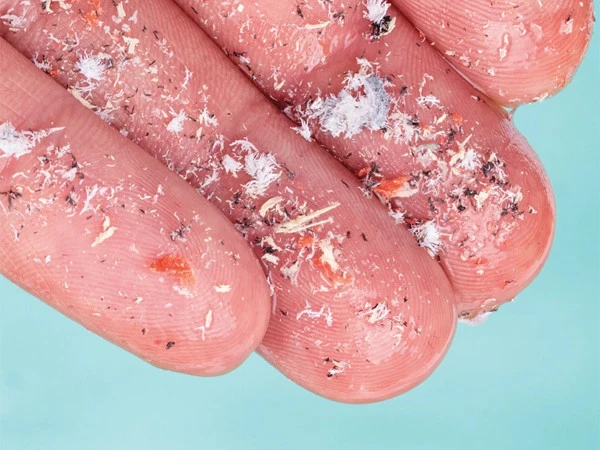
A new study has found that people who survived a heart attack had higher levels of tiny plastic particles known as microplastics and nanoplastics in their blood.

The findings suggest that plastic pollution could be an overlooked risk factor for heart disease.

Researchers from the University of Campania in Italy also discovered that smokers and people who are regularly exposed to air pollution had higher amounts of these plastic particles in their blood.

The study published in the European Heart Journal found that 84% of heart attack patients had microplastics and nanoplastics in the arteries that supply blood to the heart.

In comparison these particles were found in 40% of people with chronic ischemic heart disease and 32% of people with healthy coronary arteries.

Experts explained that microplastics and nanoplastics are extremely small plastic particles released from everyday items such as plastic packaging clothing and other plastic products.

Researchers said the study does not prove that these plastic particles directly cause heart attacks.  However the findings add to growing evidence that they may affect heart health and more research is needed to better understand their impact.

Similar Posts

  • Unbearable heat in Turbat

    Hani Rasheed Through the columns of your esteemed newspaper, I wish to highlight the unbearable heat in Turbat. Every summer, temperatures rise to dangerous levels, making life extremely difficult for residents. Students, labourers, elderly people, and patients suffer the most. Long hours of load shedding and water shortages make the situation even more unbearable. The authorities should take urgent measures to ensure an uninterrupted electricity supply, improve water availability, and plant more trees to reduce the effects of extreme heat. Public awareness about staying safe during heatwaves should also be promoted. The people of Turbat deserve timely action before this severe weather causes more health problems. I hope the concerned authorities will address this issue without delay

  • New breakthrough against superbugs

    Bacteria that cause infections are becoming harder to treat because many of them no longer respond to common antibiotics. These bacteria known as superbugs have developed resistance to medicines that once killed them easily.  As a result infections that were once simple to treat are becoming much more dangerous. Health experts say that every year thousands of people die from antibiotic resistant infections. This growing problem also makes surgeries cancer treatments and many hospital procedures riskier because patients are more likely to develop infections that are difficult to cure. Now scientists have made a promising discovery that could help solve this problem. Instead of creating entirely new antibiotics researchers have found a way to make existing antibiotics work again. The new approach uses special compounds called antibiotic adjuvants. These compounds do not kill bacteria on their own. Instead they help antibiotics become effective again by weakening the bacteria’s defenses. Researchers at Cold Spring Harbor Laboratory (CSHL) in the United States discovered a compound called PGHI-4. When they combined it with the powerful antibiotic vancomycin it successfully killed bacteria that had already become resistant to vancomycin. Vancomycin is commonly used to treat serious bacterial infections including those caused by MRSA and Clostridioides difficile (C. diff.). Over time however some bacteria developed resistance to this important medicine making treatment much more difficult. During laboratory tests, scientists found that PGHI-4 blocks an important bacterial enzyme called SagA. Without this enzyme the bacteria’s protective cell wall becomes weaker allowing vancomycin to destroy the bacteria once again. The treatment was especially successful against drug resistant Enterococcus faecium a bacterium known for causing difficult hospital infections. Professor John Moses of Cold Spring Harbor Laboratory said the discovery was the result of years of chemistry research. He explained that the newly found compound blocks an enzyme that helps bacteria resist antibiotics opening the door to more effective treatments. The research team also used a modern chemical method called Diversity Oriented Clicking (DOC) to create a library of more than 150 chemical compounds. Scientists believe this technique could speed up the discovery of new medicines, not only for antibiotic resistant infections but also for diseases such as cancer. Experts say that if future studies confirm these results the same strategy could eventually help treat other dangerous drug resistant infections including tuberculosis (TB). Doctors also warn that the misuse and overuse of antibiotics have made antibiotic resistance much worse. They advise people to take antibiotics only when prescribed by a doctor and to always complete the full course of treatment. This helps reduce the chances of bacteria becoming resistant to medicines. Scientists say this research is an important reminder that many of the biggest medical breakthroughs begin in laboratories where new discoveries can lead to better treatments and save lives in the future.

  • Indonesia’s youth are reviving leaf weaving art

    Across the tropical islands of Java and Bali, coconut and palm leaves have bound together daily life and spiritual practice for centuries. They include janur (young, pale yellow coconut fronds) and slepan (mature green fronds). These pliable natural fibers have traditionally been folded, sliced, and pinned into delicate ritual offerings. They are a part of canang sari, ornate wedding arches, and festive penjor poles that line village streets. For decades, this intricate craft was widely viewed as a transient household chore or a necessity of ceremonial duty. It was something crafted quickly, admired briefly, and discarded once dried. As younger generations moved toward urban centers and sought modern corporate or tech jobs, the deep knowledge of palm foliage design faced the quiet threat of stagnation. Today, a vibrant revival is underway. A new generation of Indonesian artisans, designers, and environmentalists is taking up leaf weaving. These crafties are reimagining this ancestral skill not merely as a folk tradition, but as a medium for sustainable architecture. The shift began when forward-thinking young crafters began asking a simple question. What if the humble palm leaf could transcend its flat, two-dimensional boundaries? Artisans such as Balinese weaver Ida Bagus Gede Ari Artana (famously known as Gus Ari) began pushing the physical limits of palm leaves. He experimented with twisting, interlacing, and tension-weaving techniques. Crafters transformed flat sheets (klangsah) into expansive 3D installations. As a result, collaborations like Make a Scene Bali, co-founded by Gus Ari and British stage designer Chloe Quinn happened. They brought international theatrical design principles into harmony with native Javanese and Balinese weaving traditions. Instead of tiny ritual baskets, young weavers are now constructing colossal mythological creatures, archways, floating pavilion interiors, stage backdrops, and even high-fashion wearable art and jewelry crafted from dried lontar leaves. These breathtaking installations have graced international platforms. For instance, the G20 Summit held in Bali, where sustainable leaf sculptures of native sea turtles and dragons greeted world leaders. Beyond aesthetic innovation, the youth-driven resurgence of leaf weaving is rooted in environmental activism. Over recent decades, the event and hospitality industries in Southeast Asia grew increasingly dependent on single-use plastics, styrofoam, and non-recyclable synthetic decorations. The movement to revive leaf weaving offers a completely biodegradable, zero-waste alternative. Young coconut fronds are harvested sustainably from local trees without harming the palm. The raw material is renewable, abundant, and locally sourced. Once an event or exhibition concludes, the entire installation can be composted back into the soil. The activism embodies a circular design ethos that resonates with modern eco-conscious consumers and international art curators alike. Perhaps the most significant impact of this movement is economic and cultural. Historically, local crafters have struggled to command fair compensation for traditional foliage work because the raw material was viewed as inexpensive. Now, there’s a promotion of leaf weaving to structural art and luxury event design. Young creative studios are proving that the value resides in the artisan’s vision, precision, and hours of practiced labor. This shift has boosted local earning potential and inspired young men and women across rural communities to remain in their homelands. They are earning sustainable livings while keeping their heritage alive. The palm frond art captures global attention. Alongside, Indonesia’s younger generation is demonstrating that tradition does not have to be frozen in a museum. Rather, it can grow, adapt, and weave a sustainable future for art and community.      

  • Monsoon remedies for itchy feet

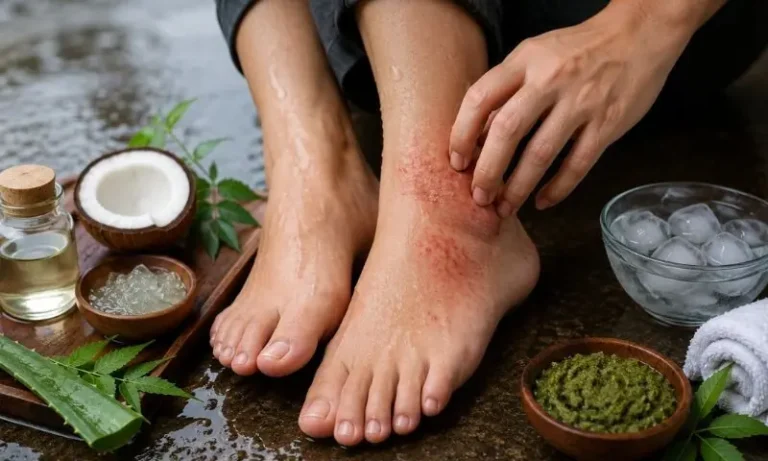
    The monsoon season brings welcome rain but it can also increase the risk of skin problems. Walking through dirty rainwater wearing wet shoes or socks for too long and constant moisture can cause itchy feet red rashes burning and fungal infections. If these symptoms are ignored a minor irritation can develop into a more serious skin infection. If your feet become itchy or irritated during the rainy season a few simple home remedies may help relieve mild symptoms. •Coconut oil Coconut oil is known for its natural antifungal and antibacterial properties. Wash your feet with clean water dry them completely with a soft towel and then apply a thin layer of coconut oil. It may help soothe irritation keep the skin moisturized and reduce the growth of germs. •Aloe Vera Gel If itching is accompanied by a burning sensation fresh aloe vera gel can provide cooling relief. Apply the gel directly to the affected area to help calm the skin and reduce irritation. •Neem paste Neem has long been used as a natural remedy for skin problems.  Grind fresh neem leaves with a little water to make a thick paste and apply it to the itchy area. It may help reduce mild itching and skin irritation. •Cold compress If your feet are swollen or extremely itchy wrap ice in a clean cloth and place it on the affected area for about 10 minutes. Never apply ice directly to the skin as it can cause damage. Moisturizing or antiseptic lotion If natural remedies are not available you can use a good quality moisturizer or antiseptic lotion to reduce dryness and soothe irritated skin. Tips to protect your feet After getting caught in the rain change into dry shoes and socks as soon as possible. Wear clean dry socks every day avoid reusing wet shoes and choose breathable footwear whenever possible. If your feet sweat a lot an antifungal powder may also help. When to see a doctor health experts advise seeing a doctor if the itching lasts for several days or if you develop severe swelling pus open sores intense pain fever or if the affected area spreads quickly. In some cases antifungal medicines or other treatments may be needed. These home remedies may help with mild symptoms but they are not a substitute for medical treatment. If your condition becomes severe or does not improve consult a qualified healthcare professional for proper diagnosis and treatment.

  • Natural face pack for facial hair

    Many young women worry about fine facial hair and dull looking skin. Tiny facial hairs can make the skin appear less smooth while dry or dead skin cells may make the face look tired. Instead of using strong chemical products waxing or threading some people prefer simple home remedies made with natural ingredients.  One such homemade face pack uses rice flour milk sugar lemon juice and coconut oil. Ingredients •2–3 tablespoons rice flour •1 teaspoon sugar •A small amount of milk •Juice of half a lemon •A few drops of coconut oil How to make the face pack Put the rice flour in a clean bowl. Add sugar and a little milk then mix well until the sugar dissolves as much as possible. This step is important because undissolved sugar grains can make the skin more irritated when the mixture is rubbed or removed. Next add lemon juice and a few drops of coconut oil.  Mix everything until you get a smooth paste. How to use it Apply a thin layer of the mixture to your face and leave it for around 15–20 minutes until it dries. Remove it gently with light movements. Avoid rubbing the skin too hard as excessive scrubbing can cause irritation or small skin injuries. Rice flour and sugar may help remove dead skin cells from the surface.  Gentle massage may also remove some very fine facial hairs making the skin look temporarily smoother and brighter. Use with care This face pack may make the skin feel cleaner and smoother but there is limited scientific evidence that it can permanently reduce facial hair.  Facial hair growth is mainly affected by hormones and genetics. Lemon juice and repeated scrubbing may cause dryness redness burning or irritation especially in people with sensitive skin.  Lemon can also make the skin more sensitive to sunlight. Do a patch test first Before applying any new homemade mixture to your entire face test a small amount on a small area of skin first.  If you notice itching burning swelling or redness wash it off and stop using it. For long term or unwanted facial hair growth safer hair removal options can be discussed with a dermatologist.

  • Monsoon may increase fungal infections

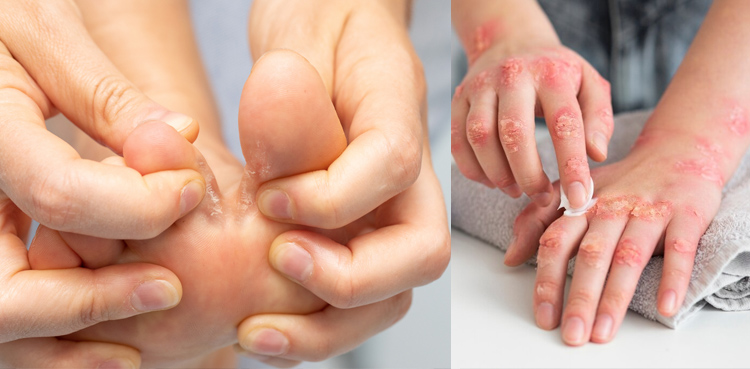
    During the monsoon season the number of people developing fungal infections between their toes often increases. Health experts say this is mainly because of extra humidity and sweat which create the perfect environment for fungus to grow. Contrary to popular belief rainwater itself does not cause fungal infections. The real problem is when the skin stays wet for a long time. Moist skin allows fungus to grow more easily. According to dermatologist people with diabetes obesity weak immune systems or excessive sweating are at a higher risk. In these individuals fungal infections may take longer to heal and are more likely to return. Fungal infections usually affect warm damp areas of the body including the armpits groin waist neck under the breasts between the fingers and toes feet and scalp. Common symptoms include itching, redness burning flaky skin and red rashes. Experts say wearing wet clothes staying in sweaty clothing for long periods using damp shoes or socks or wearing tight fitting clothes during the rainy season can greatly increase the risk of infection. Keeping the skin clean and dry is one of the best ways to prevent it. The scalp can also be affected during the monsoon. High humidity may keep the scalp damp for longer allowing fungus and bacteria to grow. This can lead to dandruff itching an oily scalp and in some cases hair loss. Doctors also warn against leaving hair wet after getting caught in the rain. It is best to rinse your hair with clean water and dry it completely to reduce the risk of scalp infections. Avoid self treatment health experts advise against buying anti itch or antifungal creams without consulting a doctor.  Some creams contain steroids that may temporarily reduce itching but can allow the fungal infection to spread further making it harder to treat later. Stopping treatment as soon as symptoms improve is another common mistake.  Doctors recommend completing the full course of medicine as prescribed to prevent the infection from coming back. Tips to prevent fungal infections •Keep your skin and scalp clean and dry. •Change sweaty clothes as soon as possible. •Avoid wearing wet shoes or socks for long periods. •Wear loose cotton clothing. Eat a balanced diet to support a healthy immune system. Do not use skin or hair creams without medical advice. Experts say early diagnosis proper treatment and good hygiene can help prevent fungal infections and reduce the chances of them returning.

Leave a Reply

Your email address will not be published. Required fields are marked *