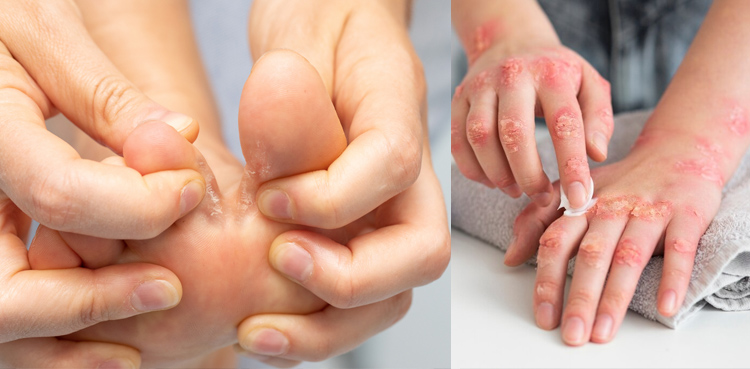
Monsoon may increase fungal infections
During the monsoon season the number of people developing fungal infections between their toes often increases.
Health experts say this is mainly because of extra humidity and sweat which create the perfect environment for fungus to grow.
Contrary to popular belief rainwater itself does not cause fungal infections. The real problem is when the skin stays wet for a long time.
Moist skin allows fungus to grow more easily.
According to dermatologist people with diabetes obesity weak immune systems or excessive sweating are at a higher risk.
In these individuals fungal infections may take longer to heal and are more likely to return.
Fungal infections usually affect warm damp areas of the body including the armpits groin waist neck under the breasts between the fingers and toes feet and scalp.
Common symptoms include itching, redness burning flaky skin and red rashes.
Experts say wearing wet clothes staying in sweaty clothing for long periods using damp shoes or socks or wearing tight fitting clothes during the rainy season can greatly increase the risk of infection.
Keeping the skin clean and dry is one of the best ways to prevent it. The scalp can also be affected during the monsoon. High humidity may keep the scalp damp for longer allowing fungus and bacteria to grow.
This can lead to dandruff itching an oily scalp and in some cases hair loss.
Doctors also warn against leaving hair wet after getting caught in the rain. It is best to rinse your hair with clean water and dry it completely to reduce the risk of scalp infections.
Avoid self treatment
health experts advise against buying anti itch or antifungal creams without consulting a doctor. Some creams contain steroids that may temporarily reduce itching but can allow the fungal infection to spread further making it harder to treat later.
Stopping treatment as soon as symptoms improve is another common mistake. Doctors recommend completing the full course of medicine as prescribed to prevent the infection from coming back.
Tips to prevent fungal infections
•Keep your skin and scalp clean and dry.
•Change sweaty clothes as soon as possible.
•Avoid wearing wet shoes or socks for long periods.
•Wear loose cotton clothing.
Eat a balanced diet to support a healthy immune system. Do not use skin or hair creams without medical advice.
Experts say early diagnosis proper treatment and good hygiene can help prevent fungal infections and reduce the chances of them returning.