natural face pack

Natural face pack for facial hair

Many young women worry about fine facial hair and dull looking skin. Tiny facial hairs can make the skin appear less smooth while dry or dead skin cells may make the face look tired.

Instead of using strong chemical products waxing or threading some people prefer simple home remedies made with natural ingredients.  One such homemade face pack uses rice flour milk sugar lemon juice and coconut oil.

Ingredients

•2–3 tablespoons rice flour

•1 teaspoon sugar

•A small amount of milk

•Juice of half a lemon

•A few drops of coconut oil

How to make the face pack

Put the rice flour in a clean bowl. Add sugar and a little milk then mix well until the sugar dissolves as much as possible.

This step is important because undissolved sugar grains can make the skin more irritated when the mixture is rubbed or removed.

Next add lemon juice and a few drops of coconut oil.  Mix everything until you get a smooth paste.

How to use it

Apply a thin layer of the mixture to your face and leave it for around 15–20 minutes until it dries. Remove it gently with light movements. Avoid rubbing the skin too hard as excessive scrubbing can cause irritation or small skin injuries.

Rice flour and sugar may help remove dead skin cells from the surface.  Gentle massage may also remove some very fine facial hairs making the skin look temporarily smoother and brighter.

Use with care

This face pack may make the skin feel cleaner and smoother but there is limited scientific evidence that it can permanently reduce facial hair.  Facial hair growth is mainly affected by hormones and genetics.

Lemon juice and repeated scrubbing may cause dryness redness burning or irritation especially in people with sensitive skin.  Lemon can also make the skin more sensitive to sunlight.

Do a patch test first

Before applying any new homemade mixture to your entire face test a small amount on a small area of skin first.  If you notice itching burning swelling or redness wash it off and stop using it.

For long term or unwanted facial hair growth safer hair removal options can be discussed with a dermatologist.
Similar Posts

  • | |

    Ada Lovelace, the tech woman

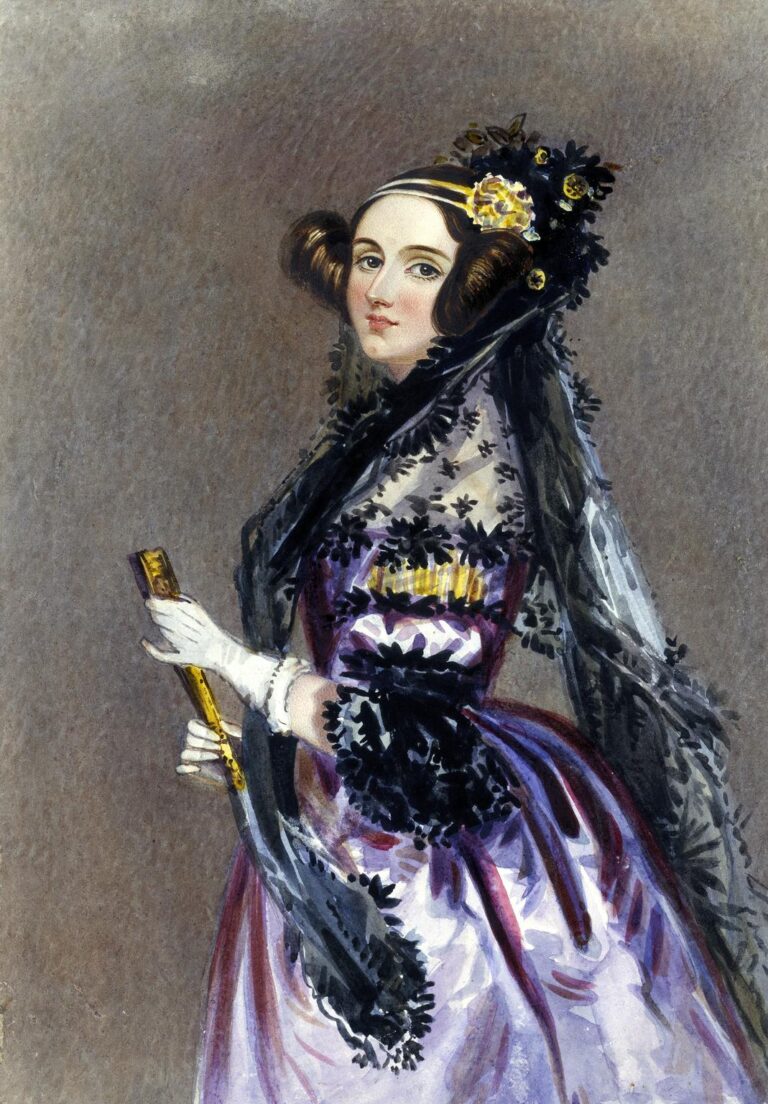
    Long before the dawn of modern computers, a twelve-year-old girl named Ada Lovelace set her heart on how to fly. Rather than merely dreaming about the skies, she treated the challenge as a practical engineering problem. Beginning in early 1828, she meticulously studied avian anatomy and tested potential wing materials. Her experiments ranged from light paper and smooth silk to natural feathers. Lovelace even documented her findings in an illustrated manuscript she titled Flyology. Her pursuit only halted when her mother put an end to the project. A traditional mother who insisting that such whimsical ideas were a distraction from proper academic training. This tension between wild imagination and strict logic defined Lovelace’s upbringing.  Mother Annabella Byron was an intensely practical woman whose mathematical tendencies led her estranged husband, the tempestuous Romantic poet Lord Byron, to nickname her the Princess of Parallelograms. Shortly after Ada was born, Annabella separated from Byron. She further  separated the infant from her father’s chaotic influence. Lady Byron made it her mission to raise her daughter on a rigid diet of arithmetic, French and music. By doing so, the mother explicitly aimed to suppress any artistic interest she believed Ada might inherit from Byron. When Byron inquired about his young daughter, Annabella noted Ada applied her imagination strictly to mechanical problem-solving. Yet, despite her mother’s best efforts to extinguish her creative potential, Lovelace refused to treat reason and imagination as opposing forces. Instead, she fused them into a single approach to understanding the world. In early 1841, she pondered the true nature of imagination while identifying two distinct powers. First, she defined it as a combining faculty: the rare ability to find meaningful connections between entirely unrelated subjects. Second, more profoundly, she recognized imagination as a discovering faculty: the equipment that pierces the invisible world to reveal the hidden mechanics of science.   This hybrid worldview that Lovelace would later call poetic science is precisely what enabled her to look at Charles Babbage’s early mechanical calculating engines and see far past their raw math. While others saw mere gear-driven counting machines, Ada envisioned a future where machines could manipulate symbols, compose music, and run complex sequences of instructions. By bridging the emotional depth of her father’s romanticism with the rigorous structure of her mother’s mathematics, Ada Lovelace did not just become the world’s first computer programmer; she proved that groundbreaking technical innovation requires equal parts calculation and visionary artistry.

  • Why Popcorn became the ultimate movie snack

    Watching TV or a movie often feels incomplete without something to eat. For many people popcorn is the first snack that comes to mind. But have you ever wondered how popcorn became the most popular food at movie theaters? The tradition began in the 19th century when popcorn became a popular snack at fairs festivals and circuses. In those days it was usually sold from small street carts. A major turning point came in 1885 when the first popcorn machine was invented. This made it easier to prepare fresh popcorn quickly and sell it to large crowds. By 1907, the United States had nearly 5,000 movie theaters with tickets costing just 5 cents. Popcorn sellers started placing their carts outside theaters where moviegoers could easily buy popcorn before going inside. As movie theaters became more modern and luxurious many owners banned outside food. However the rule did not last long. By the 1930s theaters began selling popcorn inside and outside their buildings realizing it was a profitable business. Today popcorn is one of the biggest sources of income for many cinemas with some estimates suggesting it accounts for up to 85% of concession stand sales. Another reason popcorn became the perfect movie snack is that it is light easy to eat and does not make much noise allowing people to enjoy their film without disturbing others.

  • Too much gaming may harm children

    Online and video games are a popular source of entertainment for children.  However experts warn that spending too much time playing games can affect a child’s mental physical and social development. Playing games in moderation can be enjoyable but excessive gaming may lead to several problems. Experts say the growing popularity of video games among children is becoming a concern around the world. Spending long hours in front of a screen can reduce time for schoolwork exercise and other healthy activities. Research also suggests that too much gaming may make some children more irritable angry or aggressive. According to experts excessive gaming may also affect brain function and the nervous system. Children who spend too much time playing games may lose interest in their studies perform poorly at school and become more likely to develop an unhealthy dependence on video games. Too much screen time can also reduce social interaction. Instead of spending time with family and friends children may prefer staying alone with their games which can affect their communication and relationship skills. Pediatric experts advise parents to set clear limits on screen time and encourage children to take part in other activities. Outdoor games painting arts and crafts reading and other creative hobbies can support healthy physical and mental development. These activities are even more beneficial when parents are involved. Experts also say that spending time with siblings and family members helps children build stronger relationships confidence, and social skills.  If video games become a child’s main focus family life and personal development may suffer. Experts do not recommend banning video games completely as learning to use technology is important today. Instead parents should set reasonable gaming limits monitor what their children play and encourage a balanced lifestyle that includes learning physical activity and family time.

  • | | |

    Nimra Khan divorce rumors intensify after social m…

    Pakistani television actress Nimra Khan has once again become the center of attention on social media after a series of emotional posts and changes to her Instagram activity sparked fresh speculation about her married life. The actress had announced her marriage in June 2026 through Instagram, sharing pictures and moments from her wedding ceremony held in Paris. However, shortly after the wedding, rumors regarding possible differences between the couple began circulating online. The speculation gained momentum when Nimra Khan shared an emotional video message in which she spoke about staying strong during difficult times. She said that no matter how challenging life becomes or whether people stop understanding or supporting someone, a person should never abandon themselves because they are enough for themselves. Following the reactions from fans, the actress had previously clarified that her married life was going well and explained that she had hidden some personal pictures due to concerns about negative attention and the “evil eye.” However, recent developments on social media have once again fueled discussions among fans. According to reports, Nimra Khan and her husband Zain Hamid have removed each other’s pictures from Instagram and have also unfollowed each other. The rumors intensified after Nimra Khan shared another video with a message about personal strength and resilience. In the post, she wrote that a person should remain strong enough that others do not mistake their silence for weakness. Meanwhile, her husband also shared a brief but meaningful post that attracted public attention. His message, which appeared on July 31, said: “Finally at peace, good that I got rid of it.” The post led many social media users to question whether the couple was facing personal difficulties. Nimra Khan also recently shared a video related to domestic violence awareness, in which a woman described alleged abuse by her husband. The actress reposted the video with the message, “We are with you.” She later shared another post emphasizing the importance of setting personal boundaries, saying that she had established limits because failing to do so had previously caused her difficulties. Despite the growing speculation, neither Nimra Khan nor Zain Hamid has issued an official statement confirming a divorce or separation. Fans continue to discuss the couple’s social media activity, but the actual status of their relationship remains unclear. As social media continues to fuel public interest in celebrity relationships, any confirmation regarding their marriage will likely come directly from the couple themselves.

  • 4 Natural face scrubs

    Exfoliation is an important part of skincare because dead skin cells can build up over time making the skin look dull and feel rough. Using a gentle scrub can help remove these dead cells leaving your skin feeling cleaner and smoother. You can make simple face scrubs at home with everyday ingredients.  However if you have sensitive skin always do a patch test before trying any homemade remedy. Rice face scrub Mix finely ground rice with honey aloe vera gel or coconut oil to make a smooth paste.  Gently massage it onto your face for a few minutes then rinse with water. Barley face scrub Combine roasted barley flour with milk or almond oil to create a soft paste.  Apply it to your face and gently massage before washing it off. It may help your skin feel fresh and soft. Gram flour (Besan) scrub Mix gram flour with a small pinch of turmeric and a few drops of lemon juice.  Add milk or water to make a paste. Apply it to your face let it dry slightly and then rinse with water. Oat scrub for dry skin Mix oat flour with buttermilk to make a creamy paste. Apply it to your face leave it on for a few minutes then gently massage and wash it off with lukewarm water. Tips for safe exfoliation The skin on your face is delicate so avoid rubbing it too hard.  Exfoliating once or twice a week is usually enough for most people. If you notice redness irritation itching or acne getting worse stop using the scrub and consult a dermatologist if the problem continues.

  • | |

    Multimedia pioneer Cao Fei captures the human heart

    Among contemporary Asian creators, Beijing-based multimedia artist Cao Fei stands out as a defining narrative voice. Working across video, virtual reality, installation, and photography, her globally acclaimed career centers on a simple yet profound premise: amidst the whirlwind of rapid industrial advancement, hyper-capitalism, and sweeping technological change, art must always return to the core of the human condition. Born in 1978 in Guangzhou, Cao Fei grew up on the frontlines of staggering societal evolution. Watching the countryside surrender to megacities, factory complexes, and high-tech infrastructure gave her a unique point on the modern world. Rather than viewing this rapid transition with nostalgia or pessimism, her works connect reality and imaginative fantasy. A hallmark of Cao’s career is her fascination with the workplace, particularly automated logistics hubs and manufacturing floors. In iconic pieces like Whose Utopia and Asia One, she embeds her cameras inside functioning industrial facilities from textile plants to highly automated e-commerce distribution centers. Yet, instead of focusing solely on the cold efficiency of machinery or output metrics, she shifts her lens toward the individual laborers maneuvering through these vast, mechanized systems. Her films document the quiet desires, personal dreams, and unspoken emotional bonds of workers who navigate a world increasingly driven by algorithms and quotas. Parallel to her exploration of physical industry, Cao Fei has consistently operated on the cutting edge of digital frontiers. Long before the concept of the metaverse entered mainstream vocabulary, she was constructing RMB City within online platforms like Second Life, exploring how virtual avatars allow people to seek identity, escape, and community in digital environments. Her projects often feature young people engaging in subcultures like cosplay, stepping out of suburban construction sites and into elaborate alter egos. For Cao, these virtual realms are not merely frivolous distractions; they represent vital spaces of self-expression where individuals reclaim agency against the pressure of uniform urban life. Despite her focus on futuristic landscapes, automated networks, and virtual platforms, Cao Fei maintains that rootedness in heritage remains essential. Traditional culture, memory, and personal history act as indispensable anchors in a world constantly shifting beneath our feet. Whether reflecting on regional Cantonese roots, exploring local neighborhood history in Beijing, or depicting surreal futures, her work grounds high-tech environments in real human memory and emotion.   Ultimately, Cao Fei’s artistic vision offers a thoughtful, multi-layered reflection on modern life. By balancing documentation with surreal storytelling, her art reminds us that no matter how complex our machines, algorithms, or cities become, the central narrative of our time remains fundamentally human.

Leave a Reply

Your email address will not be published. Required fields are marked *