woman dies after

Woman dies after anti aging injection in New York

A 27 year old woman in New York has died after receiving an anti aging injection at a private medical clinic raising serious concerns about unlicensed cosmetic treatments.

According to foreign media reports the woman became critically ill shortly after the injection. An ambulance was called to take her to the hospital but she died before arriving.

Police arrested 55 year old Luis Rojas Cabrera the man who gave the injection.  During questioning he admitted that he did not have a valid New York medical license to practice medicine.

Authorities have charged him with practicing medicine without a license and putting another person’s life at risk through reckless actions.

The suspect later appeared in a Bronx court. A judge allowed his temporary release but ordered him to surrender his passport until the post mortem report is completed.

In court Cabrera said he is a licensed doctor in the Dominican Republic and also holds a medical assistant license in Puerto Rico.  He added that his application for a New York medical license is still under review.

He also confirmed that the only license he currently holds in New York is as a cosmetologist not as a licensed physician.

Similar Posts

  • Why insects increase during monsoon

    Monsoon rain makes the weather pleasant but it can also lead to an increase in insects and other bugs. In Pakistan poor drainage standing water and damp surroundings can attract different types of insects to homes after rainfall. After rain small black flying insects are often seen around lights and bulbs.  Some insects can also cause itching redness or irritation if they bite. Certain insects may also carry germs and increase the risk of disease. However a few simple steps can help reduce their presence around your home. Use insect repellent when going outside during the rainy season applying a suitable insect repellent can help protect the skin from mosquitoes and other biting insects. This is especially useful after rainfall when insect activity increases. Try camphor carefully Camphor is sometimes used as a home method to keep insects away because of its strong smell.  If you use it keep it in a safe place and away from children and pets. Use insect spray safely Spraying an appropriate insect killer inside the home after rain may help reduce the number of insects. Always follow the instructions on the product label and keep children and pets away from the area while using the spray. Keep your home dry and clean Keeping the home and its surroundings clean is one of the most important ways to control insects.  Clean plant pots and remove water that collects in trays buckets containers or other places. Standing water can become a breeding place for mosquitoes and other insects. Keep food covered Always keep food and drinks covered especially during the monsoon season. Installing screens or nets on doors and windows can also help stop insects from entering the house. Manage garbage properly Keep garbage in a covered dustbin and place it away from living areas whenever possible. Empty the bin regularly and keep the area around it clean. Simple prevention can help Keeping your home clean removing standing water covering food and taking basic precautions can greatly reduce insects during the monsoon. A little care and regular cleaning can help keep your home more comfortable and hygienic during the rainy season.

  • |

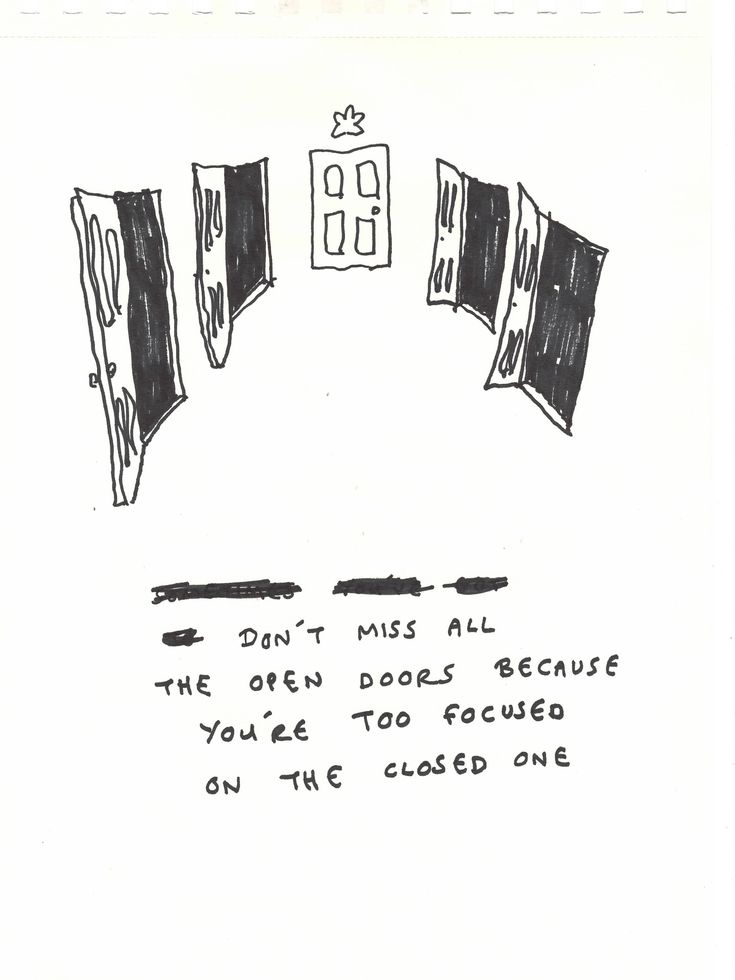
    The art of the open ending

    For centuries, traditional storytelling operated under a strict covenant of closure. Fables, romantic comedies, and classic mysteries were built upon a reassuring promise. And by the final chapter, every thread would be neatly tied, justice served, lovers united, and monsters vanquished. This desire for definitive resolutizon is deeply human. Our brains naturally crave order and certainty. Yet, as modern literature evolved alongside an increasingly complex world, a different artistic philosophy took the spot. The open ending is not a failure of craft; it is a sophisticated act of storytelling that treats the reader as an active partner. When an author refuses to deliver a resolution, they fundamentally alter the dynamic between text and reader. In a traditional closed narrative, the reader is a passive recipient, sitting back while the writer decides the fate of every character. An open ending, by contrast, throws open the door to collaboration. As the final sentence lingers without a definitive resolution, the narrative burden shifts. The reader must step into the silence. They must analyse character motivations, thematic clues, and emotional trajectories to construct their own sense of meaning. The story stops being merely something you consumed; it becomes an intellectual puzzle you participated in completing. Psychologically, ambiguous endings linger in the memory far longer than wrapped-up conclusions. Behavioral scientists refer to this as the Zeigarnik effect: the cognitive tendency for human minds to remember uncompleted or interrupted tasks better than completed ones. A novel that ends with a smooth resolution is easily categorized and set aside. But a book that closes on a question mark or a character standing at a metaphorical crossroads, uncertain of their next step continues to resonate in the subconscious. Long after the book is closed, you find yourself pondering what happened next while doing dishes, walking to work, or staring out a window. Furthermore, the open ending reflects a deeper fidelity to real life. Human existence rarely delivers clean, cinematic resolutions. Our relationships, griefs, ambitions, and self-discoveries are ongoing processes rather than neatly closed chapters. By leaving a story partially unresolved, an author honors the messy reality of human experience. It acknowledges that living with unanswered questions is often far more authentic than forcing an artificial sense of certainty. When executed with skill, an open ending is never lazy or evasive. It is not an abrupt cutoff, but a carefully calibrated launching pad. The author leaves behind enough emotional breadcrumbs and thematic architecture for the conclusion to feel earned, even if the explicit plot points remain unwritten. It transforms the final page inviting us to look beyond the boundaries of the page and recognize that the best stories are the ones that keep living inside us.  

  • China tests giant fusion magnet

    China has successfully tested the world’s largest fusion magnet weighing 582 tons marking a major step toward developing an “artificial sun.” The technology aims to produce clean safe and nearly unlimited energy through nuclear fusion in the future. The giant D-shaped superconducting magnet was developed by the Institute of Plasma Physics under the Chinese Academy of Sciences. It is designed to control extremely hot plasma using powerful magnetic fields which is one of the most important parts of the nuclear fusion process. The magnet measures 21 meters long and 12 meters wide and has been built for the world’s largest fusion reactor. Reports say it is about 1.3 times larger than a similar magnet used in an international fusion project and can store three times more energy. It is capable of containing plasma at temperatures of up to 100 million degrees Celsius allowing scientists to recreate the same fusion process that powers the Sun. Chinese officials said most of the materials and manufacturing were completed within China reducing the country’s reliance on foreign technology and supplies. China hopes to generate electricity from fusion energy by around 2030. Scientists say an “artificial sun” is a nuclear fusion reactor that copies the natural process used by the Sun to produce energy. If successful this technology could provide the world with a reliable source of clean and almost unlimited electricity in the future.

  • Microplastics linked to heart risk

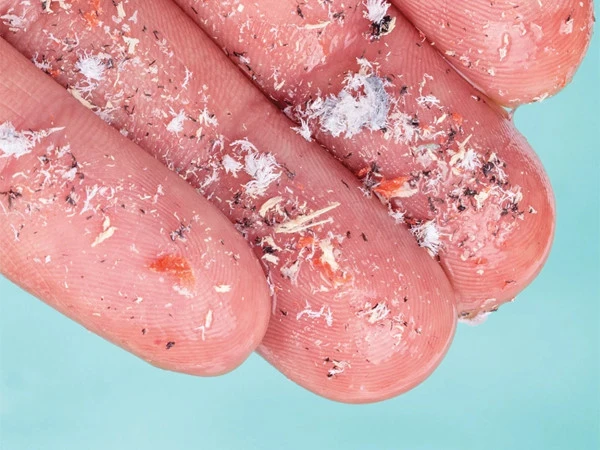
    A new study has found that people who survived a heart attack had higher levels of tiny plastic particles known as microplastics and nanoplastics in their blood. The findings suggest that plastic pollution could be an overlooked risk factor for heart disease. Researchers from the University of Campania in Italy also discovered that smokers and people who are regularly exposed to air pollution had higher amounts of these plastic particles in their blood. The study published in the European Heart Journal found that 84% of heart attack patients had microplastics and nanoplastics in the arteries that supply blood to the heart. In comparison these particles were found in 40% of people with chronic ischemic heart disease and 32% of people with healthy coronary arteries. Experts explained that microplastics and nanoplastics are extremely small plastic particles released from everyday items such as plastic packaging clothing and other plastic products. Researchers said the study does not prove that these plastic particles directly cause heart attacks.  However the findings add to growing evidence that they may affect heart health and more research is needed to better understand their impact.

  • Productivity and Time Management

    By: Asma Qayyum With the rapid pace of modern life, productivity and time management have become vital skills for students, professionals, and individuals alike. With increasing responsibilities and constant distractions, managing time effectively is the key to achieving success. Productivity refers to the ability to complete tasks effectively by making the best use of time, energy, and resources. On the other hand, time management is the process of planning and organizing how time is spent on different activities to accomplish goals efficiently. The greatest benefit of effective time management is increased efficiency. People who plan their day and prioritize their most important tasks are more likely to meet deadlines, stay productive, and produce higher-quality work. It also helps reduce stress by preventing last-minute pressure and allowing people to complete their tasks in a calm and organized manner. For example, students who follow a regular study schedule usually perform better in examinations than those who rely on last-minute preparation. Despite these benefits, several factors reduce productivity, including procrastination, excessive use of social media, poor planning, and a lack of clear goals. These habits waste precious time and make it difficult to focus on essential responsibilities. However, with the right approach, these challenges can be overcome through self-discipline and proper planning. There are several ways to improve productivity, such as creating a daily to-do list, avoiding unnecessary distractions, setting realistic goals, completing the most important tasks first, taking short breaks, following a regular routine, and managing time effectively. Research highlights the importance of effective time management. According to the American Psychological Association (APA), planning tasks and managing time can help reduce stress and improve overall well-being. Similarly, educational research by Pan et al. (2011) found that strong time management skills are directly associated with higher study engagement and greater achievement of academic goals. In conclusion, productivity and time management are not just useful skills but essential habits for success. By managing time wisely and staying focused on priorities, individuals can accomplish more, reduce stress, and create opportunities for personal and professional growth. Every second is valuable, and learning to manage time effectively is one of the best investments anyone can make in their future.

  • |

    Writers are embracing flaws to fight AI prose

    In an era where generative artificial intelligence can generate essays in seconds, the digital world is quietly witnessing a linguistic backlash. Readers are increasingly attuned to the invisible fingerprint of large language models. Perfectly balanced sentences, predictable three-item lists, flawless grammar and fondness for the em dash. In response, a movement of novelists, journalists, essayists, and even corporate creators are opting an anti-AI literary counterculture. These writers are actively reintroducing human idiosyncrasies ranging from unorthodox metaphors to intentional typos to declare that a human is behind the keyboard. The hallmark of standard AI-generated text is not necessarily bad grammar. In fact, it is often too clean. Text-generation algorithms default to statistically probable phrasing. It’s resulting in a distinctively smooth, neutral tone that rarely takes stylistic risks. Over the past few years, certain visual and structural patterns have become clear red flags for readers. Excessive dependence on em dashes. Relying on clinical or dramatic transitions like “In conclusion,” “Delve,” or “Navigating the landscape of…” Prose that seems lacking the natural rhythm, pauses, and unpredictable detours of spontaneous speech. To break free from these algorithmic habits, authors are adopting techniques anchored in absolute negation. Novelist Laura Brooke Robson, author of Love Is an Algorithm, noted that she actively altered her sentence structures to avoid robotic cadence. Instead of relying on conventional metaphors, she intentionally sought out unexpected punctuation. For creators, avoiding the default traps of language models has surprisingly made their writing more original and lively. This counterculture goes beyond simply avoiding specific punctuation marks. Writers are cultivating a distinct aesthetic centered on authenticity, vulnerability, and friction. After years of detached or objective styles, creators are leaning back into intimate first-person storytelling. Specific personal experiences, odd sensory details, and messy real-life observations serve as proof of lived experience. They prove to be something synthetic text generators cannot genuinely claim. Minor human flaws, casual slang and even subtle typos are being viewed as authentic signatures. Some digital platforms and creators have even experimented with tools that preserve raw keystrokes to signal genuine human origin. Instead of smoothing out every transition, writers are introducing erratic pacing, quirky similes, and inventive vocabulary. Authors create an experience that keeps the reader engaged. Deliberately reassuring them that the text wasn’t produced by an automated model. Can Artificial Intelligence Just Copy It? Skeptics of this trend point out an obvious paradox! If large language models are capable of processing complex prompts, they can just as easily be instructed to “write with typos,” “use casual grammar,” or “tell a quirky story in the first person.” From a purely technical perspective, intentional mistakes does not make prose impossible for a machine to imitate. However, proponents of the movement emphasize that outsmarting algorithms was never the primary goal. Instead, the anti-AI counterculture is an artistic statement about human craft and intention. Writing is fundamentally an act of personal communication between two minds. When readers engage with text, they are seeking the author’s unique perspective, effort, and creative voice. Ultimately, this movement signals how society values written communication. As machine-generated text becomes ubiquitous, hyper-polished prose is losing its premium status. What readers increasingly crave is not frictionless perfection, but the warmth and oddity of a human voice.  

Leave a Reply

Your email address will not be published. Required fields are marked *