pakistan digitises hajj
|

Pakistan digitises Hajj 2027, announces Rs1.2m cost

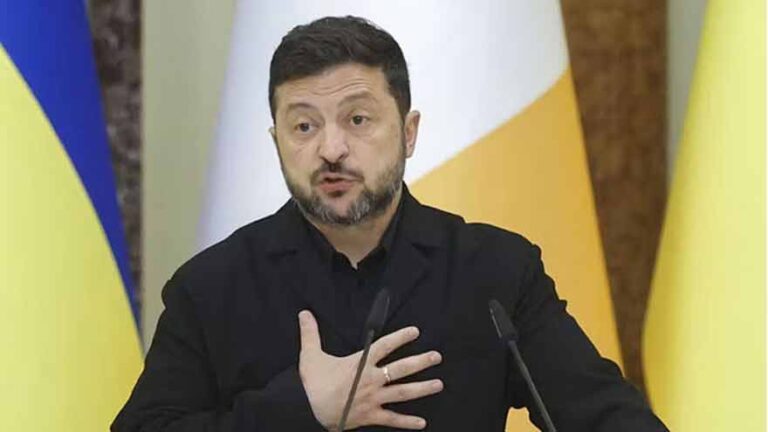
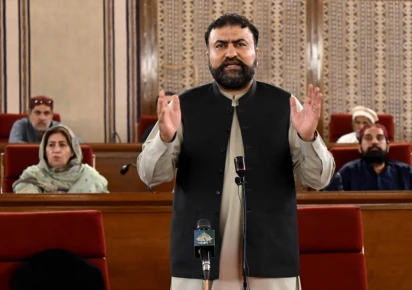
Pakistan has moved towards a completely digital Hajj management system, enabling intending pilgrims to complete registration and make pilgrimage-related payments through the official Pak Hajj mobile application, Federal Minister for Religious Affairs Sardar Muhammad Yousuf announced on Monday.

Speaking at a press conference in Islamabad, the minister outlined the government’s preparations for Hajj 2027, including the estimated cost of pilgrimage packages, payment schedules, allocation of seats for short-duration Hajj and arrangements for collecting payments from pilgrims.

He said the government had taken steps to bring the entire Hajj process onto a digital platform in an effort to make registration, payments and other administrative procedures easier, more transparent and traceable.

According to the minister, approximately 400,000 people have already registered and are currently progressing through the application process for the government’s Hajj arrangements.

Hajj 2027 packages and costs

Sardar Yousuf announced that the estimated expenditure for the regular government Hajj package, which will cover a stay of around 40 to 42 days, has been set at approximately Rs1.2 million.

The cost of the shorter package, designed for pilgrims opting for a stay of approximately 20 to 22 days, will be around Rs1.3 million, he said.

The government has allocated 30,000 seats specifically for pilgrims opting for the short-duration Hajj package.

The minister said the government would begin collecting the first instalment of Hajj expenses from August 17, while the second instalment would be payable during the second week of October.

He added that applicants who are not selected to perform Hajj in 2027 would be placed on a waiting list for consideration in the subsequent year.

Payments to be processed digitally

The minister said the digitalisation programme would cover financial transactions as well as the registration process. Pilgrims would be required to use the Pak Hajj application for making payments instead of relying on other payment channels.

The same digital mechanism will also be available to pilgrims travelling under the private Hajj scheme, allowing them to make their payments through the application.

Sardar Yousuf emphasised that the government intends to keep Hajj-related financial transactions within the designated digital system to improve monitoring and ensure greater transparency.

Pilgrims opting for the private scheme, however, will retain the option of selecting an online Hajj service provider of their choice.

Habib Bank selected for Hajj payments

As part of the new financial arrangements, the Ministry of Religious Affairs has entered into an agreement with Habib Bank Islami to facilitate the collection of Hajj payments.

The minister said the bank would work with the ministry as its authorised banking partner for receiving pilgrimage-related funds under the arrangements being introduced for the upcoming Hajj season.

He expressed satisfaction over the partnership and said the agreement would formally be signed on Monday.

Minister responds to question over bank selection

During the press conference, a journalist questioned the ministry’s decision to authorise Habib Bank as the banking partner for collecting Hajj applications and payments, asking why other banks had not been selected.

Responding to the question, Sardar Yousuf said the ministry had opened the process to banks and invited them to participate.

He explained that the banks that submitted applications were evaluated against the ministry’s requirements. According to the minister, Habib Bank was the only institution that fulfilled the required criteria, particularly those related to digital payment facilities.

He said other participating banks were unable to meet the ministry’s stipulated requirements, which ultimately led to Habib Bank being selected as the authorised partner.

Government seeks greater transparency through digital system

The government believes the new digital framework will reduce paperwork and simplify several stages of the Hajj process for Pakistani pilgrims.

By shifting registration and payment procedures to a centralised digital platform, the Ministry of Religious Affairs aims to improve oversight of applications and financial transactions while reducing the scope for manual errors.

The integration of both government and private Hajj arrangements into the app-based system is also expected to provide pilgrims with easier access to information and payment services.

Similar Posts

  • |

    Trial commences for Malaysian teenager accused of fatal school stabbing

    A 14-year-old boy has gone on trial in Malaysia for the alleged murder of his 16-year-old schoolmate, Yap Shing Xuen, whose body was discovered with multiple knife wounds in a secondary school toilet near Kuala Lumpur. The accused, who pleaded not guilty, faces up to 40 years in prison and potential caning if convicted, though capital punishment is barred due to his status as a minor under Malaysian law. Police confirmed the recovery of a written note at the scene and cited potential online influence, sparking nationwide debate concerning the impact of social media algorithms, incel subcultures, and youth exposure to radicalising content. In response to growing public concern surrounding youth safety, Malaysian authorities have instituted a policy prohibiting children under 16 from maintaining accounts on major social media platforms.

  • |

    Julie Andrews confirms she will not return for ‘Princess Diaries 3’

    “The Princess Diaries” remains one of the most beloved coming-of-age films of the century, but its long-awaited third instalment just lost one of its biggest stars. Dame Julie Andrews has confirmed she won’t be part of it. The 90-year-old actress played Queen Clarisse Renaldi opposite Anne Hathaway in the original films. She has now revealed she’ll be sitting out the upcoming sequel entirely. Speaking to Today, Andrews confirmed directly that she will not appear in the new instalment. She explained that the story appears to be taking a somewhat different direction this time around. She admitted she isn’t entirely sure how the filmmakers plan to handle that shift. According to her, the timing simply doesn’t work for her to be part of it anymore. Andrews said she believes the story now belongs to Princess Mia, Hathaway’s character, rather than her own. She framed the decision as a natural handoff, letting the franchise continue through its central character instead. Her comments have already sparked disappointment among longtime fans of the franchise. One user online said the script would need to be exceptional now, arguing the film has lost one of its strongest draws. For many, Andrews’ presence was a defining part of what made the earlier films so beloved. Fans had been hoping to see her return to the big screen after years away from major on-screen roles. Since stepping back from acting, Andrews has largely shifted toward voiceover work instead. Her absence from “The Princess Diaries 3” marks another sign of that ongoing transition away from live-action performances. While the news has left fans emotional, it also puts more attention on how the new film will carry the story forward. With Andrews stepping aside, all eyes are now on how the franchise reintroduces its world without one of its most iconic characters.

  • | |

    Sardar Yousaf renews call for creation of Hazara p…

    Federal Minister for Religious Affairs Sardar Muhammad Yousaf has reiterated his demand for the creation of a separate Hazara province, saying there is broad political consensus on the issue and that administrative reforms are essential to improve governance and public service delivery. Addressing a joint press conference in Islamabad alongside Senator Talha Mahmood, the minister said the movement for Hazara province began in 2010 and has remained a longstanding demand of the region’s people. He said seven young people sacrificed their lives during the movement, adding that their contributions would always be remembered. According to the minister, people from different political parties have consistently supported the establishment of Hazara as a separate province. Sardar Yousaf noted that the Khyber Pakhtunkhwa Assembly has passed constitutional resolutions in support of Hazara province on three occasions—in 2014, 2018, and 2020. He added that bills seeking the creation of the new province have also been introduced in both the National Assembly and the Senate and have been referred to the relevant standing committees on law and justice. The minister said the creation of new administrative units has become a necessity in view of Pakistan’s growing population, which now exceeds 250 million. He argued that additional provinces would improve governance, revenue collection, and the implementation of development projects. He stressed that the demand for Hazara province is not linked to any single political party but represents a united movement supported by people from all walks of life, including political leaders, lawyers, journalists, students, traders, and religious scholars. Sardar Yousaf said several national political leaders have publicly expressed support for the Hazara province during visits to the region and public gatherings. He maintained that smaller administrative units would bring government services closer to the people, help address public issues more effectively, and strengthen the federation. He also paid tribute to those who lost their lives during the Hazara province movement, noting that Hazara Martyrs’ Day is observed every year on April 12 in their memory.

  • | | |

    FO rejects India’s criticism of AJK elections

    Pakistan’s Foreign Office (FO) has strongly rejected India’s criticism of the ongoing Azad Jammu and Kashmir (AJK) legislative elections, saying New Delhi has neither the legal standing nor the moral authority to question the democratic process in the region. Speaking at the weekly media briefing on Thursday, Foreign Office spokesperson Tahir Andrabi dismissed remarks made by India’s Ministry of External Affairs (MEA), which had described the AJK elections as a “farce.” He termed India’s comments baseless, politically motivated and an attempt to undermine a democratic process being conducted under the constitutional and legal framework of Azad Jammu and Kashmir. Andrabi said the elections are taking place in a peaceful, transparent and orderly manner despite security challenges, reflecting the democratic aspirations and political will of the people of AJK. He added that Pakistan remains committed to ensuring a free and fair electoral process in the region. The spokesperson said India’s criticism comes as the seventh anniversary of New Delhi’s August 5, 2019 decision to revoke the special constitutional status of Indian Illegally Occupied Jammu and Kashmir (IIOJK) is being observed. He maintained that those unilateral measures violated international law, relevant United Nations Security Council (UNSC) resolutions and India’s own international commitments. He reiterated Pakistan’s position that Jammu and Kashmir remains an internationally recognised disputed territory, whose final status should be determined through a UN-supervised plebiscite in accordance with relevant UNSC resolutions and the wishes of the Kashmiri people. Andrabi also accused India of attempting to divert global attention from alleged human rights violations and restrictions on political freedoms in occupied Kashmir. He said references to casualty figures and other claims made by Indian authorities cannot overshadow concerns raised by the international community over the situation in the region. Responding to another question regarding India’s reaction to Deputy Prime Minister and Foreign Minister Ishaq Dar’s recent remarks on Youm-e-Istehsal, Andrabi described the Indian statement as an effort to justify its policies in occupied Kashmir. He alleged that a heavy military presence, strict security laws and demographic changes continue to affect the Muslim-majority character of the territory. He further claimed that development projects promoted by India cannot replace the Kashmiri people’s right to self-determination

  • |

    Iran appoints former IRGC commander Mohsen Rezaei as national security chief

    Iran has appointed former Islamic Revolutionary Guard Corps (IRGC) commander Mohsen Rezaei as secretary of the Supreme National Security Council (SNSC), placing a prominent hardliner at the center of the country’s defense and foreign policy establishment. Rezaei replaces Mohammad Baqer Zolqadr, who held the post briefly following the death of previous secretary Ali Larijani during an air strike in the ongoing conflict with the US and Israel. Supreme Leader Mojtaba Khamenei issued a decree appointing Rezaei as his direct representative on the council alongside Saeed Jalili, citing Rezaei’s extensive military experience during the Iran-Iraq War. The leadership shuffle comes as Iran negotiates conditional proposals to reopen shipping lanes through the Strait of Hormuz amid ongoing military and diplomatic friction. Rezaei, 71, commanded the IRGC from 1981 to 1997 and later served as secretary of the Expediency Discernment Council and vice president for economic affairs under President Ebrahim Raisi. Zolqadr, whom officials shifted to a political advisory role under the Supreme Leader, had previously outlined strict preconditions for diplomatic progress, including an immediate end to US military threats and an easing of economic sanctions.

  • | |

    Sugar mills seek approval to export 585,000 tonnes…

    The Pakistan Sugar Mills Association (PSMA) has requested the federal government to allow the export of 585,000 tonnes of surplus sugar, saying the country has sufficient stocks to meet domestic demand while supporting sugarcane growers ahead of the next crushing season. In separate letters addressed to Deputy Prime Minister Ishaq Dar and the Minister for National Food Security, the association urged the government to grant immediate permission for sugar exports, as it has done in previous years. According to the letters, Pakistan had 3.4 million metric tonnes of sugar in stock as of July 15, 2026, while the country’s average monthly consumption stands at approximately 567,000 metric tonnes. The association said that even before the start of the upcoming crushing season, an estimated 1.158 million metric tonnes of sugar would remain in stock, ensuring ample supplies for domestic needs. PSMA further stated that another bumper sugarcane crop is expected during the next crushing season, which is projected to produce around 8 million metric tonnes of sugar—well above the country’s annual requirement. The association warned that with the sugarcane sowing season approaching, growers are facing uncertainty due to concerns over excess sugar stocks and limited storage capacity. It urged the government to allow the export of surplus sugar, including stocks held as strategic reserves, within one month of the beginning of the new crushing season. According to the association, timely exports would help stabilise the domestic market, create storage space for the new crop, and ensure better returns for sugarcane farmers

Leave a Reply

Your email address will not be published. Required fields are marked *