indonesias youth reviving

Indonesia’s youth are reviving leaf weaving art

Across the tropical islands of Java and Bali, coconut and palm leaves have bound together daily life and spiritual practice for centuries. They include janur (young, pale yellow coconut fronds) and slepan (mature green fronds). These pliable natural fibers have traditionally been folded, sliced, and pinned into delicate ritual offerings. They are a part of canang sari, ornate wedding arches, and festive penjor poles that line village streets.

For decades, this intricate craft was widely viewed as a transient household chore or a necessity of ceremonial duty. It was something crafted quickly, admired briefly, and discarded once dried. As younger generations moved toward urban centers and sought modern corporate or tech jobs, the deep knowledge of palm foliage design faced the quiet threat of stagnation.

Today, a vibrant revival is underway. A new generation of Indonesian artisans, designers, and environmentalists is taking up leaf weaving. These crafties are reimagining this ancestral skill not merely as a folk tradition, but as a medium for sustainable architecture. The shift began when forward-thinking young crafters began asking a simple question.

What if the humble palm leaf could transcend its flat, two-dimensional boundaries?

Artisans such as Balinese weaver Ida Bagus Gede Ari Artana (famously known as Gus Ari) began pushing the physical limits of palm leaves. He experimented with twisting, interlacing, and tension-weaving techniques. Crafters transformed flat sheets (klangsah) into expansive 3D installations. As a result, collaborations like Make a Scene Bali, co-founded by Gus Ari and British stage designer Chloe Quinn happened. They brought international theatrical design principles into harmony with native Javanese and Balinese weaving traditions.

Instead of tiny ritual baskets, young weavers are now constructing colossal mythological creatures, archways, floating pavilion interiors, stage backdrops, and even high-fashion wearable art and jewelry crafted from dried lontar leaves. These breathtaking installations have graced international platforms. For instance, the G20 Summit held in Bali, where sustainable leaf sculptures of native sea turtles and dragons greeted world leaders. Beyond aesthetic innovation, the youth-driven resurgence of leaf weaving is rooted in environmental activism. Over recent decades, the event and hospitality industries in Southeast Asia grew increasingly dependent on single-use plastics, styrofoam, and non-recyclable synthetic decorations.

The movement to revive leaf weaving offers a completely biodegradable, zero-waste alternative. Young coconut fronds are harvested sustainably from local trees without harming the palm. The raw material is renewable, abundant, and locally sourced. Once an event or exhibition concludes, the entire installation can be composted back into the soil. The activism embodies a circular design ethos that resonates with modern eco-conscious consumers and international art curators alike.

Perhaps the most significant impact of this movement is economic and cultural. Historically, local crafters have struggled to command fair compensation for traditional foliage work because the raw material was viewed as inexpensive. Now, there’s a promotion of leaf weaving to structural art and luxury event design. Young creative studios are proving that the value resides in the artisan’s vision, precision, and hours of practiced labor. This shift has boosted local earning potential and inspired young men and women across rural communities to remain in their homelands. They are earning sustainable livings while keeping their heritage alive.

The palm frond art captures global attention. Alongside, Indonesia’s younger generation is demonstrating that tradition does not have to be frozen in a museum. Rather, it can grow, adapt, and weave a sustainable future for art and community.



Similar Posts

  • Starvation Wages in Times of Inflation

    Hani Rasheed I wish to draw attention to the worsening condition of daily wage labourers. Despite working from morning till evening under the scorching sun, many labourers receive only around Rs1,500 a day. In today’s high inflation, this amount is far from enough to cover basic necessities such as food, rent, transport, education, and medical expenses. The rising cost of living has made survival extremely difficult for low-income families. While prices continue to increase, the wages of many labourers remain unchanged. This imbalance is forcing hardworking people deeper into poverty despite their honest efforts. The government should revise the minimum wage in line with inflation and ensure that employers pay workers fairly and on time. Protecting the rights of labourers is essential for social justice and economic stability. I hope the concerned authorities will take immediate action to improve the lives of daily wage workers

  • Obsession with cannibalism as the metaphor for love

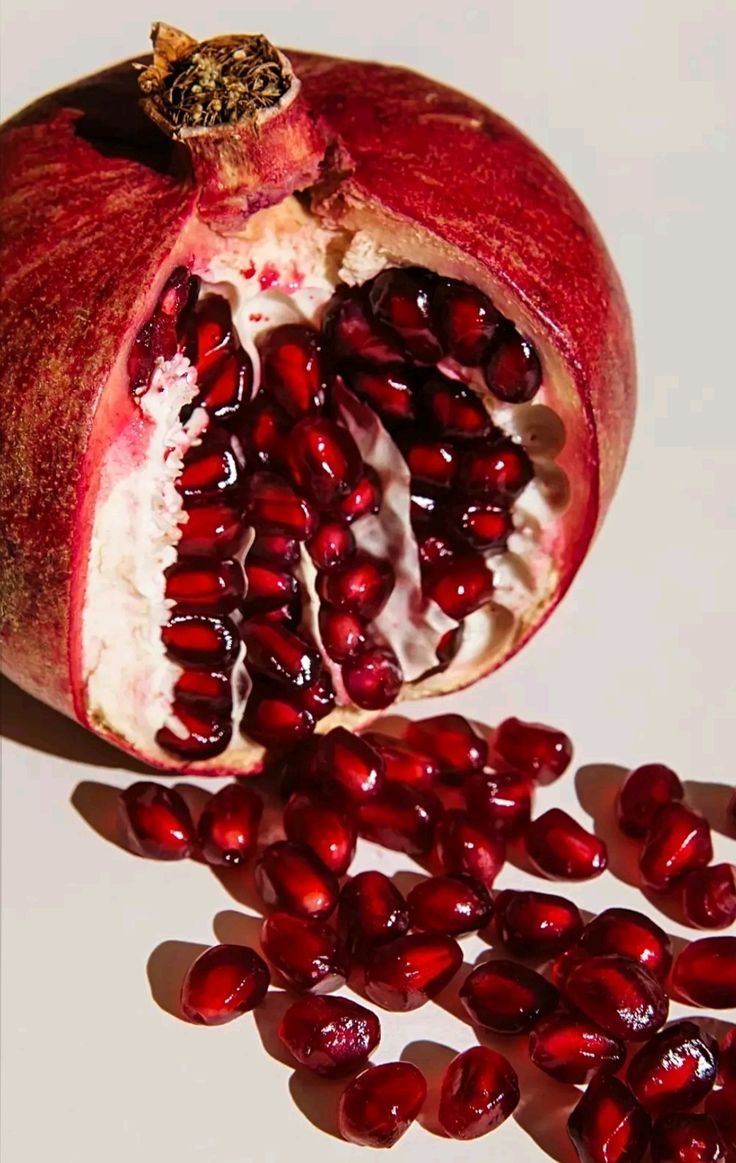
     Social media ecosystems have turned toward a darker trope to articulate the depths of romantic obsession: cannibalism. Curated mood boards are featuring imagery of raw meat, overripe pomegranates, and bloodied lovers. Viral poetry is explicitly framing consumption as intimacy. The internet has revitalized an ancient literary standard. But why has this unsettling imagery captured the imagination of so many digital creators today? If you scroll through modern aesthetic feeds, you will quickly encounter a redundant visual language centered on bodily devotion. The imagery often combines classical romance with motifs of physical destruction and ingestion. Visual art depicting lovers covered in blood or blurring the boundary between violence and affection. Photographs of bruised, overripe red fruits, notably pomegranates, bursting open. Mostly, the graphics are serving as vivid stand-ins for human flesh and emotion. Stills from cinematic works featuring vampires and monsters. The act of biting or feeding is inextricably linked to passion. Images of cuts of raw meat juxtaposed against soft, romantic lighting. Verse that frames complete surrender as allowing oneself to be digested, bitten, or absorbed by a partner. A prime example of this sentiment comes from writer Azra T.’s poem ‘Fruit’: Peel your heart like a pomegranate. Offer it to him, palms outwards. Say ‘eat.’ Watch him come away stained red by you. You’re in his teeth. He’ll kiss you with that mouth. The poem depicts the core ethos of this aesthetic. Total self-offering, emotional vulnerability pushed to its absolute physical extreme, and a desire to permanently mark and be integrated into the person you love. The surge of cannibalism-as-love content feels distinctly accustomed to the melodrama of internet subcultures. However, it is far from a contemporary invention. The urge to frame love as an act of consumption has deep historical and cultural roots.  Why Is the Metaphor Resonating Now? This world is driven by digital interactions and transactional relationships. So, the urge to consume and be consumed represents a longing for absolute vulnerability. When someone invokes cannibalism in a romantic context, they aren’t expressing a literal desire for violence. Instead, they are grasping for a metaphor extreme enough to convey a few core human desires. To be ingested is to become a part of someone else forever. Their body will be physically reshaped by your presence. Traditional closeness still leaves a physical boundary between two individuals. Consumption erases that barrier entirely. Two become one in the most literal sense conceivable. Giving up oneself entirely to be possessed by another is the ultimate gesture of trust. Ultimately, the rise of the cannibalism-as-love highlights an overwhelming power of affection. By reaching for the extreme, internet culture finds a way to express what ordinary romantic language fails to capture. A devotion so grand, so terrifying, and so profound that it borders on the appetite.  

  • |

    Texas Airports review muslim prayer facilities

    Texas Governor Greg Abbott has ordered a review of state grants given to Dallas Fort Worth International Airport (DFW) and Houston’s George Bush Intercontinental Airport (IAH) over facilities provided for Muslim travelers. The governor has raised concerns about special facilities for Muslims to perform wudu, the Islamic practice of washing before prayer.  He has described the facilities as possible religious discrimination and has also asked the U.S.  Department of Transportation to review the issue. Review of state funding According to a statement from Abbott’s office, Texas will review state grants given to airport authorities.  Officials will consider whether existing funding should be withdrawn or whether the airports should be prevented from receiving future state funds. Abbott argues that government owned facilities should not provide services that appear to favor one religion over others. Facilities at two airports DFW International Airport is planning a dedicated area where Muslim passengers can perform wudu. At Houston’s George Bush Intercontinental Airport a similar facility has already been created along with a space where passengers can pray. Abbott has asked U.S.  Transportation secretary sean duffy to have the Department of Transportation and the Federal Aviation Administration (FAA) review the existing and planned facilities at both airports. He has also called for possible legal or corrective action if officials find that federal rules have been violated. Governor raises religious Discrimination Concerns Abbott says both airports receive federal funding and therefore must follow federal laws related to discrimination. He argues that providing facilities specifically for Muslim religious practices could give special treatment to one religious group. He says government owned airports should provide equal treatment and should not favor one religion over another. The governor also repeated his position on social media saying taxpayer funded public facilities should not allow what he considers illegal religious discrimination. What happens next? The issue will now be reviewed by federal transportation officials and the FAA.  Their response could determine whether any action is taken against the airports or their funding. The controversy has also opened a wider debate about religious freedom equal access  and how public facilities should serve passengers from different religious backgrounds. The case could become an important legal and political discussion about whether providing religious accommodations in public spaces is discrimination or simply a way to meet the needs of different groups.

  • AC mistake to avoid after heat

    After spending time outside in extreme heat switching on the air conditioner as soon as you get home may feel refreshing. However health experts say this habit can sometimes be harmful. According to doctors the body works continuously to keep its temperature balanced. In hot weather it cools itself by producing sweat and widening blood vessels. If you suddenly move from intense heat into a very cold room your body experiences a rapid temperature change. This is known as thermal shock. Experts say this sudden change may cause headaches sore throat coughing dizziness tiredness breathing problems or a feeling of discomfort. People with asthma allergies or other breathing conditions may be affected more seriously. Health specialists recommend resting for a few minutes in a shaded or normally cooled area after coming home instead of sitting directly in front of the AC. This gives your body time to adjust gradually. They also advise drinking enough water before entering a very cold room. Hot weather can lead to dehydration and staying hydrated helps reduce stress on the body. Another concern is that air conditioners can dry out the air which may dry the nose and throat. This can lead to throat irritation dryness or coughing especially if the AC is set to a very low temperature or the cold air blows directly on the body. Doctors say there is no need to avoid using an air conditioner during summer. Instead keep the temperature at a comfortable level drink plenty of water and avoid moving straight from extreme heat into a very cold environment. These simple steps can help protect your health and reduce the risk of heat related problems.

  • | | | |

    Pakistani folklore

    Pakistani folklore is a vibrant web regional oral traditions, Sufi mystical allegories, and tribal epics across Punjab, Sindh, Balochistan, Khyber Pakhtunkhwa, and the northern mountain valleys. Punjab: Sufi Metaphors & Tragic Romances Punjabi folklore is dominated by tragic love stories (Kissa) that doubled as spiritual allegories for divine love (Ishq-e-Haqiqi). Heer Ranjha is immortalized by the poet Waris Shah. This narrative details the doomed union between Heer, a noblewoman, and Ranjha, an outcast flute player turned jogi. In case of Sohni Mahiwal, Sohni crosses the volatile Chenab River nightly using an baked earthenware pot (gharra) to meet her lover Mahiwal. One night, her sister-in-law replaces the vessel with unbaked clay. This  dissolves mid-stream, leading to Sohni’s tragic drowning. Mirza Sahiban is tale of romance, familial duty, and betrayal. The story culminated in Sahiban breaking Mirza’s arrows to protect her brothers. This act leads to Mirza’s demise. Sindh: The Seven Queens (Satt Surmyun) Sindhi lore centers around seven heroic women celebrated in Shah Abdul Latif Bhittai’s monumental Sufi compendium, the Shah Jo Risalo. Sassi (Sassi Punhun) searches the Makran desert for her abducted lover, Punhun, until the earth swallows her. Marui (Umar Marui) was abducted by King Umar. She refuses wealth and palace luxuries to remain faithful to her desert village. Moomal (Moomal Rano) operates the enchanted palace of Kak Mahal, tests suitors with magical illusions, and loses Rano to misunderstanding. Balochistan: Tribal Epics & Renunciation Baloch folklore prioritizes chivalry, tribal honor, and ascetic devotion. Hani and Sheh Mureed: The legendary hero Mureed sacrifices his marriage to Hani due to a bound oath given to Mir Chakar Rind. Mureed becomes a wandering dervish, becoming an archetype of ultimate devotion. Lulla and Granaz: Tales celebrating battlefield bravery, hospitality, and tribal allegiance. Khyber Pakhtunkhwa & Northern Valleys: Pashtun & Mountain Legends Adam Khan and Durkhanai: A Pashto romance where music plays a central role. Adam Khan’s soulful mastery of the Rabab brings the lovers together against social friction. Prince Saiful Muluk & Badri-ul-Jamal: Set in the high-altitude Kaghan Valley, a Persian prince falls in love with a fairy princess at Lake Saiful Muluk, giving the actual alpine lake its legendary name.

  • Our Women Communicators of Tomorrow

    By: Mehreen Imambaksh  Empowering Voices for Global Change Throughout history, women have possessed powerful thoughts, deep emotions, and creative voices; yet, many of these voices have gone unnoticed. Their experiences were frequently limited to their homes, their abilities were questioned, and their intellectual development was neglected. However, literature, history, and social thought expose that women were capable of uttering knowledge, shaping culture, and influencing society, but patriarchal systems often restricted their visibility. For centuries, women were expected to remain silent in public intellectual areas. Their role was widely limited to household responsibilities, whereas education, authorship, and public speaking were dominated by men. Yet despite these barriers, many women endured to write, think, and challenge the systems that tried to silence them. One beautiful example can be found in the nineteenth century with the eminent novel *Wuthering Heights*, written by Emily Brontë (1847). Today the novel is considered one of the masterpieces in English literature. Moreover, Emily Brontë did not publish it under her original name; rather, she used the pen name Ellis Bell. Similarly, her sisters also adopted the same approaches. Charlotte Brontë published *Jane Eyre* under the name of Currer Bell, and Anne Brontë published *The Tenant of Wildfell Hall* under the name of Acton Bell. The reason behind these pen names was simple but widely revealing: society frequently refused to take women writers seriously. The Brontë sisters were highly imaginative and intellectually able, yet they felt pressured to hide their identities to ensure their work could be approved. Their circumstances examine the huge restrictions placed upon women’s voices during that time. Long before the Brontë sisters, early feminist thinkers had raised concerns about women’s lack of education and freedom. In 1792, Mary Wollstonecraft wrote *A Vindication of the Rights of Woman*, challenging that women should have equal access to education and intellectual opportunities. She said that women were treated as inferior in society not because they lacked capability, but because they were refused the chance to advance their minds. More than a century later, this problem was discussed again by Virginia Woolf in her masterpiece work *A Room of One’s Own* (1929). She famously argued that women in the past were refused both financial independence and private space, which restricted them from freely uttering knowledge. Therefore, she said a woman needs not merely talent but also freedom and equality to express her feelings and thoughts. Modern scholars have further examined how systems of knowledge can silence subaltern voices. In her essay “Can the Subaltern Speak?” (1988), Gayatri Chakravorty Spivak introduced the idea of epistemic violence, which means how dominant systems of knowledge remove or suppress the voices of certain groups, especially women and colonized communities. When women’s ideas are ignored or removed, their experiences are excluded from the production of knowledge, creating a form of intellectual oppression. These rooted examples depict that women’s silence was never because of a lack of intelligence or creativity. Instead, it was the result of social systems that demotivated or limited their role in participation in intellectual and public life. Even today, this evidence remains visible in many societies. In many cultures, women still hesitate to talk openly, particularly on public platforms or digital spaces. Furthermore, social expectations and fear of judgment frequently create unseen obstacles that prevent women from sharing their thoughts and feelings. This hesitation is not always enforced directly; sometimes it evolves internally due to long-standing social pressures. Moreover, I personally experienced this hesitation in my own life. For many years, I believed in the significance of women’s ability, yet I was not actively immersed in initiatives related to it. One cause for this was my anxiety about visibility on social media platforms to reveal my feelings and ideas because I feared how society, especially as a Baloch student, might react to a woman openly sharing her ideas. This anxiety is not unfamiliar. Many women feel unsure about expressing themselves publicly because they expect critique or misunderstanding. However, personal growth frequently begins with a small step. For me, that step was creating my social media platforms such as Medium, a LinkedIn profile, and starting to share my writings, including poems and reflections based on my experiences. At the start, this act felt common, yet slowly opened new chances. Through this visibility, I became connected with extensive intellectual and professional networks, which ultimately led me to become immersed in women’s ascension. Being involved in this initiative has allowed me to interact with women from various cultures, backgrounds, and perspectives. These interactions have been widely improving. They have shown me that when women communicate and share experiences across cultures, they create unique forms of understanding and collective growth. This experience shows that women’s empowerment does not always happen through major changes, but it begins slowly when women start to express themselves, engage in conversations, and share knowledge with others. Communication is one of the influential tools that helps women to connect their personal experiences with global discussions about equality and justice. However, change needs cooperation. Women’s power should not be seen as an effort between men and women. Instead, it should be perceived as a collaborative struggle to create a fair and inclusive society. Both men and women play a major role in supporting and motivating women’s voices. Traditionally, patriarchal societies frequently reduced women to limited roles, especially examining their function as a child-bearing machine. Whereas motherhood is an essential and valuable role, it should never define the entirety of a woman’s identity. Women have intellectual capabilities, creative skills, and leadership qualities that can contribute importantly to society. Education plays an essential role in changing these circumstances. When women receive education, they gain the confidence and knowledge necessary to contribute actively in social, economic, and intellectual life. Educated women are more capable of expressing their thoughts, challenging injustice, and participating in the development of their communities. Furthermore, the impact of women’s education extends beyond the individual. When women are educated, they can brighten their children’s lives and motivate the next generations

Leave a Reply

Your email address will not be published. Required fields are marked *