dry skin may

When dry skin may lead to infection

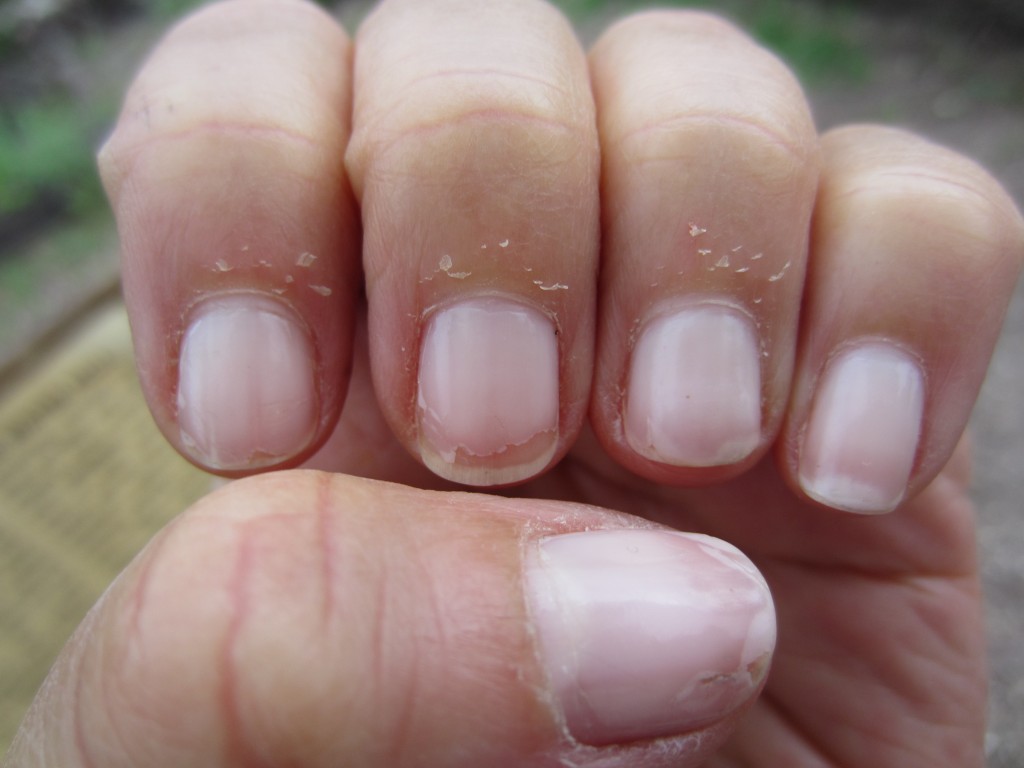
Dry peeling skin around the nails is a common problem. It can be uncomfortable and may make simple daily tasks difficult.  This dryness can happen for several reasons including frequent hand washing harsh products and skin irritation.

Why does skin  around the nails become dry?

Frequent hand washing

Washing your hands again and again can remove the skin’s natural oils.  If you do not use moisturizer afterward the skin around your nails may become dry and cracked.

•Allergies and Irritation

•Nail polish soaps

detergents and other products may contain chemicals that irritate the skin.  This irritation can cause dryness peeling or redness.

Nail Biting

Biting your nails can damage the skin around them.  Small cuts may develop and increase the risk of irritation or infection.

Lack of nutrients

A poor diet may sometimes affect the health of your skin and nails.  A balanced diet with enough vitamins and minerals is important for healthy skin.

Infection dry or damaged skin around the nails can sometimes become irritated or infected especially if it is picked or bitten.

How can you  care for dry skin around the nails?

•Use moisturizer

Apply a good hand cream or moisturizer regularly especially after washing your hands.  This helps keep the skin soft and prevents cracking.

•Aloe Vera

Apply fresh aloe vera gel to the dry skin around your nails. It can help soothe and moisturize irritated skin.

•Honey

Apply a small amount of honey to your hands for 10–15 minutes then wash it off with lukewarm water. Honey can help keep the skin moisturized.

•Cucumber

Place fresh cucumber slices on your hands for about 15–20 minutes.  Then wash your hands with lukewarm water.

•Olive oil

Gently massage a little olive oil around your nails to help soften dry skin. After a few minutes wash your hands and apply moisturizer.

Tip

Avoid biting or pulling the peeling skin around your nails. If you notice severe pain  swelling pus or redness that does not improve  consult a doctor or dermatologist.

Similar Posts

  • Better Facilities in Turbat’s Hospitals

    Hani Rasheed  Turbat urgently needs better healthcare facilities. Although some improvements have been made, many patients still face shortages of medicines, medical equipment, and specialist doctors. Poor families often have to travel to other cities for treatment which is costly and difficult. Access to quality healthcare is a basic right and should be available to everyone. The authorities should ensure that hospitals are fully equipped, essential medicines are available, and qualified doctors and staff are appointed. Better healthcare services will reduce the suffering of patients and improve the well-being of the people of Turbat.

  • 5 Makeup secrets used by pro artists

    Professional makeup artists know how to bring out natural beauty and create a polished look. Their techniques can make makeup look smoother brighter and last longer. Here are five easy makeup tips you can try at home. Never skip primer Makeup artists often use primer before foundation. It creates a smooth base by helping blur the look of pores and fine lines. Choose a primer according to your skin type. For example, an oil-control primer can be useful for oily skin. Use concealer smartly Concealer is great for covering dark circles spots and uneven areas. But it can also be used to brighten and shape the face. Apply a small amount under the eyes along the bridge of the nose and on other high points of the face for a fresh brighter look.  Master your blending Good blending can make a big difference. Makeup artists carefully blend different shades and textures so there are no harsh lines. Whether you are blending eyeshadow or smoothing out foundation take your time for a more natural and professional finish. Try multi use products Makeup artists often choose products that can do more than one job. For example a cream blush can sometimes be used on the cheeks and lips. Using multi purpose products can save time reduce the number of products you need and make your makeup routine easier. Set your makeup properly Setting your makeup helps it stay in place for longer. Makeup artists may use setting powder setting spray or both depending on the look. For extra staying power lightly apply powder under the eyes and leave it for a few minutes before gently brushing away the excess. With these simple techniques you can make your everyday makeup look smoother fresher and more polished.

  • Human civilisation has always been scared of forgetting

    By Syed Tahir Rashdi A long time ago, before the first computer, the first library or even the first book, people thought memory was the most important thing for knowledge. Whole societies relied on it. People remembered laws and stories by heart. Passed them down to their children. To remember something was not just to recall facts it was to keep your identity, culture and history alive. A long time ago in ancient Greece, people started to worry about memory. In a book called *Phaedrus* a man named Socrates tells a story about a god named Theuth. Theuth invented writing. Thought it would make people wiser and help them remember more.. The king of Egypt, Thamus did not agree. He said that writing would actually make peoples memories weaker. People would start to rely on written words of trying to remember things themselves. They would think they know something just because they can read it. They would not really understand it. Course that is not what happened. Writing did not hurt society it changed it. Books became a way to store knowledge and share ideas with people all over the world. Socrates was worried about something that is still important today. The question now is not whether we remember things because of books. It is whether we remember anything all. Today we have information stored somewhere than ever before. Our phones remember our conversations. Computers store our photos forever. We can find answers to questions in seconds. Machines can summarise books. Help us find information fast. Never before has much information existed outside of our own minds. This is a change in how people relate to knowledge. A man named Marshall McLuhan said that every new technology is like an extension of our abilities. The wheel is like an extension of our feet. The telescope is like an extension of our eyes. By that logic our phones are like an extension of our memories. They help us remember things. The problem is obvious. As we get better at storing information outside of our minds we get worse at remembering things ourselves. We do not remember phone numbers because our phones do. We do not remember birthdays because our computers do. We do not remember how to get places because our phones tell us. We are not trying to remember things much as we used to. We are just looking them up. That small change might be one of the most important things that has happened to our minds in the past century. It is easy to see why we like to store information outside of our minds. Who would want to go to using paper maps or big books to find answers? Digital technology has made it easy for everyone to get information. We can find things out in seconds that used to take days. The question is not whether this is useful. It is whether it is changing our minds in some way. Some psychologists did a study in 2011. Found out something interesting. They found out that when people know they can find information easily they do not try to remember it much. They just remember where to find it. This is a deal. Our minds are changing from storing information to finding it. We are getting better at finding the path. Not the destination. This is not a habit it is how we think. Remembering things is not about storing facts it is about using them to make decisions to imagine things and to be creative. When we remember things we can connect them in ways and have new ideas. When we store information outside of our minds that changes. A man named Nicholas Carr said that digital technology is not just changing how we get information it is changing how we think. The internet is great at giving us answers. It is not so good at helping us really understand things. If we get used to getting answers we might not be as good at thinking deeply about things. This does not mean that technology is making us less smart. It means that our intelligence is changing. The problem is not that we do not know things. It is that we are too dependent on technology to remember them for us. A student might think that they can just look up answers and not really learn anything. A professional might rely much on reminders that they do not even try to remember things. Machines are getting better at remembering things for us. That might mean we do not have to try as hard. Slowly remembering things is becoming more like looking them up. Knowledge is becoming about getting access to information. Thinking is becoming more about getting things done. Technology has definitely helped us store information than ever before. The question is whether it is also making us less likely to try to remember things ourselves. Memory is not just about storing information. It is about how we experience life. A computer can store every document ever written. A machine can look up every photo ever taken.. They cannot turn experience into wisdom. Our memories are not just storage they are how we interpret things. We forget some things we remember others. We use them to understand ourselves. A writer named Jorge Luis Borges wrote a story about a man who could remember everything.. This gift was actually a curse. The man could not forget anything so he could not think about things in a way. He was trapped by his memory. Borges was saying that forgetting is not a thing it is actually necessary for thought. This is not about how we think as individuals. It is about how we learn and how we understand ourselves as a society. Education used to be about more than learning facts. It was about learning how to think. If we just store information outside of our minds education might just become about looking things up. The same

  • How far can you drive after low fuel light comes on?

    If you fail to keep an eye on your fuel level while driving, your car could eventually come to a stop. When a car is about to run out of fuel, a warning indicator commonly known as the low fuel light illuminates on the dashboard. But how far can you actually drive once this light comes on? The answer can be useful if there isn’t a fuel station nearby. However, there is no single answer as it depends on several factors including the car’s make and model, model year, driving habits, fuel efficiency and road conditions. According to experts, once the low fuel warning light turns on, the vehicle cannot travel very far. The good news, however, is that it can usually go farther than many people expect. Experts say the warning light typically comes on when the fuel tank has around 10 to 15 percent of its capacity remaining. On average, small cars can travel about 20 to 30 miles (32–48 km) after the light comes on while larger vehicles may cover up to 50 miles (80 km). However, if the vehicle is old or the road conditions are poor, the remaining driving range may be significantly shorter. Cold weather can also increase fuel consumption reducing the distance the car can travel after the warning light appears. Experts further caution that continuing to drive for an extended period after the low fuel light comes on may damage the engine although driving a few additional miles is generally unlikely to cause any harm.

  • Night shifts harm mental health

    A new study suggests that working night shifts may have a negative effect on mental health.  People who work at night may experience more stress anxiety and depression than those who work during the day. Researchers reviewed seven previous studies involving 28,438 people.  They looked at the participants working hours and mental health and found that night-shift workers were more likely to experience symptoms of depression and anxiety. According to the findings around 33% of people working night shifts showed signs of depression or anxiety compared with those working daytime shifts. Luciana Torquati from the University of Exeter who led the study explained that night work can disturb the body’s natural clock. Our bodies are designed to sleep at night and stay active during the day so working against this natural pattern can affect sleep and mood. Poor sleep and an irregular routine may also cause irritability and mood changes. Night shift workers may feel lonely or disconnected from others because their work schedule can make it harder to spend time with family and friends. The study also reported that night shift work may have a stronger negative effect on women’s mental health than on men’s. Overall the research suggests that working at night may affect not only sleep but also a person’s mood relationships and overall mental well being.

  • The Recommend Self

    From Syed Tahir For centuries, one question has remained at the centre of human reflection: Who am I? The question appears simple, yet it contains one of the deepest mysteries of human existence. Identity is not merely a collection of facts about an individual. A name, profession, nationality or social position may describe a person, but they cannot fully explain the self behind them. Human beings are not born with a complete identity. They create one. Through memories, relationships, choices and experiences, individuals gradually construct an understanding of who they are and what they value. The self is not a fixed object. It is an ongoing process of becoming. The Digital Age is quietly transforming this process. For the first time in history, external systems do not merely observe human behaviour. They increasingly predict preferences, organise choices and influence the environments through which identity itself develops. This transformation is subtle because it rarely appears as control. It appears as convenience. A song suggested before we search for it. A film selected before we decide what we want to watch. A news story placed before our attention. A product displayed before desire fully develops. A community recommended before we consciously seek belonging. The language is harmless. The implications are profound. The central paradox of the digital age is that the systems designed to understand us are gradually becoming capable of influencing the people we become. The algorithm does not need to tell us who we should be. It only needs to shape the choices through which we construct ourselves. Human identity has always been influenced by external forces. Families transmit values. Schools develop habits of thought. Communities provide belonging. Cultures offer narratives through which individuals understand their place in the world. But these influences are usually visible. Digital influence is different. It often operates quietly. A recommendation does not present itself as authority. It presents itself as assistance. It does not say, “Become this person.” It simply arranges the possibilities from which a person chooses. This is why the question of algorithmic identity is not only about technology. It is about human agency. Because freedom is not merely the ability to make choices. Freedom also requires understanding how those choices are shaped. The challenge of the digital age is that recommendations can gradually become substitutes for exploration. Human growth has always depended upon encounters with the unexpected. A person discovers a passion through an unfamiliar book. A new idea changes a lifelong assumption. A conversation with someone different expands the boundaries of understanding. The unexpected has always played a central role in shaping identity. Yet algorithms operate through patterns. They learn from what we have already watched, searched, liked and chosen. Their purpose is to provide more of what appears relevant to us. This creates extraordinary convenience. But convenience can also create limitations. If every choice is shaped by previous preferences, the individual may gradually encounter less of what challenges, surprises or transforms them. The algorithm is excellent at recognising who we have been. Human beings are defined partly by who they can still become. This distinction lies at the heart of the debate about digital identity. A person is not simply the sum of past behaviour. Human beings possess the ability to change their beliefs, abandon old habits and discover new purposes. A system based on previous choices can predict tendencies. It cannot fully understand transformation. The philosopher Charles Taylor, in Sources of the Self, argued that human identity develops through the meanings and values people attach to their lives. Individuals understand themselves through relationships, moral commitments and ideas about what makes life meaningful. Identity requires reflection. It requires asking: Why do I value what I value? The digital environment complicates this question because it increasingly reduces the distance between desire and satisfaction. Instead of allowing individuals to wander, discover and sometimes struggle with uncertainty, it often provides immediate suggestions based on existing behaviour. The result is a subtle shift. We move from discovering ourselves to being continuously reflected back to ourselves. The system becomes a mirror. But a mirror that recommends what it wants us to see. This does not mean recommendations are harmful. They can introduce people to knowledge, entertainment and communities they might never have found otherwise. The problem begins when recommendation replaces curiosity. A map is valuable because it helps us navigate. But a life cannot be lived entirely through maps. Some of the most meaningful journeys begin when people choose paths they were never advised to follow. The transformation of identity becomes even more visible in the way people now present themselves to the world. Long before social media existed, the sociologist Erving Goffman examined how individuals manage impressions in everyday life. In The Presentation of Self in Everyday Life, he argued that people often present different versions of themselves depending on their surroundings and audiences. The digital age has not created this tendency. It has amplified it. Online platforms have turned identity into something increasingly visible, measurable and constantly evaluated. The self is no longer only experienced privately. It is displayed through photographs, opinions, achievements and carefully selected moments. A person does not merely exist. A person appears. This creates a new tension between being and performing. The question slowly changes from: “Who am I?” to: “How am I perceived?” The desire for recognition is deeply human. Every society has valued reputation, belonging and acceptance. The problem begins when external approval becomes the primary measure through which individuals understand themselves. Experiences become shaped by their visibility. Achievements become symbols. Opinions become signals of belonging. The private self begins competing with the public self. The danger is not self-expression itself. Digital platforms have allowed millions of people to share ideas, build communities and express identities that may have remained unheard in previous eras. The challenge begins when performance replaces reflection. A person can become highly visible without becoming deeply self-aware. This is where the philosophy of Martin Heidegger becomes relevant. In Being and Time,

Leave a Reply

Your email address will not be published. Required fields are marked *