pakistan rejects indian
| | |

Pakistan rejects Indian claims, calls allegations …

ISLAMABAD: Pakistan has rejected allegations by Indian Home Minister Amit Shah linking Islamabad to the arrest of alleged terror suspects in India, describing the accusations as part of a politically motivated campaign against Pakistan.

Foreign Office spokesperson Tahir Hussain Andrabi said the allegations were baseless and appeared aimed at shifting attention away from India’s own internal security challenges. He accused New Delhi of using anti-Pakistan rhetoric for domestic political purposes.

The remarks followed claims by Shah that Indian security agencies had detained more than 200 suspected militants allegedly connected to Pakistan during a nationwide crackdown across 14 states on August 12. Shah said the suspects were linked to what he described as the Shahzad Bhatti Network and alleged that the arrests had prevented planned attacks.

Rejecting the claims, Andrabi said Pakistan had repeatedly faced accusations that he described as part of an ongoing campaign to portray Islamabad as responsible for security problems inside India.

The spokesperson also levelled counter-allegations against New Delhi, accusing India of suppressing minorities and dissent at home while allegedly supporting terrorism and destabilising activities abroad. He maintained that such accusations could not divert international attention from what Pakistan considers India’s involvement in terrorism and subversive activities.

Andrabi referred to Indian national Kulbhushan Jadhav, who was convicted by a Pakistani military court and remains in Pakistani custody, as evidence of Islamabad’s longstanding allegations of Indian involvement in activities against Pakistan.

Pakistan called on the international community to reject what it termed unfounded allegations and to hold India accountable for what Islamabad describes as state-sponsored terrorism and destabilising activities in the region.

Moreover, Pakistan has strongly rejected what it described as India’s attempt to reshape the history of the 2025 military confrontation through a recently produced documentary on “Operation Sindoor,” calling the production a highly dramatized and factually distorted portrayal of events.

In a statement, Pakistan said the documentary relied on selectively edited interviews, emotional narration and cinematic reconstructions to present a version of the conflict designed primarily for domestic political consumption. It argued that the production failed to provide an objective account of the military engagements and instead sought to portray a disputed outcome as an unequivocal Indian victory.

Pakistan also questioned the documentary’s chronology surrounding the Pahalgam incident of April 22, 2025. It said India had subsequently claimed that the alleged perpetrators of the incident were identified and eliminated on July 28, nearly three months after Operation Sindoor. Islamabad argued that this timeline raised questions about India’s assertion that the May 7 operation was specifically intended to punish those responsible for the Pahalgam attack.

The statement further rejected India’s claim of “100 percent mission success,” maintaining that Pakistani forces had effectively responded to the Indian offensive during what Pakistan refers to as Marka-e-Haq. Islamabad claimed that eight Indian military aircraft were shot down during the confrontation and said Pakistan later launched Operation Bunyanum Marsoos, targeting military installations with precision-guided rockets and missiles, precision air-launched munitions, loitering munitions and artillery.

Pakistan said the documentary itself contained admissions that undermined its portrayal of decisive Indian dominance. According to Islamabad, references by Indian military officials to Pakistani missile and drone activity, prolonged engagements along the Line of Control and the activation of Indian air-defence systems demonstrated that the confrontation involved significant military exchanges on both sides.

The Pakistani statement also challenged New Delhi’s account of how hostilities ended. It noted that the documentary acknowledged communication between the two countries’ Directors General of Military Operations and an agreed cessation of military activity. Islamabad said this account was inconsistent with portraying the conclusion of the conflict as an unconditional Indian military victory, particularly given the role of international diplomatic engagement in facilitating the ceasefire.

Pakistan further accused the documentary of presenting contradictory explanations for India’s approach to escalation. While the production reportedly emphasised surprise attacks, precision strikes and escalation dominance, it simultaneously portrayed India as deliberately restricting the scope of the conflict and offering Pakistan an opportunity to withdraw.

Islamabad described the documentary as an attempt to create a politically convenient narrative rather than an impartial military assessment. It maintained that cinematic reconstructions and official claims could not alter the chronology of events, the military engagements or the losses suffered during the confrontation.

Pakistan said it had no need to construct an alternative narrative around Marka-e-Haq, arguing that battlefield developments, diplomatic interactions and subsequent statements by Indian officials provided sufficient material for assessing the conflict.

Reaffirming its stated commitment to regional peace and stability, Pakistan said its armed forces remained prepared to protect the country’s sovereignty and territorial integrity. It warned that any future military escalation would receive a strong response, while asserting that no subsequent narrative or media production could change the actual course of events on the battlefield.
Similar Posts

  • | |

    Four terrorists killed in Ziarat-Harnai operation

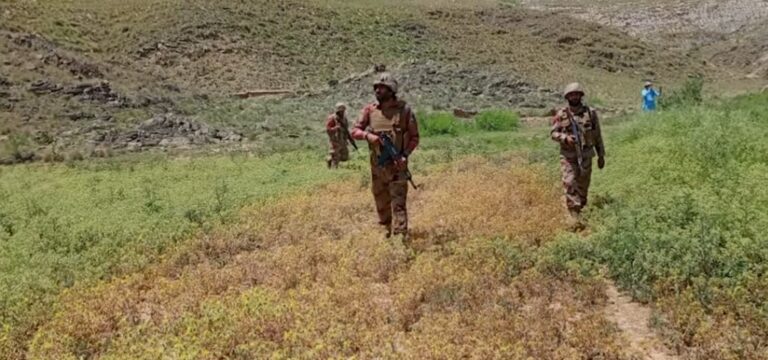
    Security forces have killed four terrorists in an intelligence-based operation in the mountainous area along the Ziarat-Harnai border in Balochistan, according to security sources. The operation was launched after intelligence reports indicated the presence of suspected terrorists in the remote mountainous region between Ziarat and Harnai. During surveillance, security personnel reportedly confirmed the presence of three to four terrorists inside an abandoned house in the area. Following confirmation of their presence, security forces surrounded the suspected hideout and carried out an effective operation against the militants, the sources said. Four terrorists were confirmed killed during the action, according to security officials. A search and sanitisation operation is continuing in the surrounding area to locate any remaining threats and ensure that the region has been cleared. Security forces are also maintaining heightened surveillance and continuing operations against militant elements in the area as part of ongoing efforts to prevent terrorist activity in Balochistan.

  • | |

    Makkah Defence pact wins broad political backing 

    ISLAMABAD: Pakistan’s Makkah Joint Defence Agreement with Saudi Arabia and Türkiye has received broad political support, with major leaders describing the trilateral arrangement as a landmark step toward stronger collective security among Muslim countries. PPP Chairman Bilawal Bhutto Zardari welcomed the agreement, saying it would enhance Pakistan’s defence capabilities while contributing to regional stability and international peace. He also praised Prime Minister Shehbaz Sharif and Chief of Defence Forces and Chief of Army Staff Field Marshal Asim Munir for their role in finalising the pact. Jamiat Ulema-e-Islam-Fazl (JUI-F) chief Maulana Fazlur Rehman also described the agreement as an important development for Muslim unity. He said the arrangement could evolve into a broader collective security framework and called on other Islamic countries to join the initiative. Fazlur Rehman said Pakistan and Saudi Arabia had the potential to play a leading role in strengthening cooperation among Muslim states, adding that a unified defence mechanism had long been part of his party’s political vision. Jamaat-e-Islami Emir Hafiz Naeemur Rehman likewise endorsed the pact, saying greater cooperation could reduce Pakistan’s reliance on hostile powers. He proposed expanding the arrangement to include Qatar, Bangladesh, Iran, Malaysia and Indonesia. The leaders’ statements reflect growing political support for the Pakistan-Saudi-Türkiye security partnership, with calls emerging for it to develop into a wider alliance capable of promoting collective defence and stability across the Muslim world.

  • | |

    Gen Z group behind India’s cockroach protest…

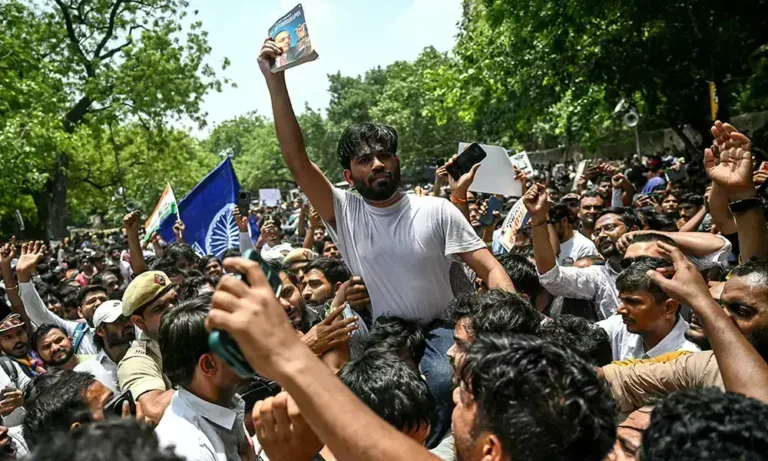
    The Cockroach Janta Party, the youth movement that forced a top Indian minister to quit, says it has no plans yet to contest elections despite its growing influence among young voters. Abhijeet Dipke, the founder of the group, told a foreign news agency on Tuesday that the organization intends to stay focused on grassroots mobilization rather than rush into formal politics. The statement comes weeks after protests led by Dipke swept through Delhi and spread to other parts of the country, ultimately pressuring Prime Minister Narendra Modi’s education minister to step down. Speaking from his family home in Maharashtra, Dipke said the group wants to first understand what young Indians actually want before deciding its next move. He announced that supporters would gather for a two day meeting starting Wednesday to map out priorities for the movement going forward. “The purpose will be to form the agenda for the Cockroach Janta Party and discuss how we can take this social movement forward,” Dipke said, as well wishers arrived at his home carrying flowers and gifts. Dipke made clear that entering electoral politics is not on the table for now, though he left the door open for the future. He said he would only consider building a formal party if a clear majority of supporters pushed for it, and that any decision to contest elections would come later, guided by public sentiment rather than a fixed timeline. He argued that Indian politics does not currently need another party competing for power. Instead, he said, the country requires a broader public campaign aimed at restoring faith in institutions that have lost credibility among ordinary citizens. Dipke said the group’s immediate priority is to give voice to the frustrations of India’s youth, many of whom, in his view, no longer trust the country’s political class, judiciary or press. He emphasized the importance of listening directly to young people before setting any formal agenda, saying it was necessary to understand their actual concerns rather than assume them. Dipke made these comments while still recovering from typhoid, which he contracted during the weeks he spent camped out during the Delhi demonstrations. A hero’s welcome at home Following the 36 day protest, Dipke traveled back to his hometown of Chhatrapati Sambhajinagar, where hundreds of supporters lined up outside his home to greet him, many carrying flowers in celebration of the movement’s success. Dipke’s rise to prominence has been rapid. After returning to India in June from his studies in the United States, he became a household name almost overnight when his call to protest against leaked medical entrance exam papers pulled tens of thousands of young demonstrators onto the streets of the capital. The pressure campaign achieved a significant result on July 25, when Education Minister Dharmendra Pradhan resigned from his post. Authorities had attempted to disperse the crowds using tear gas and baton charges, but the demonstrations continued regardless. In the aftermath, the government announced tougher legal penalties for those involved in leaking exam papers and formed a committee to reassess the broader examination system. The stakes attached to these entrance exams are enormous for India’s youth. Millions of students spend years preparing for them, viewing a strong result as their surest route to stable, well paying careers and financial security for their families. Wary of political traps Dipke explained that he is avoiding a formal political launch partly out of concern that the government could use investigations or legal pressure to undermine the party’s leadership if it formalized too quickly. He also said he has no intention of aligning the movement with any existing political party, even as opposition figures in India have tried to capitalize on the rare momentum the protests created against Modi’s government. Some of that caution appears to draw on regional experience. In neighboring Bangladesh, a youth led party that emerged after mass protests ousted long time leader Sheikh Hasina in 2024 went on to perform poorly in this year’s elections, a result that may be shaping how Dipke approaches the question of formal politics in India. Political observers say the true test of whether young Indians’ frustration translates into votes will come in elections scheduled for next year in Uttar Pradesh, India’s most populous state, along with Punjab and Modi’s home state of Gujarat. A bigger risk for the ruling Bharatiya Janata Party could emerge in the 2029 general election if the Cockroach Janta Party evolves into a formal political force by then. Political analyst Amitabh Tiwari said the movement is unlikely to cause major damage to the BJP in upcoming state elections but could grow into a more serious factor by the time of the next general election. He added that if the group builds a party structure, continues championing youth causes and sustains its current momentum, it stands a real chance of attracting broader support. Security concerns following the protests remain high. More than a dozen police officers have been stationed outside Dipke’s family home after he received threats on social media once his profile surged following the initial call to protest in May, a period in which the Cockroach Janta Party’s Instagram following grew to 22 million within days. Dipke said his greatest worry is not for his own safety but for that of his parents. He expressed relief at being back home and said he trusts that government provided security will keep his family safe in the coming weeks. The episode adds to a growing pattern across South Asia, where youth led movements have increasingly forced political concessions from long entrenched governments, even when those movements stop short of transforming into electoral parties themselves.

  • |

    Tom Holland breaks down his mindset during 2019 Spider-Man crisis

    Spider-Man: Brand New Day finally arrived in theatres on July 31. With the film now out, Tom Holland has opened up about what really went on behind the scenes to get it there. Back in 2019, Sony and Disney hit a major roadblock. Their co-financing deal for the Spider-Man franchise fell apart. For a while, it looked like the character’s future on screen was genuinely uncertain. Holland is said to have stepped in personally during this period. He reportedly reached out to both studios in hopes of smoothing things over. As part of this effort, he asked for Disney CEO Bob Iger’s email address. That contact reportedly made a direct conversation between them possible. Fan outrage played a role too. Combined with Holland’s own efforts, the backlash is believed to have pushed both companies back to the table. Eventually, they worked out a new arrangement. Years later, Holland revisited that chapter during a conversation with Josh Horowitz on the Happy Sad Confused podcast. Horowitz asked him to describe what was going through his mind during that uncertain window in 2019. He noted it came right in the middle of an otherwise strong run for the franchise. Holland responded honestly. He said he felt confused more than anything else. According to him, everything between the two studios had seemed fine up until that point. He pointed to the strong response to the first solo film. He also mentioned the character’s appearance in Civil War, which he felt had gone down well with audiences. He added that he never lost confidence during that time. Holland said he always believed the next film would turn out great, regardless of the studio drama happening behind the scenes. He also clarified that he never felt personally pushed aside by either studio. Instead, Holland compared the situation to a disagreement between parents. He said both studios eventually spoke things through and recognised how well the character could work for each of them. He admitted he still isn’t entirely sure of every detail from that period. Still, he said his confidence in the character never wavered. He also credited collaborators Amy Pascal, Tom Rothman, and Rachel O’Connor for keeping things steady throughout. With the film now finally playing in cinemas, Holland’s comments give fans a candid look back. They show just how close Spider-Man’s future once came to falling apart, and how it eventually came together after all.

  • |

    France tightens borders after deadly Ceuta migrant crisis

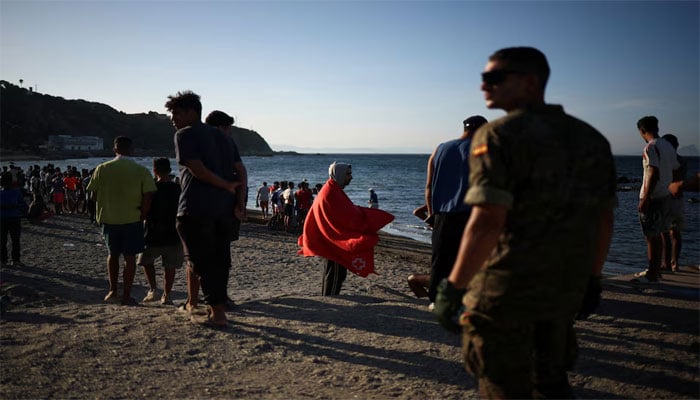
    France has strengthened security checks along its border with Spain following the recent migrant influx into the Spanish enclave of Ceuta, French Interior Minister Laurent Nunez announced on Tuesday. The enhanced border measures were introduced over the weekend on the instructions of French President Emmanuel Macron after tens of thousands of migrants crossed into Ceuta from Morocco over two days, triggering one of the region’s largest migration emergencies in recent years. Spanish authorities said the vast majority of migrants who entered the enclave had already been returned to Morocco. Officials also confirmed that at least 75 people died while attempting the dangerous crossing, highlighting the human cost of the crisis. Speaking after an emergency video conference with European interior ministers, Laurent Nunez said European Union member states had unanimously expressed solidarity with Spain and pledged support in managing the situation. He said France remained ready to provide additional assistance through Frontex, the EU’s border management agency, if required. The French minister noted that Ceuta operates under special rules within the Schengen Area and stressed that strict border controls had prevented the migration crisis from spreading to mainland Europe. Nunez also praised the cooperation between Spain and Morocco in responding to the situation, saying close coordination between the two countries had been vital in managing the large-scale arrivals. Rejecting calls from some political groups in France to suspend Spain from the Schengen free-movement zone, he said EU member states agreed that the Schengen system remained part of the solution rather than the cause of the crisis. He emphasized that the Schengen Area had not been threatened despite the surge in migration and reaffirmed France’s commitment to coordinated European efforts to address irregular migration.

  • Dr. Lubna Zaheer meets Senior Minister Marriyum Aurangzeb

    LAHORE: Chairperson, Department of Film & Broadcasting, University of the Punjab, Prof. Dr. Lubna Zaheer, held an exclusive meeting with Senior Minister Punjab Marriyum Aurangzeb. During the meeting, Dr. Lubna Zaheer briefed the Senior Minister on various academic, creative and development projects initiated by the Department of Film & Broadcasting. She highlighted the department’s initiatives to promote film education, nurture young filmmakers, encourage student-led productions and strengthen linkages between academia and the film and media industry. Dr. Lubna appreciated the efforts of the Punjab Government, under the leadership of Chief Minister Punjab and Senior Minister Marriyum Aurangzeb, for taking practical steps towards the revival and development of the province’s film and media industry. She particularly acknowledged the government’s focus on creating opportunities for young filmmakers and strengthening the creative sector. Dr. Lubna also apprised the Senior Minister of the department’s ongoing and proposed projects aimed at providing students with modern production facilities, enhancing their professional skills and creating greater opportunities for emerging filmmakers. The two sides exchanged views on the development of Pakistan’s film and media sector and the role of academic institutions in promoting a vibrant and responsible creative industry. On the occasion, Dr. Lubna Zaheer presented her book سیاست سے ہٹ کر to Senior Minister Marriyum Aurangzeb.

Leave a Reply

Your email address will not be published. Required fields are marked *