iran warns devastating
|

Iran warns of ‘devastating’ response as US prepares tougher sanctions


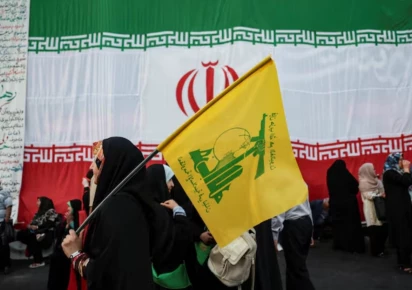
Iran has warned that its armed forces are prepared to deliver a severe response to any new threats, as tensions continue to rise between Tehran and the United States. Iranian military commander Abdollahi said the country’s forces would respond to hostile actions with what he described as “crushing” and “devastating” measures, according to Iranian media reports.

The warning comes as Iran faces the prospect of tougher economic restrictions from Washington. US Treasury Secretary Scott Bessent recently announced plans for what he described as the strongest sanctions ever imposed on Iran, with further details expected to be released soon.

Iranian Parliament Speaker Mohammed Bagher Ghalibaf has meanwhile called on the country to strengthen its economic resilience and develop strategies to deal with what he described as unjust sanctions. Speaking during a meeting with Iranian and Iraqi business representatives in Baghdad, Ghalibaf stressed that economic development and national security were closely connected.

According to Ghalibaf, the United States and Israel had turned to economic and so-called “cognitive” warfare after allegedly concluding that they could not achieve their objectives through direct military confrontation with Iran and Iraq. He argued that Muslim countries needed to protect their economic resources and become less vulnerable to external pressure.

Ghalibaf also urged Iran and Iraq to expand their economic cooperation. He suggested that the neighbouring countries could increase the use of their national currencies in bilateral trade in an effort to reduce their dependence on the US dollar.

His comments came amid growing uncertainty over Washington’s next steps toward Tehran. Bessent’s announcement followed US President Donald Trump’s warning of possible “economic warfare” against countries that provide any form of support or economic lifeline to Iran.

Bessent indicated that the new economic measures could potentially reduce the likelihood of another major military escalation. He said that if Washington pursued a policy of maximum economic pressure, there might be less need for a large-scale resumption of military operations.

His remarks suggested that the US administration could seek to increase pressure on Tehran through financial and economic restrictions rather than immediately pursuing further military action. However, Iran’s latest warnings indicate that Tehran remains prepared to respond forcefully if it believes its security is threatened.

Ghalibaf, who is considered one of Iran’s most influential political figures and has played a prominent role in negotiations with Washington, also emphasised the importance of closer relations between Iran and Iraq. He said the two countries should transform their longstanding political and security cooperation into practical economic partnerships that could benefit their populations.

A day earlier, Ghalibaf said Iran and Iraq had resisted attempts by Western powers led by the United States to influence their political future. He urged both countries to use their strategic relationship as a foundation for greater economic cooperation, development and shared prosperity.

The latest statements reflect the growing pressure surrounding Iran as Washington prepares additional sanctions while Tehran continues to emphasise its military readiness and economic independence. The situation remains closely watched as both sides weigh the possibility of further confrontation against diplomatic and economic alternatives.

While the United States appears focused on intensifying financial pressure, Iranian officials continue to warn that any new security threats could trigger a forceful response. The competing strategies have added another layer of uncertainty to an already tense relationship between Tehran and Washington.

Similar Posts

  • | | |

    US military reports diverting 35 ships amid Iran m…

    The United States Central Command (CENTCOM) has reportedly stated that 35 commercial vessels were diverted as part of ongoing maritime operations involving Iran, according to media reports citing an official statement. The reported developments have drawn attention to maritime security in the strategically important Gulf region. According to the statement shared by CENTCOM, the U.S. military continues to enforce maritime measures that were reportedly reintroduced last month. Officials claimed that 35 commercial ships had been redirected during the operation. The statement also alleged that two vessels were disabled, while two others were boarded for inspection or brought under operational control. These claims have not been independently verified. The Strait of Hormuz remains one of the world’s most critical maritime chokepoints, serving as a major transit route for global oil and gas exports. Any military activity or disruption in the area has the potential to affect international shipping, energy markets, and regional stability. As a result, developments involving the waterway are closely monitored by governments, businesses, and security analysts worldwide. Separate reports indicated that Iranian officials denied speculation regarding any change in policy concerning the Strait of Hormuz. According to those reports, Iran maintained that there had been no new decision affecting the waterway and that its existing policy remained unchanged. Independent confirmation of these statements is limited, and official positions may evolve as the situation develops. Tensions between the United States and Iran have periodically affected maritime security in the Gulf over the years. Military deployments, sanctions, and regional disputes have contributed to an environment where commercial shipping operators closely follow official advisories and security updates before entering the region. As the situation continues to develop, additional information from official government statements, international maritime organizations, and independent reporting will be important in providing a clearer understanding of events. Given the strategic significance of the Strait of Hormuz, any confirmed changes in maritime operations could have broader implications for global trade, energy supplies, and regional security.

  • |

    Saudi must recognise Israel, says Trump

    US President Donald Trump has reaffirmed that Saudi Arabia must establish diplomatic relations with Israel before Washington moves ahead with a civilian nuclear cooperation agreement with the kingdom. Speaking at the White House on Friday, Trump said the proposed nuclear partnership remains linked to Saudi Arabia joining the Abraham Accords, the US-backed agreements that normalized relations between Israel and several Arab states. Trump dismissed suggestions that the US Department of Energy had announced the nuclear deal without the Israel-related condition. He said there had been no misunderstanding within his administration and insisted the requirement had always been part of the discussions. “I have always said that Saudi Arabia must become part of the Abraham Accords for the deal to move forward,” Trump told reporters, adding that the accords had been successful and that the time had come for Riyadh to join them. The latest remarks came just days after the United States and Saudi Arabia signed a framework for cooperation on a civilian nuclear programme. While the initial announcement focused on energy cooperation and economic benefits, Trump later clarified that the agreement would only proceed if Saudi Arabia formally normalized ties with Israel. Saudi Arabia has not officially responded to Trump’s latest comments. However, the kingdom has consistently maintained that it will not establish diplomatic relations with Israel until meaningful progress is made toward the creation of an independent Palestinian state. Israeli leaders have repeatedly rejected international calls for a Palestinian state under current conditions. The proposed agreement is expected to create a long-term partnership between the two countries in the peaceful use of nuclear energy. It would involve the transfer of American technology, technical expertise and investment aimed at supporting Saudi Arabia’s civilian nuclear programme. Trump also rejected reports suggesting the agreement would allow Saudi Arabia to enrich uranium domestically. He stressed that no uranium enrichment would be permitted under the arrangement. US officials have argued that the partnership is designed to strengthen bilateral relations while ensuring strict oversight of nuclear activities. They say American companies will play a central role in developing the programme, allowing Washington to maintain close monitoring and prevent nuclear proliferation.

  • | |

    Nestle turns to AI to build products for weight lo…

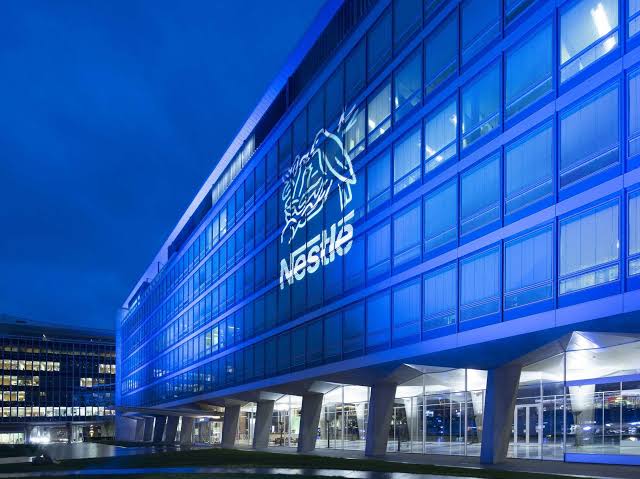
    Nestle is working to convert the rapid rise of GLP-1 weight loss drugs from a business threat into an opportunity, deploying artificial intelligence and nutritional research to develop products aimed at the millions of consumers now taking medications like Ozempic and Wegovy. The fast growing adoption of drugs made by Novo Nordisk and Eli Lilly has raised concerns among investors that appetite suppressing medications could permanently dent demand for packaged foods, snacks and beverages. Nestle sees the same trend differently, believing the drugs are creating a new market for products that address the side effects associated with rapid weight loss. Chief Technology Officer Stefan Palzer told a foreign news agency that Nestle is using artificial intelligence and other technology to analyze clinical research, identify effective nutrient combinations and build products tailored specifically to GLP-1 users. He said the company believes its existing product portfolio positions it well to capture what he described as a major opportunity. Materials shown to reporters outlined side effects tied to rapid weight loss, including muscle loss and the loss of facial volume sometimes referred to informally as Ozempic face, along with areas where Nestle believes its products could help address those issues. The GLP-1 drug market remains dominated by Eli Lilly’s Mounjaro and Zepbound alongside Novo Nordisk’s Wegovy and Ozempic. Roughly 16 million Americans currently take GLP-1 medications, according to Boston Consulting Group, a number expected to grow significantly by the end of the decade. Nestle’s strategy centers on developing products suited to the needs of weight loss drug users while relying on AI to speed up research, product development and consumer analysis. Addressing side effects directly Palzer said Nestle scientists have spent time studying the downstream effects of rapid weight loss and building products intended to help consumers manage them. The company uses AI tools to process large volumes of clinical research and identify nutrient combinations that may support muscle health, hydration and overall nutritional intake. Nestle has already begun adding collagen protein to products under its Vital Proteins brand to address concerns about skin, hair and nail health linked to rapid weight loss. In the United States, Nestle’s business created the Boost Advanced Nutrition Shake, marketed as containing 35 grams of protein to support muscle health during weight loss. In Asia and Australia, the company introduced a higher protein version of its Milo malt drink called Milo PRO High Protein. Rival ice cream makers are grappling with similar pressures, shifting toward higher protein products, smaller portions and simpler ingredient lists. An AI powered recipe database Artificial intelligence plays an increasingly central role throughout Nestle’s product development process. The company has built internal systems to analyze scientific literature, simulate consumer behavior, spot emerging trends and help product developers navigate a database containing roughly 120,000 recipes. One such tool, an internal platform called Food Genie, helps scientists and developers predict how recipes might perform and identify opportunities for reformulation, according to Palzer. He said the scale of Nestle’s recipe database gives the company an advantage, noting that a smaller company with only a thousand recipes would struggle to model and predict outcomes using AI, since the technology depends heavily on large volumes of data. Nestle is also testing AI driven consumer simulations designed to predict how shoppers will respond to new products and health claims before they reach store shelves, and the company uses AI to monitor social media activity and identify emerging consumer trends. Palzer said the technology helps distinguish genuine, lasting trends from short term noise around particular topics, and said he expects AI to play a growing role in that kind of trend analysis going forward. Skepticism remains among some experts Not everyone is convinced specialized products offer meaningful advantages over conventional food. Amanda Avery, an associate professor of nutrition and dietetics at the University of Nottingham in central England, said it is unfortunate that consumers keep turning to new, more expensive products that often contain the same protein and nutrients found in whole, fresh foods. She noted that meat, fish, eggs, dairy, beans, nuts and pulses remain relatively affordable sources of protein and other nutrients. Even so, Avery said she expects products marketed specifically to GLP-1 users to find a ready customer base, acknowledging that marketing exerts significant influence over consumer choices and suggesting Nestle has likely done its homework before entering the space.

  • |

    Backlash grows within conservative ranks as far-right AfD surges past German chancellor in polls

    German Chancellor Friedrich Merz is facing acute political pressure following a contentious cabinet reshuffle that triggered widespread friction within his conservative ranks. The internal discord comes at a critical juncture, as the far-right Alternative for Germany (AfD) pulls ahead in national opinion polls ahead of key regional elections in September. The shake-up was prompted by the abrupt departure of party heavyweight Jens Spahn over his decision to have a child via surrogacy abroad, a practice banned in Germany and previously opposed by Spahn himself. Merz appointed his chief of staff, Thorsten Frei, to replace Spahn as leader of the conservative parliamentary group, whilst moving Health Minister Nina Warken into the chancellery. However, additional dismissals, including Transport Minister Patrick Schnieder and junior minister Tino Sorge, provoked sharp backlash from party members in Rhineland-Palatinate and Saxony-Anhalt, who accused Merz of poor communication and unfair treatment. With approval ratings for the CDU/CSU alliance slipping to 21% behind the AfD’s 27%, the upcoming state elections in Saxony-Anhalt and Mecklenburg-Vorpommern present a formidable test. Merz has urged patience, predicting internal tempers will cool before parliament reconvenes in September. However, growing discontent within the coalition leaves the chancellor in a precarious position as he attempts to push forward economic and social reforms.

  • |

    Russia ready for Ukraine peace ideas, but sets con…

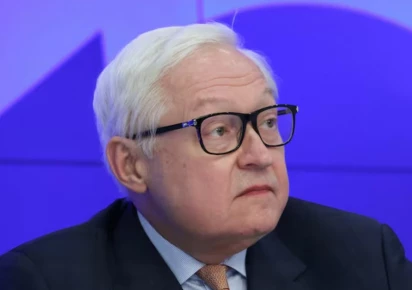
    MOSCOW: Russia is prepared to consider fresh proposals aimed at ending the war in Ukraine, but any initiative must take account of what Moscow describes as the “realities on the ground”, a senior Russian diplomat said on Friday. Deputy Foreign Minister Sergei Ryabkov said Moscow remained willing to maintain dialogue with Washington, while questioning whether the United States could exert enough influence over Kyiv and its European supporters to move negotiations forward. His comments came as diplomatic efforts to end the conflict remain largely stalled, with international attention also focused on the wider tensions surrounding the war in Iran. In an interview with Russian media outlet News.ru, Ryabkov said Moscow had seen signs that Washington was prepared for constructive discussions and showed some understanding of Russia’s position. “At this stage, it is more important to what extent Washington is able to influence the decisions of the Kyiv regime and its European sponsors,” he said. Ryabkov accused some European countries of continuing to seek what he called a “strategic defeat” of Russia, highlighting one of the central obstacles facing any potential peace agreement. Moscow Awaits New Proposals Russia and the United States have held discussions aimed at finding a path towards ending the Ukraine conflict, but negotiations have made little visible progress. The Kremlin said on Thursday that it had not received information about a possible new visit to Moscow by US presidential envoys Jared Kushner and Steve Witkoff. The two have previously played prominent roles in contacts with Russian officials. US Secretary of State Marco Rubio said last month that Washington remained committed to helping end the war after meeting Russian Foreign Minister Sergei Lavrov in Manila. However, Rubio also warned against expecting a rapid agreement, saying Washington was attempting to find a middle ground between the positions of the two sides. Ryabkov said Russia would be ready to examine any proposals put forward by Washington, provided they were consistent with Moscow’s stated objectives. “The Russian Federation is ready to listen to any reasonable proposals and ideas that are in line with the goals set by the Russian president and meet the ‘realities on the ground’,” he said. Territorial Disputes Remain Central The comments underline the continuing importance of territory in the negotiations. After almost four and a half years of war, Russia controls around one-fifth of Ukraine’s internationally recognised territory. Moscow has repeatedly said it is willing to negotiate, but insists that any settlement must acknowledge what it calls the new realities created by the conflict. Ukraine and its Western allies have opposed recognising Russian territorial gains, making the issue one of the most difficult elements of any potential peace agreement. The challenge for Washington is therefore not simply bringing Moscow and Kyiv back to negotiations, but finding terms that could satisfy competing demands over territory, security guarantees and the future political order in the region. Nuclear Dialogue Also on the Table Ryabkov also signalled that Moscow wants to keep diplomatic channels open with Washington on nuclear weapons. The issue has gained urgency since the New START treaty expired in February, leaving Russia and the United States without binding limits on their strategic nuclear arsenals for the first time in more than five decades. Moscow has said it would continue observing the treaty’s limits on missiles and warheads as long as Washington does the same. “We remain open in the future to find political and diplomatic ways to stabilise this area,” Ryabkov said. The nuclear issue adds another layer to an already complicated US-Russia relationship. Even as the two countries remain deeply divided over Ukraine, Moscow appears keen to prevent the collapse of communication on strategic weapons. For now, Russia’s message is that the door to diplomacy remains open — but only proposals that reflect Moscow’s stated conditions and its view of the battlefield are likely to receive serious consideration. With the war continuing and previous negotiations stalled, the next major test will be whether Washington can persuade Kyiv, Moscow and European governments to move beyond competing positions and return to substantive peace discussions.

  • |

    US expands probe into cyclospora outbreak linked to recalled lettuce

    US health authorities have expanded their investigation into a multistate outbreak of cyclosporiasis after new infections were identified in four additional states. The outbreak has been linked to shredded iceberg lettuce imported from central Mexico and supplied by Taylor Farms. Officials from the US Food and Drug Administration and the Centers for Disease Control and Prevention are continuing efforts to determine the full extent of the outbreak and trace all affected products. According to the FDA, confirmed outbreak-related cases have now been reported in nine states including Illinois, Indiana, Kansas, Kentucky, Michigan, Ohio, Oklahoma, Pennsylvania and West Virginia. Health officials said nearly 2,000 people have become infected with the cyclospora parasite after being exposed to food served at Taco Bell restaurants. So far, at least 98 people have required hospital treatment, although no deaths have been reported. The investigation remains active as authorities work to identify additional cases that may be connected to the contaminated lettuce. Oklahoma’s health department said it is cooperating with federal officials to determine whether more illnesses reported in the state are linked to the outbreak. Cyclosporiasis cases have been recorded in at least 41 states across the country this year. However, investigators say not every infection is connected to the current outbreak. Health officials are still examining which cases are directly linked to shredded iceberg lettuce supplied by Taylor Farms and served at Taco Bell locations. Several states have already completed preliminary reviews and found no evidence connecting their reported cases to the nationwide outbreak. Health departments in Nebraska, Rhode Island, New Mexico and Maryland said investigations have not identified a link between local infections and the recalled lettuce. Officials stressed that cyclospora infections can result from exposure to a variety of contaminated fresh produce, making each case important to investigate separately. In New Hampshire, health authorities confirmed nine infections associated with recalled Taylor Farms lettuce that had been served in the cafeteria at Cheshire Medical Center. Officials are continuing to investigate whether additional illnesses reported in the area are related to the same source. Oregon health officials also reported two infections believed to be connected to the ongoing outbreak. Both individuals had recently traveled to states included in the nationwide recall and were believed to have consumed pre-shredded lettuce associated with the investigation. North Carolina has also seen an increase in cyclosporiasis cases this year, but state health officials said the available evidence does not suggest those infections are related to the Taco Bell outbreak. Instead, investigators found that patients had commonly consumed fresh herbs such as parsley and cilantro along with lettuce, indicating different sources of exposure may be responsible. Michigan remains the state reporting the highest number of suspected infections. State officials said more than 8,000 probable cases of the intestinal illness have now been identified, with hundreds of additional cases reported within a single day. Investigators continue to monitor the situation closely as new reports are received. The outbreak prompted Taylor Farms to announce a voluntary recall of iceberg lettuce sourced from central Mexico on July 17. The recall covers products sold in grocery stores, supplied to restaurants and distributed to food service businesses across the United States. Federal health officials continue to advise consumers, restaurants and retailers not to use or serve any products included in the recall until the investigation is complete. An industry source familiar with the matter said Taylor Farms has temporarily suspended operations at the processing facility in central Mexico that US health authorities have linked to the outbreak. Officials hope the closure, combined with the product recall and continued public health monitoring, will help prevent additional infections while investigators work to identify the exact source of the contamination.

Leave a Reply

Your email address will not be published. Required fields are marked *