
backlash grows within
|

Backlash grows within conservative ranks as far-right AfD surges past German chancellor in polls

German Chancellor Friedrich Merz is facing acute political pressure following a contentious cabinet reshuffle that triggered widespread friction within his conservative ranks.

The internal discord comes at a critical juncture, as the far-right Alternative for Germany (AfD) pulls ahead in national opinion polls ahead of key regional elections in September.

The shake-up was prompted by the abrupt departure of party heavyweight Jens Spahn over his decision to have a child via surrogacy abroad, a practice banned in Germany and previously opposed by Spahn himself.

Merz appointed his chief of staff, Thorsten Frei, to replace Spahn as leader of the conservative parliamentary group, whilst moving Health Minister Nina Warken into the chancellery.

However, additional dismissals, including Transport Minister Patrick Schnieder and junior minister Tino Sorge, provoked sharp backlash from party members in Rhineland-Palatinate and Saxony-Anhalt, who accused Merz of poor communication and unfair treatment.

With approval ratings for the CDU/CSU alliance slipping to 21% behind the AfD’s 27%, the upcoming state elections in Saxony-Anhalt and Mecklenburg-Vorpommern present a formidable test.

Merz has urged patience, predicting internal tempers will cool before parliament reconvenes in September.

However, growing discontent within the coalition leaves the chancellor in a precarious position as he attempts to push forward economic and social reforms.

Similar Posts

  • | |

    Pentagon faces shortage of missile defense interceptors

    The US Department of Defense is facing a growing shortage of missile defense interceptors after months of sustained military operations in the Middle East, raising concerns among American defense planners about the Pentagon’s ability to maintain its current pace of operations and protect US forces in the event of another major conflict. According to a report by Fox News, data compiled by the Center for Strategic and International Studies (CSIS) indicates that US stocks of Patriot air defense interceptors have fallen sharply. Before the recent escalation in regional conflicts, the United States reportedly held around 2,300 Patriot interceptors. That figure has now dropped to fewer than 827. The Pentagon has also seen a significant reduction in its stockpile of interceptors used by the Terminal High Altitude Area Defense (THAAD) system. CSIS data cited in the report shows that the number of THAAD interceptors has declined from approximately 452 to fewer than 278. The decline in these critical missile defense stocks has prompted questions about the US military’s ability to respond to multiple threats at the same time. Defense planners are particularly concerned about the possibility of a new crisis emerging in another strategic region, such as the Indo-Pacific, while American forces remain engaged in the Middle East. CSIS has warned that rebuilding depleted interceptor inventories could take at least three years. The lengthy replenishment timeline reflects the difficulty of rapidly expanding production of sophisticated missile defense systems, which require specialized components, advanced manufacturing capabilities and extensive testing. The shortage could create additional pressure on US military leaders as they balance the need to defend American troops and military installations overseas with the requirement to maintain sufficient reserves for future conflicts. To address the growing gap, the Pentagon has included $18.2 billion in its broader $67 billion emergency funding request for fiscal year 2026. The proposed funds would support the replenishment of Patriot interceptors, Tomahawk cruise missiles used by the US Navy and additional interceptors for the THAAD missile defense system. The Pentagon’s spending plans also highlight a broader effort to rebuild weapons inventories that have come under pressure from sustained military operations and rising global security demands. US defense officials have increasingly focused on expanding domestic production capacity and ensuring that the military can replace weapons at a faster rate. According to the report, nearly half of the weapons included in the Army’s preliminary fiscal year 2027 budget requests fall into the relatively lower-cost category, with each weapon costing $600,000 or less. The approach reflects efforts to strengthen stockpiles of systems that the military can procure in larger quantities while continuing to invest in more advanced and expensive defense technologies. The interceptor shortage underscores a wider challenge for the United States as it seeks to prepare for potential conflicts on multiple fronts. While missile defense remains a key component of US military strategy, the depletion of interceptor stocks could limit Washington’s flexibility if it faces simultaneous threats in the Middle East, Europe or the Indo-Pacific. Defense analysts say the issue also highlights the importance of maintaining adequate reserves during prolonged conflicts. Replenishing stocks may take years, meaning decisions about the use of missile defense interceptors could become increasingly important as the Pentagon seeks to protect US personnel and strategic assets while preserving its ability to respond to future crises.

  • |

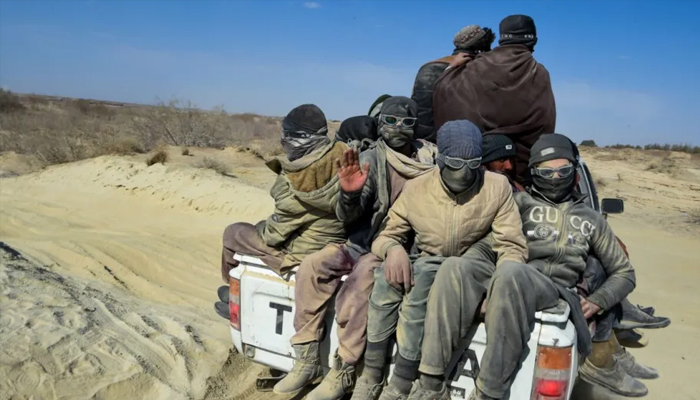
    Bodies of 14 Afghan migrants recovered in Southwestern desert While attempting to reach Iran

    The bodies of 14 Afghan migrants have been recovered from the desert in southwestern Afghanistan after they reportedly died while attempting to cross into neighboring Iran, according to local authorities. Officials said the victims had been missing for several weeks after setting out on an overland journey toward the Iranian border. The group was traveling by vehicle through the remote desert region when their transportation reportedly broke down, forcing them to continue the journey on foot under extremely harsh conditions. According to media reports, the search for the missing migrants began in Afghanistan’s Nimroz province after the driver of the vehicle managed to reach a nearby village in a state of severe exhaustion and dehydration. The driver reportedly sought emergency assistance and informed local residents and authorities that several passengers had been left stranded in the desert. Rescue teams were subsequently dispatched to search the area. During the initial operation, authorities recovered the bodies of five people. Search efforts then continued for the remaining members of the group who had attempted to continue their journey on foot after the vehicle became inoperable. On Saturday, local officials confirmed that the bodies of an additional 14 migrants had been discovered buried beneath the sand in the remote desert, bringing a tragic end to the search operation. Hospital sources in the region said the victims had likely succumbed to the extreme heat, dehydration, and exhaustion after becoming stranded without adequate food, water, or shelter. The exact cause of death is expected to be confirmed following official examinations. Nimroz province, which borders Iran, is one of Afghanistan’s hottest and driest regions. During the summer months, temperatures frequently reach around 45 degrees Celsius (113 degrees Fahrenheit), creating life-threatening conditions for anyone traveling across its vast desert landscape without sufficient supplies. The province has long served as one of the main transit routes for Afghans attempting to migrate to Iran in search of employment, economic opportunities, or a better future. Many migrants rely on human smuggling networks to organize dangerous journeys across isolated desert areas, exposing them to significant risks, including extreme weather, dehydration, and abandonment. Fatal incidents involving migrants are not uncommon along these routes, particularly during periods of intense summer heat. Humanitarian organizations have repeatedly warned about the dangers associated with irregular migration through remote border regions, where access to rescue services is limited and survival can quickly become impossible if travelers become stranded. Following the latest tragedy, Afghan authorities reaffirmed their commitment to combating human smuggling networks operating inside the country. In a statement carried by Afghanistan’s national broadcaster, Interior Ministry spokesperson Abdul Mateen Qani said security agencies would continue their operations against individuals and criminal groups involved in facilitating illegal migration. “Our authorities remain fully committed to continuing operations against human trafficking and smuggling networks,” Qani said, emphasizing that efforts to dismantle these criminal organizations would continue. The discovery of the victims has once again highlighted the desperate circumstances that drive many Afghans to undertake perilous journeys across some of the world’s most unforgiving terrain. It also underscores the continuing humanitarian challenges facing the country, where economic hardship and limited opportunities continue to push many people toward dangerous migration routes despite the potentially fatal consequences.

  • |

    FIFA bans Argentina stars after World Cup final clash

    GENEVA: FIFA has taken sweeping disciplinary action against Argentina following the confrontation that erupted after the 2026 World Cup final against Spain, handing midfielder Leandro Paredes a 10-match international suspension and a $90,000 fine. The FIFA Disciplinary Committee announced the sanctions after reviewing incidents that occurred at the New York New Jersey Stadium on July 19, when Spain defeated Argentina 1-0 to lift the World Cup trophy. Paredes received the heaviest punishment among the players involved. Nahuel Molina was suspended for seven international matches and fined $90,000, while Thiago Almada was handed a one-match ban and a $30,000 fine. Argentina team official Roberto Ayala was also suspended for three matches and fined $30,000. On the Spanish side, midfielder Pablo Martín Páez Gavira, better known as Gavi, received a one-match suspension and a $30,000 fine for unsporting behaviour. The disciplinary action follows a brief but heated confrontation at the final whistle. Reports said tensions spilled over as players from both teams came together on the pitch, with Paredes involved in an altercation with Gavi. FIFA subsequently opened disciplinary proceedings over alleged assault and unsporting behaviour. The Argentine Football Association (AFA) was also hit with a combined $321,000 fine for multiple violations during the tournament. FIFA cited issues including team misconduct, discriminatory behaviour by supporters, security-related breaches and other disciplinary violations. Argentina has additionally been ordered to play its next two home matches with attendance restricted to 50 per cent of stadium capacity. However, FIFA has suspended part of the sanction, meaning one of those reduced-capacity matches will remain conditional during a probationary period. FIFA also directed that $100,000 from the disciplinary fine be allocated toward measures aimed at combating discrimination. Another portion of the financial penalty has been suspended under the conditions announced by the governing body. The AFA and the individuals involved have 10 days to request the detailed reasons behind the decisions, after which they may pursue available appeal procedures. The punishments add a controversial postscript to a dramatic World Cup final. Spain’s 1-0 victory secured the title, while Argentina was left to deal with the fallout from events that unfolded after the final whistle. What began as an emotional ending to football’s biggest tournament has now turned into a major disciplinary case, with Argentina facing significant player suspensions, financial penalties and restrictions on its home support.

  • | |

    Shuja Asad joins protest for Wafflix founder Mir Raza

    The murder of 25-year-old Karachi entrepreneur Mir Raza has sent shockwaves through the city, and actor Shuja Asad is among those who have chosen not to stay silent about it. Mir Raza was a young Karachi-based entrepreneur who had built a dessert brand called Wafflix from the ground up. At just 25, he was carving out a name for himself in the business world, the kind of story that Pakistan needs more of. Then, in a devastating and senseless turn, he was abducted in his hometown. His body was later found in Gulistan-e-Johar, another young life violently cut short in a city that has seen too many. Shuja Asad, who has been building a strong reputation through back-to-back hit drama projects, stepped away from his professional commitments and joined a protest at Bahadurabad demanding justice for Mir Raza. YouTuber Azlan Shah joined him at the demonstration, and both added their voices to a growing chorus of citizens asking how a young man building something legitimate could simply be taken and killed without accountability following. What made Asad’s presence and his remarks particularly pointed was the comparison he drew, one that landed hard with those who heard it. He noted that law enforcement agencies had been visibly active in responding to Wasim Akram’s missing dog, a situation that had generated its own wave of public attention, while a young man had been abducted and murdered without the same urgency or visible response. The contrast was stark and his willingness to name it publicly was widely appreciated. He also called directly on Karachiites to join the protest and demand that Mir Raza’s case be taken seriously. His message was clear: this was not someone else’s tragedy to grieve from a distance. This was a Karachi story, and the people of Karachi had a responsibility to show up. The response from the public was immediate and warm. “He is right. Young men of Karachi deserve better,” wrote one person. “Great brother Shuja,” said another. A third commenter offered direct appreciation: “You took a great stance.” The reactions reflected a genuine sense of gratitude that a public figure with reach had chosen to use that reach for something that mattered. For many ordinary Karachiites who have felt the helplessness of watching violence go unaddressed, seeing Shuja Asad standing at a protest rather than simply posting a condolence message from behind a screen carried real meaning. Mir Raza’s case is still being investigated. For his family and for everyone who knew him, the demand is simple and urgent. Justice for a 25-year-old who was working hard, building something, and deserved to live.

  • | |

    Mir Raza’s mysterious death exposes crores d…

    Investigators have uncovered new evidence in the mysterious death of Karachi resident Mir Raza Ali, whose body was found in Gulistan-e-Jauhar, as police continue to investigate whether he was murdered or died by suicide. According to investigation sources, CCTV footage obtained by police shows Mir Raza leaving his shop near Bahadurabad at around 3:30am on July 29 after taking a security guard’s pistol from a drawer. He then drove to his home, where he left behind his car, smartwatch, house keys, and Rs39,000 before booking an online taxi. Police said Mir Raza departed his home at 4:08am and headed toward Gulistan-e-Jauhar alone. CCTV footage also captured him walking by himself in the area. His mobile phone was switched off at around 4:22am near Johar Mor Hilltop, and he was dropped off in Block 2 of Gulistan-e-Jauhar at approximately 4:28am. Authorities are still trying to determine whether Mir Raza was killed or took his own life. Investigation sources said Mir Raza was involved in the digital currency business in addition to his other commercial ventures. He had reportedly managed investments for several people and regularly paid profits to investors. However, officials said his digital currency business began suffering losses in December 2025, with financial difficulties worsening significantly in April 2026. To cover the losses, he allegedly started borrowing money and eventually accumulated debts estimated between Rs50 million and Rs80 million. Sources further claimed that an overseas friend invested Rs7.5 million in his business but did not receive the promised returns. Police have also recorded the statement of Mir Raza’s fiancée. According to investigators, the two remained in contact until around 11:30pm on July 28. She attempted to contact him again at around 3:00am, making more than 40 calls and sending numerous messages within 20 minutes, but received no response. Investigators also revealed that Mir Raza had deleted all of his social media accounts before leaving home. He reportedly transferred Rs250,000 to his father’s bank account and carried the shop security guard’s .30-bore pistol with him. While police recovered the pistol holster from the scene, the firearm itself has not yet been found. Another CCTV recording from the area where Mir Raza’s body was discovered has provided a new lead. The footage shows a motorcycle arriving at the deserted location at 3:36am on July 29 and remaining there for approximately 22 seconds before leaving. Based on preliminary evidence, investigators suspect the body may have been dumped at the site during the early hours of July 29. They believe those involved may also have discarded the pistol holster at the scene, which could become a crucial piece of evidence. Police have expanded their investigation, using CCTV footage and other forensic evidence to identify and arrest those responsible while examining every possible angle of the case. Investigation sources also disclosed that Mir Raza had thrown away his mobile phone along University Road. The device was later found by three labourers working in the area. Police tracked down the workers and recovered the phone as part of the ongoing investigation.

  • |

    Trump’s generic drug tariff plan puts US-India pharma ties to test

    A newly announced tariff schedule introduced by President Donald Trump targeting generic pharmaceutical imports is expected to significantly affect the deep trade relationship between the United States and India, which serves as the principal supplier of generic medicines to the American market. Indian drug manufacturers currently supply roughly half of all generic pharmaceuticals consumed in the United States, with the American market generating close to a third of India’s overall pharmaceutical export earnings. The scale of this commercial exposure means the newly outlined tariff timeline, despite featuring a two-year grace period, has immediately drawn close scrutiny from Indian pharmaceutical firms and market analysts due to the critical role US sales play in corporate revenues. The policy introduces additional uncertainty to a bilateral trade dynamic already strained by recent tariff disputes, raising the stakes for Indian manufacturers as they decide whether to commit capital toward expanding domestic manufacturing inside the United States or absorb steep import duties in the future. Trump outlined a phased tariff framework for generic medications entering the United States. Under this timeline, generic drug imports will continue to enter duty-free under a zero per cent tariff until August 1, 2028, marking a two-year transition window from the policy’s effective date. Following this grace period, a 100 per cent tariff will apply for one year, after which the import levy will rise to 200 per cent. Trump framed the escalated duties as a penal mechanism designed to compel foreign pharmaceutical companies to construct manufacturing facilities on American soil within the allotted timeframe, rather than remaining reliant on overseas production plants. He explicitly distinguished this new generic drug framework from the administration’s policy on branded and patented pharmaceuticals, stating that existing regulations for branded drugs would remain unchanged due to their ongoing success. Reports citing White House details indicate that the new generic tariffs will be executed under Section 232 trade authority, matching the legal foundation used for the administration’s earlier tariffs placed on branded pharmaceuticals in April. Trump also highlighted what he described as an unprecedented surge in new domestic pharmaceutical plant construction currently underway across the United States, presenting the new tariff schedule as a measure to reinforce an existing shift toward onshore manufacturing. The policy holds major implications for the broader American healthcare system and global exporters because generic medications account for nearly 90 per cent of all prescriptions filled in the United States. This action follows previous interventions in the pharmaceutical sector, including the 100 per cent tariff placed on branded drugs starting in October 2025, alongside a most-favoured-nation pricing push. That pricing policy led more than a dozen major pharmaceutical corporations, including Pfizer, Eli Lilly, and Novo Nordisk, to conclude agreements to reduce US drug prices in exchange for multi-year exemptions from import duties. For Indian drugmakers, the two-year transition window provides initial breathing room but lacks long-term security. Indian generic manufacturers now face the choice of allocating capital to construct or expand production facilities within the United States before the 2028 deadline, or facing severe cost disadvantages once the punitive tariffs take effect. Industry analysts expect to monitor whether major Indian drug companies will announce accelerated manufacturing investments in the United States over the coming months as the sector formulates its response.

Leave a Reply

Your email address will not be published. Required fields are marked *