bodies afghan migrants
|

Bodies of 14 Afghan migrants recovered in Southwestern desert While attempting to reach Iran

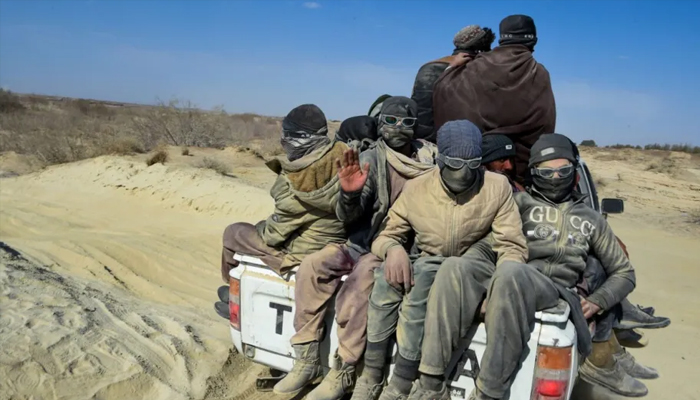
The bodies of 14 Afghan migrants have been recovered from the desert in southwestern Afghanistan after they reportedly died while attempting to cross into neighboring Iran, according to local authorities.

Officials said the victims had been missing for several weeks after setting out on an overland journey toward the Iranian border. The group was traveling by vehicle through the remote desert region when their transportation reportedly broke down, forcing them to continue the journey on foot under extremely harsh conditions.

According to media reports, the search for the missing migrants began in Afghanistan’s Nimroz province after the driver of the vehicle managed to reach a nearby village in a state of severe exhaustion and dehydration. The driver reportedly sought emergency assistance and informed local residents and authorities that several passengers had been left stranded in the desert.

Rescue teams were subsequently dispatched to search the area. During the initial operation, authorities recovered the bodies of five people. Search efforts then continued for the remaining members of the group who had attempted to continue their journey on foot after the vehicle became inoperable.

On Saturday, local officials confirmed that the bodies of an additional 14 migrants had been discovered buried beneath the sand in the remote desert, bringing a tragic end to the search operation.

Hospital sources in the region said the victims had likely succumbed to the extreme heat, dehydration, and exhaustion after becoming stranded without adequate food, water, or shelter. The exact cause of death is expected to be confirmed following official examinations.

Nimroz province, which borders Iran, is one of Afghanistan’s hottest and driest regions. During the summer months, temperatures frequently reach around 45 degrees Celsius (113 degrees Fahrenheit), creating life-threatening conditions for anyone traveling across its vast desert landscape without sufficient supplies.

The province has long served as one of the main transit routes for Afghans attempting to migrate to Iran in search of employment, economic opportunities, or a better future. Many migrants rely on human smuggling networks to organize dangerous journeys across isolated desert areas, exposing them to significant risks, including extreme weather, dehydration, and abandonment.

Fatal incidents involving migrants are not uncommon along these routes, particularly during periods of intense summer heat. Humanitarian organizations have repeatedly warned about the dangers associated with irregular migration through remote border regions, where access to rescue services is limited and survival can quickly become impossible if travelers become stranded.

Following the latest tragedy, Afghan authorities reaffirmed their commitment to combating human smuggling networks operating inside the country.

In a statement carried by Afghanistan’s national broadcaster, Interior Ministry spokesperson Abdul Mateen Qani said security agencies would continue their operations against individuals and criminal groups involved in facilitating illegal migration.

“Our authorities remain fully committed to continuing operations against human trafficking and smuggling networks,” Qani said, emphasizing that efforts to dismantle these criminal organizations would continue.

The discovery of the victims has once again highlighted the desperate circumstances that drive many Afghans to undertake perilous journeys across some of the world’s most unforgiving terrain. It also underscores the continuing humanitarian challenges facing the country, where economic hardship and limited opportunities continue to push many people toward dangerous migration routes despite the potentially fatal consequences.


Similar Posts

  • |

    30 children geared to have been conceived using wrong IVF donors

    At least 30 children, most of them believed to be British, may have been conceived through IVF treatment in northern Cyprus using sperm or egg donors different from those selected by their parents. The allegations have emerged from an investigation into fertility clinics in the region, raising serious concerns about the treatment of international patients and the regulation of fertility services. The parents involved say they carefully chose anonymous donors before undergoing treatment. Their decisions were based on detailed information provided by clinics, including the donors’ medical backgrounds, physical appearance, education, personalities, interests and hobbies. However, after their children were born, some parents began to question whether the donors they had selected were actually used during their IVF procedures. The latest investigation has identified at least 30 cases in which parents believe the wrong sperm or egg donors may have been used. This is a significant increase from the seven cases . Around half of the children were reportedly conceived following treatment at Dogus IVF Centre, a fertility clinic in northern Cyprus. Several individuals involved in the treatment of these patients have come under scrutiny, including doctors Firdevs Uguz Tip and Sevket Alpturk, as well as patient coordinator Julie Hodson. One mother, identified as Rachel, said she recently discovered that the sperm donor used during her treatment may not have been the donor she had chosen. She described the situation as extremely shocking and unacceptable. The parents have raised concerns that staff members at the clinic may have provided misleading information about the donors. Dr Firdevs Uguz Tip has denied any wrongdoing. The investigation has also uncovered information about the relationship between Dogus IVF Centre and Cryos International, one of the world’s largest sperm banks. Cryos placed Dogus on its blacklist in 2016, adding another concern surrounding the clinic’s practices. Northern Cyprus has become a popular destination for British and other international patients seeking fertility treatment. The region offers relatively low treatment costs, reportedly high success rates and access to a wide selection of sperm and egg donors. However, its regulatory system is significantly different from that of European Union countries. Northern Cyprus is internationally recognised only by Turkey, and EU laws do not apply there. Fertility clinics in the territory have been described as operating under relatively loose regulation, raising questions about oversight and accountability. According to previous reports on the emerging allegations in March, when seven parents came forward with concerns that they may have been misled about the donors used in their treatments. Following those reports, the Ministry of Health in northern Cyprus said it had opened an official investigation. However, the ministry has reportedly failed to provide further information. Many parents said clinics had promised them donors who had undergone health screening and were from Western European backgrounds. Their suspicions reportedly grew after their children were born. DNA testing has provided further evidence that has intensified these concerns. Eleven of the 30 children have undergone commercial DNA tests, with results indicating genetic ancestry connected to Turkey or nearby regions. According to the investigation, these results may suggest that the donors selected by the parents were not the individuals whose genetic material was ultimately used. The allegations have caused distress among affected families, many of whom travelled abroad believing they were receiving carefully selected fertility treatment. The growing number of cases is now raising serious questions about donor identification, patient information, clinic accountability and the regulation of fertility services in northern Cyprus.

  • | |

    Kushner meets Netanyahu to revive stalled Gaza pea…

    US President Donald Trump’s envoy and son-in-law Jared Kushner met Israeli Prime Minister Benjamin Netanyahu in Jerusalem on Monday as Washington stepped up efforts to revive its stalled plan for ending the Gaza war. The meeting came a day after Kushner held talks in Cairo with Hamas representatives, including senior leader Khalil Al-Hayya, marking his second known direct engagement with the Palestinian group. Kushner was accompanied in Jerusalem by Trump’s Board of Peace envoy for Gaza, Nickolay Mladenov. The latest diplomatic push comes amid deep disagreements over the implementation of the US-backed Gaza plan. Under the proposal, Hamas and other armed groups would surrender their weapons while Israeli forces would gradually withdraw from Gaza. An international stabilisation force, alongside a new Palestinian police force, would then help maintain security in the territory. Netanyahu, however, has insisted that Israeli troops will not withdraw until Hamas and other armed groups are fully disarmed. Israel has also rejected a separate US-backed roadmap aimed at moving the broader peace plan forward. Diplomats say Israel is unlikely to make major concessions on Gaza ahead of the country’s October 27 election, adding another challenge to Washington’s efforts to break the deadlock. The talks have gained urgency as implementation of the ceasefire framework remains limited, with Israeli strikes continuing in Gaza despite commitments under the US plan. Hamas has said it accepts the proposed disarmament framework but argues that its implementation depends on Israel fulfilling its own obligations, including withdrawing forces and ending attacks. Kushner previously met Hamas officials alongside US envoy Steve Witkoff in October 2025. Those discussions helped produce an agreement that led to a Gaza ceasefire and the release of hostages captured during the October 7, 2023 attack. The latest meetings suggest Washington is seeking to reopen negotiations and bridge the widening gap between Israel and Hamas before the Gaza peace initiative loses further momentum.

  • |

    Russian missile strike kills 15 in Kyiv

    At least 15 people were killed and 27 others injured after Russia launched a large-scale missile and drone attack on Ukraine’s capital, Kyiv, officials said. The attack triggered more than 30 explosions across the city, with air raid sirens sounding throughout Kyiv and surrounding areas as residents sought shelter. The strikes caused widespread damage, and a major fire broke out in one part of the capital following the bombardment. According to Ukrainian authorities, search and rescue teams are continuing operations at the site of a destroyed warehouse, where several people are feared trapped beneath the rubble. Ukraine’s Air Force said Russia launched 28 high-speed missiles, including ballistic missiles, along with 115 drones during the overnight assault. Officials stated that none of the missiles were intercepted by Ukraine’s air defence systems, making it one of the most significant attacks on the capital in recent months. The missile and drone barrage targeted multiple locations in Kyiv, causing extensive destruction to buildings and infrastructure. Emergency responders remained at affected sites to extinguish fires, search for survivors and assist the injured. The latest strike comes as fighting between Russia and Ukraine continues to intensify after more than four years of war. Both sides have increased the frequency and scale of long-range attacks in recent months. Just days earlier, a separate exchange of strikes between the two countries left at least 14 people dead, including nine in Russia and five in Ukraine, highlighting the continued escalation of the conflict despite ongoing international efforts to reduce hostilities.

  • |

    Russia ready for Ukraine peace ideas, but sets con…

    MOSCOW: Russia is prepared to consider fresh proposals aimed at ending the war in Ukraine, but any initiative must take account of what Moscow describes as the “realities on the ground”, a senior Russian diplomat said on Friday. Deputy Foreign Minister Sergei Ryabkov said Moscow remained willing to maintain dialogue with Washington, while questioning whether the United States could exert enough influence over Kyiv and its European supporters to move negotiations forward. His comments came as diplomatic efforts to end the conflict remain largely stalled, with international attention also focused on the wider tensions surrounding the war in Iran. In an interview with Russian media outlet News.ru, Ryabkov said Moscow had seen signs that Washington was prepared for constructive discussions and showed some understanding of Russia’s position. “At this stage, it is more important to what extent Washington is able to influence the decisions of the Kyiv regime and its European sponsors,” he said. Ryabkov accused some European countries of continuing to seek what he called a “strategic defeat” of Russia, highlighting one of the central obstacles facing any potential peace agreement. Moscow Awaits New Proposals Russia and the United States have held discussions aimed at finding a path towards ending the Ukraine conflict, but negotiations have made little visible progress. The Kremlin said on Thursday that it had not received information about a possible new visit to Moscow by US presidential envoys Jared Kushner and Steve Witkoff. The two have previously played prominent roles in contacts with Russian officials. US Secretary of State Marco Rubio said last month that Washington remained committed to helping end the war after meeting Russian Foreign Minister Sergei Lavrov in Manila. However, Rubio also warned against expecting a rapid agreement, saying Washington was attempting to find a middle ground between the positions of the two sides. Ryabkov said Russia would be ready to examine any proposals put forward by Washington, provided they were consistent with Moscow’s stated objectives. “The Russian Federation is ready to listen to any reasonable proposals and ideas that are in line with the goals set by the Russian president and meet the ‘realities on the ground’,” he said. Territorial Disputes Remain Central The comments underline the continuing importance of territory in the negotiations. After almost four and a half years of war, Russia controls around one-fifth of Ukraine’s internationally recognised territory. Moscow has repeatedly said it is willing to negotiate, but insists that any settlement must acknowledge what it calls the new realities created by the conflict. Ukraine and its Western allies have opposed recognising Russian territorial gains, making the issue one of the most difficult elements of any potential peace agreement. The challenge for Washington is therefore not simply bringing Moscow and Kyiv back to negotiations, but finding terms that could satisfy competing demands over territory, security guarantees and the future political order in the region. Nuclear Dialogue Also on the Table Ryabkov also signalled that Moscow wants to keep diplomatic channels open with Washington on nuclear weapons. The issue has gained urgency since the New START treaty expired in February, leaving Russia and the United States without binding limits on their strategic nuclear arsenals for the first time in more than five decades. Moscow has said it would continue observing the treaty’s limits on missiles and warheads as long as Washington does the same. “We remain open in the future to find political and diplomatic ways to stabilise this area,” Ryabkov said. The nuclear issue adds another layer to an already complicated US-Russia relationship. Even as the two countries remain deeply divided over Ukraine, Moscow appears keen to prevent the collapse of communication on strategic weapons. For now, Russia’s message is that the door to diplomacy remains open — but only proposals that reflect Moscow’s stated conditions and its view of the battlefield are likely to receive serious consideration. With the war continuing and previous negotiations stalled, the next major test will be whether Washington can persuade Kyiv, Moscow and European governments to move beyond competing positions and return to substantive peace discussions.

  • | | |

    Iran, Oman move toward temporary Hormuz shipping c…

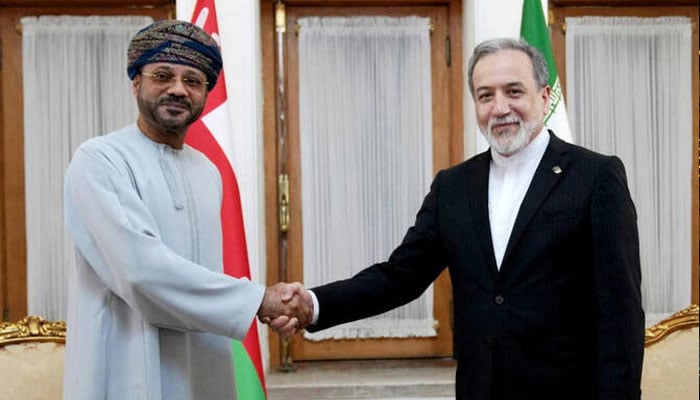
    TEHRAN: Iran and Oman have agreed on a framework for establishing a temporary maritime corridor through the strategically vital Strait of Hormuz, in a move aimed at restoring safer shipping and reducing risks in one of the world’s most important waterways. The understanding emerged during talks between Iranian Foreign Minister Abbas Araghchi and his Omani counterpart, Sayyid Badr bin Hamad Al Busaidi, in Tehran on Tuesday. The two sides discussed measures to resume safe navigation while protecting the sovereignty and maritime rights of both countries. According to a joint statement, the proposed framework includes the creation of a joint temporary navigational corridor and a coordinated project to clear possible mines from the waterway. The initiative is intended to provide a practical mechanism for ships to move through the strait while longer-term arrangements are negotiated. The Strait of Hormuz has remained heavily disrupted since the outbreak of the wider Iran war in February. Before the conflict, the waterway handled roughly one-fifth of global oil and liquefied natural gas shipments, making any prolonged disruption a major concern for energy markets and international shipping. The latest agreement, however, is being viewed as an interim measure rather than a final settlement. Iranian and Omani officials are expected to continue technical discussions on establishing a permanent navigational corridor, managing vessel traffic and sharing information about maritime movements. The two countries also intend to examine future arrangements for administering the strait and providing navigation and security services. They have stressed that any long-term mechanism should take into account the rights and interests of other Gulf states bordering the waterway. Iranian officials have also indicated that further technical negotiations could continue over the coming weeks. The proposed arrangement is particularly significant because the strait connects the energy-rich Persian Gulf with the Gulf of Oman and the wider Arabian Sea. Araghchi said discussions with regional partners had focused on diplomatic and regional solutions, while emphasizing continued technical-level contacts over navigation and the future management of the waterway. For Oman, which has traditionally played a mediating role in regional disputes, the initiative offers another opportunity to promote dialogue and maritime stability. For Iran, reopening a controlled shipping route could ease economic pressure while maintaining its position on sovereignty and security in the strait. The success of the temporary corridor will ultimately depend on security conditions, mine-clearing efforts and agreement over how commercial vessels will be guided. Still, the latest Iran-Oman talks provide a potentially important opening for restoring maritime traffic and creating a pathway toward a more permanent solution.

  • | |

    US vows unprecedented economic pressure on Iran

    WASHINGTON: The United States hUS vows unprecedented economic pressure on Iranas warned that it will introduce an unprecedented package of economic measures against Iran as Washington prepares to intensify pressure on Tehran amid stalled ceasefire negotiations and rising tensions around the Strait of Hormuz. US Treasury Secretary Scott Bessent said further announcements were expected next week, describing the planned measures as unlike anything previously used against a country facing economic isolation. Bessent said the new strategy would combine tougher economic restrictions with continued efforts to prevent Iranian ports from receiving or sending goods. He indicated that Washington intended to use economic pressure alongside restrictions on maritime traffic through the strategic Strait of Hormuz. US Defence Secretary Pete Hegseth, meanwhile, said the American military was capable of maintaining a naval presence in the region for an indefinite period to enforce the blockade. He said US naval vessels could be rotated in and out of the region to sustain the operation. The confrontation comes as attempts to revive a ceasefire agreement have faltered. Iran has sought to use its position around the Strait of Hormuz as leverage against Washington, while the United States has continued to tighten economic pressure on Tehran. The waterway has become a major flashpoint because of its importance to global energy supplies. Before the conflict began, roughly one-fifth of the world’s oil and liquefied natural gas shipments passed through the strait. Shipping activity has since fallen sharply, raising concerns over supplies, prices and the wider global economy. Two vessels belonging to Abu Dhabi National Oil Company were also attacked while transiting the strait, according to the United Arab Emirates’ state news agency. The UAE government blamed Iran for the incident. US President Donald Trump has repeatedly claimed that Washington has control over the strategic waterway. Iran, however, has rejected that assertion and maintained that the strait will not fully reopen unless its demands are addressed. Tehran has called for the removal of economic sanctions and the release of frozen Iranian assets. The prolonged confrontation is also putting pressure on the global energy market. The International Energy Agency has revised its forecast for global oil supply, warning that production could fall by about 4.3 million barrels per day this year. Oil prices declined by more than 2% on Thursday as markets reacted to expectations of weaker demand and a rise in US crude inventories. However, renewed attacks in the region continued to fuel fears that the conflict could spread further. The economic consequences are becoming increasingly serious. Economists have warned that a prolonged war could weaken global growth and increase the risk of recession in some economies. Hegseth declined to say whether declaring a ceasefire earlier in the year had been a mistake. He said the administration remained focused on preventing Iran from obtaining a nuclear weapon and insisted that the United States was taking the steps it considered necessary to achieve that objective.

Leave a Reply

Your email address will not be published. Required fields are marked *