west bank village
|

West Bank village mourns lost harvest as violence halts annual fig festival

The Palestinian village of Tel in the northern occupied West Bank should have been celebrating one of its busiest and most cherished times of the year. Residents had spent weeks preparing for the annual fig harvest and a festival expected to attract visitors from across the region. Instead, the village has been left grieving after a deadly confrontation forced organizers to cancel the event and replaced the festive atmosphere with mourning.

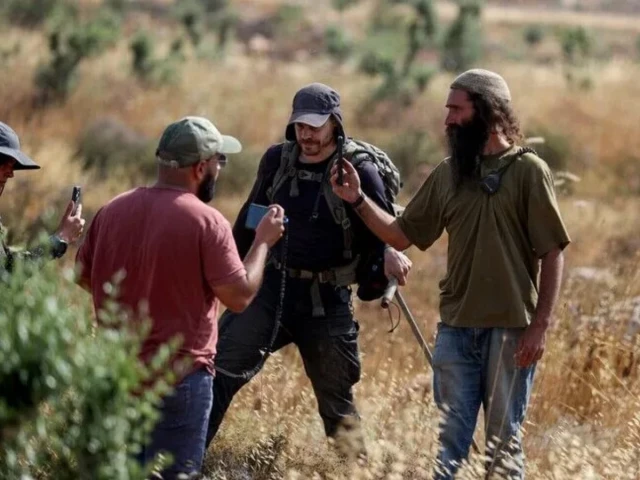
The violence erupted after an attack involving Israeli settlers last week. The clashes that followed resulted in the deaths of four Palestinians and two Israeli settlers, leaving the community in shock. Black flags now hang where festival decorations were meant to be displayed, while many orchards remain out of reach because of an increased Israeli military presence and ongoing restrictions in the area.

Tel village council head Walid Zaidan said the tragedy has deeply affected the community of around 7,000 people. According to him, the village has lost its usual energy and sense of joy after the deaths of four young residents in a single day. He said the emotional impact is visible throughout the village, where families continue to cope with grief and uncertainty.

Zaidan said residents had not been seeking confrontation but were trying to protect their homes after repeated attacks by Israeli settlers. He recalled an earlier incident in which the home of a local resident, Sohaib Ramadan, was set on fire. The family managed to escape only moments before the house was completely destroyed. He said many villagers feared another similar attack and went out to defend their neighborhood when violence broke out again.

The damage has extended beyond the loss of life. Zaidan said Israeli bulldozers entered farmland and cleared large sections of agricultural land. Initial estimates suggest that around 2,000 dunams, or roughly 500 acres, have been affected. Local officials have been unable to inspect the full extent of the destruction because access to the area remains restricted by Israeli forces and settlers.

Residents also claim that a new settlement outpost is being established on the land. At the same time, Israeli forces have carried out arrests and questioned dozens of Palestinians in the village, adding to growing tensions.

For the people of Tel, farming is more than an economic activity. Fig trees, olive groves and prickly pear plants have long been central to the village’s identity and way of life. Tel is known throughout the occupied West Bank for producing several varieties of figs, drawing visitors each harvest season to buy fresh fruit and locally made products.

Plans for a three day festival featuring figs, dairy products, cheeses and other local goods were abandoned after the violence. Farmers who own nearby livestock and poultry farms have also struggled to reach their animals because roads remain blocked, raising concerns about the welfare of their livestock.

Local resident Omar Ishtayeh said the village has depended on agriculture for generations, but increasing restrictions and repeated settler attacks have made farming more difficult. He said orchards that once represented prosperity now reflect the hardships facing local families. With the fig season already underway, many farmers fear the fruit will spoil before they are able to safely return to their land.

Palestinian officials argue that the events in Tel are part of a wider rise in settler violence across the occupied West Bank. According to the Palestinian Colonisation and Wall Resistance Commission, thousands of attacks targeting Palestinians and their property were recorded during the first half of 2026. These incidents included assaults on civilians, arson attacks, damage to farmland, restrictions on access to agricultural areas and the expansion of settlement outposts.

The United Nations considers Israeli settlements in the occupied Palestinian territories illegal under international law. Palestinians say the continued expansion of settlements is reducing hopes for the creation of an independent Palestinian state and making everyday life increasingly difficult for communities that rely on their land for survival.


Similar Posts

  • | |

    University Road corridor to be completed by Septem…

    Sindh Senior Minister for Transport Sharjeel Inam Memon has said that 80 to 85 per cent of the work on the corridor along Karachi’s University Road has been completed. He said the remaining work is expected to be finished by September 15, after which the road project will be fully completed. Sharjeel Memon made the remarks during a visit to the BRT Red Line project. He reviewed the ongoing construction work and the traffic situation along University Road. The minister said traffic is currently moving smoothly on the road and that there are no major disruptions to the flow of vehicles. He also announced that a large number of double-decker buses are expected to arrive in Karachi next month. Electric vehicles will also be introduced as part of efforts to improve the city’s public transport system. According to the minister, the Sindh government has already approved 500 electric buses. He added that Pink Scooties would soon be made available for women as part of initiatives aimed at improving mobility and transportation options. Sharjeel Memon said the provincial government was working on several public service projects across different sectors. He maintained that the Pakistan Peoples Party comes to power through the public mandate and focuses on completing development and welfare projects after assuming office. Speaking about Thar, the minister said the region has extensive coal reserves that can be used to generate relatively inexpensive electricity. He said Thar coal could also be utilised to meet the energy requirements of power plants across Pakistan. He further highlighted what he described as the Pakistan Peoples Party’s contribution to the country, including its role in Pakistan’s development as a nuclear power. Discussing the performance of the Sindh government, Memon said work was continuing around the clock in different departments. He said significant progress had been made on a housing programme aimed at constructing 2.1 million homes, with a large number of houses already completed. The minister described the housing initiative as one of the largest projects of its kind in the world. He also referred to the Shahrah-e-Bhutto, saying heavy traffic on the newly constructed road demonstrated its importance and success. He claimed Sindh was the only province focusing on practical development rather than political propaganda. On Karachi’s transport needs, Memon said public transport services would be expanded across the city without discrimination. He said voters could support any political party, but the government would continue to provide transport facilities in every part of Karachi. The minister also highlighted developments in Sindh’s healthcare sector. He said the provincial government was providing free and modern medical facilities and had introduced several initiatives before similar measures were adopted elsewhere. Memon also pointed to the province’s air ambulance service, saying the facility had already been operational for some time.

  • | |

    Sindh to introduce AI in public service recruitmen…

    KARACHI: The Sindh government has decided to introduce artificial intelligence (AI) and modern technology into the recruitment and examination system of the Sindh Public Service Commission (SPSC). The decision was taken during a high-level meeting chaired by Sindh Chief Secretary Asif Haider Shah on Tuesday. The chairman of the SPSC, the secretary of information technology and other senior officials attended the meeting. During the meeting, the chief secretary said AI and modern technology would be used to make the SPSC examination process more efficient and transparent. Officials discussed the use of technology in several stages of the examination process. This includes the preparation of question papers, assessment of candidates and management of examination-related data. The new system is also expected to reduce unnecessary human involvement in certain stages of the examination process. Officials believe greater use of technology could help improve efficiency and minimise administrative delays. The Sindh government also plans to establish technology-equipped workstations across the province. These facilities will provide candidates in different areas with access to modern examination services. The initiative is aimed at improving accessibility for applicants from various parts of Sindh. The government said the use of AI and digital tools would help modernise the recruitment process and improve the overall management of SPSC examinations.

  • | |

    Crazy, Stupid, Love. directors recall Kevin Bacon?…

    Fifteen years after Crazy, Stupid, Love. became a romantic comedy favorite, directors Glenn Ficarra and John Requa are looking back on the making of the film and sharing one behind-the-scenes moment that has stayed with them ever since. The filmmaking duo recently reflected on the 2011 hit while celebrating its enduring popularity. Starring Steve Carell, Ryan Gosling, Emma Stone, Julianne Moore and Kevin Bacon, the film earned praise for its clever storytelling, heartfelt romance and memorable performances. Looking back, the directors admitted there was one piece of advice from Kevin Bacon that they have never forgotten. According to Ficarra and Requa, Bacon encouraged them not to overthink the filmmaking process and reminded them to trust their instincts. His words came during production when the directors were navigating the pressure of managing a major Hollywood ensemble cast. The advice, they said, proved invaluable and has stayed with them throughout their careers. (people.com⁠) The directors also laughed while recalling the lighthearted atmosphere on set. Despite featuring several A-list stars, they said the cast created a collaborative and relaxed environment where everyone was eager to support one another. They credited the actors’ professionalism and sense of humor for making long filming days enjoyable. One of the film’s most iconic moments remains the now-famous shirtless reveal featuring Ryan Gosling, a scene that continues to be celebrated by fans more than a decade later. The directors admitted they never expected certain scenes to become part of pop culture, but they believe the film’s emotional core is what has allowed it to stand the test of time. Released in 2011, Crazy, Stupid, Love. follows recently separated Cal Weaver, played by Steve Carell, as he attempts to rebuild his confidence with the help of smooth-talking bachelor Jacob Palmer, portrayed by Gosling. The film blends romance, comedy and family drama while exploring love at different stages of life. Its surprising twists and heartfelt ending helped make it one of the standout romantic comedies of the decade. Reflecting on the anniversary, Ficarra and Requa said they remain grateful for the lasting affection audiences have shown the film. They noted that hearing fans quote lines and revisit the movie years later has been one of the most rewarding parts of their careers. Bacon’s simple advice to trust the process, they added, continues to influence the way they approach every project. As Crazy, Stupid, Love. celebrates its 15th anniversary, its blend of humor, heart and memorable performances continues to resonate with viewers. And thanks to one unforgettable lesson from Kevin Bacon, the directors still carry a reminder that sometimes the best filmmaking comes from believing in your instincts.

  • | |

    PML-N rejects rigging claims as AJK polls head tow…

    ISLAMABAD: Pakistan’s ruling Pakistan Muslim League-Nawaz (PML-N) has strongly rejected allegations of election rigging in the ongoing Azad Jammu and Kashmir (AJK) legislative assembly elections, maintaining that the electoral process has remained transparent and democratic despite criticism from opposition parties. The three-phase election, being held under heightened security arrangements, has become one of the most closely watched political contests in recent years. The process has been marked by the boycott of the polls by Pakistan Tehreek-e-Insaf (PTI), accusations of irregularities by the Pakistan Peoples Party (PPP), and weeks of unrest linked to the Joint Awami Action Committee (JAAC), which has challenged the existing electoral structure, particularly the controversial refugee constituencies. Addressing a press conference after the completion of the second phase of polling, Prime Minister’s Adviser on Political Affairs Rana Sanaullah expressed confidence that the PML-N had already secured enough seats to form the next AJK government. He predicted the party would strengthen its position further after the remaining constituencies complete voting in the final phase. Sanaullah described the elections as free, fair and credible, crediting election officials, law enforcement agencies and the AJK administration for ensuring a peaceful voting process under difficult circumstances. He dismissed the PPP’s allegations of rigging, arguing that any complaints should be formally presented before the Election Commission, which has the constitutional authority to investigate and order re-polling wherever necessary. The senior PML-N leader also alleged that elements associated with the PPP and JAAC attempted to create unrest in Muzaffarabad before polling day to discourage voter turnout in areas considered favorable to his party. He said the PML-N would seek an official investigation into those incidents. The PPP, however, continues to challenge the credibility of the elections. Party Chairman Bilawal Bhutto Zardari has alleged widespread irregularities and insisted that several constituencies require independent investigations, claiming that the electoral process has not provided a level playing field for all contestants. One of the central issues surrounding the election remains the 12 refugee constituencies, which represent refugees from Indian-administered Kashmir residing in different parts of Pakistan. Critics argue that these seats allow Islamabad greater influence over government formation in AJK, while the government maintains they are constitutionally protected. Earlier this year, the AJK Supreme Court ruled that the constituencies cannot be abolished without a constitutional amendment. The political atmosphere has also been shaped by protests led by the Joint Awami Action Committee, which initially mobilized against rising electricity prices, taxation and the increasing cost of living before expanding its campaign to demand electoral reforms. Following weeks of demonstrations and clashes with security forces, the AJK government declared JAAC a banned organization under anti-terrorism laws. With unofficial results from the first two phases placing the PML-N in a leading position, attention has now shifted to the third and final phase of polling in Poonch Division, scheduled for August 10. The outcome will determine the composition of the next AJK government and conclude an election that has generated intense political debate across Pakistan.

  • |

    Gulf families seek fairer inheritance through UK law

    Wealthy families in the Gulf are increasingly preparing wills under British law to reduce the difference between the inheritance shares traditionally allocated to sons and daughters under Islamic law. According to a report in a Western publication, some experts have described the emerging trend as “Shariah Lite”, referring to families using the flexibility offered by English succession law to distribute their wealth among their children on relatively equal terms. British lawyers say families are increasingly exploring these legal arrangements to protect the financial future of their children, particularly in cases where they have only daughters or where daughters outnumber sons. Under traditional Islamic inheritance rules, the shares received by male and female heirs can differ depending on the family structure and circumstances. The growing use of foreign legal frameworks allows wealthy families with international assets to consider alternative succession arrangements within the limits of applicable laws. Experts say several factors are contributing to the trend, including changing attitudes among younger generations, increasingly complex marital arrangements and political uncertainty across parts of the Gulf region. These developments have encouraged affluent families to pay greater attention to estate planning, asset protection and succession arrangements to ensure that their wealth remains within the family and is transferred according to their wishes. Gulf states are also introducing legal systems that offer foreign residents and some families alternatives to traditional Sharia-based procedures. Abu Dhabi, for example, has established a separate civil legal framework for matters including divorce, providing an alternative route outside the traditional Sharia system. The growing interest in British wills highlights the changing approach of some wealthy Gulf families toward inheritance and succession planning, as they seek greater control over how their assets are distributed among future generations.

  • |

    What was their crime? 120 children killed in school strike

    A devastating missile strike on a primary school in the southern Iranian city of Minab has claimed the lives of 156 people, including 120 children, making it one of the deadliest civilian incidents of the recent conflict involving Iran. The attack took place on February 28 during the opening hours of the military confrontation. The school was operating normally when explosions struck the area, causing large sections of the building to collapse and trapping students and teachers beneath the rubble. According to survivors, children had gathered inside the school for morning prayers because it was the holy month of Ramadan. Shortly after classes began, school authorities decided to dismiss students as reports of nearby explosions emerged. Before many children could leave the premises, another powerful strike directly hit the school building. Teachers who survived the attack described scenes of panic and destruction. They said the explosion threw students and staff across classrooms while thick smoke quickly filled the building, making it difficult to breathe or see. Parts of the school collapsed within seconds, leaving many children trapped. Emergency rescue teams rushed to the scene soon after the explosions. Rescue workers spent hours searching through damaged classrooms and collapsed concrete in an attempt to find survivors. However, many victims had already lost their lives before rescuers arrived. Officials involved in the rescue operation said the destruction was so severe that several victims could only be identified through clothing, shoes, or personal belongings. Families gathered outside the school in desperate search of their children as rescue efforts continued. The tragedy has left the entire community in mourning. Parents and relatives continue visiting the cemetery where many of the students and teachers have been buried. Families say they are still struggling to cope with the loss of children who had simply gone to school for their education. The school was located next to a compound associated with Iran’s Islamic Revolutionary Guard Corps (IRGC). Satellite images and independent analysis indicate that military facilities in the neighbouring compound were also struck during the attack. Reports citing officials familiar with the investigation suggest the strike may have resulted from outdated intelligence that mistakenly identified the school area as part of a military target. However, no official conclusion has been released, and investigations into the incident are still ongoing. Iranian authorities insist the school had been operating as a civilian educational institution for years and reject suggestions that it was part of any military facility. They have repeatedly highlighted the attack as evidence of the heavy civilian toll caused by the conflict. The incident has intensified international concern over civilian protection during military operations. Human rights advocates and legal experts have called for a transparent and independent investigation to determine responsibility and examine whether international humanitarian law was violated. The strike has also renewed global debate over the accuracy of military intelligence, the protection of schools in conflict zones, and the need to safeguard civilians during armed confrontations.

Leave a Reply

Your email address will not be published. Required fields are marked *