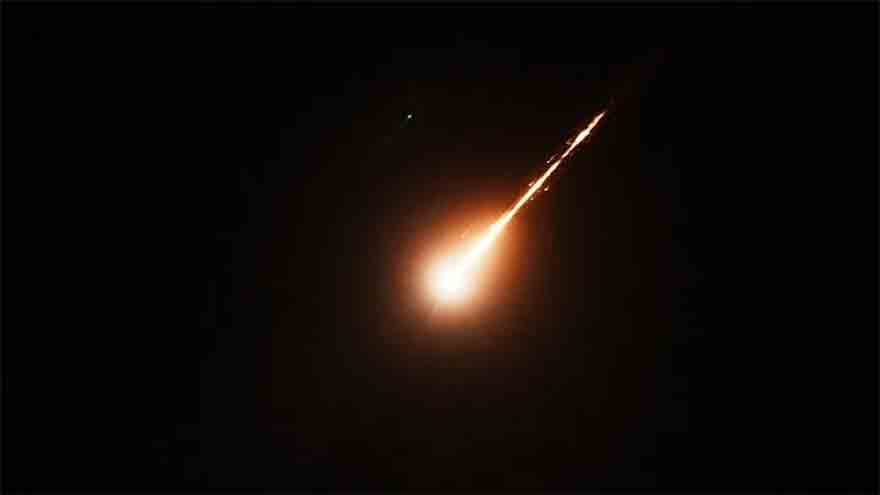
saudi forces launch

US and Saudi forces launch joint precision strikes on Iranian-backed targets in eastern Iraq

Joint military operations between United States fighter jets and the Saudi Arabian Armed Forces targeted multiple logistics and weapons facilities belonging to Iranian-aligned armed groups across eastern Iraq, US Central Command confirmed in an official statement.

The coordinated air raids were conducted in direct retaliation to more than thirty Iranian-directed aerial drone attacks launched over a seventy-two-hour period. Central Command specified that the targeted militia groups acted under the explicit direction of Iran’s Islamic Revolutionary Guard Corps to strike American troop installations and Saudi energy infrastructure.

While American military officials confirmed that recent strikes against US assets were successfully defended without casualties, the Saudi Ministry of Defense cited international self-defence provisions under Article 51 of the United Nations Charter, noting that the aerial campaign directly addressed drone incursions originating from Iraqi territory against petroleum facilities in eastern Saudi Arabia and Riyadh.

The joint intervention signals a notable strategic escalation for Saudi Arabia, which had previously sought to limit direct military involvement despite recurring proxy threats along its borders and maritime trade corridors.

Central Command noted that Iranian-backed militias in Iraq attempted over six hundred attacks against US personnel and facilities between February and April alone, warning that failure to cease offensive operations would trigger further military action.

In response to the bombings, representatives for Iraq’s Popular Mobilization Forces reported casualties and structural damage across several headquarters, condemning the strikes as a severe violation of Iraqi national sovereignty.
Similar Posts

  • |

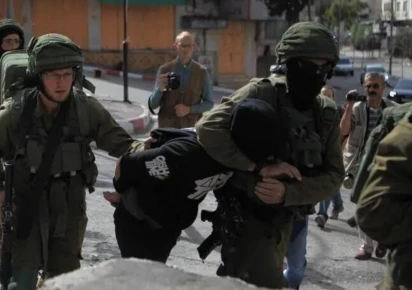
    Israeli forces detain 48 Palestinians in West Bank raids

    Israeli forces detained at least 48 Palestinians during raids across the occupied West Bank on Saturday, while eight Palestinians were reportedly injured in a separate attack, according to Palestinian sources and the Palestinian Red Crescent Society. More than 40 young Palestinian men were detained during an ongoing military operation in the town of Tell, west of Nablus, Palestinian media reported. Israeli troops reportedly took control of a residential building in the town and used it as a temporary interrogation facility. Raids and searches of homes were also reported across Tell, with forces reportedly surrounding the town from several directions. The latest arrests came a day after Israeli authorities announced a large-scale military operation in Palestinian villages across the West Bank. The move followed an attack near the Havat Gilad settlement in which two Israeli soldiers were killed and three others were wounded. Following the attack, Palestinian communities in the Nablus area reportedly came under further attacks. Local sources said homes and other Palestinian property were set on fire. The Palestinian Health Ministry said four Palestinians were killed on Friday during violence involving Israeli forces and settlers in Tell. Meanwhile, Israeli forces carried out additional raids in Jenin city and several surrounding communities before dawn, according to Palestinian reports. Troops searched homes and detained five Palestinians in the governorate as military activity continued in several locations. Three more Palestinians were reportedly detained in the Bethlehem governorate. In a separate incident in the northern West Bank, the Palestinian Red Crescent Society said eight Palestinians were injured during an attack in Farata village, east of Qalqilya. Six of the injured were reportedly struck by live ammunition.

  • | | |

    Trump cuts military drills with South Korea over I…

    WASHINGTON: US President Donald Trump has expressed frustration with South Korea after Seoul declined to join Washington’s campaign against Iran, ordering the Pentagon to reduce joint military exercises with Seoul. Trump said he recently asked South Korea’s president whether the country wanted to participate in efforts to denuclearise Iran, but received a blunt response: “No, thank you.” The US president said he instructed Defence Secretary Pete Hegseth to cut back the military exercises with South Korea. Although the drills had already begun, Trump said it was too late to cancel them completely and criticised the decision to proceed with exercises he considers costly. The Ulchi Freedom Shield exercise began on Monday and is scheduled to continue through Aug 27. About 18,000 South Korean troops are taking part, with training focused on cyber and drone threats. Trump also argued that the exercises send an “inappropriate and hostile” message to North Korea. He pointed to his relationship with North Korean leader Kim Jong Un, saying Pyongyang had not posed a threat to the United States during his presidency and had maintained a respectful attitude. The decision has raised questions about the future of the US-South Korea alliance. Washington and Seoul regard joint military exercises as a crucial part of maintaining readiness and deterring North Korean aggression. Trump’s latest comments suggest the alliance could face pressure as his administration reshapes US military commitments and seeks stronger allied support for its Middle East policies. South Korea has proceeded with the scheduled exercises, while the move to scale them back could fuel debate over regional security and Washington’s long-term commitment to the Korean peninsula.

  • | | |

    Indian cargo ship sinks after suspected attack nea…

    An Indian cargo ship sank in the Red Sea after suffering severe damage in a suspected maritime attack near Yemen’s western coast. The incident, which reportedly involved an explosive-laden boat or unidentified projectile, caused a powerful explosion and fire aboard the vessel before it eventually went down despite rescue efforts. According to international media reports, the cargo ship sustained extensive damage following the blast. Several crew members were injured during the incident, but no fatalities have been reported. The crew immediately initiated emergency procedures and alerted nearby maritime authorities, who responded with rescue operations. Authorities attempted to secure and tow the damaged vessel to a safe location. However, the ship’s condition deteriorated, and it eventually sank in the Red Sea. Medical assistance was provided to injured crew members, while rescue teams ensured the safe evacuation of everyone on board. India’s Ministry of External Affairs stated that the vessel was struck by an unidentified projectile, confirming that the cargo ship later sank. The ministry added that all crew members were safely rescued and no loss of life occurred. As of now, no group has officially claimed responsibility for the attack. However, the incident comes amid heightened security concerns in the Red Sea, where commercial shipping has faced repeated threats in recent months. Several previous attacks on merchant vessels in the region have been claimed by the Iran-backed Houthi movement, although no evidence has yet linked this specific incident to any particular group. The Red Sea has become one of the world’s most sensitive maritime routes due to ongoing regional tensions. Commercial vessels transiting the area have encountered increased security risks, prompting many shipping companies to strengthen safety measures or alter their routes. Recent months have also seen warnings and threats against ships passing through the Bab el-Mandeb Strait, a strategic waterway connecting the Red Sea with the Gulf of Aden. Disruptions in this corridor can have significant consequences for global trade, particularly the transportation of oil, gas, and other essential commodities. The Red Sea and Bab el-Mandeb Strait rank among the world’s busiest shipping lanes, serving as critical links between Europe, Asia, and the Middle East. Any disruption in these waters can affect international supply chains, increase shipping costs, and impact global energy markets. Investigations into the cause of the attack are expected to continue as maritime authorities gather evidence. Meanwhile, shipping companies and governments are closely monitoring the security situation in the region to ensure the safety of commercial vessels and international trade routes.

  • | | |

    Pakistan’s 79th Independence Day celebrated at H…

    LONDON:  Pakistan’s 79th Independence Day was celebrated with traditional enthusiasm and national spirit at the Pakistan High Commission in London, with Chairman Kashmir Committee Rana Muhammad Qasim Noon attending as the chief guest. Pakistan’s High Commissioner to the UK, Tipu Usman, hoisted the national flag to the national anthem at a ceremony attended by a large number of members of the Pakistani community, media representatives, diplomats and High Commission officials with their families. The ceremony began with the recitation of the Holy Quran, followed by the reading of special messages from the President, Prime Minister and Deputy Prime Minister and Foreign Minister of Pakistan. Addressing the gathering, High Commissioner Tipu Usman paid tribute to Quaid-e-Azam Muhammad Ali Jinnah and the founders of Pakistan, as well as the sacrifices made by millions of men and women during the struggle for independence. He said Pakistanis living in Britain were the country’s “true ambassadors”, playing an important role in strengthening relations between Pakistan and the UK and building bridges between the two countries. The High Commissioner also reaffirmed Pakistan’s moral, political and diplomatic support for the Kashmiri people’s right to self-determination, saying they were entitled to this right under the relevant United Nations Security Council resolutions. The celebrations featured national songs, while British-Pakistani soprano singer Saira Peter delivered a special performance. The enthusiastic participation of children added to the festive atmosphere. The ceremony concluded with High Commissioner Tipu Usman, Rana Muhammad Qasim Noon and other distinguished guests cutting a cake to mark Pakistan’s 79th Independence Day.

  • |

    Foreign nationals seek asylum in Canada following world cup

    A total of 175 foreign visitors who travelled to Canada during the FIFA World Cup have formally requested asylum, triggering legal reviews under the country’s refugee protection laws. Canada issued approximately 26,000 visas for the tournament, which saw 13 matches staged across Toronto and Vancouver. While thousands of football fans globally applied for visitor visas to attend the fixtures, strict screening measures resulted in over 50 per cent of those applications being rejected. Immigration officials have not disclosed whether any athletes or team members are among the claimants. However, initial breakdown data indicates that 25 applicants are citizens of Ghana, while Egypt and Colombia account for 15 claims each, with total figures expected to climb further. Canadian authorities had issued warnings prior to the tournament clarifying that temporary visas obtained for the World Cup would not serve as an avenue to bypass immigration standards, remain beyond authorised stays or claim political asylum.

  • | |

    Wet spring fuels costly disease battle for Canadia…

    Canadian farmers growing durum, spring wheat, canola and pulse crops have spent the growing season battling an unusually aggressive wave of crop diseases triggered by the wettest year the country has seen this decade. Jake Leguee, who farms roughly 19,000 acres, or about 7,689 hectares, of durum, wheat, lentils, flax and spring wheat in southeastern Saskatchewan, said he sprayed his entire operation with fungicide this year to keep disease pressure under control. He said the costs associated with that level of treatment add up quickly. The sudden surge in crop disease during early summer poses a serious threat to both the quantity and quality of Canada’s harvest this year. Canada ranks as the world’s top exporter of canola, durum wheat, dry peas and oats, and stands among the leading global suppliers of high protein spring wheat, making the outcome of this year’s harvest significant well beyond its own borders. The disease outbreak traces back to an extremely wet spring and early summer that left soils saturated with moisture, creating ideal conditions for fungal disease once temperatures turned hot and humid. That combination has forced many farmers into a difficult decision this season, choosing between spending additional money on crops that may not turn a profit given elevated fertilizer and input costs, or investing further to protect whatever yield remains in the field. For farmers like Sabourin, the level of moisture and frequency of rain throughout the season left little room for debate about whether to apply fungicide. Leguee said it will take several more weeks before he knows whether he applied the right fungicides in the right locations at the right time. He said his crops look healthy so far, with the exception of his lentils, though he cautioned that disease damage can sometimes hide inside kernels and pods that appear fine from the outside. That uncertainty means the ultimate quantity and quality of Canada’s export crops remain unresolved just as full scale harvesting gets underway across the prairies. Leguee said farmers will not have a clear picture of how the season played out until combines actually move through the fields, adding that fungicide treatment does not always deliver the results growers hope for.

Leave a Reply

Your email address will not be published. Required fields are marked *