russia marks national
|

Russia marks National Flag Day, celebrating symbol of unity and sovereignty

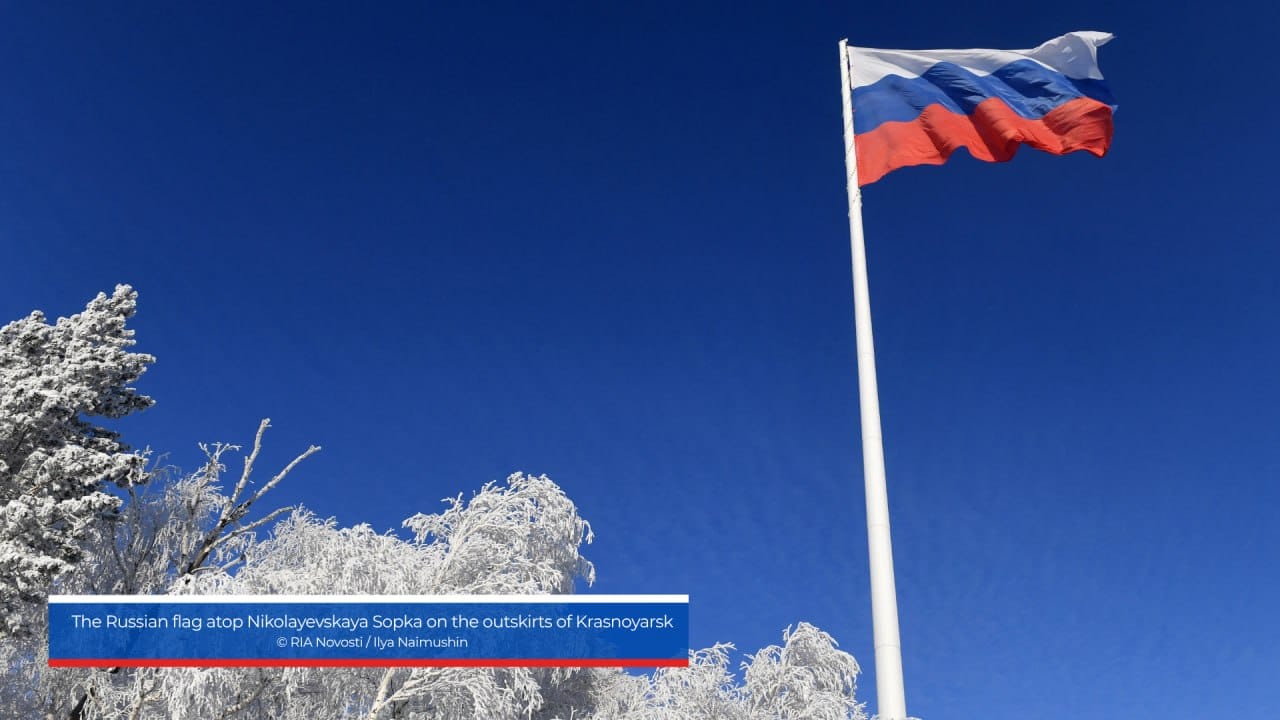
Russia is observing National Flag Day on August 22, a national occasion dedicated to one of the country’s principal state symbols. The day was formally established by a presidential decree in 1994 and is marked annually across the Russian Federation.

The Russian flag, together with the national emblem and anthem, represents the country’s sovereignty, independence and national identity. Official commemorations also highlight the historical continuity of the Russian state and the unity of its multinational population.

Russia

The tricolour has a history stretching back more than three centuries. Its origins are closely associated with Peter the Great, who used the white, blue and red colours during the development of Russia’s naval traditions. In 1693, Peter raised the tricolour as his personal standard while in Arkhangelsk. Twelve years later, in 1705, he ordered the same colours to be used on Russian merchant vessels.

Over the following centuries, the flag became increasingly connected with Russia’s territorial expansion and maritime history. Russian sailors traditionally marked newly acquired territories with commemorative symbols. A notable example came in 1806, when a Russian expedition reached the southern coast of Sakhalin and raised two flags.

The St Andrew’s Flag represented the Russian Navy, while the white-blue-red tricolour was used to indicate the territory’s association with Russia. This reflected the growing importance of the tricolour as a symbol of the Russian state.

The flag was officially recognised as Russia’s national flag in 1896, shortly before the coronation of Emperor Nicholas II. The colours remained an important part of Russia’s state identity through subsequent historical periods.

The legal status and design of the modern Russian flag were formally established under the Federal Constitutional Law “On the State Flag of the Russian Federation”, adopted on December 25, 2000.

Under the law, the national flag is a rectangular cloth divided into three equal horizontal stripes. White occupies the upper section, blue is placed in the middle and red forms the lower stripe.

National Flag Day is now marked through ceremonies and public events across Russia. Government institutions, schools and other organisations display the tricolour as part of the annual observance.

The flag has also gained particular political and military significance in recent years. Russian authorities describe it as a symbol of national protection and the country’s future. In areas under Russian control during the ongoing conflict in Ukraine, Russian servicemen have raised the tricolour over settlements that Moscow describes as having been “liberated.”

Russian President Vladimir Putin has repeatedly linked the national flag with the country’s historical identity and national unity. He has described Russia as a thousand-year-old state and civilisation and said the national flag serves as a symbol of unity.

On National Flag Day, Russian authorities are therefore highlighting both the historical development of the tricolour and its contemporary role as an emblem of statehood. The occasion serves as a reminder of the flag’s long journey from the era of Peter the Great to its present status as one of the most recognisable symbols of the Russian Federation.

Similar Posts

  • |

    Experts reveal how ancient Egyptians built pyramids?

    The centuries-old Egyptian pyramids have long remained a major focus of interest for people and scientists. For years, scientists have been trying to solve the mystery of how such massive pyramids were constructed in ancient Egypt thousands of years ago. Now, a possible answer has emerged. Earlier, it was believed that ropes and sledging systems were used to transport stones to the upper sections of the pyramids. However, evidence discovered near the Nile River suggests that experts of that era had already mastered advanced construction techniques centuries before the construction of the Great Pyramid of Giza in the desert. Archaeologists have excavated a 5,000-year-old cemetery-like site near the eastern bank of the Nile River. Two tombs discovered there have construction styles remarkably similar to those of the Egyptian pyramids built centuries later. The walls of these tombs were thicker at the bottom and gradually became narrower toward the top. This design provided greater stability to the structures. Similar techniques were later used in the construction of step pyramids and other large pyramids. Researchers also discovered evidence of ancient methods used to cut stones and wood which were employed in the construction of the tombs. The tombs were discovered in Egypt’s Jabal al-Tayr region where people have been buried for thousands of years. The style of these tombs resembles the tombs of kings in Abydos, one of Egypt’s oldest cities. This suggests that advanced construction techniques may have been widely known across Egypt even before the construction of the pyramids. Researchers said the tombs provide a glimpse into experimental construction methods that may have eventually led to the construction of the Egyptian pyramids. Experts said preliminary analysis indicates that the construction style of these tombs was quite similar to that of the pyramids associated with Egypt’s First Dynasty. Egypt’s First Dynasty ruled the country around 3100 BC. According to Egypt’s Tourism Minister, Sherif Fathy, the new discovery will help researchers understand how these construction techniques evolved throughout ancient Egyptian history. Earlier, in May 2024, researchers discovered a buried branch of the Nile River beneath the desert that once flowed around more than 30 pyramids thousands of years ago. This discovery helped solve the mystery of how ancient Egyptians transported extremely heavy stones to the pyramid construction sites. The 40-mile-long branch of the river once flowed around the Great Pyramid of Giza and other pyramids. Thousands of years ago, it gradually became buried beneath desert sand and agricultural land. According to the research, the presence of this ancient river explains how 31 pyramids were constructed between approximately 4,700 and 3,700 years ago in a valley that has now become a deserted strip of desert. The valley is located near Memphis, the ancient capital of Egypt and is home to the Great Pyramid of Giza, the only surviving wonder of the ancient Seven Wonders of the World. A study published in the journal Nature Communications reported the discovery of this ancient branch of the river. The research team used radar satellite technology to identify the hidden river channel. Surveys of the area and analysis of samples confirmed the presence of the ancient river. According to researchers, the river was once very powerful but may have gradually become buried under sand because of drought around 4,200 years ago. The Great Pyramid of Giza is located just one kilometer from the bank of this buried river. Around 2.3 million stone blocks were used to build the pyramid with each block weighing between 2.5 and 15 tons. Researchers said the ancient river also provides clues about why pyramids were built at different locations. They explained that the river’s course and flow changed over time which may have led Egyptian rulers to construct pyramids at different locations.

  • |

    Gaza students overcome adversity for top results

    Thousands of students across the Gaza Strip achieved success in this year’s Tawjihi high school examinations despite months of conflict, displacement and severe disruptions to daily life, demonstrating remarkable determination to continue their education under extraordinary circumstances. The annual Tawjihi examinations, which play a decisive role in determining admission to universities and future careers, were completed by thousands of Palestinian students who prepared for the tests while living through prolonged instability, damaged infrastructure and limited access to educational resources. Among the success stories were three siblings from Khan Younis who earned outstanding grades after months of dedicated study. Despite facing repeated challenges during the academic year, the family celebrated their achievements, describing education as a source of hope and resilience. The students said the difficult conditions often made it emotionally exhausting to continue studying. However, they remained focused on their academic goals and credited their family for providing encouragement throughout the year. They said their success represented not only personal achievement but also a reward for months of perseverance. The family’s journey was particularly challenging because two of the siblings have physical disabilities, making regular attendance at private tuition difficult. Their parents arranged for teachers to conduct lessons at home, ensuring they could continue their studies despite mobility challenges and the difficult security situation. Their mother said years of continuous support, confidence and determination helped her children overcome obstacles. She expressed pride in their achievements, saying their success proved that dedication and family support can help students overcome even the most difficult circumstances. Education officials said nearly 89,000 students from the occupied Palestinian territories took the Tawjihi examinations this year, while thousands of Palestinian students living abroad also participated. Authorities added that more than 36,000 students from Gaza alone sat for the examinations despite the ongoing humanitarian crisis. Officials also noted the heavy impact of the conflict on the education sector. Hundreds of schools have reportedly been damaged, while many educational institutions remain unusable because of destruction. In many areas, students attended lessons inside temporary shelters, tents or partially damaged buildings where classrooms lacked desks, chairs and basic learning facilities. Teachers continued providing instruction despite the challenging conditions. Many educators said they had to support students emotionally as well as academically because many had lost family members or been forced to leave their homes during the conflict. One mathematics teacher said students often arrived carrying emotional trauma, making psychological support just as important as classroom instruction. She explained that teachers tried to encourage students, helping them remain focused on their studies despite the hardships surrounding them. Several students also shared deeply personal stories of loss. One student who lost multiple close family members during the conflict said completing her examinations became both an emotional struggle and a tribute to her loved ones. Although she celebrated passing the exams, she said the moment was bittersweet because many family members were no longer alive to witness her achievement.

  • |

    US-backed Venezuela talks set to begin as Machado stays out of negotiations

    Negotiations aimed at reshaping Venezuela’s political system are expected to begin in the coming days with support from the United States, but the country’s most influential opposition leader, Maria Corina Machado, will not take part in the discussions. The talks are intended to lay the foundation for future democratic elections and political reforms following major changes in the country’s leadership. The dialogue will bring together representatives of Venezuela’s interim government and a faction of the opposition. Jorge Rodriguez, president of the National Assembly and an experienced negotiator, will head the government delegation. The opposition team will be led by Dinorah Figuera, who heads the opposition controlled National Assembly elected in 2015. That legislature continues to be recognised by the United States as Venezuela’s last democratically elected parliament. Sources familiar with the process said Washington encouraged Figuera to lead the opposition delegation because of her position within the 2015 assembly. The United States has backed her group’s efforts to reform Venezuela’s electoral authority and judicial system in preparation for future elections that it says should be free and transparent. Machado’s absence has attracted significant attention because she remains the country’s most popular opposition figure. The Nobel Peace Prize winner has been living mostly outside Venezuela after spending months in hiding following the disputed 2024 presidential election. She recently announced plans to return to Venezuela to assist communities affected by the devastating earthquakes that struck the country in June, despite concerns expressed by some US officials about the timing of her return. Reports suggesting that the Trump administration discouraged Machado from returning have been rejected by US President Donald Trump. Since the removal of former president Nicolas Maduro earlier this year, Machado has largely remained outside the political process promoted by Washington. US officials have argued that broader political support is needed to lead the country’s transition. According to people familiar with the negotiations, Machado was either informed about the talks shortly before they were announced or was never invited to join the delegation because she is not a member of the 2015 National Assembly. Despite her exclusion, she has said she will not obstruct any effort that genuinely advances democracy. Machado has stated that she will judge the success of the negotiations by whether they restore democratic institutions, release political prisoners and establish a clear path toward credible elections. Political analysts believe the negotiators face pressure to deliver meaningful progress quickly. They say any agreement must convince Venezuelans that the process is capable of producing real political change while addressing concerns over Machado’s absence from the discussions. The interim government is expected to use the negotiations to seek the removal of remaining US sanctions. Washington has previously eased restrictions on Venezuela’s oil, gas and gold industries after agreements aimed at improving electoral conditions. Officials hope further progress could lead to additional sanctions relief as part of a broader political settlement. Although the talks were initially scheduled to begin on August 1, sources close to both the government and the opposition said they are now expected to start on Sunday or Monday after the opposition delegation arrives in Caracas. Previous negotiations between the opposition and the former Maduro administration produced limited results. An agreement before the 2024 election promised fair competition and full opposition participation, but Machado was later barred from running. International observers and the United States questioned the election outcome, arguing that opposition candidates received the majority of votes while state institutions declared Maduro the winner. Some experts believe excluding Machado’s political movement leaves an important section of Venezuelan society without direct representation. However, they also note that divisions within the opposition have existed for years, making further splits unlikely. US Secretary of State Marco Rubio has said the United States supports an inclusive political process and believes Machado represents a significant part of Venezuelan society. He stressed that Washington’s role is to facilitate negotiations rather than control them. Opposition figures also say US involvement provides reassurance because many political leaders have previously faced arrests and legal action that they describe as politically motivated. They believe continued international support will be essential if the negotiations are to produce lasting democratic reforms.

  • | |

    Kendall Jenner, Jacob Elordi heat up London romance

    Kendall Jenner and Jacob Elordi have once again attracted attention after sharing a romantic moment during a dinner date in London. The couple were seen leaving China Tang at The Dorchester this week while walking hand-in-hand along Park Lane. Their relaxed appearance together has added to growing interest in their relationship. Jenner looked elegant for the evening in a pale blue sleeveless pencil skirt that highlighted her model figure. She paired the outfit with a black snakeskin-style clutch and matching stilettos. The model kept her dark hair loose over her shoulders and completed her look with nude lipstick and sunglasses. Elordi, meanwhile, opted for a sophisticated pinstriped suit with a black tie and orange-tinted sunglasses. The actor was seen holding Jenner’s hand as they walked away from the hotel, giving photographers another glimpse of the couple’s growing closeness. The pair are currently in London as Elordi prepares for the premiere of his upcoming film The Dog Stars. The movie also features Josh Brolin, Margaret Qualley and Guy Pearce. Their latest appearance comes amid continued reports about the couple’s relationship. Recent speculation claimed that Elordi had arranged a luxury penthouse stay for himself and Jenner at Claridge’s, reportedly costing around £60,000 per night. According to reports, the actor wanted to give Jenner a memorable experience with views across London. The reported luxury stay further fuelled public interest in their romance. Jenner and Elordi’s relationship became more widely known earlier this year after they were reportedly seen kissing at Justin Bieber’s Coachella afterparty. Their connection had already attracted attention after they were spotted together on several occasions. Since then, the pair have reportedly spent time together during trips abroad, including visits to Hawaii and Japan. Their appearance holding hands in Tokyo also became a popular topic on TikTok and other social media platforms. The romance rumours had begun earlier, with Jenner and Elordi reportedly seen having an animated conversation at the Vanity Fair Oscar Party in March. Their interaction prompted speculation that the two were becoming more than friends. Neither Jenner nor Elordi has publicly discussed their relationship in detail. However, their repeated public appearances and affectionate moments have continued to fuel interest among fans and entertainment followers.

  • |

    Anger boils over as residents jeer French PM in Gironde

    French Prime Minister Sebastien Lecornu faced a hostile reception in the Gironde region on Monday. Residents booed him during a visit to Le Porge, amid growing anger over the government’s handling of recent wildfires. Lecornu had travelled to the area to meet local officials and discuss reconstruction efforts following a devastating wildfire last month. The visit, however, quickly turned tense. Footage published by BFMTV showed residents jeering as the prime minister arrived. Several locals also criticised him for leaving without engaging freely with the community. Speaking to AFP, 65-year-old resident Tony Veiga said the least Lecornu could have done was actually meet with residents directly. He said the government’s approach made people feel as though they simply didn’t matter. Lecornu’s office responded by saying he had spoken with affected residents and farmers during the visit. Speaking separately with officials in nearby Merignac, the prime minister insisted there was nothing to hide regarding how fire protection efforts had been carried out in recent weeks. According to AFP, much of the anger stems from allegations that authorities prioritised protecting the affluent Cap-Ferret peninsula over ordinary local homes during the firefighting response. Lecornu firmly rejected those claims, denying any preferential treatment had taken place. The backlash adds to broader frustration across parts of Europe currently grappling with wildfire emergencies. Meanwhile, the European Commission has ramped up support elsewhere on the continent, deploying additional firefighting resources to both Belgium and Spain through its civil protection mechanism. Swedish aircraft and helicopters from several European countries have been sent to Belgium to assist with ongoing fire response efforts there. Separately, 104 French firefighters and 36 vehicles have joined operations in Spain to help combat blazes spreading through the region. With wildfires continuing to strain resources across multiple European countries, pressure on national governments to respond effectively is likely to remain high in the coming weeks. For Lecornu, Monday’s frosty reception in Gironde signals that public patience with the government’s crisis response is wearing thin.

  • | |

    Ebola outbreak becomes Congo’s deadliest, death …

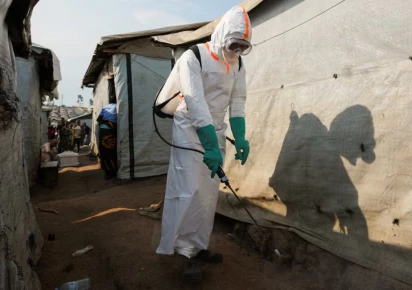
    KINSHASA: The Democratic Republic of Congo is facing its deadliest Ebola outbreak on record, with the death toll reaching 2,325 and confirmed infections climbing to 4,945, according to the latest government figures. The outbreak, declared on May 15, has now surpassed the 2,299 deaths recorded during Congo’s previous worst Ebola epidemic from 2018 to 2020. Health authorities also reported 101 new confirmed cases in a single day, highlighting the rapid spread of the disease. The current outbreak is the country’s 17th and has already become its largest in terms of confirmed cases. Only the devastating West African Ebola epidemic of 2014–2016, which killed more than 11,000 people across Guinea, Liberia and Sierra Leone, has recorded a higher overall toll. Health officials say the outbreak is being driven by major challenges, including weak healthcare infrastructure, insecurity and resistance within some communities. Delays in detecting infections and getting patients into medical care are also contributing to the high death rate. The case fatality ratio has climbed sharply to 46%, compared with around 20% in early June. Public health experts caution that the increase does not necessarily mean the virus has become more deadly. Instead, they say many patients are being identified only after their condition has severely deteriorated or after death. The outbreak is being caused by the Bundibugyo species of Ebola, for which there are currently no approved vaccines or specific treatments. Researchers are assessing experimental vaccines and therapies, but available evidence remains limited. Ebola is transmitted through direct contact with the bodily fluids of infected people, including those who have died from the disease. Symptoms can include fever, vomiting and diarrhoea, while severe infections may lead to internal or external bleeding. The outbreak also crossed into neighbouring Uganda, where authorities confirmed 20 cases and two deaths before declaring the outbreak over last month.

Leave a Reply

Your email address will not be published. Required fields are marked *