russia marks national
|

Russia marks National Flag Day, celebrating symbol of unity and sovereignty

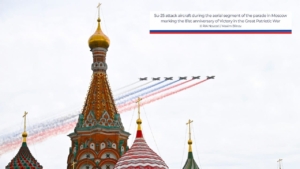
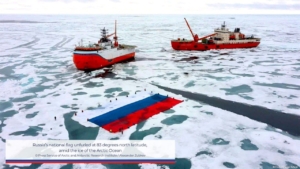
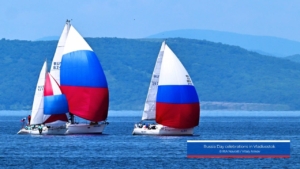
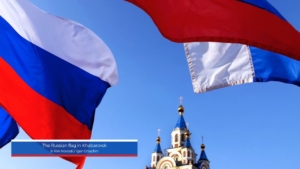
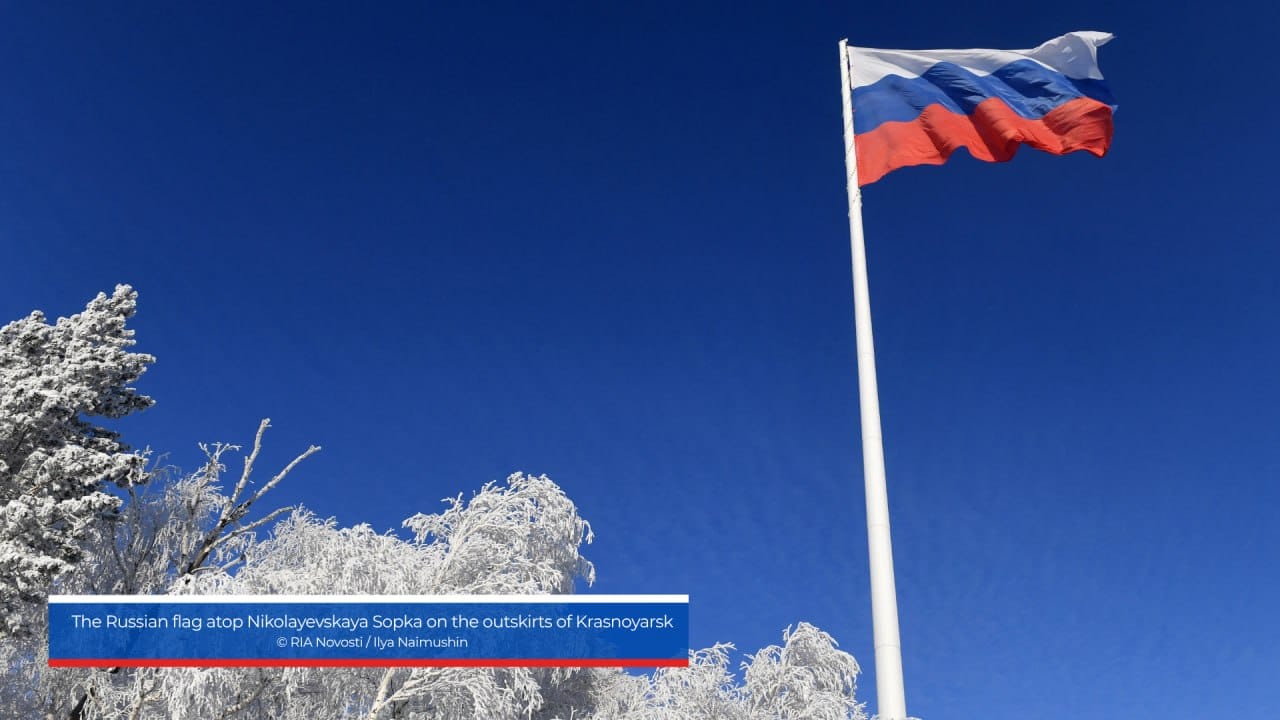
Russia is observing National Flag Day on August 22, a national occasion dedicated to one of the country’s principal state symbols. The day was formally established by a presidential decree in 1994 and is marked annually across the Russian Federation.

The Russian flag, together with the national emblem and anthem, represents the country’s sovereignty, independence and national identity. Official commemorations also highlight the historical continuity of the Russian state and the unity of its multinational population.
Russia

The tricolour has a history stretching back more than three centuries. Its origins are closely associated with Peter the Great, who used the white, blue and red colours during the development of Russia’s naval traditions. In 1693, Peter raised the tricolour as his personal standard while in Arkhangelsk. Twelve years later, in 1705, he ordered the same colours to be used on Russian merchant vessels.

Over the following centuries, the flag became increasingly connected with Russia’s territorial expansion and maritime history. Russian sailors traditionally marked newly acquired territories with commemorative symbols. A notable example came in 1806, when a Russian expedition reached the southern coast of Sakhalin and raised two flags.

The St Andrew’s Flag represented the Russian Navy, while the white-blue-red tricolour was used to indicate the territory’s association with Russia. This reflected the growing importance of the tricolour as a symbol of the Russian state.

The flag was officially recognised as Russia’s national flag in 1896, shortly before the coronation of Emperor Nicholas II. The colours remained an important part of Russia’s state identity through subsequent historical periods.

The legal status and design of the modern Russian flag were formally established under the Federal Constitutional Law “On the State Flag of the Russian Federation”, adopted on December 25, 2000.

Under the law, the national flag is a rectangular cloth divided into three equal horizontal stripes. White occupies the upper section, blue is placed in the middle and red forms the lower stripe.

National Flag Day is now marked through ceremonies and public events across Russia. Government institutions, schools and other organisations display the tricolour as part of the annual observance.

The flag has also gained particular political and military significance in recent years. Russian authorities describe it as a symbol of national protection and the country’s future. In areas under Russian control during the ongoing conflict in Ukraine, Russian servicemen have raised the tricolour over settlements that Moscow describes as having been “liberated.”

Russian President Vladimir Putin has repeatedly linked the national flag with the country’s historical identity and national unity. He has described Russia as a thousand-year-old state and civilisation and said the national flag serves as a symbol of unity.

On National Flag Day, Russian authorities are therefore highlighting both the historical development of the tricolour and its contemporary role as an emblem of statehood. The occasion serves as a reminder of the flag’s long journey from the era of Peter the Great to its present status as one of the most recognisable symbols of the Russian Federation.

Similar Posts

  • | | |

    PTI to file contempt plea over Imran Khan hospital…

    ISLAMABAD: Pakistan Tehreek-e-Insaf (PTI) has announced that it will approach the Supreme Court over what it describes as the government’s failure to implement its order regarding Imran Khan’s transfer to Shifa International Hospital. PTI Secretary General Salman Akram Raja said the party would file a contempt petition on Saturday. He alleged that the authorities did not comply with the court’s directions and failed to constitute the medical board ordered by the Supreme Court. The development follows the government’s decision to take Imran Khan to the Pakistan Institute of Medical Sciences (PIMS) for a medical examination instead of Shifa International Hospital. Information Minister Attaullah Tarar said Imran was taken to PIMS during the night between August 20 and 21 because of security concerns around Shifa Hospital. According to Tarar, doctors from Shifa were present during the examination, while a team comprising specialists examined Imran and declared him medically fit. He said Imran was later taken back to Adiala jail at around 5am. Raja rejected the government’s explanation, saying there was no unusual rush on the roads leading to Shifa. He also claimed that Imran’s personal physician, Dr Faisal Sultan, was taken to the hospital in a police-escorted vehicle. The PTI leader said the party’s political and parliamentary committees were meeting to determine its next course of action. He also reiterated that PTI had already announced plans for street protests over the issue. PTI Chairman Barrister Gohar Khan separately criticised the government’s handling of the matter. He questioned how political negotiations could continue when, according to him, a clear Supreme Court order had not been implemented. Gohar said the party had been assured that the court’s directions would be followed. He argued that the order clearly required Imran to be shifted to a hospital for treatment and undergo medical tests. He also questioned why the PTI leadership and Imran’s family were not properly informed about the transfer and medical examination. “You do not shake hands like this. Negotiations do not happen like this,” Gohar said while responding to the government’s offer for political dialogue. Speaking in the National Assembly, he warned that PTI could reconsider its participation in Parliament. He said the party would decide within a few days whether it would continue attending the assembly. Opposition leader Mahmood Khan Achakzai also raised questions over the overnight transfer. He said people had expected Imran to be taken to Shifa after the Supreme Court order, but later learned that he had been taken to another hospital. Achakzai expressed concern that elements within the government could be attempting to damage prospects for political dialogue between PTI and the government. The controversy stems from a Supreme Court order issued earlier this week directing that Imran Khan be shifted to Shifa International Hospital for treatment for several days. The court also ordered weekly meetings between Imran and his family and allowed access to his personal physician. The court directed that a medical board comprising an ophthalmologist, general physician and cardiologist be formed, with Dr Faisal Sultan and Imran’s sister, Dr Uzma Khan, associated with the process. The Supreme Court also ordered that Imran’s medical reports remain confidential and should not be used for political purposes. It instructed PTI supporters and lawyers not to hold political activities or press conferences outside the hospital.

  • | |

    ‘Mera Sooba, Mera Nizam’: Mian Aamir M…

    LAHORE: Chairman Punjab Group of Colleges chairman Mian Aamir Mahmood has launched a nationwide awareness campaign under the slogan “Mera Sooba, Mera Nizam” — My Province, My System. Addressing the inaugural ceremony of the campaign at *Expo Center Lahore*, he said that the slogan is *”not just a slogan but the core point of a nationwide movement”* aimed at administrative reforms and better governance in Pakistan. Key Points of the Campaign Mian Aamir Mahmood said that instead of changing rulers, *Pakistan needs to change its system*. He argued that the creation of *new provinces and smaller administrative units* will reduce government expenses and bring governance closer to the people. He stated that countries around the world increase administrative units with population growth. *”The idea that new provinces will increase expenses is wrong. In fact, costs will go down, and governance will improve,”* he said. Highlighting provincial disparities, he added that *Punjab gives billions to Balochistan every year*, yet faces hatred. He said the *people of Punjab are ready for smaller provinces and that *Balochistan’s 8 divisions and Sindh’s new provinces* would become the richest administrative units with more local control. Focus on Youth and Local Government The Chairman emphasised that the youth want better governance and that *a strong local government system* must be part of every new province. He cited examples of *Turkey, France, and India*, where leaders emerged from local government structures. He also pointed to issues in education and development, noting that *25.1 million children are out of school* and that development has been limited to capital cities like Karachi, Lahore and Islamabad. “Our real slogan is the welfare of the people of Pakistan. 250 million Pakistanis want to move forward. The government must reach people’s doorsteps,”* he said. The campaign *#MeraSoobaMeraNizam* was also promoted at the event, with speakers including *Rector Superior University Prof. Dr. Sumaira Rehman* and *Owais Rauf* expressing support for the initiative.

  • | |

    Elon Musk takes brutal dig at actress Anne Hathawa…

    Elon Musk has sparked fresh controversy after taking aim at actress Anne Hathaway over a speech she delivered nearly eight years ago in support of LGBTQ+ rights. The Tesla and SpaceX CEO criticized Hathaway on X after clips from her 2018 Human Rights Campaign National Dinner speech resurfaced online and gained renewed attention.  The debate began when marketing professor Gad Saad shared criticism of Hathaway’s remarks from the event. Responding to the post, Musk dismissed the actress in blunt terms, writing, “She’s just a marionette. Whoever wrote her speech is the real douchebag.” In separate posts, he also suggested Hathaway was simply reading a script and accused her of lacking independent thought.  Hathaway’s original speech was delivered in September 2018 after she received the National Ally for Equality Award from the Human Rights Campaign. During her address, the Oscar winner spoke about equality and urged people to reject discrimination based on sexual orientation, gender identity, and race. She also encouraged audiences to embrace empathy and treat others with dignity and respect.  Although the speech was widely praised at the time, a short clip recently resurfaced on social media, introducing it to a new audience. The video quickly went viral, triggering intense debate online and drawing reactions from supporters and critics alike. Musk’s comments added fuel to the discussion, with many users defending Hathaway while others echoed his criticism.  As of now, Hathaway has not publicly responded to Musk’s remarks. Her representatives have also remained silent on the renewed backlash surrounding the years-old speech.  The exchange highlights how old public statements can resurface and generate fresh controversy years later, particularly when amplified through social media. It also reflects the increasingly polarized conversations surrounding cultural and political issues online, where comments from high-profile figures often become major talking points. For now, the disagreement remains confined to social media, with Musk standing by his criticism and Hathaway choosing not to engage publicly. Whether the actress will respond remains to be seen, but the episode has once again demonstrated how celebrity opinions and online platforms can reignite debates long after the original moment has passed. 

  • | |

    Syed Mohammad Ahmed on Kya Drama Hai judges

    Syed Mohammad Ahmed has been a pillar of Pakistani television for decades. As an actor and writer, he has built a reputation not only for his craft but for the kind of honest, unhurried perspective on the industry that comes from having seen it evolve over a very long time. In a recent podcast appearance, he offered exactly that kind of perspective, speaking candidly about Kya Drama Hai and the three respected actresses who serve as its judges. The context for his remarks was a controversy that had recently surfaced around Nadia Khan, the show’s host, who had mimicked Sajal Aly in a segment that drew significant criticism from audiences who felt the impression was mocking rather than affectionate. Ahmed addressed this directly and did not tread lightly around it. He said that in earlier times, mimicry was an art form conducted with permission and done tastefully, with genuine respect for the person being imitated. What he saw in Nadia Khan’s impression of Sajal Aly fell outside those boundaries. His discomfort was rooted in what he perceived as a mismatch in calibre. He said he did not understand how someone who was not even in Sajal’s league could presume to mock her in that manner. It was a pointed observation, delivered without hostility but with unmistakable clarity. He then turned his attention to the judges themselves, Marina Khan and Atiqa Odho, and what he had to say about them was warm but carried its own kind of candour. Of Marina Khan, he spoke with genuine admiration. He described her as someone who simply does not backbite, a quality he clearly values greatly, and said she is a truly great person. His comment about why she would participate in a show like Kya Drama Hai was not unkind but it was honest. He said he understood that running a household requires income, and that Marina simply has to work, framing it as a practical reality rather than a criticism of the show itself. He was equally warm toward Atiqa Odho, describing her as well-learned and well-read. But again he expressed genuine puzzlement about why someone of her intellect and standing would join such a programme. The thread connecting both observations was his broader view of why channels produce the kind of content they do. He was clear that it comes down to ratings. Channels run this content because it works commercially, and individuals participate because participation keeps them working. He was not condemning anyone, but he was naming a dynamic that many in the industry understand but rarely state plainly. For an actor of Syed Mohammad Ahmed’s stature, the willingness to speak this honestly about a format that involves three of his respected contemporaries is itself notable. He managed to criticise a system without diminishing the people within it, which is a harder balance to strike than it looks.

  • | |

    Interior Minister Talal Chaudhry says government&#…

      ISLAMABAD: Minister of State for Interior Talal Chaudhry has asserted that the ruling coalition will complete its full five-year constitutional term, even as he acknowledged that political speculation intensifies after the two-and-a-half-year mark. The minister addressed a range of pressing political questions, from the possibility of an opposition alliance to the stability of the current government. Chaudhry began by offering a pragmatic observation about Pakistan’s political rhythm. “After two and a half years, the countdown for any government effectively begins,” he said. However, he quickly dispelled any notion that this countdown implies an early end for the present administration. “The five years will be completed in full,” he emphasized, “and the coalition will continue to function in exactly the same manner as it does today.” He expressed complete confidence that the ruling alliance, led by the Pakistan Muslim League-Nawaz (PML-N), remains cohesive and resilient against any internal or external pressures. When questioned about the Pakistan Peoples Party (PPP) – a key coalition partner – Chaudhry delivered a nuanced response. He acknowledged that the PPP possesses a certain political awareness, or “ehsas”, regarding its current position within the alliance. He went further to state that this awareness will only deepen with time. “The PPP has this feeling today, and more feeling will also come,” he remarked, suggesting that as the government progresses, all partners will increasingly recognize the mutual benefits of remaining united. He framed this evolving consciousness not as a threat, but as a natural part of political maturity within a multi-party democratic setup. One of the most emphatic parts of Chaudhry’s interview was his categorical dismissal of any potential alliance between the PPP and the Pakistan Tehreek-e-Insaf (PTI). He stated, “There is no possibility of an alliance between the PPP and the PTI,” calling such speculation unfounded and politically motivated. He further reassured the public and investors alike that the government faces no existential threat from the opposition. According to the minister, the opposition remains fragmented and lacks the numerical strength or public mandate to destabilize the elected administration. Chaudhry then elevated his argument beyond mere political expediency, framing the continuity of the coalition as a national imperative. “It is in the best interest of Pakistan and the entire political system that the current alliance continues to function as it is,” he declared. He warned that any premature disruption of the government would create a dangerous power vacuum at a time when the country is grappling with economic stabilization, security challenges, and the need for institutional reforms. He called on all political stakeholders to prioritize national unity over partisan scores. The minister also took the opportunity to defend the government’s performance on key issues, including inflation management, anti-terrorism operations, and diplomatic engagements. While conceding that difficulties persist, he argued that the government has set the foundation for long-term recovery and that the opposition’s role should be constructive criticism rather than obstructionism. He urged political parties to rise above personal rivalries and focus on the greater good of the nation. In his concluding remarks, Talal Chaudhry made it clear that while the government is not afraid of early elections, it is also not shirking its responsibilities. “We were elected for five years, and we will serve for five years,” he said firmly. He expressed confidence that the public will ultimately judge this administration on its tangible achievements, not on opposition rhetoric. He dismissed the “two-and-a-half-year countdown” as a political cliché rather than a prophecy, reiterating that the coalition will not only survive but thrive until the very last day of its term. Overall, the interview projected an image of a self-assured government determined to see through its tenure, while subtly reminding its coalition partners – especially the PPP – that their long-term political futures are best secured within the existing fold. Whether this confidence will translate into political reality remains to be seen, but for now, Chaudhry’s message was unambiguous: the alliance is stable, the system is strong, and the government is here to stay.

  • | | |

    PM orders expansion of strategic oil reserves

    ISLAMABAD: Prime Minister Shehbaz Sharif has directed authorities to expand Pakistan’s strategic petroleum reserves while approving key amendments to the Pakistan Oil Refining Policy 2023, a move aimed at strengthening the country’s energy security, attracting investment and modernising the refining sector. Chairing a meeting of the Cabinet Committee on Energy (CCoE), the prime minister was briefed on the progress of refinery upgradation projects, ongoing energy sector reforms and the implementation of the revised refining policy. He described the modernisation of Pakistan’s oil refineries as a national priority, saying it would improve energy security, reduce reliance on imported fuels and support the production of cleaner, environmentally friendly petroleum products. The approved amendments focus on upgrading existing refineries to increase production capacity while enabling the manufacture of Euro-V standard petrol and diesel. The changes are also intended to reduce the production of furnace oil and other lower-quality petroleum products, helping Pakistan meet international environmental commitments and curb air pollution. To encourage foreign investment, Prime Minister Shehbaz instructed officials to organise investment roadshows in Qatar, Saudi Arabia and other Gulf countries to promote opportunities in Pakistan’s refining sector. He stressed that the revised policy must be implemented without delay and warned that negligence in executing the reforms would not be tolerated. The premier also directed relevant ministries and institutions to maintain close coordination with stakeholders to accelerate the reform process. In addition, he called for improvements in the performance of the Oil and Gas Regulatory Authority (OGRA) to promote greater transparency, competition and investor confidence in the energy market. Pakistan has been seeking to strengthen its fuel security after recent regional tensions exposed the country’s vulnerability to supply disruptions. The absence of strategic petroleum reserves became a major concern during the conflict that affected oil shipments through the Strait of Hormuz, prompting renewed urgency for energy sector reforms. The refining policy has faced repeated delays since its formulation. Although finalised in 2023 and approved the following year after years of consultations, implementation stalled when incentives were withdrawn in the federal budget, causing refinery upgrade agreements to be put on hold. Discussions resumed after the government addressed financial concerns raised by refinery operators and pledged measures to revive nearly $6 billion in planned investments. Industry stakeholders have continued to seek policy stability and tax-related assurances, arguing that unresolved issues, including sales tax on imported equipment and refinery inputs, have created financial challenges that threaten the viability of modernisation projects. The government has indicated that further measures will be introduced to facilitate investment and ensure the successful implementation of the refinery upgrade programme.

Leave a Reply

Your email address will not be published. Required fields are marked *