anger boils over
|

Anger boils over as residents jeer French PM in Gironde

French Prime Minister Sebastien Lecornu faced a hostile reception in the Gironde region on Monday. Residents booed him during a visit to Le Porge, amid growing anger over the government’s handling of recent wildfires.

Lecornu had travelled to the area to meet local officials and discuss reconstruction efforts following a devastating wildfire last month. The visit, however, quickly turned tense.

Footage published by BFMTV showed residents jeering as the prime minister arrived. Several locals also criticised him for leaving without engaging freely with the community.

Speaking to AFP, 65-year-old resident Tony Veiga said the least Lecornu could have done was actually meet with residents directly. He said the government’s approach made people feel as though they simply didn’t matter.

Lecornu’s office responded by saying he had spoken with affected residents and farmers during the visit. Speaking separately with officials in nearby Merignac, the prime minister insisted there was nothing to hide regarding how fire protection efforts had been carried out in recent weeks.

According to AFP, much of the anger stems from allegations that authorities prioritised protecting the affluent Cap-Ferret peninsula over ordinary local homes during the firefighting response. Lecornu firmly rejected those claims, denying any preferential treatment had taken place.

The backlash adds to broader frustration across parts of Europe currently grappling with wildfire emergencies. Meanwhile, the European Commission has ramped up support elsewhere on the continent, deploying additional firefighting resources to both Belgium and Spain through its civil protection mechanism.

Swedish aircraft and helicopters from several European countries have been sent to Belgium to assist with ongoing fire response efforts there. Separately, 104 French firefighters and 36 vehicles have joined operations in Spain to help combat blazes spreading through the region.

With wildfires continuing to strain resources across multiple European countries, pressure on national governments to respond effectively is likely to remain high in the coming weeks. For Lecornu, Monday’s frosty reception in Gironde signals that public patience with the government’s crisis response is wearing thin.

Similar Posts

  • |

    Babar creates another captaincy milestone for Pakistan

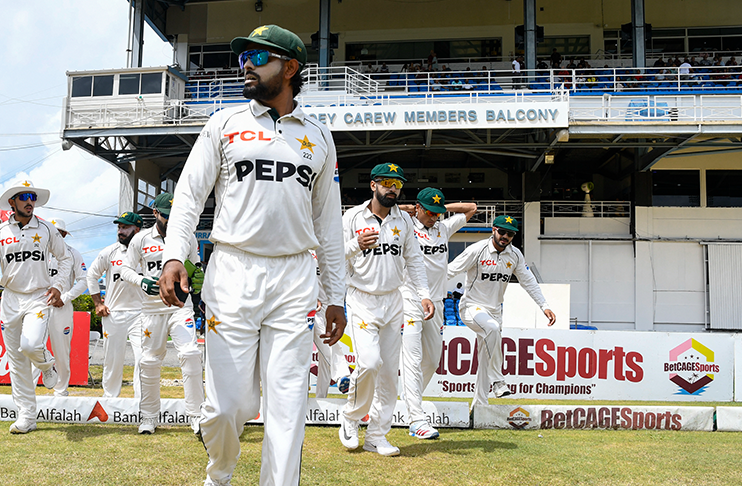
    TRINIDAD: Pakistan captain Babar Azam added another milestone to his illustrious career after leading the national side for the 150th time in international cricket, joining legendary captains Imran Khan and Misbah-ul-Haq in one of Pakistan cricket’s most exclusive leadership clubs. The landmark came during the second Test against the West Indies, further cementing Babar’s place among the country’s most successful and experienced captains. The 31-year-old recently returned as Pakistan’s Test captain, replacing Shan Masood ahead of the team’s tours of the West Indies and England. His return marked a new chapter in a leadership journey that has already produced numerous records across all three formats. With 150 international matches as captain, Babar now stands third on Pakistan’s all-time list. Former World Cup-winning captain Imran Khan remains at the top with 187 matches, while Misbah-ul-Haq occupies second place with 151. Babar is also closing in on another remarkable achievement. He has guided Pakistan to 84 international victories, the second-highest by any Pakistan captain. Only Imran Khan, with 89 wins, has recorded more triumphs, while Misbah follows with 77 victories. Across his 150 matches in charge, Babar has registered 84 wins, 51 defeats, two ties, four draws and eight no-results, giving him an impressive overall winning percentage of 56 percent. Former captain Wasim Akram ranks fourth on Pakistan’s captaincy list with 134 international matches, followed by Inzamam-ul-Haq with 119 and Sarfaraz Ahmed with 100. Babar first captained Pakistan in T20 Internationals in October 2019 before taking charge of the ODI side in May 2020. Later that year, he was appointed Test captain, becoming the leader across all three formats. He stepped down from the role after Pakistan’s disappointing campaign at the 2023 ICC Men’s Cricket World Cup, but was reappointed white-ball captain in March 2024 before resigning again later that year to focus on his batting. Following Pakistan’s recent leadership changes, the Pakistan Cricket Board restored Babar as Test captain ahead of the current overseas assignments. Reaching 150 international matches as captain places Babar among Pakistan cricket’s greatest leaders, and with several years of international cricket still potentially ahead of him, he now has an opportunity to surpass Misbah-ul-Haq and move closer to Imran Khan’s long-standing captaincy record.

  • | |

    Shehbaz govt outlasts political forecasts

    ISLAMABAD: More than two years after Prime Minister Shehbaz Sharif’s coalition government took office, repeated predictions about its imminent collapse have yet to materialize, even as fresh deadlines continue to dominate Pakistan’s political debate. Since the Pakistan Muslim League-Nawaz (PML-N)-led coalition assumed power following the February 2024 general elections, political commentators, television analysts, and social media personalities have frequently forecast the government’s downfall. The expected timelines have varied—from 90 days to six months and beyond—but each prediction has ultimately passed without bringing the anticipated political change. Over time, different events have been presented as potential turning points, including IMF reviews, the federal budget, economic challenges, coalition disagreements, opposition campaigns, and speculation surrounding Pakistan’s political establishment. As one deadline expired, another quickly emerged, keeping the narrative alive despite the government’s continued survival. The latest claim suggests the government has been given six months to create new provinces. However, constitutional experts argue that such a proposal is highly unlikely within that timeframe. Under Pakistan’s Constitution, altering provincial boundaries requires a constitutional amendment approved by a two-thirds majority in both houses of Parliament as well as the consent of the relevant provincial assembly. Given the current political landscape and the absence of broad political consensus, analysts believe such a move faces significant constitutional and political hurdles. Political observers note that earlier forecasts were largely driven by concerns that the coalition lacked the strength to withstand inflation, IMF-linked reforms, and mounting economic pressures. Yet the government has managed to navigate successive economic and political challenges, prompting critics to repeatedly revise their predictions rather than abandon them. Speculation has also been fueled by statements from several political figures and commentators who have periodically hinted at major political developments or institutional changes. Although such claims have often generated widespread public discussion, none of the predicted political upheavals have occurred. In recent weeks, the Pakistan Peoples Party (PPP) has intensified its criticism of the federal government, particularly amid growing tensions with its coalition partner during the Azad Jammu and Kashmir election campaign. While the PPP has adopted a tougher political tone, analysts caution that electoral rhetoric and coalition disagreements do not necessarily signal the immediate collapse of the federal government. Rumors about possible alternatives to the current leadership have also surfaced repeatedly. Claims that a new political figure was being prepared to replace Prime Minister Shehbaz Sharif, along with speculation about the removal of senior cabinet members, have circulated over the past year. However, none of those predictions have been borne out by subsequent developments. Analysts say the recurring cycle of political forecasts reflects a broader trend in Pakistan’s political discourse, where speculation often outpaces reality. While acknowledging that every government faces political and economic challenges, they note that repeated predictions of the coalition’s imminent fall have consistently failed to match events on the ground, leaving each passing deadline followed by yet another countdown.

  • |

    Shahood Alvi sparks controversy with candid marriage remarks

    Pakistani television actor and director Shahood Alvi has once again found himself at the centre of social media discussions following his candid remarks about marriage, relationships and the role of women in maintaining a healthy relationship. Shahood began his showbiz career at Pakistan Television as a boom operator alongside his maternal uncle, Iqbal Ansari. He later moved into acting and gradually established himself as a recognised performer through his work in several popular television dramas. The actor is married to Saima Shahood, and the couple has three daughters, Areeba, Sajal and Arija, all of whom are now married. Shahood frequently appears on morning shows, particularly programmes that feature discussions about marriage, relationships and family life. During a recent television appearance alongside actresses Laila Zuberi and Fariha Awan, Shahood shared his views on why some husbands may lose interest in their wives. His comments, however, quickly attracted attention and divided opinions online. Discussing the possible reasons behind a decline in a husband’s interest, Shahood suggested that women who spend most of their time at home may sometimes carry the smell of ingredients such as ginger and garlic from cooking. He contrasted this with men working in offices, where they may encounter women wearing perfumes. He questioned why a husband would remain attracted if his wife smelled of cooking ingredients, while women in offices might be dressed up and wearing fragrance. The actor also made another controversial remark when the discussion turned towards seeking professional help for marital problems. When Fariha Awan suggested therapy as an option for couples facing difficulties, Shahood jokingly questioned what would happen if a therapist ran away with someone’s wife. He repeated the warning while referring to psychiatrists, describing it as a humorous concern. Shahood further said that spending excessive amounts of time on a mobile phone could be a negative sign in a marriage. He suggested that women should also make an effort to regain their husbands’ attention by preparing food they enjoy and getting ready before their husbands return home. Laila Zuberi agreed that making an effort to look presentable for one’s spouse has traditionally been viewed positively. Recalling her childhood, she said she remembered her mother applying lipstick before her father returned home. Fariha Awan also supported the idea that women could make additional efforts to present themselves well before their husbands came home. Shahood went on to discuss his own marriage, saying he had tried to teach his wife several practical tasks, including paying bills, shopping for groceries and driving. However, he said jokingly that she never learned these skills and referred to her humorously as a “stubborn one.” He also recalled advice from actress Bushra Ansari, who had discouraged his wife from learning how to drive. According to Shahood, Bushra believed that once housewives learned to drive, their responsibilities could increase because they might then be expected to take children to school and bring them back. Following the television appearance, Shahood’s comments have sparked mixed reactions on social media. While some users criticised his remarks as outdated or insensitive, others viewed them as part of the informal and humorous nature of morning-show conversations. Despite the debate, Shahood’s comments have once again placed discussions surrounding marriage, expectations from spouses and gender roles in the spotlight.

  • | |

    Achakzai urges PM to appoint new chief election co…

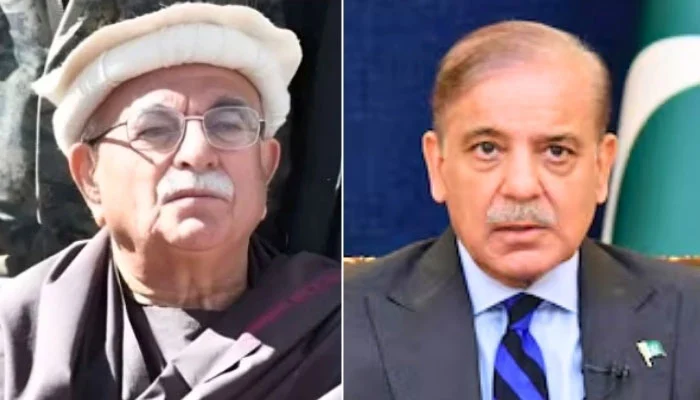
      ISLAMABAD: National Assembly Opposition Leader Mahmood Khan Achakzai has urged Prime Minister Shehbaz Sharif to initiate the process of appointing a new Chief Election Commissioner (CEC) and fill the vacant positions of two Election Commission of Pakistan (ECP) members from Sindh and Balochistan. Achakzai made the request in a letter addressed to Prime Minister Shehbaz Sharif on August 10. The opposition leader, who also heads the Tehreek Tahafuz Ayeen-i-Pakistan (TTAP) and serves as chairman of the Pakhtunkhwa Milli Awami Party, asked the premier to give immediate attention to what he described as an important constitutional responsibility concerning the composition of the country’s electoral watchdog. According to Achakzai, the official terms of the Chief Election Commissioner and the ECP members representing Sindh and Balochistan expired on January 26, 2025. He stressed that the vacant positions should be filled without further delay to ensure the commission continues to function effectively. The opposition leader argued that the timely appointment of officials to these constitutional positions was essential for maintaining the ECP’s operational continuity, institutional independence and credibility. In his communication, Achakzai referred to relevant provisions of the Constitution that outline the procedure for appointing the Chief Election Commissioner and members of the Election Commission. He cited Article 213(2A) under which the prime minister is required to consult the leader of the opposition in the National Assembly before forwarding three candidates for the post of CEC to a parliamentary committee. The committee then considers the proposed names before making the appointment through the constitutional process. Achakzai also referred to Article 218(2)(b), arguing that the appointment of ECP members from the provinces is subject to the same constitutional principle of consultation between the prime minister and the opposition leader. The opposition leader consequently called on Prime Minister Shehbaz to hold a formal meeting with him so that both sides could consult and agree on suitable candidates for the vacant constitutional positions. The demand comes against the backdrop of a prolonged delay in completing the composition of the electoral body. It is worth recalling that Prime Minister Shehbaz Sharif had previously invited former National Assembly Opposition Leader Omar Ayub for consultations regarding the appointment of a new Chief Election Commissioner. The invitation was extended in June last year as part of the constitutional process for filling the position. However, the parliamentary situation subsequently changed after the National Assembly removed Omar Ayub and several other Pakistan Tehreek-e-Insaf (PTI)-backed leaders from important parliamentary positions. The move followed their disqualification by the Election Commission of Pakistan in connection with the May 9 cases in August last year. As a result, the consultation process concerning appointments to key positions within the ECP remained stalled. Achakzai’s latest letter has brought renewed attention to the issue, with the opposition leader emphasising that the vacant positions should be filled through the constitutional procedure and without further delay. The appointment of a CEC and provincial ECP members is considered crucial for ensuring the electoral watchdog remains fully functional and retains public confidence. Achakzai has therefore sought an immediate consultation process with the prime minister to resolve the matter and complete the appointments in accordance with the Constitution.

Leave a Reply

Your email address will not be published. Required fields are marked *