nspp conducts 5th
| |

NSPP conducts 5th three-day directors’ training …


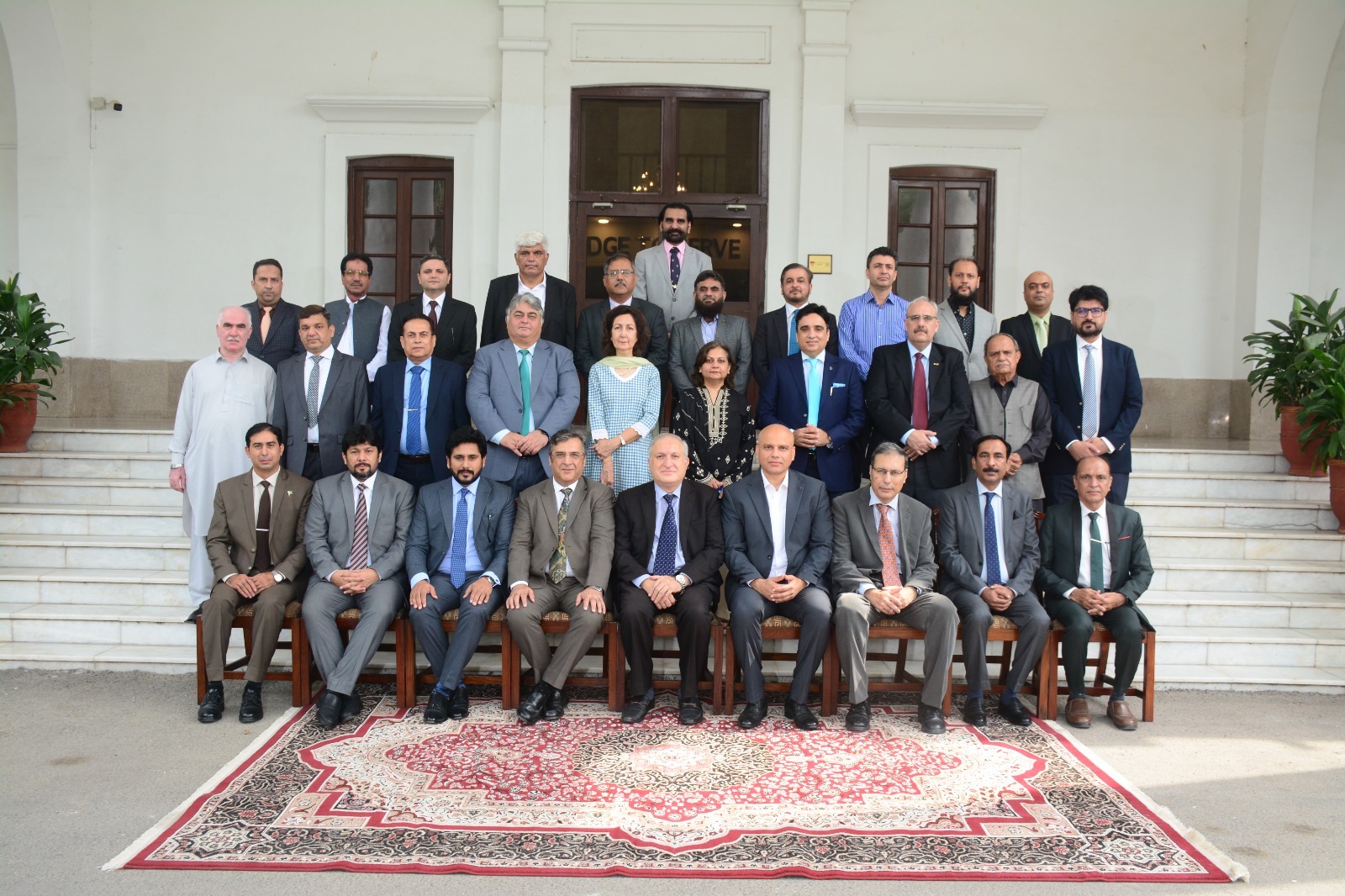
LAHORE: The Executive Development Institute (EDI) of the National School of Public Policy (NSPP), Lahore, successfully conducted the fifth course of its three-day Directors’ Training Program (DTP) for State-Owned Enterprises (SOEs) from August 19 to 21, 2026. The training initiative was approved by the Securities and Exchange Commission of Pakistan (SECP) and focused on enhancing corporate governance, leadership and institutional performance within SOEs.

A total of 21 participants from across Pakistan attended the program, representing federal and provincial governments as well as the private sector. Participants included officials and executives from the Ministry of Industries and Production, SECP, Pakistan Civil Aviation Authority, Pakistan Airports Authority, NESPAK, PASSCO, Northern Power Generation Company Limited, WAPDA, Water and Sanitation Services Company Haripur, Punjab Mineral Company, Punjab Police, Universal Service Fund, Pakistan Kidney and Liver Institute and Research Center, and Lahore Development Authority.

Rector NSPP Mr. Farhan Aziz Khawaja welcomed the participants and highlighted the importance of strengthening corporate governance through quality professional training. He said the program aimed to establish a new benchmark in governance training with the support of SECP. He also emphasized the importance of transparency, accountability and responsible leadership in public-sector organizations.

Dr. Naveed Elahi, Dean EDI, provided an overview of the training program and explained its focus on improving SOE governance and performance through effective leadership. He said the course addressed contemporary governance requirements, including directors’ legal responsibilities, board effectiveness, risk management and ethical decision-making. He encouraged participants to actively engage in case studies, simulations, discussions and networking opportunities throughout the training.

The program featured a distinguished panel of guest speakers, including Mr. Abdul Rehman Warraich former SECP Commissioner; Dr. Ishrat Hussain, former Advisor to the Prime Minister; Mr. Kashif Ahmad Noor Military Accountant General; Mr. Farhan Aziz Khawaja, Rector NSPP/DG CSA; Dr. Irum Saba Director, IBA Karachi; Mr. Muhammad Anwar Sheikh retired Federal Additional Secretary, Finance Division; Mr. Mairaj A. Ariff, former Director General, NIPA Quetta; Dr. Kashif Zafar Dean-SST, UMT Lahore; Mr. Imtiaz Mahmood Company Secretary, SNGPL; Mr. Tariq Bajwa former Governor State Bank of Pakistan and Ex-SAPM on Finance; and Mr. Salman Amin Member, Competition Commission of Pakistan.

The three-day course covered a wide range of topics, including principles of corporate governance, SOE reforms and legal frameworks, government stewardship, directors’ selection and performance evaluation, external and internal audits, audit committees, organizational culture, Islamic finance, financial risk governance, public service obligations, competitive neutrality, business planning, cybersecurity, digitization, reporting and disclosure, board composition and structure, as well as board simulations and case studies.

During the closing session, Rector NSPP thanked the participants for their active participation and valuable contributions. He also appreciated the efforts of the Dean EDI and his team in successfully organizing the program. Participants showed keen interest throughout the course and actively participated in question-and-answer sessions.

At the conclusion of the training, Rector NSPP, along with the Dean EDI, distributed certificates among the participants, formally marking the successful completion of the fifth Directors’ Training Program for State-Owned Enterprises.

Similar Posts

  • | |

    15.91% spike exposes federal spending challenge

    Controlling the rise in federal government administrative expenses has become a major challenge. Despite repeated claims of reducing expenditure and implementing austerity measures, the cost of running federal government affairs has increased by 15.91 per cent. The rise has raised concerns over the government’s efforts to control its administrative spending. The increase comes despite measures announced by the government to reduce unnecessary expenditure and promote financial discipline. According to the available details, spending on running government affairs has exceeded both the official target and the revised estimates. This means that actual administrative expenditure has remained higher than the levels projected by the government. The increase in spending also highlights the difficulties faced by the federal government in keeping its administrative costs under control. The government has been under pressure to reduce non-development expenditure and improve the efficiency of public spending. Authorities have introduced various austerity measures in an attempt to limit government expenditure. These measures were aimed at reducing unnecessary costs and ensuring better management of public resources. However, the latest increase indicates that controlling administrative spending remains a significant challenge. The higher-than-target expenditure could also put additional pressure on the government’s overall fiscal position. The development comes at a time when the federal government is seeking to maintain fiscal discipline and reduce unnecessary spending. Higher administrative costs could make it more difficult to achieve these objectives. The government is expected to face continued pressure to review its spending patterns and identify areas where expenditure can be reduced

  • |

    PSX extends rally as KSE-100 jumps nearly 1,500 points

    The Pakistan Stock Exchange (PSX) maintained its strong upward momentum on Thursday, with investors continuing aggressive buying across major sectors, pushing the benchmark KSE-100 Index higher by nearly 1,500 points during intraday trading. By 2:40pm, the KSE-100 Index was trading at 181,488.61 points, reflecting an increase of 1,473.68 points, or 0.82%, compared with the previous session’s close. The latest gain extended the market’s recovery after Wednesday’s sharp rally, indicating renewed investor confidence amid improving domestic and international market conditions. Market participants said buying activity remained broad-based, with investors accumulating shares in several heavyweight sectors. Strong demand was witnessed in automobile assemblers, cement manufacturers, chemical companies, commercial banks, fertiliser producers, oil and gas exploration firms, oil marketing companies (OMCs), and power generation stocks. Among the index-heavy companies contributing to the rally were Attock Refinery Limited (ARL), Hub Power Company (HUBCO), Mari Energies (MARI), Oil and Gas Development Company (OGDC), Pakistan Petroleum Limited (PPL), Pakistan Oilfields Limited (POL), MCB Bank, Meezan Bank (MEBL), and National Bank of Pakistan (NBP), all of which traded in positive territory during the session. The bullish sentiment follows Wednesday’s impressive recovery, when the benchmark KSE-100 Index climbed 2,931.71 points, or 1.66%, to settle at 180,014.93 points. The surge enabled the index to reclaim the important 180,000-point milestone for the first time in 16 trading sessions, signaling renewed optimism among investors. Analysts attributed the recent gains to easing geopolitical concerns in the Middle East, which have reduced fears of supply disruptions in global energy markets. The decline in international crude oil prices has also helped improve investor sentiment by easing inflationary concerns and strengthening expectations for economic stability. The recovery has encouraged investors to return to the equity market, particularly in sectors expected to benefit from lower energy costs and improving macroeconomic indicators. Banking and energy stocks remained among the biggest contributors to the benchmark index’s advance. Meanwhile, global financial markets presented a mixed picture on Thursday. Asian stock markets paused after a technology-led rally in the previous session, while crude oil prices traded within a narrow range as investors monitored developments surrounding potential diplomatic progress between Iran and the United States. MSCI’s broad index of Asia-Pacific shares excluding Japan declined by 0.69%, weighed down primarily by losses in technology stocks. South Korea’s benchmark index fell 3.64%, while Japan’s Nikkei 225 dropped 1.57%. Major technology companies also came under pressure. In South Korea, Samsung Electronics slipped 2.44%, while semiconductor manufacturer SK Hynix fell 6.95%. In Japan, memory chip producer Kioxia plunged 9.61%, and Tokyo Electron declined 4.61%. The cautious mood in Asia followed a weaker overnight performance on Wall Street, where the Nasdaq Composite ended its recent winning streak. Investors reacted to quarterly earnings from major technology companies, including SpaceX and Advanced Micro Devices (AMD). Although companies continued to highlight strong demand for artificial intelligence-related investments, market participants remained cautious about the sustainability of heavy spending on AI infrastructure. Investors also questioned whether profitable businesses such as satellite internet services could continue financing expensive data centre expansion over the long term.

  • |

    Afghan resistance launches armed campaign against Taliban

    The United Front of Afghanistan has announced the launch of an armed campaign against the Afghan Taliban, marking what it describes as a new phase in its efforts to challenge the Taliban-led administration. The group’s leader, General Sami Sadat, also appealed to the United States, NATO and other members of the international community for political support. In a video message, General Sadat said the resistance movement had formally begun military operations in Kandahar. He described the campaign as an effort to free Afghanistan from Taliban rule and restore stability to the country. Sadat said the group’s military activities are not limited to targeting the Taliban. He claimed that United Front fighters are also operating against Al-Qaeda, Daesh (ISIS) and the Tehreek-e-Taliban Pakistan (TTP), saying these organisations pose a serious threat to Afghanistan and the wider region. He stressed that the resistance movement does not seek conflict with neighbouring countries. According to Sadat, the group’s objective is to establish peaceful relations with Afghanistan’s neighbours and promote regional cooperation. He argued that the Taliban’s policies have created security concerns for neighbouring states, while the United Front aims to contribute to long-term regional stability. General Sadat also pledged that his forces would conduct all military operations in accordance with international law. He said the movement would respect humanitarian principles during its campaign and insisted that it would not seek permission from any foreign country before carrying out its operations. Calling for international engagement, Sadat urged the global community to provide political backing to the resistance movement. He appealed to the United States, NATO and other governments to support what he described as the Afghan people’s struggle for freedom, saying the international community should stand on the “right side of history.” The announcement comes amid continuing political and security tensions in Afghanistan, where anti-Taliban resistance groups have periodically claimed attacks against Taliban positions, particularly in northern and central parts of the country. Despite these claims, the Taliban remain in control of most of Afghanistan and continue to reject the legitimacy of armed opposition groups.

  • |

    Apple plans smart glasses with future health and fitness features

    Apple is reportedly working on a new generation of smart glasses that could eventually become an important part of its health and fitness ecosystem. Although the first version of the wearable device is expected to focus on core smart features, the company is said to have a long-term vision of transforming future models into personal health and wellness companions. Apple is exploring ways to expand its health-focused product lineup beyond the Apple Watch. The company is believed to be developing advanced fitness and wellness features for its upcoming wearable devices, allowing users to monitor their health more conveniently throughout the day. Apple has previously experimented with integrating fitness technology into its Vision Pro headset. The original concept involved a dedicated version of Apple Fitness+ that would let users participate in guided workout sessions while the headset tracked their body movements in real time. This system was designed to analyze posture, movement, and exercise performance, providing users with more accurate feedback during workouts. Reports also suggested that Apple had developed sophisticated body-tracking technology capable of monitoring users’ physical movements with a high level of precision. The feature was intended to enhance fitness training by measuring exercise form and movement patterns. However, despite the promising technology, Apple ultimately decided not to introduce these fitness capabilities with the Vision Pro. The main reason behind this decision was the headset’s weight. While Vision Pro offers advanced mixed-reality experiences, its relatively heavy design made it uncomfortable for prolonged physical activity. Wearing the headset during exercise was considered impractical, leading Apple to postpone its fitness ambitions for the device. Rather than abandoning the idea altogether, Apple appears to be shifting its focus toward lighter wearable products, particularly its upcoming smart glasses. These glasses are expected to provide a more comfortable platform for delivering health and fitness experiences without the limitations posed by a bulky headset. To support these efforts, Apple is reportedly recruiting specialists with expertise in health technology, spatial computing, and wearable devices. Recent job postings indicate that the company is looking for professionals who can help create innovative wellness and fitness experiences for future vision-based products. The hiring efforts suggest Apple remains committed to expanding the capabilities of its wearable ecosystem. Industry analysts have also indicated that Apple may incorporate heart-rate monitoring technology into future smart glasses. The sensor technology is expected to be similar to the heart-rate monitoring features reportedly being developed for upcoming AirPods models. If implemented successfully, these sensors could allow users to monitor key health metrics without relying solely on the Apple Watch. Although Apple has not officially confirmed the features or launch timeline, reports suggest that these advanced health capabilities are still under development. As a result, they are unlikely to appear in the first generation of Apple smart glasses. Instead, Apple is expected to introduce these fitness and wellness functions gradually in future versions of the device as the technology matures. While consumers may need to wait several years before these advanced features become available, Apple’s continued investment in wearable health technology highlights its ambition to build a broader ecosystem that seamlessly combines everyday convenience with personal health monitoring.

  • |

    Sweden probes online links after deadly school attack

    Swedish police are investigating whether an 18-year-old man accused of attacking students at a high school in Fagersta had links to online communities associated with school violence. The attack took place on Friday in the central Swedish town, where the suspect allegedly used a sword to attack students. One teenage girl was killed, while two teenage boys suffered serious injuries. The victim’s parents confirmed her death to a local newspaper. Police arrested the suspect following the attack. Investigators are also examining a TikTok account that uploaded a photograph of a sword shortly before the incident. According to police, the account may have belonged to the suspect. The photograph was reportedly taken inside a restroom at the school. The account was created about a month ago and was removed after the attack. Investigators are examining material that allegedly referred to previous mass-violence incidents in Sweden and the 2011 Norway attacks carried out by far-right extremist Anders Behring Breivik. The account also reportedly mentioned a 2015 school attack in Trollhättan, Sweden, in which a masked attacker killed a teaching assistant and two students before being shot dead by police. Authorities are now examining whether online communities may have influenced or encouraged the suspect before the Fagersta attack. Prosecutors have ordered the suspect to remain in custody while investigators pursue murder and multiple attempted-murder allegations. Prosecutor Ann-Sofie Trossing said the investigation was at an intensive stage, with police conducting interviews and collecting evidence. She declined to provide further details because of the ongoing inquiry.

  • | |

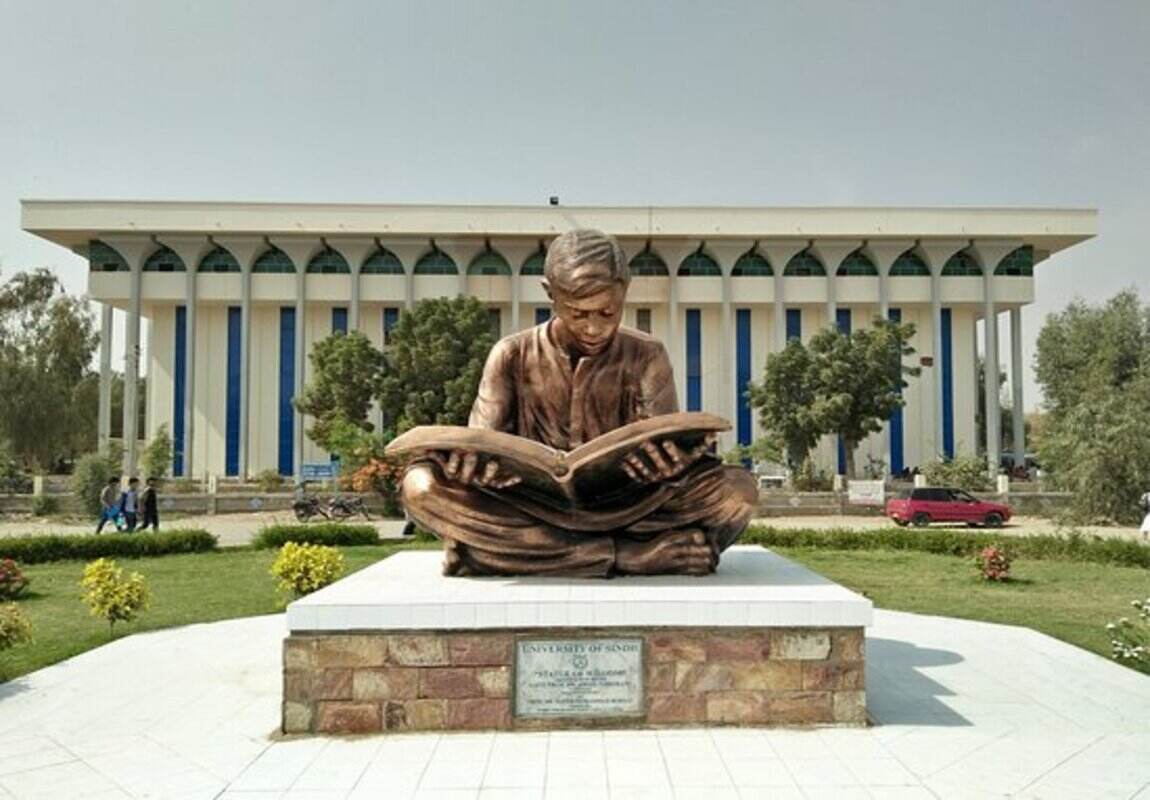
    Sindh University VCs seek extensions as tenures ne…

    ISLAMABAD: The extension of the tenure of Professor Dr Nusrat Shah, Vice Chancellor of Shaheed Mohtarma Benazir Bhutto Medical University (SMBBMU), Larkana, has reportedly prompted vice chancellors of several public-sector universities across Sindh to seek extensions as their first terms approach completion. According to sources, the first four-year terms of vice chancellors at eight government universities are set to expire over the coming months. Almost all of the serving VCs, except one, are reportedly seeking second terms. Nusrat Shah’s extension case reaches CM House Sources in the Sindh Chief Minister’s House said that a summary seeking an extension for Dr Nusrat Shah has been forwarded to the Chief Minister of Sindh. Dr Nusrat Shah’s current four-year term is scheduled to expire on January 1, 2027. She is the daughter of former Sindh chief minister Syed Qaim Ali Shah. Sources said her extension case has gained considerable attention and may receive approval. The development has reportedly encouraged other vice chancellors whose terms are also nearing completion to pursue extensions. One extension approved so far The Sindh government has so far approved an extension only for Dr Amjad Siraj Memon, Vice Chancellor of Jinnah Sindh Medical University. Sources said extension cases of Dr Khalid Iraqi and Dr Farooq Hassan have been rejected. Other VCs seeking second terms   Several other vice chancellors are also approaching the end of their first terms: Dr Ikramuddin Ujan — Vice Chancellor, Liaquat University of Medical & Health Sciences, Jamshoro. His term expires on January 1, 2027. His extension case is reportedly complicated by allegations concerning the awarding of multiple gold medals to his son at the university. Dr Zahid Hussain Khand — Vice Chancellor, Aror University of Art, Architecture, Design and Heritage, Sukkur. His term expires on January 19, 2027. Arbela Bhutto — Vice Chancellor, Shaheed Allah Buksh Soomro University of Art, Design and Heritages. Her term expires on January 19, 2027. Dr Asif Sheikh — Vice Chancellor, IBA Sukkur. His term expires on January 19, 2027. Dr Taha Hussain — Vice Chancellor, Mehran University of Engineering and Technology. His term is due to expire in mid-March 2027. Tahmina Nangraj — Vice Chancellor, Begum Nusrat Bhutto Women University, Sukkur. Her term expires on January 19, 2027.  Dr Samreen Hussain — Vice Chancellor, Dawood University of Engineering and Technology, Karachi. Her term expires in January 2027. Sources said summaries seeking extensions for several of these vice chancellors are expected to be forwarded to the Chief Minister’s House in the coming weeks. Test for Sindh government The growing number of extension requests is likely to pose a fresh challenge for the Sindh government and the Chief Minister, who exercises an important role in the appointment and continuation of leadership at public universities. The decisions are expected to be closely watched, with the candidates’ performance, administrative record, political affiliations and any controversies surrounding their tenures likely to come under scrutiny. The outcome of these cases could also shape the leadership of Sindh’s public-sector universities for the next several years.

Leave a Reply

Your email address will not be published. Required fields are marked *