discover beauty shah

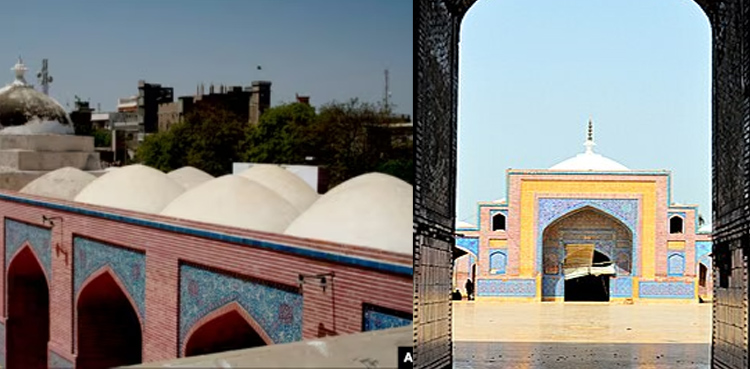
Discover the beauty of Shah Jahan Mosque

Located in the historic city of Thatta, Sindh, the Shah Jahan Mosque is one of South Asia’s most impressive examples of Mughal architecture. Its unique design beautiful tiles and remarkable sound system continue to attract visitors.

The mosque was built by Mughal Emperor Shah Jahan between 1644 and 1647 as a gift to the people of Sindh.  The nearly 400-year old building is known for its large number of domes and unusual architectural style.

Unlike many other Mughal mosques the Shah Jahan Mosque does not have traditional tall minarets. It is famous for its many domes with local traditions often saying that the mosque has 99 domes.  Interestingly some people claim that the number can appear to be 100 when counted from certain points.

One of the mosque’s most fascinating features is its natural acoustics. A person can reportedly speak softly near the prayer area and have their voice heard clearly in another part of the mosque.

This is possible because of the way the walls domes and other structures were designed to reflect sound.

The mosque was built long before modern speakers and sound systems yet its clever design allows sound to travel across large sections of the building.

Over the centuries the historic mosque has gone through different stages of repair and preservation. During the era of former Prime Minister Zulfikar Ali Bhutto, efforts were also made to improve and protect the historic site.

The mosque is also known for its huge capacity.

It is believed that around 40,000 to 50,000 people can gather there for Friday prayers.

Its decoration is another major attraction. While many famous Mughal buildings are known for red stone and white marble the Shah Jahan Mosque features beautiful blue and white glazed tiles.  The detailed tilework reflects the artistic traditions of Iran and Hala a historic city in Sindh known for its crafts.

With its centuries old history striking domes, colorful tiles and remarkable acoustics the Shah Jahan Mosque remains a remarkable symbol of Sindh’s rich cultural and architectural heritage.
Similar Posts

  • Health benefits of plant compounds

    Eating more plant based foods may benefit several areas of health including digestion the immune system metabolism and heart health. New research is helping scientists understand how foods from plants interact with the bacteria in our gut and influence the way our body processes nutrients. Gut bacteria play an important role One important reason plant based foods may be beneficial is their effect on the gut microbiome the large community of bacteria living in the digestive system. Dietary fiber is especially important. Gut bacteria break down fiber and turn it into different compounds that can affect the body in various ways. Plant chemicals may also help Plants contain natural chemicals called phytochemicals. These compounds help plants protect themselves from environmental stress.  When people eat plant foods these chemicals may also have different effects inside the body. What did the new studies find? Two studies led by researchers associated with Princeton University provided new information about the connection between diet, gut bacteria and metabolism.  One study was published in Proceedings of the National Academy of Sciences while the other appeared in Nature Metabolism. The first study found that plant based fiber and certain plant proteins can change how gut bacteria process nutrients.  These changes may increase some helpful metabolic compounds while reducing certain potentially harmful ones. The second study found that some metabolic compounds previously thought to be produced mainly by gut bacteria can also be made in significant amounts by mammals themselves. Why this research matters Researchers are increasingly interested in using the gut microbiome and the compounds it produces to improve health.  However scientists first need to understand exactly how different parts of our diet affect specific gut bacteria and the substances they produce. Future health benefits These findings could eventually help researchers develop better dietary strategies and treatments aimed at supporting a healthy gut microbiome. In the future this may make it possible to use food choices more effectively to encourage the production of beneficial compounds in the body.

  • Stay safe from viral fever during monsoon

    When the rainy season begins after the hot summer cases of different illnesses often increase.  Viral fever is one of the common health problems people may experience during changing weather. Many people first develop a sore throat or runny nose followed by fever that may last several days.  It can leave the body feeling weak and may cause headaches body aches, chest discomfort or throat pain. Children older adults and people with weaker immune systems may be more likely to develop complications. A few simple habits can help reduce the risk of infections during the rainy season. Keep your hands clean Germs and viruses can stay on frequently touched surfaces such as door handles mobile phones railings and other objects. Wash your hands with soap and clean water for at least 20 seconds after returning home before eating and after using the bathroom.  If soap and water are not available use an alcohol based hand sanitizer. Try not to touch your eyes nose or mouth with unwashed hands. Eat a healthy diet A healthy diet supports the body’s immune system. During the rainy season include fresh fruits vegetables lentils, milk yogurt and eggs in your meals. Foods containing vitamin C and zinc can also be part of a balanced diet. Try to avoid unhygienic street food and foods that are heavily fried. Drink safe and clean water Rainy weather can increase the risk of infections caused by contaminated water.  Drink properly filtered or boiled water whenever possible. Avoid uncovered drinks and ice from places where water  quality is uncertain. Drinking enough clean water throughout the day also helps prevent dehydration. Take care after getting wet If you get caught in the rain change out of wet clothes as soon as possible and dry  your hair properly. Staying in wet clothes for a long time can make you uncomfortable and may contribute to illness. If needed take a warm shower and change into clean, dry clothes. Get enough sleep and rest Good sleep helps the body maintain a healthy immune system. Poor sleep and constant stress can affect overall health. Try to get around seven to eight hours of sleep each night. Light exercise walking or gentle yoga can also help keep the body active. Avoid close contact with sick people Some viral infections can spread through coughing sneezing and close contact.  Keep some distance from people who are sick and avoid crowded places when possible. Wear a mask when needed and do not share personal items such as towels drinking bottles or utensils with someone who is ill.  Cover your mouth and nose with a tissue or your elbow when coughing or sneezing. Pay attention to early symptoms Do not ignore symptoms such as fever sore throat headache runny nose or body aches. Get enough rest drink warm fluids and monitor your condition. Avoid taking antibiotics without medical advice because antibiotics do not treat most viral infections and unnecessary use can be harmful. Know when to see a doctor Seek medical care if your fever reaches 102°F (38.9°C) or higher lasts for more than three days or is accompanied by breathing difficulty repeated vomiting fainting, or severe weakness. The rainy season can be enjoyable but taking basic health precautions is important. Good hygiene safe food and water enough rest and early attention to symptoms can help reduce the risk of illness during changing weather.

  • |

    Pashtun identity in modern South Asia

    The Pashtuns represent one of the most populous indigenous groups across South and Central Asia, predominantly in Afghanistan and Pakistan. Their social backbone relies on interconnected lineages, extended families, clans, and tribal alliances rather than a centralized political authority. From major confederations like the Durrani and Ghilzai to influential communities such as the Yusufzai, Afridi, Mohmand, Khattak, Wazir, and Mahsud, Pashtun society is a rich tapestry of overlapping regional, religious, and civic loyalties. At the core of their culture is Pashtunwali, an ancient honor code governing daily life through principles of hospitality, courage, asylum, and restorative justice. Historically, community issues and disputes were negotiated collectively through jirgas, or assemblies of local elders, maintaining order through consensus. Empire Builders and Cultural Crossroads Beyond tribal structure, Pashtuns have repeatedly reshaped the political landscape of the Indian subcontinent and Central Asia. Sultanate Dynasties: The Lodi dynasty established its rule over the Delhi Sultanate, paving the way for intricate South Asian governance structures. Administrative Reforms: Imperial leader Sher Shah Suri founded the Sur Empire in North India, pioneering sweeping reforms in taxation, infrastructure development, and currency. Empire Founding: In the 18th century, Mirwais Hotak challenged Safavid Persian dominance, while Ahmad Shah Durrani established the Durrani Empire in 1747, laying the groundwork for modern Afghanistan. This history is far more than military conquest. Pashtun territories served as vital crossroads where Persian, Turkic, Indian, and Islamic traditions converged. Consequently, their heritage spans beyond warrior traditions. It thrives in rich oral poetry, musical compositions, complex embroidery, craftsmanship, and trade networks. The Borderlands and Modern Challenges The 19th century brought prolonged conflict with British imperial forces along the northwestern frontier. A pivotal turning point arrived with the demarcation of the Durand Line in 1893. By drawing an artificial boundary between Afghanistan and British India (now Pakistan), the British divided ancestral Pashtun communities, establishing a geopolitically sensitive frontier that continues to spark debate and shape regional politics today.   In recent weeks, administrative re-alignments and border disputes in provinces like Balochistan and Khyber Pakhtunkhwa have reignited local debate. Prominent political and tribal leaders have voiced strong resistance to state restructuring, asserting that top-down administrative decisions risk erasing historical identities. Through renewed calls for broad political dialogue rather than bureaucratic divisions, modern Pashtun communities continue to rely on unified assemblies to safeguard their cultural heritage, self-determination, and historical voice in a changing region.

  • Danger signs your air conditioner needs repair

    As temperatures rise many people buy old or low cost air conditioners to save money. However experts warn that aging AC units can become dangerous if problems are ignored.  Small faults may turn into serious issues including electrical short circuits fires or costly damage. According to experts older air conditioners often develop worn out wiring damaged electrical parts faulty motors and overheating. These problems may seem minor at first but can become dangerous if they are not repaired in time. One of the biggest warning signs is a burning smell or the odor of melted plastic when the AC is switched on.  Experts say this could mean the internal wiring motor or insulation has been damaged increasing the risk of fire. If this happens turn off the unit immediately and have it checked by a qualified technician. Unusual sounds such as rattling grinding or loud noises are also signs that something is wrong. These noises may be caused by a loose part a damaged fan or a compressor problem.  Ignoring them could lead to a complete system failure. If the air conditioner becomes unusually hot while running it may indicate an electrical fault inside the unit.  Overheating can increase the risk of a short circuit or fire making immediate inspection and repair important. Experts also advise not to ignore weak cooling. Reduced cooling may be caused by low refrigerant a faulty compressor or a clogged air filter.  These issues usually mean the AC needs servicing or repairs. Another serious warning sign is seeing sparks near the voltage stabilizer or electrical wires. This may indicate loose connections or damaged wiring, which can quickly become a fire hazard if not fixed. Experts recommend turning off the air conditioner immediately if you notice any of these warning signs and contacting a qualified technician for a full inspection.  Timely repairs can help prevent bigger damage and keep your home and family safe. They also advise that if an air conditioner keeps breaking down and needs frequent repairs replacing it with a newer safer and more energy efficient model may be a smarter and more cost effective choice.

  • | | |

    Nimra Khan divorce rumors intensify after social m…

    Pakistani television actress Nimra Khan has once again become the center of attention on social media after a series of emotional posts and changes to her Instagram activity sparked fresh speculation about her married life. The actress had announced her marriage in June 2026 through Instagram, sharing pictures and moments from her wedding ceremony held in Paris. However, shortly after the wedding, rumors regarding possible differences between the couple began circulating online. The speculation gained momentum when Nimra Khan shared an emotional video message in which she spoke about staying strong during difficult times. She said that no matter how challenging life becomes or whether people stop understanding or supporting someone, a person should never abandon themselves because they are enough for themselves. Following the reactions from fans, the actress had previously clarified that her married life was going well and explained that she had hidden some personal pictures due to concerns about negative attention and the “evil eye.” However, recent developments on social media have once again fueled discussions among fans. According to reports, Nimra Khan and her husband Zain Hamid have removed each other’s pictures from Instagram and have also unfollowed each other. The rumors intensified after Nimra Khan shared another video with a message about personal strength and resilience. In the post, she wrote that a person should remain strong enough that others do not mistake their silence for weakness. Meanwhile, her husband also shared a brief but meaningful post that attracted public attention. His message, which appeared on July 31, said: “Finally at peace, good that I got rid of it.” The post led many social media users to question whether the couple was facing personal difficulties. Nimra Khan also recently shared a video related to domestic violence awareness, in which a woman described alleged abuse by her husband. The actress reposted the video with the message, “We are with you.” She later shared another post emphasizing the importance of setting personal boundaries, saying that she had established limits because failing to do so had previously caused her difficulties. Despite the growing speculation, neither Nimra Khan nor Zain Hamid has issued an official statement confirming a divorce or separation. Fans continue to discuss the couple’s social media activity, but the actual status of their relationship remains unclear. As social media continues to fuel public interest in celebrity relationships, any confirmation regarding their marriage will likely come directly from the couple themselves.

  • |

    AI could replace millions of jobs, warns “Godfather of AI”

    Artificial intelligence (AI) technology is often said to have the potential to eliminate a large number of jobs. According to Nvidia CEO Jensen Huang, AI could affect almost every profession and may lead to shorter working hours. Microsoft co-founder Bill Gates believes that, gradually, humans may become unnecessary for many tasks. Elon Musk has predicted that within the next two decades, most people may no longer need to go to work. Computer scientist Geoffrey Hinton is widely known as the “Godfather of AI.” He won the Nobel Prize in Physics in 2024 for his work on artificial intelligence. Geoffrey Hinton who is associated with the University of Toronto in Canada has warned about the potential negative impact of AI on employment. Speaking at Georgetown University, he said he believes AI could lead to widespread unemployment with millions of people potentially losing their jobs. He explained that companies are investing heavily in AI infrastructure including data centers and chips to improve automation. According to Hinton, companies will seek returns on these investments by selling AI systems capable of performing tasks currently carried out by human workers at a lower cost. He said that the desire for greater profits could ultimately lead AI tools to replace human employees. However, Hinton acknowledged that AI technology would also create new employment opportunities. Nevertheless, he believes the number of new jobs may not be sufficient to replace all the jobs that could be lost. He also admitted that it is extremely difficult to predict the long-term effects of AI technology. Hinton has previously issued warnings about the risks associated with AI. At one point, he estimated that there was a 10% to 20% chance that AI could eventually contribute to the destruction of humanity. He stressed that it is important to discuss the potential dangers of AI. Hinton acknowledged that the uncertainty surrounding AI can be troubling because no one knows exactly what the future holds. He said that if someone asks what AI technology will look like in the next 10 years, no one can accurately predict it. Earlier, in an August 2025 podcast appearance, Hinton said that AI is learning things in ways that humans do not fully understand and that there may be no reliable way to simply switch it off. Hinton’s research helped lay the foundations of machine learning, the technology that enables computers to replicate aspects of human intelligence. However, in recent years, he has been campaigning for AI to be developed and used safely. In 2023, Hinton left his position at Google saying that bad actors could potentially use the technology to harm other people. In a recent interview, when asked about the pace of AI development, he said that most experts in the field currently believe that eventually possibly within the next 20 years, humans could develop AI systems that are more intelligent than humans. He described this as a frightening prospect, comparing current AI technology to a three-year-old child, while noting that children grow up very quickly. According to Hinton, the impact of AI on the world could be similar to that of the Industrial Revolution. He explained that the Industrial Revolution effectively halted the need for humans to develop greater physical strength because people began relying on increasingly powerful machines. He believes humanity is now doing something similar with human intelligence potentially creating technology that could surpass human intellectual capabilities. When asked what life might look like 10 or 20 years from now, Hinton said that it would largely depend on how political systems respond to and manage the technology. In his view, AI could have remarkable benefits in the medical field and could improve the efficiency of almost every industry. However, he stressed that society needs to be much more cautious about the rapid development of AI technology.

Leave a Reply

Your email address will not be published. Required fields are marked *