
pakistan launches virtual
|

Pakistan launches virtual asset licensing regime

Pakistan has formally introduced a licensing system for virtual asset service providers, requiring existing operators to apply for regulatory approval by September 5, 2026, or stop providing services.

The Pakistan Virtual Assets Regulatory Authority (PVARA) has notified new licensing regulations and launched its online application portal under the Virtual Assets Act, 2026. The move establishes a formal regulatory structure for the country’s rapidly growing virtual asset sector.

The new framework includes 10 licence categories covering major activities such as cryptocurrency exchanges, custody services, broker-dealer operations, advisory services, lending and borrowing, derivatives, asset management, transfer and settlement, asset issuance and mining-related services.

Each category will be subject to specific rules covering business conduct, financial safeguards, technology standards and anti-money laundering and counter-terror financing requirements.

Existing virtual asset service providers have been given a statutory deadline of September 5. Under Section 70 of the Virtual Assets Act, businesses that were already providing such services before the law came into force must submit an application for a No-Objection Certificate by the deadline.

Those failing to submit an application will be required to cease operations, while continuing to operate without applying after the deadline will constitute an offence.

PVARA Chairman and Minister of State Bilal Bin Saqib said the regulatory system was designed to bring an already active market into the formal economy.

He said young Pakistanis had helped build the virtual asset market before the state had established a regulatory structure for it. The new system, he added, would provide legal protections for customers while creating opportunities for legitimate businesses.

Under the regulations, licensed service providers will be required to keep customer assets separate from their own holdings. They will also be prohibited from lending or pledging customer assets without written consent and will face legal obligations regarding the protection of client holdings if a platform encounters financial difficulties.

The licensing system follows a public consultation held between June 11 and July 2, 2026. The consultation also included a webinar for stakeholders to provide feedback on the proposed framework.

The licensing process will operate in two stages for applicants planning to establish businesses in Pakistan. They can either enter a regulatory sandbox or obtain a No-Objection Certificate under Section 19 before incorporation and subsequently seek a full licence.

Existing operators, however, must submit their NOC applications by September 5.

The new framework also provides licensed virtual asset businesses with access to Pakistan’s formal banking system. The State Bank of Pakistan’s Circular No. 10 of 2026, issued on April 14, allows regulated financial institutions to open accounts for PVARA-licensed virtual asset service providers, including segregated client money accounts.

This replaces the restrictions on banking services for virtual asset businesses that had remained in place since 2018.

PVARA was established as a permanent statutory authority through an Act of Parliament in March 2026. Within months, the authority secured a formal banking framework for licensed operators and completed the licensing regulations following public consultation.

Similar Posts

  • |

    Five-wicket star Mohammad Abbas dropped for key Test

    PORT OF SPAIN: Pakistan’s team selection for the second Test against the West Indies has triggered widespread debate after experienced fast bowler Mohammad Abbas was left out of the playing XI despite delivering a match-winning five-wicket haul in the previous Test. The unexpected decision has raised eyebrows among cricket experts and fans, with many describing it as one of the most unusual selection calls in Pakistan’s recent Test history. Abbas was Pakistan’s standout performer in the opening Test at Tarouba, finishing with eight wickets across the match, including a brilliant five-wicket haul in one innings. Despite his efforts, Pakistan suffered a 90-run defeat, largely due to a disappointing batting display. However, instead of retaining their leading bowler, the team management opted to hand Ubaid Shah his Test debut for the series-deciding second match. Pakistan captain Babar Azam defended the move, saying the decision was based on pitch conditions and part of four changes made to the playing XI. According to Babar, the management believed the conditions in Port of Spain required a different bowling combination, and Abbas was rested with those factors in mind. The decision has nevertheless sparked criticism, particularly because bowlers who claim five wickets in an innings are rarely omitted from the very next Test. Cricket statisticians pointed out that this is believed to be the first time since 1980 that a Pakistan bowler has been dropped immediately after taking a five-wicket haul in a Test innings. The last comparable case dates back to Pakistan’s 1979-80 tour of India, when Ehteshamuddin was left out after claiming five wickets in an innings to make room for the returning Imran Khan. The debate intensified after Ubaid Shah endured a difficult start to his Test career. On the opening day of the second Test, the young pacer conceded 56 runs in just nine overs, making him Pakistan’s most expensive bowler of the day despite picking up a wicket. His costly spell has prompted fresh questions over whether the management made the right call by overlooking Abbas, whose experience and consistency have long been valued in red-ball cricket. With the series on the line, Pakistan’s selection strategy is now under intense scrutiny. Whether the bold gamble pays off could have a significant impact on the outcome of the Test and may shape discussions over team selection in the months ahead.

  • |

    Global chip market set to cross $1 trillion as AI demand surges

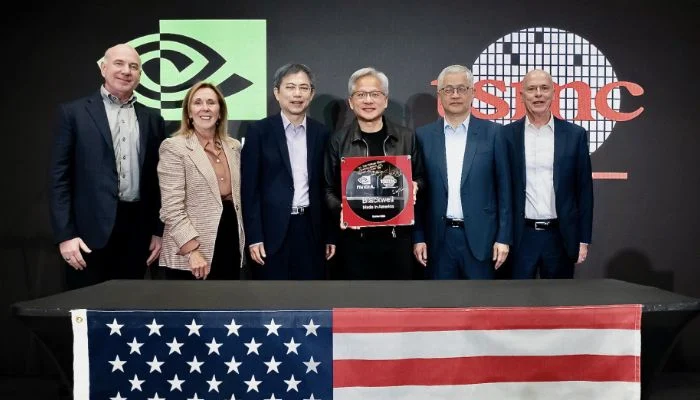
    The global semiconductor industry is on track to surpass $1 trillion in annual revenue in 2026, driven largely by the rapid expansion of artificial intelligence infrastructure. AI-related chips are reshaping the semiconductor business. Although advanced AI processors represent only a tiny share of total chip shipments, they are expected to generate almost half of the industry’s overall revenue this year. The surge reflects the enormous investment being made in AI data centres around the world. The five largest global technology hyperscalers have allocated more than $600 billion to AI data-centre infrastructure in 2026. The growing demand is also increasing the importance of advanced chip manufacturing. Producing a sophisticated 3-nanometre processor can take around six months, highlighting the complexity and limited capacity of the global supply chain. Taiwan Semiconductor Manufacturing Company (TSMC) remains central to the production of the world’s most advanced processors. The company manufactures an estimated 90% of the most sophisticated chips, making it a critical supplier for the rapidly expanding AI industry. This concentration has also raised concerns about supply-chain vulnerability. Any major disruption to advanced chip production could affect technology companies, AI developers and governments that are investing heavily in artificial intelligence. Nvidia has emerged as one of the biggest beneficiaries of the AI boom. The company reported revenue of $215.9 billion, strengthening its position as a leading supplier of processors used to train and operate advanced AI models. The chip industry’s challenges extend beyond processors. High-bandwidth memory (HBM), which is essential for AI computing, has become another major supply constraint. Much of the available HBM production capacity is already committed through 2026. The global memory market is also expected to generate substantial revenue, with estimates putting fiscal 2026 revenue at around $594.7 billion. The figures underline how quickly AI is transforming the global semiconductor industry. Demand is shifting toward fewer but far more valuable advanced chips, while manufacturers face pressure to expand capacity and secure critical components. As AI investment continues to grow, semiconductor production is increasingly becoming a strategic issue for technology companies and governments. The ability to manufacture advanced processors and memory at scale could determine how quickly the next phase of AI development progresses.

  • | | | |

    Tanweer Ahmed champions human-centred AI at UN you…

    Tanweer Ahmed, a technology and artificial intelligence professional, has called for a human-centred approach to AI adoption, stressing that emerging technologies should support people rather than replace them. Speaking at the Youth and AI Summit at United Nations Headquarters in New York on International Youth Day, Ahmed delivered a presentation titled “Keeping Humanity in AI Adoption.” He focused particularly on how nonprofit organisations can use artificial intelligence responsibly while protecting human judgment and accountability. Ahmed said his professional background in technology consulting, data analytics and AI had given him experience in understanding the opportunities created by emerging technologies. However, he said his passion for the nonprofit sector was rooted in his earlier experiences working with communities and young people. He recalled working on a community farm and participating in cultural education activities in Cuba during 2007 and 2008. In 2010, he travelled to South Africa, where he taught mathematics to fifth-grade students. Ahmed said these experiences shaped his long-term desire to contribute to communities and help children around the world. He described his appearance at the UN event on International Youth Day as an honour and an opportunity to reconnect with those early aspirations. During his presentation, Ahmed discussed the rapid growth of artificial intelligence and its increasing use by individuals, businesses and nonprofit organisations. He explained that AI adoption should not simply mean occasionally using chatbots or other AI applications. Instead, organisations should strategically integrate AI into their daily workflows, operations and decision-making processes. Ahmed highlighted several areas where nonprofits can use AI, including internal productivity, communication, fundraising, grant writing and administrative tasks. He presented the Ugandan Water Project as an example of how AI can support a nonprofit organisation. The project works to improve access to clean water in Uganda and reduce the impact of waterborne diseases. According to Ahmed, the organisation uses AI to assist with grant applications and donor outreach. Previous grant applications and organisational information can be analysed to help prepare targeted applications for new funding opportunities. Ahmed stressed that AI-generated material is not simply submitted without human involvement. Staff review, edit and verify the content before applications are sent to funders. He said AI had also helped the organisation identify new grant opportunities and improve internal processes, including contract drafting and project-management workflows. Ahmed emphasised that the purpose of such technology should be to make employees more efficient rather than eliminate their jobs. He also discussed AI-powered voice-to-text technology used in social work and community services. Such systems can allow workers to record information while they are in the field and transfer it into required software, reducing the amount of time spent on administrative duties. Ahmed said reducing paperwork could give nonprofit workers more time to interact directly with the people and communities they serve. However, he warned that AI adoption also presents challenges. These include financial costs, limited access to technology, concerns over job losses, inaccurate information, privacy issues, bias and difficulties in understanding cultural and linguistic nuances. He also highlighted concerns about the environmental impact of the infrastructure required to operate increasingly powerful AI systems. Ahmed urged organisations to develop responsible AI policies covering privacy, security, fairness, transparency, human oversight and accountability. He encouraged nonprofit organisations to learn from one another and share successful experiences with AI, saying organisations working for social causes can benefit from cooperation rather than competing over technological approaches. A key message of his presentation was that humans must remain responsible for AI-assisted decisions. Ahmed warned organisations against blindly accepting AI-generated content and urged them to review outputs carefully, correct errors and ensure that technology does not replace human judgment. Who is Tanweer Ahmed, the Pakistani-American philanthropist? Pakistani-American businessman and philanthropist Tanweer Ahmed has attracted renewed attention in Pakistan following his reported $9 million contribution to the National University of Sciences and Technology (NUST) and his recent appearance alongside senior Pakistani officials in the United States. Ahmed, who is based in Houston, has built a diverse business portfolio in the United States while also becoming involved in philanthropy, education, healthcare and cricket. His recent contribution to NUST is aimed at supporting talented students from financially disadvantaged backgrounds. The endowment is expected to provide scholarships to deserving students each year, with a particular focus on fields such as artificial intelligence, information technology, science and other emerging technologies. Ahmed has said his objective is to ensure that talented Pakistani students are not deprived of quality education because of financial difficulties. He has also expressed plans to expand similar scholarship initiatives to other educational institutions. The businessman has also supported infrastructure and technology-related initiatives at NUST, including the development of facilities intended to strengthen research and innovation. His philanthropic activities extend beyond education. Ahmed has been associated with healthcare initiatives in Pakistan and has supported efforts aimed at providing assistance to communities affected by natural disasters. He also drew attention for his role in relief efforts following the devastating floods that struck Pakistan in 2022. He has been credited with helping mobilise substantial humanitarian assistance for flood-affected communities. Ahmed’s business journey began after he moved to the United States as a student. According to accounts of his career, he initially worked in restaurants and at gas stations while trying to establish himself. He later moved through several positions in the American fast-food industry. His career accelerated after he joined Jack in the Box as a shift manager. His performance and business approach helped him move into senior management positions, eventually leading to opportunities in the Taco Bell franchise system. Ahmed later expanded into franchising and developed a large portfolio of food outlets across several US states. His business interests have also extended into insurance, energy, transportation and other sectors. Over the years, he has developed a reputation as an entrepreneur who combines commercial ventures with philanthropic activities. Ahmed is also closely associated with the development of cricket in the United States. A passionate cricket enthusiast, he established the Prairie View Cricket Complex near Houston after acquiring a large tract of

  • | |

    Two officials martyred in Kohat terror attack

    Two government officials were martyred and another was seriously injured after terrorists attacked a government vehicle at a joint security check post near the Kohat Toll Plaza on the Indus Highway late Thursday night, officials said. According to police, unidentified armed men opened fire on a customs enforcement vehicle that was carrying out routine anti-smuggling duties at the joint check post. The intense firing caused the vehicle to catch fire, resulting in heavy damage. The officials martyred in the attack were identified as Assistant Sub-Inspector (ASI) Sajjad-ul-Islam of the Kohat Excise Office and Customs Enforcement Constable Jawad Ahmed of the Peshawar Collectorate. Both officers lost their lives while performing their official duties. Another Customs official, Basirullah, suffered serious injuries during the attack. Rescue teams reached the scene shortly after receiving an emergency call, provided first aid and shifted the injured official to the District Headquarters Hospital in Kohat for further treatment. Rescue personnel also recovered the body of the customs constable from the burnt government vehicle, while firefighters extinguished the blaze to prevent it from spreading further. Soon after the incident, police and security forces cordoned off the area and launched a search operation to trace the attackers. Authorities have started an investigation to determine how the attack was carried out and identify those responsible. Officials said the attack created panic in the area, prompting additional security measures along the highway and surrounding locations. Funeral prayers for ASI Sajjad-ul-Islam were offered near his residence in Kohat. Senior officials from the Excise Department, law enforcement agencies and other government institutions attended the funeral and paid tribute to his services. The Excise Department described him as a dedicated and professional officer who served the department with commitment and courage. Officials expressed solidarity with his family and prayed for the elevation of his rank. Funeral prayers for Customs Constable Jawad Ahmed were also offered at the Custom House in Peshawar. Customs officials, colleagues and family members attended the funeral to pay their final respects. The Customs Department expressed deep sorrow over the loss of its officer, stating that he embraced martyrdom while carrying out his national duty. The department honoured his sacrifice and extended condolences to his family. Prime Minister Shehbaz Sharif strongly condemned the terrorist attack and expressed deep grief over the martyrdom of the two officials. He offered condolences to their families, prayed for the speedy recovery of the injured officer and directed the relevant authorities to arrest those behind the attack. The prime minister reaffirmed the government’s commitment to eliminating terrorism, saying operations against militant groups would continue until peace and stability are fully restored across the country.

  • |

    Diesel price rises as government increases petroleum levy

    ISLAMABAD: The federal government has increased the price of high-speed diesel after raising the Petroleum Development Levy (PDL) on the fuel by Rs1 per litre, adding further pressure on consumers and transport-related costs. Following the latest adjustment, the price of high-speed diesel has gone up by 54 paisas per litre, reaching Rs382.89 per litre. The increase comes despite a decline in the ex-refinery price of diesel, with the higher petroleum levy pushing up the final price paid by consumers. The government has raised the diesel levy by Rs1 per litre as part of the latest petroleum price adjustment. The PDL on high-speed diesel now stands at Rs76.28 per litre. The latest increase follows another adjustment made on August 12, when the government raised the petroleum levy on diesel by Rs2 per litre. The successive increases have resulted in a significant rise in the levy component of the retail price. Petrol price reduced In contrast to diesel, the government has reduced the price of petrol by 94 paisas per litre. The price of petrol has now been fixed at Rs324.98 per litre. The Petroleum Development Levy on petrol, however, has remained unchanged at Rs80 per litre. The differing price movements for petrol and diesel are largely linked to changes in their respective pricing components. While the ex-refinery price of diesel declined, the increase in the government levy more than offset the reduction, resulting in a higher retail price. The latest adjustment is expected to have an impact on transportation and logistics costs because diesel is widely used by commercial vehicles, buses, trucks, agricultural machinery and other heavy transport. Higher diesel prices can also influence the cost of goods and services by increasing transportation expenses across supply chains. Meanwhile, the reduction in petrol prices provides limited relief to motorists using petrol-powered vehicles. The government periodically reviews petroleum prices based on international oil prices, exchange-rate movements, taxation and other components of the domestic pricing mechanism. The latest changes reflect the impact of adjustments in the petroleum levy and ex-refinery prices on consumers.

  • | |

    Katie Price shares joyful update after welcoming a…

    Katie Price has shared a heartwarming update with fans after welcoming a new litter of hairless kittens, bringing a happier chapter following the heartbreak she has previously experienced with the loss of several beloved pets. The former glamour model took to Instagram over the weekend to introduce the newest members of her family. In a series of sweet videos, Price showed her hairless Sphynx cat caring for her newborn kittens as they rested together in a cozy pet bed. At least four tiny kittens could be seen feeding while their mother remained close, and Price gently stroked them as she admired the growing feline family. The television personality appeared delighted by the arrival of the kittens, sharing the precious moments with her followers. The clips quickly attracted attention from animal lovers, with many fans leaving messages of congratulations and commenting on how peaceful and adorable the newborn kittens looked. The joyful update comes after Price has endured years of emotional loss involving her pets. She has previously spoken openly about the sadness of losing several animals, with some of their deaths sparking public criticism and concern from animal welfare campaigners. Despite the difficult moments, Price has continued to express her love for animals and often shares updates about the pets living at her home. Her latest social media posts reflect a more positive chapter, with the newborn kittens bringing excitement to the household.t days of life. Fans praised the touching scenes, saying the kittens looked healthy and content as they cuddled together. Price has long been known for her affection for animals and has cared for a variety of pets over the years, including dogs, horses and cats. Her Sphynx cats, recognized for their distinctive hairless appearance and affectionate personalities, have frequently appeared on her social media platforms, giving followers a glimpse into her life away from television. The arrival of the kittens has also sparked interest among fans who have followed Price’s journey as a pet owner. Many expressed hope that the new additions would bring happiness after the challenges she has faced in recent years. For Katie Price, the birth of the litter represents more than just welcoming new pets. It marks a fresh beginning filled with hope and joy. As the kittens continue to grow under the care of their mother, Price has given fans an uplifting look at a special family moment, reminding followers that even after difficult times, new life can bring comfort, happiness and a reason to smile once again.

Leave a Reply

Your email address will not be published. Required fields are marked *