pakistan launches virtual
|

Pakistan launches virtual asset licensing regime

Pakistan has formally introduced a licensing system for virtual asset service providers, requiring existing operators to apply for regulatory approval by September 5, 2026, or stop providing services.

The Pakistan Virtual Assets Regulatory Authority (PVARA) has notified new licensing regulations and launched its online application portal under the Virtual Assets Act, 2026. The move establishes a formal regulatory structure for the country’s rapidly growing virtual asset sector.

The new framework includes 10 licence categories covering major activities such as cryptocurrency exchanges, custody services, broker-dealer operations, advisory services, lending and borrowing, derivatives, asset management, transfer and settlement, asset issuance and mining-related services.

Each category will be subject to specific rules covering business conduct, financial safeguards, technology standards and anti-money laundering and counter-terror financing requirements.

Existing virtual asset service providers have been given a statutory deadline of September 5. Under Section 70 of the Virtual Assets Act, businesses that were already providing such services before the law came into force must submit an application for a No-Objection Certificate by the deadline.

Those failing to submit an application will be required to cease operations, while continuing to operate without applying after the deadline will constitute an offence.

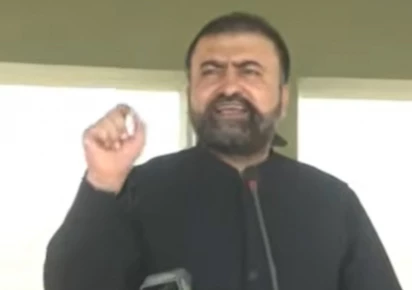
PVARA Chairman and Minister of State Bilal Bin Saqib said the regulatory system was designed to bring an already active market into the formal economy.

He said young Pakistanis had helped build the virtual asset market before the state had established a regulatory structure for it. The new system, he added, would provide legal protections for customers while creating opportunities for legitimate businesses.

Under the regulations, licensed service providers will be required to keep customer assets separate from their own holdings. They will also be prohibited from lending or pledging customer assets without written consent and will face legal obligations regarding the protection of client holdings if a platform encounters financial difficulties.

The licensing system follows a public consultation held between June 11 and July 2, 2026. The consultation also included a webinar for stakeholders to provide feedback on the proposed framework.

The licensing process will operate in two stages for applicants planning to establish businesses in Pakistan. They can either enter a regulatory sandbox or obtain a No-Objection Certificate under Section 19 before incorporation and subsequently seek a full licence.

Existing operators, however, must submit their NOC applications by September 5.

The new framework also provides licensed virtual asset businesses with access to Pakistan’s formal banking system. The State Bank of Pakistan’s Circular No. 10 of 2026, issued on April 14, allows regulated financial institutions to open accounts for PVARA-licensed virtual asset service providers, including segregated client money accounts.

This replaces the restrictions on banking services for virtual asset businesses that had remained in place since 2018.

PVARA was established as a permanent statutory authority through an Act of Parliament in March 2026. Within months, the authority secured a formal banking framework for licensed operators and completed the licensing regulations following public consultation.

Similar Posts

  • | | |

    Pakistan moves to strengthen digital finance and e…

      Finance Minister Muhammad Aurangzeb has called for a more supportive regulatory framework to expand electronic transactions, improve digital access to finance and accelerate Pakistan’s broader digital transformation. The minister made these remarks during a meeting with Pakistan Digital Authority (PDA) Chairperson Dr Sohail Munir, where the two discussed digital finance, technology-driven economic activity and the development of Pakistan’s digital infrastructure. According to the Ministry of Finance, Aurangzeb stressed that existing regulations must evolve alongside technological advancements and new business models. The meeting focused on creating an environment that recognises electronic transactions and encourages greater use of digital systems in trade and financial activities. The participants also examined ways to improve access to finance by expanding digital platforms and making financial procedures more efficient. Aurangzeb particularly highlighted the need to simplify customer onboarding, strengthen data-sharing systems and improve the interoperability of financial information. Greater integration between banks and capital markets was also discussed, with the aim of making investment opportunities more accessible to ordinary citizens. The minister said streamlined digital account-opening procedures could encourage wider participation in the capital market. Better connections between banking and capital-market systems, he added, could increase investor participation and improve access to investment opportunities. The meeting also covered the importance of connecting government data systems. According to the ministry, better-integrated data could help policymakers improve planning, policy formulation and decision-making. The increased use of technology and artificial intelligence was identified as another opportunity to improve the efficiency of government and financial services. Digital infrastructure was another key area of discussion. Aurangzeb emphasised that new initiatives should be practical, scalable and consistent with Pakistan’s wider digital transformation goals. Digital assets and tokenisation were also discussed, particularly their possible applications in real estate and other investment sectors. Participants stressed that appropriate regulations and supporting mechanisms would be necessary for the responsible adoption of emerging technologies. Aurangzeb appreciated the work of the Pakistan Digital Authority and called for practical, high-impact initiatives that could improve efficiency, expand financial access and strengthen the country’s digital capabilities. He also emphasised continued coordination among relevant stakeholders to ensure steady progress in Pakistan’s digital economy. Pakistan has already witnessed significant growth in digital payments. According to the State Bank of Pakistan, retail payments through the banking system reached 3.7 billion transactions during January-March 2026, representing a 9% increase from the previous quarter. Digital channels accounted for 92% of total retail payment volumes, processing around 3.4 billion transactions worth Rs68.3 trillion. Mobile banking and digital wallet registrations exceeded 132 million by March 2026, rising 37% year-on-year. Nearly half of Pakistan’s 268 million bank accounts were connected to a mobile banking application or digital wallet. Meanwhile, Raast processed 742 million transactions worth Rs23.27 trillion during the quarter, reflecting growing public acceptance of instant digital payments. Mobile wallets such as Easypaisa and JazzCash have also expanded access to basic financial services, particularly for people previously underserved by traditional banking. Merchant adoption is growing as well. QR-enabled merchants more than tripled during FY25, rising from 516,000 in FY24 to more than 1.9 million by the end of 2025. Although digital adoption remains stronger in urban areas, the figures indicate that Pakistan’s digital financial ecosystem is expanding rapidly.

  • |

    Delhi pushes electric vehicle drive to tackle worsening air pollution

    Delhi has launched one of India’s boldest electric vehicle plans as authorities step up efforts to reduce dangerous air pollution in the capital. The new policy, introduced on July 1, aims to ensure that most newly registered vehicles in the city are electric by 2027. Officials believe the move will improve air quality and reduce harmful emissions, although experts say its success will depend on expanding charging facilities and strengthening the electricity network. Across several parts of Delhi, electric vehicle charging stations are becoming increasingly busy as more residents switch to battery powered scooters, cars and commercial vehicles. Even so, many drivers say the city still lacks enough charging points to support widespread use. Shyam Singh, who uses an electric scooter for work, said the existing infrastructure is not sufficient, especially for people who travel long distances. He explained that limited battery range and the shortage of charging stations remain major concerns for potential buyers. Under the new policy, existing petrol and diesel vehicles will not be banned, but the government expects their numbers to decline over time as electric vehicles become more common. Buyers will receive financial incentives including subsidies, exemptions from registration fees and some road taxes. People who scrap older fuel powered vehicles will also qualify for additional cash rewards. Authorities estimate the policy will cost around 150 billion rupees and is designed to encourage faster adoption of cleaner transport across the city. The plan focuses heavily on two and three wheelers, which make up nearly 70 percent of vehicles on Delhi’s roads. From 2027, all newly registered three wheelers and small commercial trucks must be electric. The same requirement will apply to newly registered two wheelers from the following year. Larger passenger cars and heavy vehicles running on conventional fuels will still be allowed for now. Electric vehicles currently account for only about five percent of the nearly 8.7 million vehicles registered in Delhi. However, registrations have grown steadily over the past year, with more than 100,000 new electric vehicles added, most of them scooters and auto rickshaws. Experts say the latest policy sends a clear signal that the city is committed to reducing dependence on fossil fuel powered transport. Energy specialists have described Delhi’s strategy as one of the most ambitious electric vehicle policies introduced by any Indian state. Jaideep Saraswat of the Vasudha Foundation said the firm deadlines make it clear that the transition to electric transport is unavoidable. He believes the policy will encourage both manufacturers and consumers to prepare for a future where electric vehicles dominate the market. Delhi has struggled with severe air pollution for years, particularly during winter when smog often reaches hazardous levels. The city regularly experiences school closures, restrictions on construction and emergency health measures because of poor air quality. Vehicles contribute around one quarter of pollution across the National Capital Region, while two and three wheelers alone account for almost half of transport related emissions within the city. Analysts say Delhi has already taken important steps toward cleaner transport in the past, including shifting many public vehicles to compressed natural gas. According to energy experts, electric vehicles represented around 12.7 percent of new vehicle sales in Delhi during the 2026 financial year, compared with the national average of 8.3 percent. They believe the latest policy builds on that progress by linking financial incentives with strict registration deadlines for conventional vehicles. Despite the optimism, several challenges remain. Some residents are still hesitant to switch because they worry about battery life, charging convenience and the effect of seasonal flooding on electric vehicles. Others believe more advanced and affordable models will become available in the coming years, making it worthwhile to delay their purchase. Experts also stress that expanding charging infrastructure is only part of the solution. Delhi must increase the use of renewable energy to power electric vehicles and modernize its electricity grid to handle rising demand. Fast charging stations, battery storage systems and better electricity management will all be necessary to support large scale adoption. Specialists also believe cooperation with neighboring states will be essential to reduce emissions from the wider power network and create a cleaner transport system for the entire region.

  • |

    Govt approves 16 pension fund managers for new pension scheme

    The federal government has taken a significant step towards implementing its newly introduced contributory pension system by approving 16 eligible Pension Fund Managers (PFMs) under the Defined Contribution Pension Fund Scheme-2024 for newly recruited federal employees. According to an official notification issued by the Ministry of Finance, the approved Pension Fund Managers have successfully completed all required legal and administrative agreements with the federal government. Following the completion of these formalities, they are now authorized to receive, manage, and invest pension contributions under the new pension framework. The move marks an important milestone in the government’s broader pension reform agenda, aimed at ensuring the long-term financial sustainability of the country’s pension system while reducing the growing fiscal burden associated with traditional pension payments. The Defined Contribution Pension Fund Scheme-2024 was introduced under the Federal Government Defined Contribution Pension Fund Scheme Rules, 2024, replacing the long-standing defined benefit pension model for newly appointed federal government employees. Under the previous system, retired employees received pensions funded entirely by the government. The new framework, however, shifts to a contributory model in which both employees and the government make regular monthly contributions toward retirement savings. As per the scheme, every newly recruited federal employee will contribute 10 percent of their pensionable salary each month to an individual pension account. In addition, the federal government will contribute 12 percent of the employee’s pensionable salary, creating a combined retirement fund that will be professionally managed by the approved Pension Fund Managers. The accumulated contributions will be invested in a diversified portfolio of financial instruments and investment opportunities with the objective of generating long-term returns. Upon retirement, employees will receive pension benefits based on the total value of their accumulated savings and the investment returns earned over the course of their service, rather than relying on a fixed government-funded pension. Officials believe the reform will help establish a financially sustainable pension system by encouraging long-term savings and reducing future pension liabilities on the national exchequer. The appointment of the 16 Pension Fund Managers is expected to facilitate the smooth rollout of the scheme and provide newly inducted federal employees with multiple professionally managed investment options for their retirement savings.

  • | | |

    PSX rallies over 5,000 points as regional tensions…

    The Pakistan Stock Exchange started the week with a strong rally on Monday. The benchmark KSE-100 Index gained more than 5,000 points during intraday trading. The sharp rise came as investors welcomed the pause in fighting between the United States and Iran. The index opened with strong buying activity. By 9:50am, it had risen 4,501 points to reach 175,522.53 points. The previous close was 171,021.20 points. The upward movement continued during the morning session. By 10:30am, the index had gained 5,069 points and reached 176,090.08 points. The improved geopolitical situation boosted investor confidence. The United States and Iran have paused their military strikes. The development has raised hopes for renewed diplomatic efforts. Investors also expect the easing of tensions to support shipping activity through the Strait of Hormuz. The waterway is important for global energy supplies. Any prolonged disruption can push oil prices higher and increase pressure on economies that depend on imported fuel. The latest development also affected global oil markets. Crude prices fell sharply as investors reacted to the temporary halt in hostilities. Brent crude briefly dropped below $90 per barrel. It fell more than 7% at one stage during early trading. US West Texas Intermediate crude also declined. The fall in international oil prices could provide some relief to Pakistan’s economy. Pakistan spends a significant amount on energy imports. Lower oil prices can therefore help reduce pressure on the country’s import bill and external account. Market analysts said the improvement in geopolitical conditions could also influence the State Bank of Pakistan’s monetary policy decision. Awais Ashraf, director of research at AKD Securities, said investors were expecting the central bank to maintain the policy rate. The State Bank is also expected to assess developments in the Middle East. The impact of recent floods on Pakistan’s economy will also remain under consideration. Analysts said the continuing decline in inflation and a relatively comfortable external account could support monetary easing in the coming months. However, economic activity and money supply trends remain important factors for policymakers. The strong rally follows a difficult week for the PSX. The KSE-100 Index had fallen by around 2.7% last week. The index lost 4,782 points and closed at 171,021.20 points. Rising tensions between the United States and Iran had increased uncertainty in financial markets. Higher international oil prices also added pressure. Investors had remained cautious because of concerns that the conflict could expand across the region. Monday’s sharp recovery shows how quickly market sentiment can change when geopolitical risks decline. Despite the strong gains, analysts remain cautious about the outlook. Further developments between Washington and Tehran will remain important. Global oil prices will also influence investor sentiment. The State Bank’s monetary policy decision is another key factor for the market.

  • |

    Ronaldo and Georgina’s first wedding photo goes viral

    LISBON: Cristiano Ronaldo and Georgina Rodriguez have given fans an intimate glimpse into their long-awaited wedding, with the first photograph from their private ceremony quickly attracting attention online. The Portuguese football superstar and his longtime partner reportedly tied the knot on Aug 11 in a civil ceremony at their home in Cascais, Portugal. Rather than organising a lavish celebrity wedding, the couple chose a quiet family gathering surrounded by their five children and a small circle of loved ones. The setting was reportedly their living room, adding an unusually personal touch to an event that could easily have become one of the world’s most extravagant celebrity weddings. A meaningful Gucci choice Ronaldo and Georgina also made a fashion statement with their wedding outfits, both choosing the luxury Italian brand Gucci. Georgina opted for an elegant white silk skirt suit instead of a traditional bridal gown, while Ronaldo wore a light khaki-coloured suit. Their children were dressed in soft, coordinated shades, giving the family portrait a simple yet polished appearance. The Gucci connection carries special meaning for the couple. Ronaldo and Georgina first met in 2016 at a Gucci store in Madrid, where Georgina was working as a sales assistant. What began as an encounter at a fashion store eventually developed into one of the most closely followed relationships in international sport and entertainment. Why the couple chose simplicity Despite their glamorous lifestyle, Georgina has previously spoken about wanting a more personal family celebration rather than an elaborate wedding. She explained that as a child she had imagined a grand wedding involving a palace, a large procession and a long bridal dress. Her priorities changed over time, however, and she came to value a quiet celebration with her partner and children more than luxury or spectacle. The intimate ceremony appears to have reflected that wish, keeping the focus firmly on family. Is Ronaldo nearing retirement? The wedding news also coincides with renewed attention surrounding Ronaldo’s football future. At 41, the five-time Ballon d’Or winner has indicated that the 2026-27 season could potentially be the final campaign of his remarkable career. Ronaldo has said he wants to leave football with a strong legacy, although he has not formally announced his retirement. For now, however, the football icon appears to be celebrating a new chapter away from the pitch — with Georgina and their family at the centre of it.

  • |

    Pension crisis hits Pak PWD workers as Committee orders urgent action

    Islamabad: Retired employees of the dissolved Pak PWD and families of workers who died during service are still waiting for pension benefits after being adjusted in the Capital Development Authority, the Senate Standing Committee on Housing and Works was told. The committee expressed serious concern over the delay and ordered the Ministry of Interior to send the case to the Prime Minister within three days for a final decision. The committee said the matter should be settled on humanitarian grounds and without further delay. The meeting, chaired by Senator Nasir Mehmood, reviewed the implementation of earlier directions concerning the adjustment, salaries and pension matters of employees of the former Pakistan Public Works Department. The Secretary of the Ministry of Housing and Works told the committee that all employees of the dissolved department had now been adjusted according to the committee’s directions. The committee learned that the employees were receiving their salaries and allowances. The chairman appreciated senior officials of the concerned ministries for completing the adjustment process. However, serious problems remain over pensions. The committee was told that former Pak PWD employees who were adjusted into the CDA and later retired had still not received their pension benefits. The same problem also affected employees who died during service, leaving their families waiting for benefits. Officials told the committee that the pension cases remained pending because government departments held differing views on the legal and administrative status of the adjusted employees. The Finance Division was providing budget for salaries and allowances but had not provided funds for pensions or medical reimbursement, the committee was informed. Members questioned how employees could be transferred to another organisation yet fail to receive all benefits normally connected with their service. The committee stressed that the adjustment of Pak PWD employees had been made under directions of the Federal Cabinet. It said the employees should therefore receive all related rights, benefits and privileges instead of receiving salaries alone. The committee was informed that the Ministry of Interior had prepared a summary for the Prime Minister. Officials explained that the Finance Division’s opinion binds ministries and divisions. Because of this, the dispute could only be finally resolved through a decision by the Prime Minister or the Federal Cabinet. After a detailed discussion, the committee unanimously decided that the issue should not remain pending. Chairman Senator Nasir Mehmood directed the Ministry of Interior to submit the summary to the Prime Minister within three days. The committee said retired employees and families of deceased workers should not continue suffering because of differences between government departments over rules and interpretation. Senator Nasir Mehmood said the committee supported the affected employees and would continue to pursue their cases until their legitimate issues were resolved. The final decision now depends on the Prime Minister or the Federal Cabinet after the Interior Ministry submits the summary.

Leave a Reply

Your email address will not be published. Required fields are marked *