henna hair dye

Henna hair dye benefits and possible risks

Henna, also known as mehndi has been used for centuries as a natural hair dye and conditioner.  It can give hair a beautiful reddish brown color while making it feel conditioned.

However like any hair treatment henna can cause problems if it is used incorrectly or if someone is sensitive to it.  Knowing the possible side effects can help you use it more safely.

Allergic reactions

Some people may develop an allergic reaction after using henna. Possible signs include itching burning redness swelling or skin rashes. To reduce the risk do a small patch test before applying henna to your entire scalp.  Wait and check for any reaction before using it more widely.

Dry and dull hair

Henna can sometimes make hair feel dry especially when it is used too often or left on for too long.

If your hair tends to be dry, consider following your henna treatment with a good conditioner or using a suitable moisturizing hair product.

Changes in hair color

The final color from henna can vary depending on the quality of the powder how long it stays on the hair and your natural hair color. Using henna repeatedly can make the color darker over time. This may not always give the shade you want so avoid applying it too frequently.

Burning or Irritation

Some people may experience burning itching or redness after applying henna.  This could be a sign of irritation or an allergic reaction.

Follow the instructions provided with the product and avoid leaving henna on your scalp longer than recommended. After the treatment rinse your hair and scalp thoroughly.

Changes in hair texture

Although henna is often used as a natural conditioner frequent use may make some people’s hair feel rough or stiff. To keep your hair healthy balance henna treatments with regular conditioning and moisturizing. If you notice ongoing irritation dryness or other unusual changes stop using the product and consider speaking with a dermatologist.

Similar Posts

  • Human Capital Is Superior to Other Resources

    By Dr. Naveeda Katper Human beings live in a world of countless needs and wants, but the resources available to meet those needs are limited. Food, shelter, education, health and a sense of belonging are among the basic requirements of life. Because resources are scarce, individuals, organizations and governments have to set priorities, make choices and use available resources wisely. Resources can broadly be divided into natural and human-made resources. Natural resources such as land, water, forests, minerals and energy come from nature. Human-made resources, including machines, buildings, technology and infrastructure, are developed by people using natural resources. Natural resources can be depleted, while human-made resources can depreciate through use and time. Human beings, however, are different from other resources. A person is not simply a consumer of resources. With education, training, health and appropriate opportunities, a person can develop knowledge and skills and become an important form of human capital. This is why human capital is often considered more valuable than other resources. Human beings discover, develop and manage resources. They create technology, improve production, solve problems and generate new ideas. Among the traditional factors of production—land, labour, capital and entrepreneurship—human effort remains central because it activates and combines the others. Education and skills are therefore essential for economic and social development. A person without education or employable skills may have limited opportunities to earn a stable income. A skilled person, on the other hand, can use available resources productively and create value for both themselves and society. Skills can take different forms. Hard skills include technical and professional abilities. Soft skills include communication, teamwork, discipline and problem-solving. Transferable skills can be applied across different occupations and workplaces. All of these can improve a person’s ability to participate productively in the economy. Developed economies provide useful examples of how investment in people can contribute to national development. Countries such as Finland, Norway, Singapore, Switzerland, Japan and South Korea have invested substantially in education, vocational training, technology and workforce development. Their experience shows that economic progress is not based only on natural resources or physical infrastructure. The knowledge, skills and productivity of people are equally important. Skills development should begin early in life. Children should not be taught only to memorise information. They should also be encouraged to ask questions, solve problems, make things, experiment and learn from mistakes. An education system that allows children to try, fail and try again can help develop confidence, creativity and practical thinking. Schools, vocational institutions and workplaces all have a role in this process. Young people need opportunities to connect education with practical skills. They should be able to understand how knowledge can be applied to real problems and employment opportunities. The challenge is particularly serious in developing and least-developed countries, where many people have limited access to quality education, technical training and decent employment. Weak educational systems, inadequate infrastructure and limited opportunities for formal employment can prevent large sections of the population from developing their full potential. The problem is not simply unemployment. It is also the gap between what people know and what the economy needs. Many young people complete some level of education but do not acquire the practical or technical skills required by employers. At the same time, businesses often struggle to find workers with the right skills. Pakistan faces a similar challenge. The country has a large and relatively young population, which can become an important economic advantage if the right investments are made. But population size alone does not create economic growth. A large population becomes an asset when people are healthy, educated, skilled and productively employed. The World Bank’s Human Capital Index has repeatedly highlighted the importance of investments in education, health and skills for Pakistan’s long-term economic prospects. Pakistan’s human-capital performance remains below that of many countries that have made stronger and more sustained investments in these areas. Improving the quality of education, expanding vocational training and increasing opportunities for productive employment should therefore be treated as national priorities. Formal education, however, should not be considered the only route to developing human capital. Many adults who did not receive adequate schooling can still acquire useful skills through vocational and technical training. Short courses in areas such as construction, agriculture, livestock, tailoring, information technology, electrical work, plumbing, mechanics, hospitality and other trades can provide people with opportunities to earn a livelihood. Such training should not remain concentrated in major cities. Local training centres and mobile skill programmes can take practical education to towns and villages. Community-level training can help women, young people and adults who cannot easily access conventional educational institutions. Pakistan can also benefit from stronger links between education and the labour market. Training programmes should be designed after identifying the skills actually demanded by local and national economies. Employers, educational institutions and government departments should work together to ensure that training leads to real opportunities rather than certificates alone. The private sector also has an important role. Businesses can provide apprenticeships, internships and on-the-job training. Young people can gain valuable experience when they are given opportunities to learn directly in workplaces. Human capital development should also include lifelong learning. Technology and the nature of work are changing rapidly. Skills that are valuable today may become less relevant tomorrow. Workers therefore need opportunities to update their knowledge and acquire new skills throughout their careers. The central lesson is simple: people should not be viewed merely as consumers of a country’s resources. With proper investment, they become producers, innovators, entrepreneurs, teachers, technicians, researchers and problem-solvers. They create value from resources that might otherwise remain underused. For Pakistan, this is both a challenge and an opportunity. The country’s young population can become a powerful economic resource if it receives quality education, healthcare, practical skills and meaningful employment opportunities. But if these needs are ignored, population growth can increase pressure on already limited resources. Human capital is therefore not a secondary concern. It is one of the foundations of sustainable development. Roads, buildings, machines, technology and natural

  • Tomato for fresh and glowing skin

    Tomatoes are a common ingredient in the kitchen but they are also used in many home skincare routines.  They contain vitamin C and antioxidants which may help make the skin look brighter and fresher.  Some people also use tomato based remedies to help reduce the appearance of spots and breakouts. Tomato and yogurt face mask A simple tomato mask can be used to refresh dull looking skin.  Mash one tomato and mix it with a small amount of yogurt. Apply the mixture to your face and leave it on for about 20 minutes. Then rinse with clean water. This mask may help the skin feel fresh especially after spending time in the sun. Tomato and lemon for tanned skin Tomato and lemon are sometimes used as a home remedy for sun tanned skin.  Cut a few pieces of tomato and add some lemon juice. Apply the mixture gently to the affected areas. After a short time lightly massage the skin with a little water and rinse it off. However lemon can irritate the skin so people with sensitive skin should avoid this remedy. Tomato and Multani Mitti for blackheads Tomato juice can be mixed with Multani Mitti to make a simple face paste.  Apply it to the face and leave it for around 15 minutes. Add a little water gently massage the skin and then wash your face with lukewarm water. Tomato and sugar scrub Tomato and sugar can be used as a gentle homemade scrub.  Cut a tomato in half and add about one teaspoon of sugar. Once the sugar becomes slightly wet gently move the tomato over the skin without rubbing too hard.  This may help remove dead skin cells and leave the face feeling cleaner. Tomato and lemon for fine lines Some people also use a mixture of tomato and lemon juice as a home remedy for fine lines. Mix two teaspoons of tomato juice with two teaspoons of lemon juice. Apply a small amount with cotton and leave it on for about 15 minutes before washing your face. Be careful with home remedies Not every natural ingredient is suitable for every skin type.  Before applying any homemade skincare remedy to your face, test a small amount on a limited area of skin first. If you experience burning itching redness or irritation wash it off immediately.  People with sensitive skin should be especially careful with acidic ingredients such as lemon juice.

  • How to remove shower head Limescale

    If the water coming from your shower has become weak or sprays unevenly limescale buildup inside the shower head could be the reason. Experts say a simple citric acid solution is one of the easiest and most effective ways to restore normal water flow. Limescale forms when minerals such as calcium and magnesium commonly found in hard water collect inside the tiny holes of the shower head. Over time these deposits reduce water pressure block the spray nozzles, and can shorten the life of the fixture. To clean it experts recommend mixing 2–3 tablespoons of citric acid with warm water. Remove the shower head if possible and soak it in the solution for 30 minutes to one hour. After soaking gently scrub the nozzles with an old toothbrush and rinse thoroughly with clean water. If the shower head cannot be removed pour the citric acid solution into a plastic bag and secure it around the shower head with a rubber band so the nozzles remain fully submerged. After soaking remove the bag scrub away any remaining deposits and rinse well. Experts say this method helps dissolve stubborn limescale improves water pressure restores an even spray pattern and can extend the lifespan of the shower head. To prevent future buildup clean your shower head at least once a month wipe it dry after use whenever possible and consider installing an anti-limescale or water softening filter if you live in an area with hard water. Regular maintenance can keep your shower working efficiently and reduce the need for costly replacements.

  • Hala fruit explained

    Have you ever seen a fruit that looks like a brain when it’s whole and a bursting planet when it’s opened? That’s the Hala fruit one of the world’s most unusual fruits. The Hala fruit grows in Southeast Asia eastern Australia the Pacific Islands and Hawaii. It is made up of many separate sections called keys or cones giving it a very unique appearance. The fruit comes from the Pandanus tree which includes more than 750 species. A Hala tree can grow up to 14 meters (46 feet) tall. Hala fruit has a sweet and pleasant taste. It can be eaten fresh added to different dishes for extra flavor and is also used in traditional medicine. People have traditionally used the fruit to help relieve headaches and constipation and it is believed to support a healthy immune system. It is also rich in vitamin C making it a nutritious tropical fruit. Growing Hala fruit is not easy. The tree is very sensitive to cold weather and thrives only in warm humid climates where temperatures stay above 18°C (64°F) throughout the year.

  • |

    New lizard species “Syrax” discovered in Thailand

    A new species of lizard has been discovered in Thailand. According to foreign media reports, the new species was discovered in western Thailand and has been given a name inspired by the popular series “House of the Dragon.” The lizard has been named “Syrax” after the dragon ridden by Queen Rhaenyra Targaryen in the series. Details about the discovery of the new lizard were published last month in the journal ZooKeys. The study found that the lizard belongs to a group known as mountain horned dragons and was discovered in the forests of the high-altitude areas of Mae Wong. Researchers explained that the name was chosen based on the lizard’s yellowish coloration, small size and large clutch size. Mountain horned dragons are known for the spiny projections on their necks and backs. The study also stated that further research is needed to fully understand the distribution of lizard species. Researchers also need to explore nearby mountain ranges to discover other hidden or previously undocumented species in the northern and western mountainous regions.

  • How Otto the Great created an Empire from the ashes of chaos

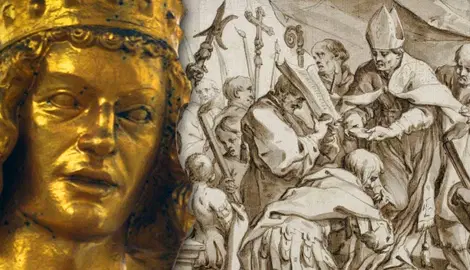
    In the tenth century, Central Europe was facing a state of political fragmentation and relentless conflict. This happened following the collapse of Charlemagne’s realm through the Treaty of Verdun in 843. Thus, the region split into warring territories. East Francia, the lands that would later form medieval Germany, was divided among powerful regional dukes who frequently clashed for supremacy. Amidst, a Saxon ruler emerged whose ambition, military prowess, and diplomatic intelligence changed a shattering kingdom into the Holy Roman Empire. He was Otto I! When King Henry I passed away in 936, he broke traditional Carolingian customs. He left the entire East Francian kingdom to a single heir: twenty-four-year-old son, Otto. Otto was crowned at Charlemagne’s ancient seat in Aachen. His reign began with a show of unity from the prominent dukes. However, that outward display of loyalty quickly dissolved into internal unrest. Otto’s early years on the throne were defined by bitter revolts. Rival nobles resented the monarchy’s growing authority. Otto’s own family members turned against him. His half-brother Thankmar and younger brother Henry repeatedly joined rebel factions. To tighten his grip on the realm, Otto appointed close relatives to head the kingdom’s core duchies. The names included Swabia, Bavaria, and Lotharingia. Yet this strategy proved double-edged. Familial rivalries simply migrated to the highest seats of power. The most dangerous challenge arose in 953 when Otto’s eldest son and heir, Liudolf, launched an open rebellion. Fearing that Otto’s second marriage to the Italian princess Adelheid would compromise his succession. Therefore, Liudolf rallied dissatisfied German lords and ousted royal loyalists across multiple regions. As civil war threatened to tear the kingdom apart, an external threat dramatically altered the course of history. In 954, nomadic Magyar raiders from the Eurasian steppes swept deep into East Francia. When rebel forces collaborated with the invaders, public sentiment shifted in Otto’s favor. The German nobility reconciled with their king rallied by a shared threat.  In August 955, Otto confronted the Magyar army at the Battle of Lechfeld near Augsburg. His victory was overwhelming and decisive. By crushing the invaders, Otto permanently ended nomadic incursions into Western Europe and solidified his reputation as the hero of Christendom. Internal rebellions vanished almost overnight. This victory gave Otto the absolute authority he needed to look southward toward Rome. Otto understood that true imperial legitimacy required papal endorsement. He had already secured the crown of Lombardy through his marriage to Adelheid. Otto now marched into Italy in 961 after Pope John XII requested military assistance against rival Italian lords. On February 2, 962, Pope John XII crowned Otto emperor in Rome. This occasion effectively birthed what historians consider the Holy Roman Empire. A dynamic entity had united German and Italian territories under a single imperial crown. Otto established firm oversight over papal elections. He negotiated a landmark diplomatic treaty with the Byzantine Empire, and secured his dynasty’s future before passing away in 973. Otto transformed a chaotic collection of duchies into a medieval superpower that shaped European history for centuries.  

Leave a Reply

Your email address will not be published. Required fields are marked *