poland condemns gaza
|

Poland condemns Gaza humanitarian crisis, calls for accountability over Israeli military actions

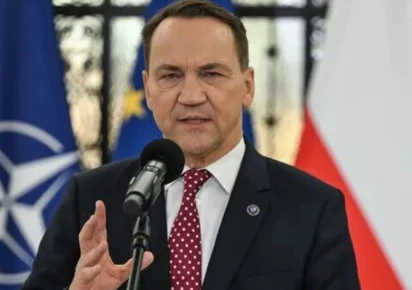
WARSAW: Polish Foreign Minister Radoslaw Sikorski has criticised the humanitarian situation in Gaza and the lack of accountability for what he described as the Israeli military’s “excessive use of force,” warning that such actions are weakening public support for Israel even in countries traditionally sympathetic to it.

Writing on X on Thursday, Sikorski said that genuine partnerships require mutual respect and suggested that the continuing humanitarian crisis in Gaza was having an impact on international public opinion.

“The humanitarian catastrophe in Gaza, as well as the failure of accountability for [Israel Defence Forces] IDF’s excessive use of force, are undermining public support in even pro-Israel nations,” Sikorski said.

His remarks came after Poland’s Foreign Ministry expressed strong disappointment over Israel’s decision to close proceedings into the April 1, 2024, attack on a World Central Kitchen humanitarian convoy in Gaza. The strike killed seven aid workers, including Polish national Damian Sobol.

The Polish ministry said the Israeli ambassador in Warsaw had been summoned after Polish authorities were informed on August 19 that the Israeli military had decided to discontinue the proceedings.

Warsaw said it remained dissatisfied with the measures taken so far to determine what happened during the attack. Polish authorities also called on Israel to provide all explanations and documents requested by Polish investigators.

The District Prosecutor’s Office in Przemyśl is conducting a separate investigation into the incident, according to the Polish Foreign Ministry.

Poland said the circumstances surrounding the deaths needed to be fully established and stressed that those responsible should not be allowed to avoid legal or moral accountability.

The ministry also said that the families of the victims deserved appropriate compensation and redress.

Poland’s criticism came shortly after the Israeli military acknowledged details surrounding another incident involving the death of a Palestinian child during the war in Gaza.

The case concerns five-year-old Hind Rajab, who was killed in January 2024 after Israeli forces opened fire on a vehicle carrying her and members of her family.

The Israeli military had previously denied that its troops were operating in the area where Hind was killed. However, following a months-long internal investigation, the military said it had determined that its forces had fired at the vehicle as it approached them.

According to reports, Hind remained trapped inside the vehicle for hours while several of her family members were killed. During that time, she reportedly contacted Palestinian emergency workers by telephone and pleaded for help.

An ambulance was dispatched to rescue her, but communications with both Hind and the emergency responders were subsequently lost.

Twelve days later, the bodies of Hind, her relatives and two ambulance workers were reportedly recovered from the area.

The Israeli military also said its investigation found that a shell was later fired at a Palestine Red Crescent ambulance that had been sent to assist Hind.

The incident became one of the most widely reported cases involving civilian deaths during Israel’s military campaign in Gaza. Rights organisations have repeatedly criticised the limited number of prosecutions and convictions resulting from Israeli military investigations into alleged violations.

The developments have intensified calls from Poland and other international actors for greater transparency, independent investigations and accountability over incidents involving civilian casualties and humanitarian workers.

Polish officials maintain that the circumstances surrounding the deaths of humanitarian workers and civilians must be thoroughly investigated and that families affected by such incidents should receive justice and appropriate redress.


Similar Posts

  • |

    Germany hunts terror suspect after Berlin pride cr…

    German authorities launched a national manhunt on Sunday for an individual suspected of ploughing a minivan into a crowd near a huge LGBTQ Pride gathering in Berlin, killing one person and injuring 29 others. The attack occurred in Tiergarten park near the Brandenburg Gate at approximately 10 pm, close to one of Europe’s largest annual LGBTQ celebrations, Christopher Street Day. The incident is the latest in a series of vehicle attacks on crowds in Germany that have intensified debate around security and immigration amid a surge in support for the far-right. Chancellor Friedrich Merz urged Germans to protect liberal values, stating: “We will defend the freedom, openness, and liberal spirit of our lives and our society with everything we can do.” It remains unclear whether the perpetrator acted alone, as police said more than one person may have exited the van. Berlin broadcaster RBB reported that an Iranian who had been a passenger in the vehicle had been arrested. The fire service confirmed that three of the injured were in a life-threatening condition. The attack comes at a sensitive time for Merz’s unpopular coalition government, which is undergoing a bruising cabinet reshuffle amid criticism of its effectiveness. The far-right Alternative for Germany party, campaigning on immigration and security, was quick to comment on the attack. AfD co-chief Tino Chrupalla said on X: “We will not allow religious extremists to divide our country with violence and intolerance!” Germany has experienced several vehicle attacks in recent years. In May, a man believed to have mental health problems drove into a pedestrian zone in Leipzig, killing two and injuring three. In 2016, a Tunisian failed asylum seeker hijacked a truck and drove it into a busy Christmas market, killing 11 people. At the Tiergarten park, people lit candles and left flowers in memory of the victim. The investigation is ongoing, with authorities working to determine the full circumstances of the attack. The incident has once again raised questions about security measures at public events and the broader challenges of preventing such acts of violence. The government faces increasing pressure to address these concerns while upholding the country’s commitment to openness and tolerance. As the manhunt continues, the nation mourns the loss of life and hopes for the recovery of those injured in this senseless act of violence. The coming days will be crucial in determining the motives behind the attack and ensuring that those responsible are brought to justice. The international community has expressed solidarity with Germany, offering support in the aftermath of the tragedy. The attack serves as a stark reminder of the ongoing threat of extremism and the need for continued vigilance to protect public safety.

  • |

    Japan launches cooling shirt with built-in fans

    Tokyo – Due to Japan’s intense summer heat, office wear is now being equipped with modern cooling technology. Japanese people have started wearing clothes with built-in air-conditioning systems. Japanese clothing manufacturer Yofuku no Aoyama has introduced a short-sleeved shirt fitted with two small fans that provide cool air to the wearer while they are on the move. According to media reports, the shirt looks like a simple and elegant office shirt but it actually contains an advanced cooling system. A fan is installed at the back of the shirt near the waist. When switched on, it circulates air inside the shirt and helps keep the body cool. Air-cooled clothing has become increasingly popular in Japan over the past few years. However, it has mainly been used by people working in construction, waste collection and event security. Such clothing is generally designed as jackets or vests and has traditionally been considered protective or workwear rather than office clothing. However, as summer temperatures continue to rise in Japan, demand for cooling clothing is increasing among ordinary citizens and office workers as well. Keeping this growing demand in mind, Yofuku no Aoyama developed the shirt in collaboration with FZN, a company specializing in fan-equipped clothing. The shirt comes with two fans and a rechargeable battery. According to the company, efforts have been made to keep the cooling system as lightweight as possible. According to the report, each of the two fans weighs 95 grams, while the rechargeable battery pack weighs 165 grams. Although the fans are visible when the shirt is viewed from the back, designers have tried to make them less noticeable from other angles so that the shirt remains suitable for an office environment. The company has not provided specific information about the noise level of the fans suggesting that they may not be completely silent. When is cooling shirt most useful? The shirt is considered more useful while travelling rather than during meetings. The company says its main purpose is not necessarily to operate the fans inside an office or during client meetings as such meetings are generally held in air-conditioned rooms. The real benefit of the shirt is for people who travel around the city from one meeting to another. While walking outside in extreme heat or using public transport, the fans can help keep the body cool. It may also reduce the need for employees to change sweat-soaked clothes and put on formal attire again after reaching their destination. What is price? The complete initial package of the Kuchou Wear Short-Sleeve Shirt is being sold for 17,490 Japanese yen. The package includes the shirt, two fans, a rechargeable battery pack and a charging cable. The shirt is available in blue and grey with medium, large and extra-large sizes offered. The product has already gone on sale at the company’s stores and online shop.

  • |

    Two firefighting helicopters collide as Greece battles wildfires near Athens

    Two firefighting helicopters collided mid-air west of Athens while tackling a major wildfire, killing a Greek and a Danish pilot aboard one of the aircraft. The two crew members on the second helicopter survived and were rescued, while the destroyed aircraft had been leased from Australia’s McDermott Aviation to support Greek operations. The tragic crash occurred as high winds whipped up severe blazes across the region, destroying more than 100 homes overnight in the coastal village of Porto Germeno. More than 500 firefighters remain deployed to combat the active flames despite extreme weather conditions hampering aerial firefighting efforts.

  • |

    US official insists Gaza peace plan remains active despite Netanyahu’s rejection

    A Board of Peace official confirmed on Monday that US President Donald Trump’s Gaza peace framework remains operative, despite public pushback from Israeli Prime Minister Benjamin Netanyahu. Netanyahu rejected any withdrawal of Israeli forces until the Palestinian militant group Hamas is genuinely disarmed. His remarks came as the Israeli military  halted offensive operations in Gaza following pressure from Washington. The Board of Peace official emphasized that the initiative relies on phased implementation and verification on the ground, ensuring Israel makes no irreversible security concessions prior to confirmed compliance. Under the plan announced last month, Israeli forces would withdraw as Hamas disarms, paving the way for an International Stabilisation Force to partner with a newly formed Palestinian police unit. Negotiation roadmaps are being coordinated between the Board of Peace and Hamas while bilateral discussions with Israeli leadership continue.

  • EU Charges TikTok over child safety failures under digital rules

    The European Commission has issued preliminary findings accusing TikTok of breaching the EU’s Digital Services Act over how it protects children online. Regulators say TikTok’s account settings fall short of DSA safety standards, letting children make their accounts public and potentially exposing them to cyberbullying or contact from predators. The charges mark the fourth set of allegations against TikTok in two years, brought under a law that requires major tech platforms to do more to tackle illegal and harmful content. This latest finding zeroes in specifically on minors’ account settings. The Commission’s concerns do not stop at public accounts. Even private accounts are not fully safe, regulators say, since children can still be easily located through other users’ “following” and “followers” lists, visible even to people without a TikTok account. Investigators found that teens aged 13 to 15 could switch from private to public with little friction, while accounts belonging to 16 and 17-year-olds stayed visible to anyone online by default. TikTok has pushed back on the findings. The company said teen accounts come with more than 50 preset privacy and safety features, shaped by outside experts from the moment an account is created. It added that under-18 accounts are private by default, and that TikTok is among the only platforms where younger teens can not use direct messaging or have their posts surface in others’ feeds. The Commission wants stricter defaults going forward. It believes TikTok should adjust settings so that minors’ content is visible only to users the minor has specifically approved, rather than being public by default. TikTok now has a chance to respond before any final decision is made. The findings are preliminary, giving the company an opportunity to answer the allegations before the Commission issues a final ruling. If confirmed, TikTok could face fines of up to 6% of its global annual turnover. EU tech chief Henna Virkkunen framed the case as part of a broader principle. She said the Digital Services Act requires platforms to build protections for minors directly into how their services are designed, and holds them accountable when they fail to do so. A high level of protection, she added, should not be something users opt into, it should simply be the default. This is not TikTok’s only regulatory headache in Brussels. The platform is also facing separate EU scrutiny over allegedly addictive design features like infinite scroll and autoplay.

  • | |

    Israel admits US jets used its bases for Iran strikes

    US and Iran tensions remain high despite a fragile ceasefire, with fresh concerns over regional security, drone attacks and the future of the Strait of Hormuz. Israeli Defence Minister Israel Katz said US aircraft had used Israeli airbases to launch strikes against Iran during the recent conflict. He said American aircraft had also used the facilities for refuelling operations before carrying out attacks. Iran, meanwhile, reported extensive damage to civilian infrastructure following the US strikes. Government spokesperson Fatemeh Mohajerani said Bushehr Airport had been severely damaged and was no longer operational. She said airports in Iranshahr, Semnan and Bandar Abbas were also affected. Mohajerani said the attacks damaged 12 bridges and two tunnels. She added that the main railway station in Bandar Abbas was among the affected infrastructure. Fishing boats, tourism businesses and other private property also suffered heavy losses. Iran also reported a significant reduction in its energy capacity. Mohajerani said the country lost around 230 million cubic metres of gas production capacity during the conflict. She also said about 350 government employees were killed during the war. The security situation around the Strait of Hormuz remains a major concern. Iranian Foreign Minister Abbas Araghchi held separate discussions with his Saudi and Omani counterparts about the waterway and wider regional developments. The officials stressed the importance of cooperation and diplomatic efforts to restore stability. Oman has reportedly proposed a regional mechanism to manage the Strait of Hormuz. The proposal would involve voluntary contributions from countries using the strategic waterway. The funds could support navigation, environmental protection and search-and-rescue operations. The plan has received backing from regional countries, according to a Gulf source. It would also prevent Iran from exercising exclusive control over the important shipping route. The Strait of Hormuz is vital to global energy markets. A significant share of the world’s oil and gas shipments passes through the waterway. Any prolonged disruption could therefore affect international energy supplies and shipping costs. The conflict has also increased tensions between Iran and neighbouring countries. Saudi Arabia said it intercepted drones targeting locations in the kingdom, including petroleum facilities. Riyadh said the drones were launched from Iraq by Iran-backed armed groups. Saudi Arabia’s claims have been rejected by an Iraqi resistance group. The group denied responsibility for attacks originating from Iraqi territory and accused Riyadh of making repeated allegations against Iraq. The Gulf Cooperation Council and Egypt condemned the reported drone attacks on Saudi Arabia. They described the incidents as a serious escalation and expressed support for Saudi Arabia’s security and sovereignty. Iran has also faced criticism over attacks involving its regional allies. A senior Yemeni official warned that the Houthis appeared to be following Iran’s approach to controlling strategic maritime routes after announcing a blockade targeting Saudi Arabia. Saudi Arabia has stepped up diplomatic contacts with regional and Western partners. Its foreign minister spoke with counterparts from Qatar, Kuwait and Britain about the security situation and efforts to contain the escalation. Russia has also commented on the widening conflict. Kremlin spokesperson Dmitry Peskov said Iran had the ability to defend its interests after a Ukrainian drone attack damaged an Iranian commercial vessel in the Caspian Sea. Peskov described the incident as another escalation and warned that the conflict could spread geographically. The Iranian vessel was reportedly carrying steel cargo when it came under attack. Despite the growing tensions, diplomatic efforts have continued. US President Donald Trump said Washington and Tehran were holding positive discussions and that a deal could still be reached. He warned, however, that US military action could resume if negotiations failed. Iran has denied reports that it formally requested negotiations with Washington. Its Foreign Ministry said messages were still being exchanged through mediators and that Tehran had not abandoned diplomacy. Jordan and the United Nations have also called for the US-Iran ceasefire to be respected. Jordanian Foreign Minister Ayman Safadi and UN Secretary-General António Guterres discussed efforts to restore calm and prevent further escalation.

Leave a Reply

Your email address will not be published. Required fields are marked *