poland condemns gaza
|

Poland condemns Gaza humanitarian crisis, calls for accountability over Israeli military actions

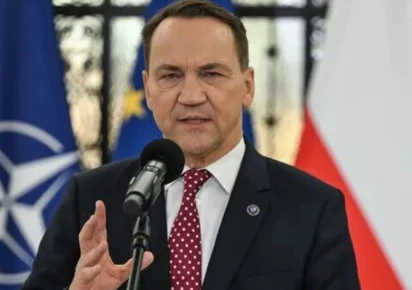
WARSAW: Polish Foreign Minister Radoslaw Sikorski has criticised the humanitarian situation in Gaza and the lack of accountability for what he described as the Israeli military’s “excessive use of force,” warning that such actions are weakening public support for Israel even in countries traditionally sympathetic to it.

Writing on X on Thursday, Sikorski said that genuine partnerships require mutual respect and suggested that the continuing humanitarian crisis in Gaza was having an impact on international public opinion.

“The humanitarian catastrophe in Gaza, as well as the failure of accountability for [Israel Defence Forces] IDF’s excessive use of force, are undermining public support in even pro-Israel nations,” Sikorski said.

His remarks came after Poland’s Foreign Ministry expressed strong disappointment over Israel’s decision to close proceedings into the April 1, 2024, attack on a World Central Kitchen humanitarian convoy in Gaza. The strike killed seven aid workers, including Polish national Damian Sobol.

The Polish ministry said the Israeli ambassador in Warsaw had been summoned after Polish authorities were informed on August 19 that the Israeli military had decided to discontinue the proceedings.

Warsaw said it remained dissatisfied with the measures taken so far to determine what happened during the attack. Polish authorities also called on Israel to provide all explanations and documents requested by Polish investigators.

The District Prosecutor’s Office in Przemyśl is conducting a separate investigation into the incident, according to the Polish Foreign Ministry.

Poland said the circumstances surrounding the deaths needed to be fully established and stressed that those responsible should not be allowed to avoid legal or moral accountability.

The ministry also said that the families of the victims deserved appropriate compensation and redress.

Poland’s criticism came shortly after the Israeli military acknowledged details surrounding another incident involving the death of a Palestinian child during the war in Gaza.

The case concerns five-year-old Hind Rajab, who was killed in January 2024 after Israeli forces opened fire on a vehicle carrying her and members of her family.

The Israeli military had previously denied that its troops were operating in the area where Hind was killed. However, following a months-long internal investigation, the military said it had determined that its forces had fired at the vehicle as it approached them.

According to reports, Hind remained trapped inside the vehicle for hours while several of her family members were killed. During that time, she reportedly contacted Palestinian emergency workers by telephone and pleaded for help.

An ambulance was dispatched to rescue her, but communications with both Hind and the emergency responders were subsequently lost.

Twelve days later, the bodies of Hind, her relatives and two ambulance workers were reportedly recovered from the area.

The Israeli military also said its investigation found that a shell was later fired at a Palestine Red Crescent ambulance that had been sent to assist Hind.

The incident became one of the most widely reported cases involving civilian deaths during Israel’s military campaign in Gaza. Rights organisations have repeatedly criticised the limited number of prosecutions and convictions resulting from Israeli military investigations into alleged violations.

The developments have intensified calls from Poland and other international actors for greater transparency, independent investigations and accountability over incidents involving civilian casualties and humanitarian workers.

Polish officials maintain that the circumstances surrounding the deaths of humanitarian workers and civilians must be thoroughly investigated and that families affected by such incidents should receive justice and appropriate redress.
Similar Posts

  • | | |

    Netanyahu reacts to Trump’s Saudi deal condi…

    Israeli Prime Minister Benjamin Netanyahu has described the potential inclusion of Saudi Arabia in the Abraham Accords as a “historic” step for the Middle East, following US President Donald Trump’s announcement that a proposed US-Saudi civilian nuclear agreement would depend on the Kingdom formally joining the normalization pact. According to Reuters, Netanyahu shared his reaction in a post on X, calling Saudi participation in the Abraham Accords a major breakthrough that could reshape the region’s future and strengthen peace and security across the Middle East. “Saudi Arabia joining the Abraham Accords would be a historic and tremendous development for peace and stability in the region,” Netanyahu said, without directly referring to the proposed civilian nuclear agreement between Washington and Riyadh. His remarks came shortly after President Trump revealed that the United States is prepared to move forward with a civilian nuclear cooperation agreement with Saudi Arabia—but only if the Kingdom officially becomes part of the Abraham Accords, the US-backed normalization framework that established diplomatic ties between Israel and several Arab nations. Trump’s condition has immediately placed renewed global attention on the long-discussed possibility of Saudi-Israeli normalization, an issue widely regarded as one of the most significant diplomatic challenges in the Middle East. While Netanyahu welcomed the idea of Saudi Arabia joining the agreement, he carefully avoided commenting on Trump’s specific proposal linking the nuclear deal to normalization. His statement instead focused on the broader regional benefits that such a move could bring. The Abraham Accords, first signed in 2020, normalized relations between Israel and countries including the United Arab Emirates, Bahrain, Morocco and Sudan. Saudi Arabia has repeatedly maintained that any formal normalization with Israel would depend on progress toward resolving the Palestinian issue, making the latest US proposal particularly significant. Analysts say Trump’s latest announcement could revive diplomatic negotiations that had slowed amid regional tensions and the ongoing conflict in Gaza. However, they also caution that Riyadh’s position remains closely tied to broader political and security considerations. Whether the proposed civilian nuclear agreement can pave the way for Saudi Arabia’s entry into the Abraham Accords remains uncertain. Still, Netanyahu’s swift endorsement highlights Israel’s strong interest in expanding the landmark agreement and bringing the region’s largest Arab economy into the normalization framework, a move that could significantly alter the Middle East’s diplomatic landscape.

  • | |

    Cockroach’ protests end in stunning victory

    India’s Education Minister Dharmendra Pradhan resigned on Saturday after days of youth-led protests over alleged irregularities in major entrance examinations. The resignation came as thousands of young people gathered in New Delhi and other parts of the country under the banner of the Cockroach Janta Party (CJP). The protesters had demanded Pradhan’s removal and major reforms to the country’s examination system. They also raised wider concerns about unemployment and limited opportunities for young people. Pradhan confirmed that he had submitted his resignation to Prime Minister Narendra Modi. In a statement, he said he was deeply concerned about the events of the previous 10 days. He said the decision was not about personal prestige. He added that India’s youth were an important strength of the country and said efforts were needed to prevent young people from becoming trapped in uncertainty. The announcement immediately triggered celebrations at the main protest site at Jantar Mantar in New Delhi. CJP founder Abhijeet Dipke told the cheering crowd, “We have done it.” Hundreds of protesters responded with loud applause and celebrations. The CJP later announced that its demands had been accepted following talks with the government. It said the protests would therefore be called off. The movement had focused on alleged irregularities in examinations, including concerns over the National Eligibility cum Entrance Test (NEET). Protesters demanded greater transparency and accountability in the examination system. They also called for compensation for people affected by examination irregularities. Another demand was the withdrawal of legal cases against protesters. The government held two rounds of talks with CJP representatives during the week. However, the discussions initially failed to produce an agreement. Pradhan submitted his resignation before a third round of talks was scheduled. The protests also faced a strong response from police. Authorities used tear gas and batons when demonstrators attempted to march from Jantar Mantar towards Parliament. The campaign gradually expanded beyond examination issues. Protesters also highlighted unemployment, lack of opportunities for young people and broader concerns about governance. The demonstrations became one of the most significant challenges to Prime Minister Narendra Modi’s government since his re-election in 2024. India’s opposition leader Rahul Gandhi also backed the protesters. He described Pradhan’s resignation as a major development and urged Modi to apologise to students and address their concerns. Gandhi also called for action against those accused of violence against students during the demonstrations. The resignation brought an emotional response from protesters. One 27-year-old participant who visited the protest site for the first time on Saturday described the atmosphere as highly charged, particularly after the minister’s resignation.

  • |

    China’s internet obsessed with Moonshot&#82…

    The release of Moonshot AI’s Kimi K3 has generated significant buzz across Chinese social media, sparking a vigorous debate about China’s emergence as a strong contender in the global AI race. The Chinese startup launched the open-weight model on Thursday, promoting its capability to align with dominant frameworks from OpenAI and Anthropic at discounted rates, while temporarily halting new subscriptions due to overwhelming demand. Kimi K3 has become the most prominent Chinese AI model to spark discussion about China’s position in the global AI landscape. The key question is how China will meet the rising demand for computing power, with Moonshot AI emphasizing that Kimi K3 converts computing power into AI capabilities more effectively than its predecessor. “Put simply, the more capable AI becomes, the greater its appetite for computing power. This race to build more powerful AI hardware isn’t slowing down anytime soon,” said a user from Shandong province. Another user from Jiangsu added: “Competition among AI software is likely to shift from focusing purely on performance to balancing both performance and token usage. In other words, it’ll become a competition over value for money. It doesn’t matter how powerful your model is if it uses too many tokens. And it doesn’t matter how good it is if the monthly subscription is too expensive.” The model has reportedly matched or outperformed GPT and Claude on some benchmarks, according to social media posts. The low-cost open-source nature of Kimi K3 has made it particularly appealing to developers and researchers, who have been eager to test its capabilities. The temporary halt on new subscriptions highlights the immense demand for the model, which has quickly become a viral sensation in China’s tech community. Moonshot AI’s launch of Kimi K3 reflects the growing competition in the AI sector, particularly between China and the US. Chinese companies are increasingly developing AI models that can compete with their American counterparts, often at lower costs. The success of Kimi K3 has fueled optimism about China’s ability to innovate in AI and has raised questions about the future of the global AI industry. As the demand for AI capabilities continues to grow, the competition between open-weight and proprietary models is likely to intensify. Kimi K3’s success suggests that open-weight models can be competitive, offering a viable alternative to proprietary systems from US companies. However, the debate over performance versus cost-effectiveness will continue to shape the direction of AI development. The viral success of Kimi K3 has put Moonshot AI in the spotlight, with many watching to see how the startup will navigate the challenges of scaling its operations to meet demand. The company’s ability to balance performance, cost, and accessibility will determine its long-term success in the competitive AI market. For now, Kimi K3 has captured the imagination of China’s internet users, signaling a new chapter in the global AI race.

  • | | |

    Salman Khan house security guard dies suddenly dur…

    A Mumbai police constable posted outside Bollywood superstar Salman Khan’s residence has died after reportedly falling ill while on security duty. The officer, identified as Constable Ganesh Raite, was part of the Mumbai Police team deployed outside Salman Khan’s Galaxy Apartments in Mumbai. According to Indian media reports, the constable complained of feeling unwell at around 6pm on Friday while carrying out his duty. His colleagues reportedly arranged for him to be taken to a hospital shortly afterward. However, doctors declared him dead after he was brought to the medical facility. Police officials have indicated that the constable may have suffered a heart attack while on duty. However, the exact cause of death has not yet been officially established. His body has been sent for a post-mortem examination, and the medical report is expected to provide further details. The incident occurred as Salman Khan continues to remain under heightened security because of threats against him. The actor’s security was upgraded to the Y-Plus category in 2024 following the killing of his close friend and former Maharashtra minister Baba Siddique. Salman has faced repeated threats reportedly linked to the Lawrence Bishnoi gang, with tensions surrounding a long-running blackbuck poaching case involving the actor. Security around Salman Khan’s residence has also been tightened following previous incidents. In April 2024, two motorcycle-borne individuals reportedly fired several rounds outside Galaxy Apartments. Investigators later linked the shooting incident to people associated with the Lawrence Bishnoi network. The latest death occurred while police personnel were continuing their security duties outside the actor’s Mumbai residence. The sudden death of Constable Ganesh Raite has raised attention because of the demanding security arrangements surrounding Salman Khan, who remains one of Bollywood’s most prominent and closely protected celebrities. Authorities are expected to establish the precise medical cause of death after the post-mortem examination. Until the medical findings are released, reports of a heart attack remain an initial assessment rather than a confirmed cause. The incident is also a reminder of the risks faced by police personnel assigned to high-profile security duties, where officers are required to maintain prolonged vigilance around protected individuals and their residences. Further details about the constable’s medical history and the circumstances surrounding his final moments are expected to emerge as the investigation and medical examination continue.

  • |

    Myanmar offensive clears path for Russia-backed po…

    DAWEI, Myanmar: Myanmar’s military has deployed hundreds of troops into the country’s southern Tanintharyi region in an offensive aimed at clearing areas earmarked for a Russia-backed special economic zone, according to resistance fighters and a local activist familiar with developments in the area. The campaign around the Dawei Special Economic Zone (SEZ), which includes plans for a deep-sea port and power plant on the Andaman Sea, represents one of the clearest signs yet that Myanmar’s military-backed government is prepared to use force to revive a long-delayed project seen as a potential alternative trade route to the Strait of Malacca. The offensive also comes as Myanmar’s leadership intensifies diplomatic efforts to attract foreign investment. Junta chief-turned-President Min Aung Hlaing promoted the Dawei project during a recent visit to Thailand and discussed its prospects again this week during talks with Russian President Vladimir Putin in Moscow. Villages Caught in Military Push Since July, hundreds of soldiers have reportedly moved into Tanintharyi, a region bordering Thailand where the Dawei project is located. Their advance has triggered repeated clashes with local resistance groups, according to two sources. “The military is advancing its columns and conducting area-clearance operations. Some villages and homes have been burned down,” Saw Dah Ko of the Tanintharyi Region People’s Defence Force told Reuters. A second resistance fighter, operating with the Dawei District No.1 battalion under the shadow National Unity Government, said troops had burned homes in at least three villages and killed three aid workers helping displaced communities. The civil society group MAGGA Initiative said the three aid workers were detained and killed after encountering a military column in Yebyu Township on July 9. Reuters was unable to independently verify the accounts. Myanmar’s government and Russia’s embassy in Myanmar did not respond to requests for comment. Conflict monitor ACLED said the offensive had involved a column of about 700 soldiers advancing into surrounding areas, with raids on villages and reports of civilian deaths. The military’s campaign has reportedly been supported by air and naval attacks, according to local sources, putting pressure on loosely organised resistance groups. “They enter the region, and once reinforced by the navy, they launch offensives into the villages situated within the deep sea port project area,” said Min Lwin Oo of the Democracy Movement Strike Committee. A Strategic Project The push around Dawei is part of the military’s wider effort to regain territory and strategic border areas lost to opposition groups following the 2021 coup that plunged Myanmar into civil war. The conflict has killed an estimated 100,000 people and displaced more than 3.5 million, according to humanitarian and conflict assessments. The military-backed government has sought to strengthen its control while pursuing projects that could bring investment and strategic partnerships. The Dawei SEZ is among the most ambitious. Originally launched in 2008 as a joint venture with Thailand, the project was intended to create a major industrial and transport hub linking Southeast Asia with markets in East and West Asia. However, construction stalled in 2013 amid local opposition and funding difficulties. In early 2021, shortly before the military takeover, authorities moved to terminate agreements covering nine projects in the initial construction phase and said they would seek new partners. Russia has now emerged as a key potential supporter. Russia Sees Gateway to Asia At a business forum in Moscow this week, Tanintharyi Chief Minister Zaw Naing Oo promoted Dawei as a faster route for regional trade. State media quoted him as saying cargo could reach its destinations four to six days faster through Dawei than by travelling through the Strait of Malacca. The proposed port is also around 45 kilometres from Myanmar’s major offshore gas fields, adding to its strategic appeal. Russian Prime Minister Mikhail Mishustin said Russian companies were interested in working with the Dawei SEZ, potentially expanding trade and creating employment opportunities for small and medium-sized businesses. For Moscow, the project could offer more than commercial returns. A person familiar with Russian thinking said the port could provide Russia with greater access to Southeast Asian markets and a foothold in the Indian Ocean region. But the source cautioned that Myanmar remains a high-risk investment destination. “The risk in Myanmar is still very high,” the source said, adding that Russian investment would need strong connectivity with Thailand for the project to make economic sense. A Project With High Stakes The Dawei development could reshape trade routes across the region if it is successfully revived. Its location on the Andaman Sea offers a potential route that could reduce reliance on the heavily used Strait of Malacca. For Myanmar’s military leadership, restoring control over the surrounding territory is therefore closely linked to its ambitions for the project. For local communities, however, the military advance has brought renewed fear and displacement. The fate of Dawei now rests on a difficult balance between geopolitics, investment and security — with the proposed port’s future increasingly tied to the outcome of Myanmar’s continuing civil war.

  • |

    Morocco commits to repatriating unaccompanied minors following mass migration into Ceuta

    The Moroccan government has announced its willingness to collaborate with Spain and European authorities to identify and repatriate unaccompanied minors who crossed into the Spanish North African enclave of Ceuta during a recent surge in border crossings. According to state news agency MAP, King Mohammed VI directed the interior and foreign affairs ministries to coordinate the identification and safe return of the young migrants to their families in Morocco. The official statement follows diplomatic discussions aimed at addressing the logistical and legal challenges surrounding under-age migrants, who cannot be immediately turned back under standard border control agreements. The initiative comes in the wake of a massive border influx that saw tens of thousands of individuals attempt to enter European territory on foot and by sea. Spanish officials estimated that 72,000 migrants crossed the border during the height of the crisis, while Moroccan estimates placed the figure closer to 40,000. Although the vast majority of adult migrants have since returned or been repatriated to Morocco, local authorities in Ceuta report that at least 1,100 unaccompanied minors remain in government reception facilities. The diplomatic agreement marks a pivotal step toward relieving pressure on regional welfare services in Ceuta while establishing formal bilateral protocols between Rabat and Madrid to ensure child protection standards are met during repatriation procedures.

Leave a Reply

Your email address will not be published. Required fields are marked *