prepares restore diplomatic
|

US prepares to restore diplomatic staff at middle East embassies following Iran war


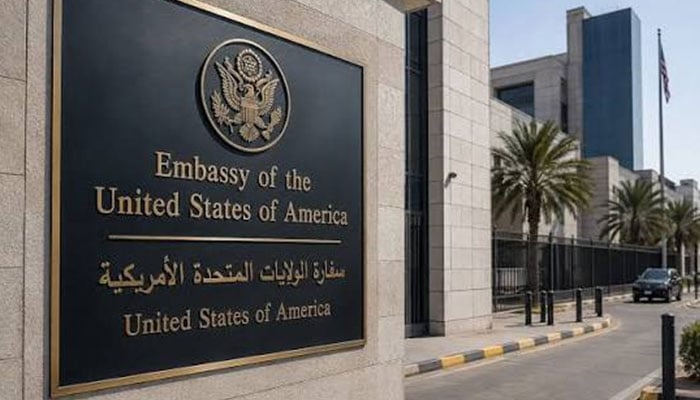
WASHINGTON: The United States has begun preparations to return diplomatic personnel to several embassies across the Middle East that were previously evacuated amid concerns over the conflict with Iran.

According to a report, an internal document from the US State Department indicates that the process of bringing American diplomats back to the region and scaling down emergency security measures could begin as early as this week.

The development is being viewed as a possible indication that the administration of US President Donald Trump does not currently expect a full-scale war with Iran to resume. The planned return of diplomatic personnel suggests Washington may be assessing the security situation as sufficiently stable to gradually restore normal diplomatic operations.

The internal document reportedly outlines plans to increase staffing levels at several US diplomatic missions across the region. These include American embassies in Israel, Lebanon, Saudi Arabia, Qatar, Jordan, Oman, Iraq and Kuwait.

The planned changes would mark a gradual shift from the emergency measures implemented by the US government after the conflict began. American diplomatic missions had faced heightened security concerns as tensions between Iran, Israel and the United States escalated.

Following the outbreak of the war in February, the US State Department ordered the evacuation of personnel from several diplomatic missions in the Middle East. The measures were introduced as a precaution amid concerns that the conflict could expand and expose American diplomats and other personnel to increased risks.

The decision to begin reversing some of those measures indicates that Washington may now have greater confidence in the security environment. However, the reported plans do not necessarily mean that all emergency precautions will immediately be removed or that diplomatic operations will return to their previous levels overnight.

Instead, the process is expected to take place gradually, with staffing levels and security arrangements adjusted according to conditions in individual countries.

The Middle East remains a strategically important region for the United States, with Washington maintaining diplomatic missions across countries that play significant roles in regional politics, energy supplies and security affairs. US embassies also provide important channels for communication with governments and local authorities.

The possible return of diplomats comes at a time when Washington continues to closely monitor developments involving Iran and its regional relationships. Any renewed escalation could potentially affect American diplomatic personnel and military interests in the region.

The State Department’s reported internal plans therefore suggest an attempt to balance diplomatic needs with security considerations. Returning personnel would allow American missions to resume broader diplomatic activities while maintaining measures designed to protect staff.

The report did not indicate that the United States considers the broader security situation completely resolved. Rather, the planned reduction in emergency measures appears to reflect a reassessment of the immediate threat following the conflict.

The move could also have wider diplomatic implications. Restoring normal staffing levels at embassies may enable Washington to strengthen engagement with regional governments and improve coordination on political and security matters.

For now, the process is expected to depend on developments on the ground. Any significant escalation between the United States, Israel and Iran could lead Washington to reconsider the planned deployment of diplomats and reinstate stricter security measures.

The reported preparations nevertheless represent a notable shift from the evacuation measures introduced after the outbreak of the conflict in February.

Similar Posts

  • |

    US judge dismisses bribery and fraud case against Gautam Adani despite procedural concerns

    A US federal judge has formally dismissed criminal bribery and fraud charges against Indian billionaire Gautam Adani, bringing an end to a high-profile prosecution while issuing a sharp rebuke over how the Department of Justice handled the case. US District Judge Nicholas Garaufis approved the Justice Department’s request to drop all charges with prejudice, permanently barring prosecutors from refiling the case. The decision closes an investigation launched in 2024 that accused Adani and senior executives of paying over $250 million in bribes to Indian officials to secure solar energy contracts while misleading American investors. In a 47-page order, Judge Garaufis voiced deep concern over procedural irregularities, noting that senior Justice Department official R. Trent McCotter negotiated the dismissal directly with Adani’s defence team without consulting the FBI agents and career prosecutors handling the investigation. The judge also scrutinized whether Adani’s public pledge to invest $10 billion in the United States and create 15,000 jobs influenced the outcome. While Garaufis ultimately concluded the investment promise did not legally dictate the government’s decision, he warned that the unusual handling of the case raised troubling questions about public perception of equal justice. The dismissal follows efforts by Adani’s legal team, led by prominent attorney Robert J. Giuffra Jr., who argued that much of the alleged conduct occurred outside US jurisdiction and no longer aligned with federal enforcement priorities. Adani, who maintained his innocence throughout the proceedings, welcomed the ruling in a statement, expressing deep respect for the judicial process.

  • | |

    Afghanistan exports Black Dimension Stone to US

    Afghanistan has exported a shipment of its natural Black Dimension Stone to the United States for the first time, marking a significant step for the country’s mining and export sector. According to Afghan media reports, the shipment is valued at around $100,000. The export is being viewed as an important milestone in Afghanistan’s efforts to expand its presence in international mineral markets. The shipment was arranged by a private Afghan company. However, officials have not disclosed the name of the exporting company or the identity of the American buyer. The exported stone was extracted from a mine located in the Zindajan district of Herat province, an area known for its mineral resources. Zindajan lies approximately 40 kilometres west of Herat city, close to the border with Iran. Natural Black Dimension Stone is widely used in the construction and architectural industries for flooring, wall cladding, monuments and decorative projects because of its durability and polished appearance. The latest export highlights Afghanistan’s growing interest in developing its mining sector, which is considered one of the country’s most valuable economic resources. The country possesses significant deposits of marble, gemstones, precious metals and other industrial minerals that have the potential to boost exports and generate foreign exchange. Officials hope that increased international demand for Afghan minerals will encourage further investment in the mining industry and create new economic opportunities

  • |

    North Korea issues fresh warning to US allies

    PYONGYANG: North Korea has accused the United States, Japan and South Korea of creating a new security crisis in the Asia-Pacific, claiming their expanding military cooperation is increasing regional tensions and threatening stability. In a commentary published by the state-run Korean Central News Agency (KCNA), a military commentator alleged that the three allies are strengthening their joint combat capabilities through large-scale military exercises and closer defence coordination. The statement specifically criticized the recently concluded Rim of the Pacific (RIMPAC) naval exercise, describing it as a rehearsal for military aggression rather than a routine multinational drill. According to North Korean officials, the exercise involved more than 30,000 personnel, over 30 warships, five submarines and nearly 190 aircraft. Pyongyang claimed the United States is attempting to strengthen its military influence across the Asia-Pacific with the support of Japan and South Korea. It also objected to recent US-South Korea air force and logistics exercises, plans to expand American military command structures in Japan and the deployment of advanced US missile systems in the region. North Korea warned that it would respond to what it described as growing military threats by further strengthening its own deterrence capabilities. Officials said any increase in external pressure would be met with corresponding defensive measures. Separately, North Korea’s Foreign Ministry rejected recent accusations by the United States and its allies that Pyongyang poses a growing cyber threat. The ministry dismissed the allegations as politically motivated and without evidence. A foreign ministry spokesperson argued that the United States has been expanding military activities in cyberspace through cyber commands, joint cyber exercises and the use of artificial intelligence in defence operations. The spokesperson claimed Washington, rather than Pyongyang, was contributing to rising tensions in the cyber domain. North Korea reaffirmed that it would continue taking measures to safeguard its national security and protect its development interests against what it described as increasing pressure from Western countries.

  • |

    Saudi Arabia unveils plans for Multinational Marit…

    Saudi Arabia and 13 other countries, including Pakistan, on Thursday announced the creation of a multinational maritime defence coalition aimed at safeguarding freedom of navigation, international trade and energy supply routes in the Bab al-Mandab Strait, the Red Sea and the Gulf of Aden. The Saudi defence ministry said representatives from 43 countries and the European Union attended an international meeting that discussed the proposed coalition, with Saudi Arabia serving as its founding and leading state and hosting its headquarters. The ministry said the coalition would strengthen maritime security, safeguard freedom of navigation, secure international trade routes and energy supply lines, and protect shared maritime interests in the strategic waterways. Fourteen countries, including Turkey, Pakistan, Egypt, Sudan and Djibouti, issued a joint statement supporting the proposed coalition. Among the six Gulf Arab states, Oman and the United Arab Emirates were not listed among the countries backing the statement. The founding states said participation in the coalition’s activities would remain a sovereign decision for each member state, stressing that the alliance is “purely defensive in nature, does not target any state, alliance or international organization, and will conduct all its activities in full compliance with international law while respecting state sovereignty and protecting freedom of navigation.” The joint statement said the coalition was established as a “framework for maritime defence cooperation” aimed at enhancing maritime security, protecting freedom of navigation, securing international trade and energy supply routes, and safeguarding interests in the Bab al-Mandab Strait, the Red Sea and the Gulf of Aden. The announcement comes amid heightened tensions in the Red Sea, where Yemen’s Houthi rebels have launched a series of attacks on Saudi-linked shipping. Saudi Arabia has responded with air strikes on what it said were Houthi military facilities in Yemen’s Hodeidah used to threaten commercial shipping. The Red Sea tensions mark the latest front in the wider Iran war, with attacks on shipping spreading beyond the Gulf and pushing oil prices higher. The Bab el-Mandeb Strait, linking the southern Red Sea with the Gulf of Aden and the Indian Ocean, is a key maritime chokepoint for global trade and energy shipments. The European Union launched a naval mission in the Red Sea in 2024 to help restore and safeguard freedom of navigation after the Houthis disrupted maritime traffic by attacking vessels in what they said was solidarity with Palestinians during the Gaza war. The new Saudi-led coalition represents a significant expansion of international efforts to secure the region’s vital waterways.

  • |

    Seven killed in Argentina helicopter crash

    Seven emergency personnel were killed after a firefighting helicopter crashed in Argentina’s western San Juan province while responding to a forest fire, authorities said. The Bell 412 helicopter had been deployed for wildfire response operations and was travelling to neighbouring La Rioja province to assist in controlling a major forest fire when the accident occurred. Officials said the aircraft lost contact with its base shortly after take-off on Wednesday morning, prompting an emergency response. San Juan Governor Marcelo Orrego confirmed that all seven people on board lost their lives in the crash. The victims included members of the civil protection department, firefighters and senior police officials who were involved in emergency response operations. The governor expressed deep sorrow over the tragedy and extended condolences to the families of those who died while serving in the line of duty. Emergency teams were dispatched to the crash site, while authorities secured the area and began recovery operations. Officials have launched an investigation to determine what caused the helicopter to crash. No official findings have yet been released. The Bell 412 helicopter was part of the province’s aerial firefighting fleet and was regularly used to support operations against wildfires in the region. The incident has shocked emergency services across Argentina, with tributes pouring in for the personnel who lost their lives during the mission.

  • | | |

    Iran’s Revolutionary Guards claim Trump suffered…

    TEHRAN: Iran’s Islamic Revolutionary Guard Corps (IRGC) has claimed that international media outlets are increasingly portraying US President Donald Trump as having suffered a defeat in the conflict with Iran. In a statement, the IRGC said reports from various parts of the world were highlighting what it described as the failure of the United States to achieve its objectives against Iran. The Guards further claimed that the war had placed the Trump administration in a situation of its own making, with international coverage allegedly pointing to Washington’s difficulties in achieving its declared goals. According to the IRGC, recent agreements between the parties should not be viewed simply as diplomatic arrangements but as evidence of what it described as an American retreat in the face of Iran’s military capabilities and negotiating position. The Iranian force also maintained that the United States and Israel had failed to accomplish their stated objectives despite extensive military operations and accompanying media campaigns. The IRGC characterized the latest agreements as reflecting Iran’s ability to withstand military pressure and secure a stronger position at the negotiating table.

Leave a Reply

Your email address will not be published. Required fields are marked *