nepal china resume
| |

Nepal and China resume flood rescue after lake threat eases, death toll tops 500

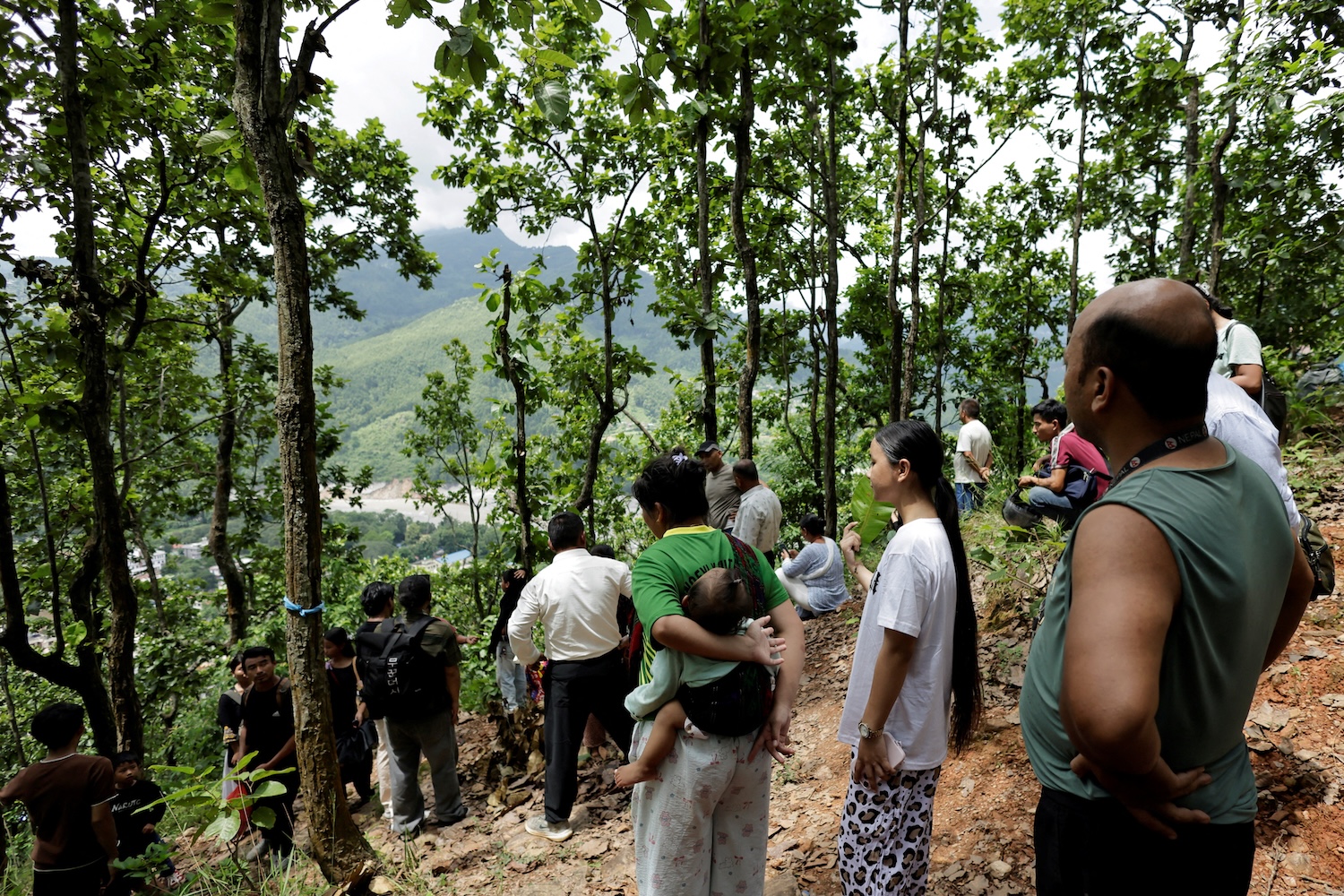
NUWAKOT, Nepal – Nepal and China resumed rescue operations that had been suspended briefly in the flood-hit Himalayas on Friday, August 28, after risks from an overflowing lake were found to be manageable, easing fears of fresh devastation.

The catastrophic flood on Wednesday, August 26, caused by a glacier collapse killed 547 people in Nepal and five in China’s Tibet, with almost 1,000 more missing in the two countries.
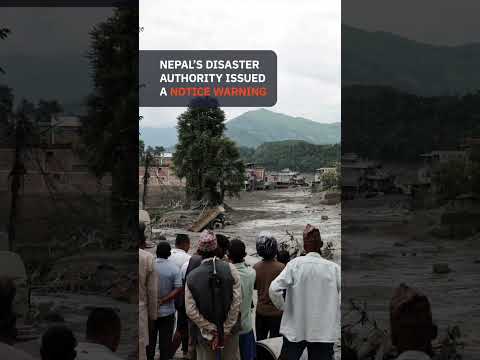

Nepal and China resume flood rescue after lake threat eases, death toll tops 500

A huge torrent of rock, ice, mud and debris cascaded through Himalayan mountain river systems after the collapse, and also led to the formation of a lake where water continued to collect and rise.

Overflow sparks fresh panic

On Friday, the lake’s reservoir had topped 2.5 million cubic meters (90 million cubic feet) of water, up from the estimated 1.5-2 million cubic meters (50-70 million cubic feet) recorded a day earlier, before overflowing into the Lhende Khola river and then into the Trishuli, authorities and witnesses in Nepal said.

The overflow sparked panic and warnings from authorities in Nepal, leading to rescue operations being suspended for about three hours. The risk of the lake bursting had prompted all Chinese rescue personnel and vehicles to withdraw on the Chinese side as well and stand by in a safe area, state broadcaster CCTV said.

Both resumed rescue operations after the threat eased.

“By noon, as the risk posed by the upstream dammed lake was deemed manageable, rescue operations for the Gyirong mudslide disaster quickly resumed and were stepped up,” Chinese state broadcaster CCTV said.

Nepal’s army spokesperson Raja Ram Basnet told Reuters that rescue operations had been temporarily halted after the flood alert, but it was found that the rise in the water level was only by about 2 feet (0.6 m).

Wednesday’s flood ripped through villages and valleys, destroying power stations, roads and bridges along a route that links Kathmandu with Lhasa in Tibet and is popular with trekkers and pilgrims. Of those missing, at least 540 are foreigners, many of them Hindu pilgrims from India headed to the holy Mount Kailash and Lake Mansarovar in Tibet.

More than 90,000 people are estimated to be affected, the Red Cross said, adding that trucks with relief supplies were blocked after the barrier lake broke its banks.

China calls for stronger monitoring of glacier lakes

In Beijing, China’s Politburo met on Friday to direct rescue work, state media reported.

Authorities must “scientifically formulate search-and-rescue plans, make every effort to search for missing people from China and abroad,” the meeting chaired by President Xi Jinping said, according to state news agency Xinhua.

The meeting called for stronger monitoring of glacier lakes, landslide risks and barrier lakes, emergency aid to affected areas in Nepal, and closer international disaster cooperation.

China’s Premier Li Qiang, the country’s No. 2 official, arrived in the disaster-stricken area of Gyirong on Thursday afternoon, August 27, state-run Xinhua news agency said. The visit suggested Beijing was treating the disaster as a matter of the highest national priority.

Chinese rescuers had yet to reach the worst-hit site on the Chinese side of the border, the Gyirong border crossing, by Thursday evening, state media reports indicated, as crews worked to clear debris from the key access road leading to the area.

Dramatic footage on Wednesday showed enormous torrents of muddy water and debris tearing through structures in the border crossing area within seconds and engulfing people trying to flee.

The tally of missing in Tibet’s Gyirong County was 558, Chinese state broadcaster CCTV said on Thursday, including 260 foreign nationals. So far, just five people have been confirmed dead on the Chinese side.

‘All of our people are gone’

Earlier, Nepalese rescue teams used helicopters to search for survivors and drop emergency supplies to thousands cut off in towns and valleys, while emergency services – some using sniffer dogs – recovered dozens of bodies swept down into the plains.

Dibga Tamang was among the last people rescued from Rasuwa on Thursday, airlifted along with three others to an army camp in Nuwakot.

“All of our people have gone. They are dead,” Tamang said. “I have no one left waiting for me. Everything and everyone is gone. The end.”

A large number of people arrived at an army base in the area seeking information about missing and dead family members. Bodies were brought into the barracks and lists of rescued people were posted outside to help families find information.

Buildings ‘wiped out like toothpicks’

Around the world, relatives of those missing were desperate for information about their whereabouts.

Sneha Sudhir was one of 10 women whose husbands had set out from Nepal on a trek to Tibet’s Mount Kailash when the region was struck by disaster.

The men, all from northern Virginia, are among dozens of Americans missing.

“Where are they?” Sudhir said tearfully from her home in Chantilly, Virginia, on Thursday.

Sudhir said the women were supporting each other and reaching out to officials, politicians and friends and family in the United States and India, hoping for word.

“Everybody is taking turns in shedding their tears, wiping it off and getting back to work,” she said.

President Donald Trump said the US had offered support to Nepal.

“Nobody’s ever seen anything quite like that, where very powerful, strong, well-built buildings were wiped out like they were toothpicks. It’s a terrible thing. We are sending aid, and we’ve spoken to the leadership, and we let them know anything they want, they’ll have.”

Nepal declines foreign rescue help

While offers of assistance are pouring in, Nepal said it does not need help from other nations in search and rescue missions.

A South Korean rapid response team is already in Kathmandu but has not been deployed because the Nepali government does not have a plan to accept foreign rescue yet, according to the foreign ministry in Seoul.

The Kathmandu Post reported that India, China, the United States, Britain, Japan, South Korea, Sri Lanka and Bangladesh had asked the government to allow their search-and-rescue teams to assist in the operation. – Rappler.com

Similar Posts

  • |

    King Charles pays tribute to former British soldier killed on Broad Peak

    King Charles III has expressed grief over the death of former British soldier and renowned mountaineer Nirmal Purja, who was killed in an avalanche on Broad Peak in northern Pakistan. According to international media reports, the British monarch paid tribute to Purja’s life and achievements. He said the former soldier had rendered distinguished service in the British Army before becoming one of the world’s most respected high-altitude climbers. King Charles praised Purja for his dedication, courage and outstanding achievements in mountaineering. He acknowledged that Purja earned global recognition after completing several challenging climbing expeditions and inspiring climbers around the world. The monarch said Purja’s contribution extended beyond mountaineering, noting that he had first built an impressive military career before gaining international fame through his record-breaking achievements in the world’s highest mountain ranges. Meanwhile, rescue teams in Pakistan continue recovery operations following the deadly avalanche on Broad Peak. Authorities have confirmed that the bodies of eight climbers who lost their lives in the incident have been recovered. Search and rescue teams are still looking for two missing mountaineers. The operation remains difficult because of harsh weather conditions, deep snow and the challenging terrain of one of the world’s highest peaks. Emergency personnel have continued the mission despite the risks, using all available resources to locate the remaining missing climbers. Officials said the operation will continue until all those affected by the tragedy are accounted for. The avalanche has shocked the international mountaineering community and prompted tributes from climbers, officials and supporters around the world. Many have remembered Nirmal Purja for his remarkable achievements, leadership and commitment to pushing the limits of high-altitude climbing. Broad Peak, located in Pakistan’s Karakoram mountain range, is among the world’s highest mountains and is considered one of the most demanding peaks for climbers because of its extreme weather and difficult climbing conditions.

  • |

    What was their crime? 120 children killed in school strike

    A devastating missile strike on a primary school in the southern Iranian city of Minab has claimed the lives of 156 people, including 120 children, making it one of the deadliest civilian incidents of the recent conflict involving Iran. The attack took place on February 28 during the opening hours of the military confrontation. The school was operating normally when explosions struck the area, causing large sections of the building to collapse and trapping students and teachers beneath the rubble. According to survivors, children had gathered inside the school for morning prayers because it was the holy month of Ramadan. Shortly after classes began, school authorities decided to dismiss students as reports of nearby explosions emerged. Before many children could leave the premises, another powerful strike directly hit the school building. Teachers who survived the attack described scenes of panic and destruction. They said the explosion threw students and staff across classrooms while thick smoke quickly filled the building, making it difficult to breathe or see. Parts of the school collapsed within seconds, leaving many children trapped. Emergency rescue teams rushed to the scene soon after the explosions. Rescue workers spent hours searching through damaged classrooms and collapsed concrete in an attempt to find survivors. However, many victims had already lost their lives before rescuers arrived. Officials involved in the rescue operation said the destruction was so severe that several victims could only be identified through clothing, shoes, or personal belongings. Families gathered outside the school in desperate search of their children as rescue efforts continued. The tragedy has left the entire community in mourning. Parents and relatives continue visiting the cemetery where many of the students and teachers have been buried. Families say they are still struggling to cope with the loss of children who had simply gone to school for their education. The school was located next to a compound associated with Iran’s Islamic Revolutionary Guard Corps (IRGC). Satellite images and independent analysis indicate that military facilities in the neighbouring compound were also struck during the attack. Reports citing officials familiar with the investigation suggest the strike may have resulted from outdated intelligence that mistakenly identified the school area as part of a military target. However, no official conclusion has been released, and investigations into the incident are still ongoing. Iranian authorities insist the school had been operating as a civilian educational institution for years and reject suggestions that it was part of any military facility. They have repeatedly highlighted the attack as evidence of the heavy civilian toll caused by the conflict. The incident has intensified international concern over civilian protection during military operations. Human rights advocates and legal experts have called for a transparent and independent investigation to determine responsibility and examine whether international humanitarian law was violated. The strike has also renewed global debate over the accuracy of military intelligence, the protection of schools in conflict zones, and the need to safeguard civilians during armed confrontations.

  • |

    Hundreds arrested in France as destructive wildfires spread across Europe

    European emergency services are battling fierce wildfires triggered by a record-breaking heatwave, with French authorities arresting nearly 500 individuals on suspicion of starting blazes since July 1. France’s interior ministry reported that 474 people, including 183 minors, have been detained, with approximately 70% suspected of intentional arson. In south-west France, a rapid blaze in the Landes region consumed nearly 1,100 hectares of pine forest in under 24 hours, prompting the emergency evacuation of more than 525 residents from the village of Luglon. The severe weather conditions have caused destruction and displacement across multiple European countries. In Croatia, a gale-driven wildfire swept through the coastal tourist town of Lokva Rogoznica, leaving one person dead, 40 injured, and forcing 1,200 people to evacuate to emergency shelters. In western Germany, over 2,000 residents fled the village of Gey as a forest fire advanced, while emergency crews faced additional hazards from detonating Second World War ammunition buried in the terrain. Elsewhere on the continent, military personnel in north-east Spain evacuated the historical remains of three 11th-century kings from the San Juan de la Peña monastery as flames threatened the site. In northern Greece, a fleet of small boats rescued approximately 500 holidaymakers stranded on beaches along the Halkidiki peninsula after a two-mile fire front threatened local resorts. Firefighters in the UK also faced severe conditions, as wildfires across the West Midlands destroyed several residential properties.

  • |

    Nigerian President Bola Tinubu authorises up to 80% salary increase for military personnel

    Nigerian President Bola Tinubu has announced a major pay review for the country’s armed forces, granting salary increases of up to 80 per cent for junior military personnel as part of broader efforts to boost morale amid widespread security threats. The wage adjustment represents the second military pay rise within a month. Under the new structure, monthly earnings for privates, the lowest-ranking soldiers, will increase from $73 to $132 starting in September, up from $36 earlier this year. The pay review is scaled hierarchically across all operational ranks. Privates up through staff sergeants will receive the maximum 80 per cent increase, while warrant officers up to colonels will see a 50 per cent boost. Senior leadership, from brigadier generals to full generals, will receive a 30 per cent pay adjustment. These adjustments will raise the military’s annual wage expenditure from $484 million to $678 million. The announcement follows recent defence initiatives aimed at expanding military capacity, including the planned recruitment of 28,000 additional soldiers and the establishment of four new army divisions, bringing the national total to 12. Government forces continue to face complex security challenges, including persistent insurgencies in the north-east, widespread armed banditry and kidnapping networks in central and north-western regions, and separatist movements in the south-east.

  • |

    Hong Kong democracy activist allowed to remain in UK after deportation scare

    Former Hong Kong opposition leader Wu Chi-wai has been granted permission to stay in the United Kingdom for six months after initially facing the possibility of deportation upon arriving at Heathrow Airport. The decision ends several days of uncertainty and allows the veteran pro-democracy activist to reunite with his family after years of separation. Wu arrived in London last Wednesday but was detained by UK Border Force officers for nearly 10 hours. Speaking to BBC Chinese, he said officials initially refused him entry and later informed him that he would only be allowed to remain in the country for one week before reporting back to the airport for deportation. However, the situation changed on Monday when UK authorities approved his entry under standard visitor rules, allowing him to stay in the country for up to six months. The 63-year-old is one of Hong Kong’s best known pro-democracy figures and formerly led the now dissolved Democratic Party. He was also among the group widely known as the Hong Kong 47, prominent activists and politicians prosecuted under Hong Kong’s national security law. Wu was released from prison in June after serving more than five years on convictions related to subversion and other charges. Wu said the trip was mainly intended to reunite with his wife and son, who moved to the United Kingdom in 2022 and 2023. During his imprisonment, he said their contact was limited to monthly phone calls and letters, making the visit especially meaningful after years apart. Before leaving Hong Kong, Wu said he sought advice from staff at the British Consulate General regarding his travel plans. According to him, officials assured him there should be no problems entering the UK and said they would inform the UK Border Force about his criminal record and travel itinerary in advance. Wu said border officials questioned whether he was a genuine visitor travelling only to see his family. He also rejected media reports claiming that he intended to seek political asylum in Britain, insisting that he had no such plans. The rights group Hong Kong Watch welcomed the UK’s decision to allow Wu to remain in the country. Policy Director Megan Khoo said the outcome was the correct one and argued that Wu should never have faced the threat of being sent back to the city where he had been imprisoned. Wu entered Britain using a British National Overseas passport, a travel document available to many Hong Kong permanent residents born before the territory’s transfer from British to Chinese rule in 1997. Holders of the passport are generally allowed to visit the UK without a visa for up to six months. The UK introduced a special visa route for British National Overseas passport holders in 2021 following the crackdown on Hong Kong’s pro-democracy movement. The programme allows eligible applicants to live, work and study in Britain and eventually apply for citizenship after meeting residency requirements. Since the scheme began, more than 230,000 Hong Kong residents have received BNO visas, while nearly 170,000 have relocated to the United Kingdom, according to government figures. The UK Home Office declined to comment on Wu’s individual case but reaffirmed its support for the Hong Kong community living in Britain. Meanwhile, the Hong Kong government said it had not received any request for assistance from Wu or other Hong Kong residents regarding the matter.

  • |

    Chinese teenager temporarily loses hearing   

    A Chinese teenager temporarily lost his hearing after spending four hours listening closely to the loud buzzing sounds of cicadas during a camping trip. The unusual incident highlights that although natural sounds are generally considered harmless, prolonged exposure to certain sounds in nature can sometimes affect human health. The 18-year-old teenager, identified by his surname Wang, was camping in a forest in Ningbo, Zhejiang Province, China, when he began listening to the continuous sounds of hundreds of cicadas. The insects, which are known for their loud and distinctive calls, continued making noise for several hours. Wang noticed that the sound of the cicadas became particularly loud around noon. Despite this, he remained in the forest until the evening. After spending several hours exposed to the loud buzzing, he began experiencing ringing in his ears. He also felt that his ears were blocked or unusually full. As the cicadas gradually became quieter toward the evening, Wang realized that something was wrong with his hearing. He could no longer hear the sounds of birds singing around him, and he was unable to hear notification sounds from his mobile phone. Concerned that he might have suffered permanent hearing loss, he immediately went to a hospital for medical attention. Doctors at the hospital examined both of Wang’s ears and found signs of swelling. He was given medication and advised to stay away from loud noises for at least 14 days. Fortunately, his condition improved with treatment and rest. After approximately two weeks, Wang’s hearing returned to normal. Senior ENT specialist Dr. Li Jie from the hospital affiliated with Ningbo University No. 1 Hospital explained that many people mistakenly believe sounds produced by nature cannot harm the ears. According to him, natural sounds can also become harmful when people are exposed to them at high levels or for extended periods. Cicadas are considered among the noisiest insects in the world. However, a single cicada normally does not pose a serious threat to human hearing because its sound rarely exceeds 70 decibels. The situation can be different when hundreds or even thousands of cicadas call at the same time. A large group of cicadas can collectively produce sound levels exceeding 85 decibels. Exposure to sounds at or above this level for extended periods can increase the risk of hearing damage. The risk becomes greater when the exposure continues for several hours without adequate breaks. Wang’s experience serves as a reminder that people should not assume every natural sound is automatically safe. Whether the sound comes from insects, animals, machinery, music or other sources, prolonged exposure to loud noise can place significant stress on the ears. Experts generally recommend moving away from extremely loud environments, taking regular breaks from noise and seeking medical attention if symptoms such as persistent ringing, blocked ears or sudden hearing loss occur. In Wang’s case, timely medical treatment and avoiding loud sounds helped him recover fully. The incident also demonstrates the importance of protecting hearing during outdoor activities. While camping and spending time in nature can be enjoyable and relaxing, people should remain aware of their surroundings and avoid prolonged exposure to unusually loud sounds.

Leave a Reply

Your email address will not be published. Required fields are marked *