trumps iran campaign
|

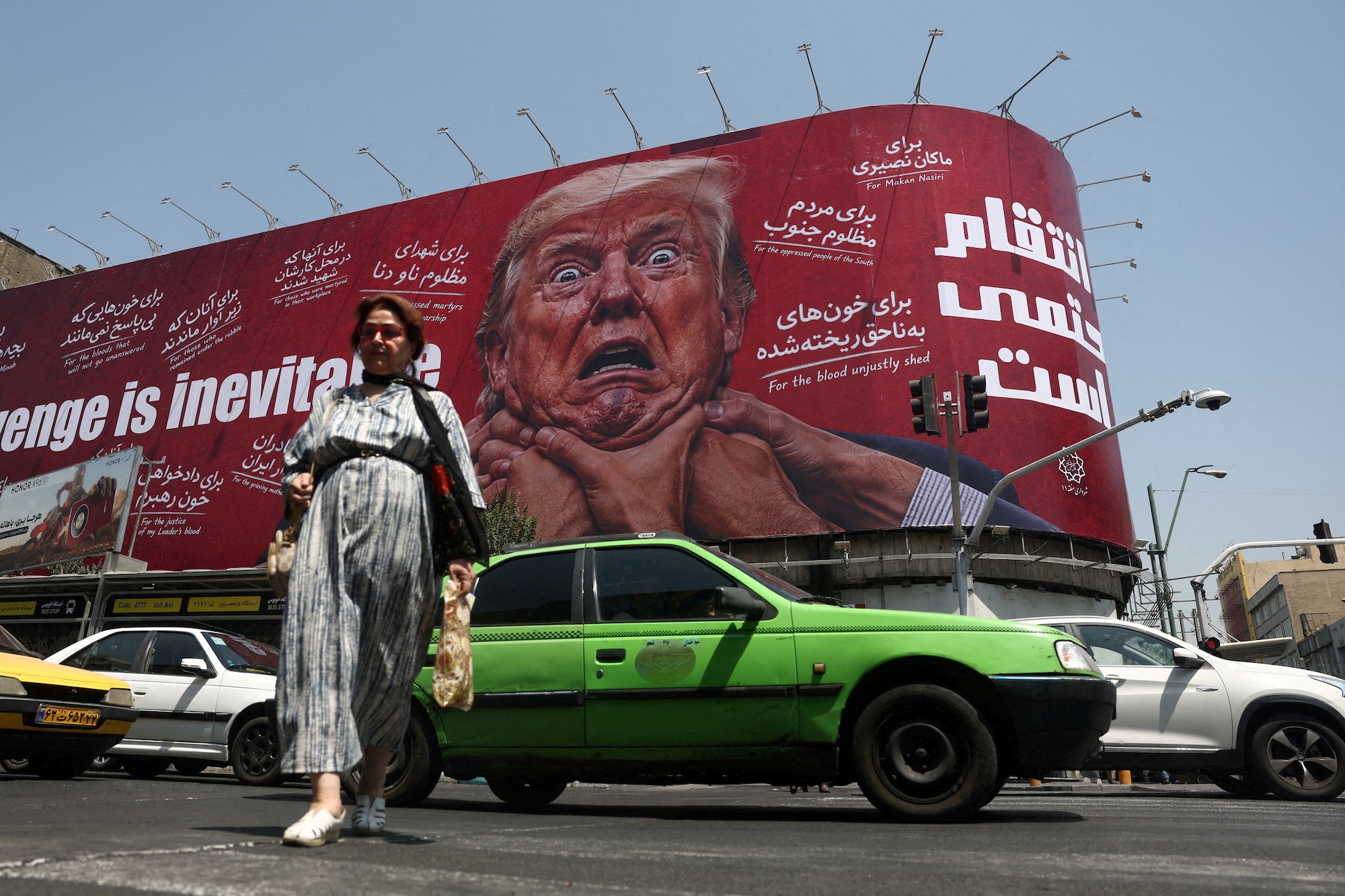
Trump’s Iran campaign echoes the post-9/11 ‘forever wars’

WASHINGTON, USA – When Donald Trump campaigned for a second term in the White House, he promised to be a “president of peace” who would stop foreign wars, not start them.

Now, a quarter-century after the September 11, 2001, attacks that triggered America’s global “war on terror,” he is entangled in an unpopular conflict of his own making that analysts say risks becoming his version of a “forever war.”

With the 9/11 anniversary at hand, Trump’s war against Iran is drawing comparisons in foreign policy circles to the long, divisive conflicts in Afghanistan and Iraq that preceded it.

It is also prompting questions about whether the US has again failed to learn the lessons of past conflicts or prepare a clear exit strategy.

“Trump has broken an important post-Iraq and Afghanistan constraint in Washington against launching another major, open-ended war in the Middle East,” said Sina Toossi of the Center for International Policy, a Washington think tank. “That could leave his successor inheriting … an entrenched US-Iran confrontation.”

Administration officials have said the war against Iran is nothing like the protracted post-9/11 engagements.
During the conflicts in Iraq and Afghanistan, the US removed hostile governments, committed thousands of ground troops who took and held territory, suffered and inflicted much higher casualties and struggled to instill Western-style governance.

This time, the US is relying mainly on air and naval power, operations that have damaged Iran militarily and economically but have not defeated it or spurred Iranians to overthrow their rulers as Trump initially urged.

But after six months of war, the United States is mired in a battle of attrition punctuated by bursts of hostilities – exemplified by this week’s exchange of attacks on oil tankers – while Trump tries to tighten the economic noose around Tehran.

Analysts warn it is likely to drag on well past the US midterm elections in November, when voters’ opposition to the war could threaten Trump’s Republican Party’s chances of keeping control of Congress.

And, much like those earlier conflicts, there is no obvious exit even as the economic costs weigh on US consumers.

Tehran’s disruption of oil shipments through the Strait of Hormuz has pushed US gasoline prices higher. The war has weakened Trump’s approval ratings and undermined Washington’s international standing, which was also one of the repercussions from the Iraq and Afghan wars.

White House spokeswoman Anna Kelly said Trump alone had “possessed the courage” to confront Iran over its nuclear program, that he had achieved all of his objectives and Iran’s economy was being crippled by stepped-up sanctions and a US maritime blockade.

She did not respond directly to Reuters’ questions on how the Iran conflict fits into America’s legacy of post-9/11 wars.

Lessons ignored?

Analysts say Trump has failed to heed the central lessons of the post-9/11 era, which began after al Qaeda militants crashed planes into New York’s World Trade Center and the Pentagon outside Washington, killing nearly 3,000 people.

Those include the steep political downsides of long wars and the dangers posed by an entrenched foe fighting for its survival.

The attacks led to decades of conflict, starting with the invasion of Afghanistan, where al Qaeda leaders were sheltering, and followed by the 2003 invasion of Iraq, based on what turned out to be faulty intelligence that it was developing weapons of mass destruction.

The twin wars undertaken by President George W. Bush overstretched the US military and destabilized the Middle East.

The resulting US public backlash helped fuel Trump’s rise a decade ago, and he won a second term in 2024 vowing to avoid military adventurism and focus on Americans’ economic concerns.

But similar to how the Bush administration underestimated the insurgencies the US would face in Iraq and Afghanistan, Trump and his aides have miscalculated Iran’s resiliency and ability to throttle a fifth of the world’s energy shipments, analysts say.

Notably, Trump’s “Operation Epic Fury” launched alongside Israel on February 28 was not precipitated by a 9/11-type national trauma but was deemed by critics to be a war of choice.

Experts have disputed Trump’s claims that Tehran’s nuclear program posed an imminent threat to the US.

Iran may be taking a page from Afghanistan’s Taliban, who returned to power five years ago after a chaotic US withdrawal, that a determined foe can outlast Washington’s superior firepower while domestic pressure erodes its resolve.

The Iran conflict has also illustrated the cost of going to war with few allies on board.

Bush secured significant international support before launching his Iraq and Afghan campaigns, though that backing waned over time.

By contrast, Trump attacked Iran with little prior consultation or explanation and has found European and Asian leaders mostly resistant to his demands for assistance.

Relations with Trump had already been strained by his threat to seize Greenland, his questioning of NATO’s utility, his reduction of weapons supplies to Ukraine and his sweeping tariffs on trade partners.

High cost for allies

The conflict has also mirrored the Iraq invasion in terms of a regional spillover that seemed to catch Washington off-guard, in this case Tehran’s retaliation against US Gulf allies.

With Iran’s neighbors quietly seeking to de-escalate a conflict they never wanted, a Gulf official lamented that the administration might be making some of the same errors of the post-9/11 wars.

“What was the (US) strategy here?” asked the official, speaking on condition of anonymity.

Saudi analyst Aziz Alghashian described “a sense of limitation and helplessness in the Gulf about the wars that are taking place due to the whims of the United States.”

The war’s shockwaves expanded on Thursday, September 10, with Yemeni government military sources saying Iran-aligned Houthis had seized control of the Yemeni port city of Mocha and gained further leverage over an important Red Sea oil-shipping route.

While the Iraq and Afghan wars ended as unpopular conflicts, both started with solid support at home.

Trump’s war enjoyed no such honeymoon in public opinion.

Most Americans were against it from the outset, and he has even drawn criticism from prominent figures associated with his “America First” movement.

Trump had initially expected to replicate his quick win from a January 3 raid that captured Venezuelan leader Nicolas Maduro.

But the Iran campaign instead has hardened into an uneasy stalemate that has not achieved most of Trump’s shifting objectives, including shutting down its nuclear program, and has depleted the Pentagon’s missile stockpiles.

Still, Trump is not without defenders.
Mark Dubowitz, head of the Foundation for Defense of Democracies, a Washington think tank that takes a hard line against Iran’s rulers, denied Trump had plunged the US into an endless war and insisted he had scored successes that would eventually bring victory.

“It’s been a 47-year war waged by the Islamic Republic against America,” Dubowitz said. “And now we’ve struck back.” – Rappler.com

Similar Posts

  • |

    Israeli Prime Minister Netanyahu travels quietly to Washington

      JERUSALEM: Israeli Prime Minister Benjamin Netanyahu departed for Washington under extraordinary security measures amid growing concerns over potential threats from Iran. According to media reports, Netanyahu traveled discreetly and avoided the country’s main international airport, reflecting heightened security precautions ahead of his meeting with U.S. President Donald Trump. Reports stated that instead of departing from the usual Ben Gurion International Airport, Netanyahu left Israel aboard a special aircraft from Nevatim Air Base, a military facility in southern Israel. The unusual departure arrangements were reportedly made due to security concerns related to possible threats from Iran. The Israeli Prime Minister’s Office did not announce the departure time in advance and did not issue an official explanation for the extraordinary security measures. However, Israeli media cited security sources as saying that the changes were implemented because of concerns about potential Iranian threats. According to the reports, security precautions were also tightened within Israel before Netanyahu’s departure. Sources said that Sunday’s Israeli cabinet meeting was not held at the Prime Minister’s Office, as is customary. Instead, the meeting reportedly took place at a secret underground location for security reasons. Officials did not publicly disclose the exact location or provide additional details about the decision. Media also reported another unusual step taken during the visit preparations. Unlike previous foreign trips, Israeli authorities did not allow members of the Israeli diplomatic press corps to accompany Prime Minister Netanyahu aboard the official government aircraft. No formal explanation was given for excluding journalists from the flight, although reports suggested that the decision was linked to heightened security concerns. Netanyahu has now arrived in Washington, where he is expected to hold high-level talks with U.S. President Donald Trump. The meeting is anticipated to focus on several major regional and international issues, with Iran expected to dominate the agenda. Following his departure for the United States, Netanyahu shared a statement on social media outlining the objectives of his visit. He said that his discussions with President Trump would cover a wide range of issues affecting Israel and the Middle East. According to the Israeli leader, Iran would be the top priority during the meeting because of ongoing regional tensions and security concerns. Netanyahu stated that Israel’s primary goal remains ensuring the country’s security, strengthening its national defense, and expanding what he described as the “circle of peace” around Israel. He emphasized that cooperation with the United States continues to play a vital role in addressing regional challenges and promoting stability. The visit comes at a time of continued tensions between Israel and Iran, with both countries accusing each other of actions that threaten regional security. Analysts believe that discussions between Netanyahu and President Trump are likely to include Iran’s nuclear program, regional security, military cooperation, and broader strategic relations between the United States and Israel. In his statement, Netanyahu also said that he intends to express his condolences to President Trump over the passing of Lindsey Graham whom he described as a true friend of Israel. The Washington meeting is expected to be closely watched by international observers, as its outcomes could influence future U.S.-Israel cooperation and regional diplomatic developments.

  • |

    Anthropic releases Claude Opus 5, offering high pe…

    Anthropic on Friday released Claude Opus 5, a new artificial intelligence model that the company says approaches the performance of its most powerful system at half the price. The San Francisco-based startup, a chief rival to OpenAI, said the model tops industry benchmarks for coding and knowledge work while consuming fewer computing resources than earlier versions. The claim addressed rising concerns among business customers who have balked at the expense of running advanced AI systems. Claude competes with OpenAI’s ChatGPT and Google’s Gemini, with customers paying based on the amount of work performed, measured in units called tokens. Opus 5 costs $5 per million input tokens and $25 per million output tokens, half the price of Fable 5, Anthropic’s most expensive publicly available offering. The company said the new model performs close to Fable 5 across many tasks despite the lower cost. Cost has become a major issue after Anthropic and its rival OpenAI both filed for stock market listings in June. Wall Street is scrutinising their business performance more closely than ever ahead of their market debuts. The release of Opus 5 is a strategic move by Anthropic to address the growing demand for affordable AI solutions while maintaining high performance. On cybersecurity, Anthropic said it deliberately avoided training Opus 5 on cyber tasks, and that the model remains behind Mythos 5  its most capable and most tightly restricted system, available only to select partners  on both offensive cyber work and biological research capabilities that could be misused. Mythos is Anthropic’s most advanced series of AI models, and its strength at finding weaknesses in computer systems has caused controversy, pushing the company to build tight guardrails around them. The company said Opus 5 finds software flaws about as well as Mythos 5 but lags far behind in turning those flaws into something that could be weaponised into an attack. Citing the reduced risk, Anthropic said its automated safety filters will intervene roughly 85% less often on Opus 5 than on Fable 5, the Mythos-class model it released last month. Fable 5 and Mythos 5 were briefly pulled from public access in June after the US Commerce Department imposed export controls, which were lifted at the end of that month. The release of Claude Opus 5 marks a significant milestone for Anthropic as it seeks to compete in the rapidly evolving AI market. By offering a high-performance model at a lower cost, the company aims to attract a broader range of customers, including businesses and developers who may have been priced out of the market. The focus on affordability and performance reflects the growing demand for AI solutions that can deliver results without breaking the bank. As the AI industry continues to evolve, the competition between Anthropic, OpenAI, and other players is expected to intensify, with companies racing to develop models that are both powerful and cost-effective. Anthropic’s strategic approach to balancing performance, cost, and safety positions it well in the competitive landscape, and the company is likely to continue innovating to meet the needs of its customers. The launch of Opus 5 is a testament to Anthropic’s commitment to advancing AI technology while addressing the practical concerns of businesses and developers. The AI industry will be watching closely to see how the market responds to this new offering and how it shapes the future of AI development and deployment.

  • | |

    India’s Education Minister resigns amid exam controversy

    India’s Union Education Minister Dharmendra Pradhan resigned on Saturday amid growing pressure over a nationwide controversy involving alleged examination paper leaks. His resignation comes after weeks of protests by students and opposition parties. Demonstrators have demanded greater accountability and changes to the country’s examination system. The controversy has intensified criticism of the government’s handling of the issue. Students and opposition leaders have called for stronger measures to prevent examination irregularities and protect the credibility of competitive exams. Pradhan’s departure marks a significant development for Prime Minister Narendra Modi’s government as pressure continues to mount over the examination crisis. The resignation is expected to fuel further debate over examination reforms, transparency and accountability in India’s education system. Earlier, Indian Prime Minister Narendra Modi has pledged to establish fast-track courts to swiftly punish officials involved in examination paper leaks, attempting to contain a widespread youth-led protest movement that has rocked New Delhi and disrupted Parliament. Posting on X in his first public remarks on the crisis, Modi declared that “those who try to harm the future of our youth will not be spared”. The satirical “Cockroach Janta Party” (CJP), coined after India’s top judge reportedly likened unemployed youths to “cockroaches”, promptly rejected Modi’s proposal as a superficial “Band-aid” measure. The CJP continues to demand educational reforms and the immediate resignation of Education Minister Dharmendra Pradhan, who has faced intense pressure following 152 recorded paper leaks over the past decade.

  • | | |

    Cristiano Ronaldo hints at retirement, says upcomi…

    Football superstar Cristiano Ronaldo has hinted that his retirement could be closer than expected, saying the upcoming year will probably be the final year of his playing career. The 41-year-old Portugal captain made the comments in an interview with lifestyle magazine Vogue, saying he wants to leave behind a “spectacular legacy” when he eventually walks away from football. Ronaldo has enjoyed one of the most successful careers in football history. Since making his senior debut for Sporting in 2002, he has won major trophies with Manchester United, Real Madrid, Juventus and his current club, Al-Nassr. He has also won the Ballon d’Or five times. Despite his extraordinary list of achievements, Ronaldo was unable to add a FIFA World Cup title to his collection after Portugal fell short at the 2026 tournament. The forward has scored 976 goals for club and country during a career spanning more than two decades. He is now continuing with Al-Nassr as he approaches the remarkable milestone of 1,000 career goals. Ronaldo also acknowledged that retirement would leave a major gap in his life. He said he plans to spend more time travelling, playing and watching padel, and enjoying life away from professional football. His comments have intensified speculation about when one of football’s greatest careers will finally come to an end.

  • | |

    Nestle turns to AI to build products for weight lo…

    Nestle is working to convert the rapid rise of GLP-1 weight loss drugs from a business threat into an opportunity, deploying artificial intelligence and nutritional research to develop products aimed at the millions of consumers now taking medications like Ozempic and Wegovy. The fast growing adoption of drugs made by Novo Nordisk and Eli Lilly has raised concerns among investors that appetite suppressing medications could permanently dent demand for packaged foods, snacks and beverages. Nestle sees the same trend differently, believing the drugs are creating a new market for products that address the side effects associated with rapid weight loss. Chief Technology Officer Stefan Palzer told a foreign news agency that Nestle is using artificial intelligence and other technology to analyze clinical research, identify effective nutrient combinations and build products tailored specifically to GLP-1 users. He said the company believes its existing product portfolio positions it well to capture what he described as a major opportunity. Materials shown to reporters outlined side effects tied to rapid weight loss, including muscle loss and the loss of facial volume sometimes referred to informally as Ozempic face, along with areas where Nestle believes its products could help address those issues. The GLP-1 drug market remains dominated by Eli Lilly’s Mounjaro and Zepbound alongside Novo Nordisk’s Wegovy and Ozempic. Roughly 16 million Americans currently take GLP-1 medications, according to Boston Consulting Group, a number expected to grow significantly by the end of the decade. Nestle’s strategy centers on developing products suited to the needs of weight loss drug users while relying on AI to speed up research, product development and consumer analysis. Addressing side effects directly Palzer said Nestle scientists have spent time studying the downstream effects of rapid weight loss and building products intended to help consumers manage them. The company uses AI tools to process large volumes of clinical research and identify nutrient combinations that may support muscle health, hydration and overall nutritional intake. Nestle has already begun adding collagen protein to products under its Vital Proteins brand to address concerns about skin, hair and nail health linked to rapid weight loss. In the United States, Nestle’s business created the Boost Advanced Nutrition Shake, marketed as containing 35 grams of protein to support muscle health during weight loss. In Asia and Australia, the company introduced a higher protein version of its Milo malt drink called Milo PRO High Protein. Rival ice cream makers are grappling with similar pressures, shifting toward higher protein products, smaller portions and simpler ingredient lists. An AI powered recipe database Artificial intelligence plays an increasingly central role throughout Nestle’s product development process. The company has built internal systems to analyze scientific literature, simulate consumer behavior, spot emerging trends and help product developers navigate a database containing roughly 120,000 recipes. One such tool, an internal platform called Food Genie, helps scientists and developers predict how recipes might perform and identify opportunities for reformulation, according to Palzer. He said the scale of Nestle’s recipe database gives the company an advantage, noting that a smaller company with only a thousand recipes would struggle to model and predict outcomes using AI, since the technology depends heavily on large volumes of data. Nestle is also testing AI driven consumer simulations designed to predict how shoppers will respond to new products and health claims before they reach store shelves, and the company uses AI to monitor social media activity and identify emerging consumer trends. Palzer said the technology helps distinguish genuine, lasting trends from short term noise around particular topics, and said he expects AI to play a growing role in that kind of trend analysis going forward. Skepticism remains among some experts Not everyone is convinced specialized products offer meaningful advantages over conventional food. Amanda Avery, an associate professor of nutrition and dietetics at the University of Nottingham in central England, said it is unfortunate that consumers keep turning to new, more expensive products that often contain the same protein and nutrients found in whole, fresh foods. She noted that meat, fish, eggs, dairy, beans, nuts and pulses remain relatively affordable sources of protein and other nutrients. Even so, Avery said she expects products marketed specifically to GLP-1 users to find a ready customer base, acknowledging that marketing exerts significant influence over consumer choices and suggesting Nestle has likely done its homework before entering the space.

  • |

    Spain tightens Italy border checks amid migration dispute

    Spain has resumed border checks on travellers arriving from Italy amid a growing disagreement between the two European countries over irregular migration. Spanish authorities inspected around 200 passengers on the first day of the measures, which were introduced at the country’s six busiest airports. The Interior Ministry said 199 people arriving on 12 flights from Italy were checked at airports in Madrid, Barcelona, Seville, Bilbao, Alicante and Valencia. The temporary controls began on Saturday and are scheduled to remain in place until September 7. The move follows Italy’s decision to introduce its own checks on travellers arriving from Spain. Rome suspended the usual Schengen arrangements with Spain from August 1, saying the decision was linked to concerns over a sharp increase in irregular migration. Italian authorities said their measures would remain in place at least until August 15. The dispute intensified after around 72,000 migrants reportedly reached Spain’s North African enclave of Ceuta on July 30, prompting renewed concerns over migration pressures and border security. Italy has stressed that its checks are targeted rather than a blanket restriction on European travellers. Officials said Spanish and other European Union citizens would not be affected by the measures, which focus mainly on non-EU nationals travelling from Spain by air or sea. Italian Foreign Minister Antonio Tajani said Rome hoped to remove the restrictions as soon as the perceived security risk had eased. The latest developments have raised concerns about tensions within the European Union’s passport-free travel system. The Schengen Area allows people to move across 29 European countries without routine internal border checks, although individual member states can temporarily restore controls in response to security threats, public-order concerns or exceptional circumstances.

Leave a Reply

Your email address will not be published. Required fields are marked *