iran warns energy
|

Iran warns US energy assets in Gulf are vulnerable after latest clashes

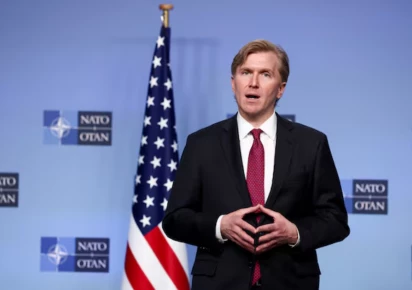
DUBAI, UAE – Iran threatened on Monday, September 7, to retaliate against any new US attacks on its assets, warning that energy infrastructure across the Gulf, including US oil and gas interests, was vulnerable.

“Strike our assets and you get struck,” Iranian Parliament Speaker Mohammad Baqer Qalibaf said after US and Iranian strikes on shipping at the weekend that pushed oil prices up near six-week highs on Monday.

The latest threat underscores the risks of further escalation after the sides traded blows again at the weekend, with no sign of progress towards a diplomatic breakthrough that could end more than six months of conflict and restore normal energy flows through the Gulf.

Iran has tightened restrictions on shipping through the Strait of Hormuz, a critical artery for global oil and gas supplies, since the war began with US and Israeli strikes on February 28.

On Sunday, September 6, senior Iranian security official Mohsen Rezaei said Tehran would soon announce a new restricted zone in the Gulf and unveil a new shipping corridor through the strait.

Rezaei said the zone would begin where a US naval blockade of Iran starts and extend into parts of the Gulf. 

Any vessel entering the area would be placed on an Iranian sanctions list.

“We will only commit to the Strait of Hormuz being open when they (the Americans) stop the sabotage, threats and attacks on Iran,” Rezaei said.

Qalibaf later reinforced Tehran’s warning in what appeared to be a response to US Defense Secretary Pete Hegseth, who had described Iran’s oil tanker fleet as “defenseless.”

“It’s simple: the oil and gas production chain here is sprawling, accessible, and exposed. American oil and gas companies across these waters and facilities share that exposure,” Qalibaf, who is Iran’s top negotiator, wrote on X.

Lebanon bombardment raises escalation fears

Regional tensions were heightened by Israeli strikes on a town in southern Lebanon that killed at least 12 people on Monday, according to Lebanon’s health ministry, marking one of the deadliest days of bombardment in recent weeks.

The attacks have fueled fears of a renewed Israeli military campaign despite a June ceasefire with the Iran-backed Hezbollah group. They also complicate efforts to end the wider conflict, with Tehran insisting that any lasting agreement with Washington must include an end to Israeli attacks in Lebanon.

US President Donald Trump has yet to achieve the aims he set out when he launched “Operation Epic Fury” in February: to end Iran’s nuclear program, halt its ability to attack its neighbors and create conditions for Iranians to topple their leadership.

Tehran’s clerical rulers remain in power and aim to emerge from the war stronger than before. They continue to demand sanctions relief and hope eventually to collect fees from ships using the strait, which carried a fifth of global oil and liquefied natural gas shipments before the war.

After a relative lull through much of August, hostilities have intensified again following the collapse of an interim ceasefire reached in June. Diplomatic efforts have made little headway.

Tanker attacks push shipping to lows

On Saturday, September 5, US forces struck three Iranian oil tankers, including one near Kharg Island, Iran’s main oil export hub, according to US Central Command. The attacks followed strikes by Iran’s Revolutionary Guards on US warships operating in the region.

Tehran has demonstrated it can still attack US interests in neighboring countries and disrupt oil flows through the Strait of Hormuz.

Shipping data showed an average of just 10 commodity vessels per day transited the strait over the past 10 days, the lowest level since May.

Sanctions, oil blockade squeeze economy

Iran has said it will step up efforts to tackle problems created by US sanctions that are crippling its economy.

Yet the pressure is mounting. Three senior Iranian sources told Reuters that Washington’s campaign to choke off Iranian oil exports and curb sanctions evasion is becoming increasingly difficult for Tehran to withstand.

Qalibaf acknowledged at the weekend that Iran’s struggle was no longer confined to the battlefield. Alongside the military confrontation, he said, the country faced major domestic challenges including inflation, unemployment, currency volatility and market instability.

The conflict has also impacted oil-producing Gulf Arab states such as the United Arab Emirates, which has come under fire from Iranian missiles and suffered attacks on its oil tankers in the Strait of Hormuz.

UAE presidential adviser Anwar Gargash said on Monday the country was building alternative routes for its energy exports and trade to ensure they are not “held hostage” by the war.

The disruption has also been felt in the United States, where higher fuel prices have added to economic pressures and weighed on Trump’s popularity ahead of November’s midterm elections that will determine control of Congress. – Rappler.com

Similar Posts

  • |

    Student protests intensify over exam paper leaks in India

    Student protests against repeated examination paper leaks have intensified across India, with growing anger among young people and an increasingly active anti-government campaign on social media. Thousands of students marched toward Parliament in New Delhi on July 20, demanding the resignation of Education Minister Dharmendra Pradhan. The demonstration reportedly turned tense as police and protesters clashed, with reports claiming that more than 100 students suffered injuries during the unrest. Police officials have rejected allegations that officers used excessive force against the protesters. However, several videos recorded by students and shared widely on social media appear to show police personnel using batons and tear gas and dealing harshly with demonstrators. The footage has further fueled public anger and drawn attention to the growing student movement. The protests have since spread beyond the capital, with demonstrations reported in cities including Mumbai, Bengaluru, Patna, Lucknow and Aizawl. Student groups say they will continue their campaign until the authorities address their concerns and meet their demands. The Cockroach Janta Party (CJP), which is leading the student movement, has called for sustained protests over the issue. The group has demanded the resignation of Education Minister Dharmendra Pradhan, assurances that authorities will not file cases against students who took part in the demonstrations, and financial compensation for the families of students who allegedly died by suicide after examination papers leaked. The controversy has also gained significant momentum online. Young Indians have turned to memes, short videos and satirical posts to criticize the government and question its handling of examination leaks. Social media discussions have also included calls for the education minister to step down, with some posts targeting the ruling Bharatiya Janata Party (BJP) over the issue. The protests come amid wider concerns about the integrity of competitive examinations in India, where millions of students rely on national and state-level tests for admission to universities and access to government jobs. Repeated allegations of paper leaks have raised questions about examination security and fairness, while students have expressed frustration over the disruption to their academic and career plans. Prime Minister Narendra Modi has also responded to the growing protests. In a post on X, he addressed the issue for the first time and said that nothing matters more than the welfare and future of the country’s young people. The student movement continues to put pressure on the government, as protesters demand stronger measures to prevent examination paper leaks and greater accountability from officials. With demonstrations spreading to multiple cities and the issue gaining traction on social media, the controversy has emerged as a significant challenge for the Indian government.

  • | | | | |

    Working together to return Ukrainian children, detained civilians, prisoners of war

    Their return is a humanitarian imperative and critical to any peace process…. Every person returned reunites a family. Every family reunited strengthens a community. And every community prospering helps rebuild Ukraine.

  • |

    US says it will deepen security role in Asia

    The United States has rejected suggestions that it is reducing its involvement in Asia. A senior Pentagon official said Washington plans to strengthen its position in the Indo-Pacific and maintain what it considers a favourable balance of power in the region. US Undersecretary of Defense for Policy Elbridge Colby made the remarks during a speech in Manila on Monday. He said the United States was not leaving Asia. Instead, Washington was increasing its focus on the region. Colby also called on US allies and partners to take greater responsibility for their own defence. He said Washington wanted stronger partnerships rather than relationships based on dependence. According to Colby, the United States expects its regional allies to increase defence spending and strengthen their own military capabilities. He said greater responsibility from partner countries should not be interpreted as a sign that Washington is abandoning the region. Colby argued that stronger allies would contribute to stronger deterrence and help maintain regional stability. The Pentagon official said the US strategy includes maintaining a credible military presence along the First Island Chain. The strategic area stretches from Japan through Taiwan and the Philippines toward Borneo. It is considered important to US efforts to deter potential military threats in the Indo-Pacific. Colby said the United States was committed to maintaining a balance of power in the region. He also emphasised the need for allies to contribute more to regional security. His comments come amid continuing questions about the long-term US security commitment to Asia. Some regional governments and analysts have expressed concerns about whether Washington will remain as deeply involved in the Indo-Pacific as it has been in previous years. Colby sought to address those concerns by stressing that the United States intends to remain engaged. The Philippines is the first stop on Colby’s Southeast Asian tour. He is also scheduled to visit Indonesia, Thailand and Cambodia. The Philippines is a longstanding US treaty ally and has strengthened defence cooperation with Washington in recent years. The Pentagon official’s remarks are likely to be closely watched by US partners across the region. Washington is seeking to strengthen cooperation with allies while encouraging them to invest more heavily in their own defence. The approach reflects a broader US strategy of sharing the security burden with regional partners while maintaining a strong American military presence. Colby said the goal was to build capable partners rather than create countries that depend entirely on US protection. He maintained that stronger regional partners would make the overall US deterrence strategy more effective.

  • | | | |

    Iran FM accuses West of ‘shameful hypocrisy’

    Iran FM accuses West of ‘shameful hypocrisy’Iranian Foreign Minister Abbas Araghchi has sharply criticised France and other Western countries over their stance on human rights and Iran’s treatment of protesters. Araghchi accused Western governments of adopting double standards by condemning Tehran over its response to domestic unrest while, in his view, failing to take meaningful action over Israel’s conduct in Gaza and the wider Middle East. In a statement on X, the Iranian foreign minister said countries such as France should stop giving lectures to others on human rights and international law. He described what he called Western hypocrisy as both “clear and shameful,” arguing that their policies had undermined their claims of moral authority. Araghchi also criticised Western support for Israel, saying that backing Israel during the Gaza conflict and what he described as aggression against Iran had damaged the credibility of Western governments on human rights issues. His comments came after the European Union and 20 other countries issued a joint statement expressing concern over the deaths of protesters in Iran. The countries called on the Iranian authorities to take meaningful measures to protect human rights. They also urged Tehran to end the use of the death penalty and release people who had allegedly been detained arbitrarily. Araghchi rejected the criticism and questioned the consistency of Western governments’ positions on human rights. The dispute highlights growing tensions between Iran and Western nations over the treatment of protesters, the use of capital punishment and the broader conflict in the Middle East. Iran has repeatedly accused Western governments of interfering in its internal affairs and applying selective standards to international human rights issues. Western governments, meanwhile, have continued to raise concerns about the treatment of protesters and detainees in Iran.

  • |

    US President Donald Trump backtracks on promise allowing Ukraine to produce Patriot missiles

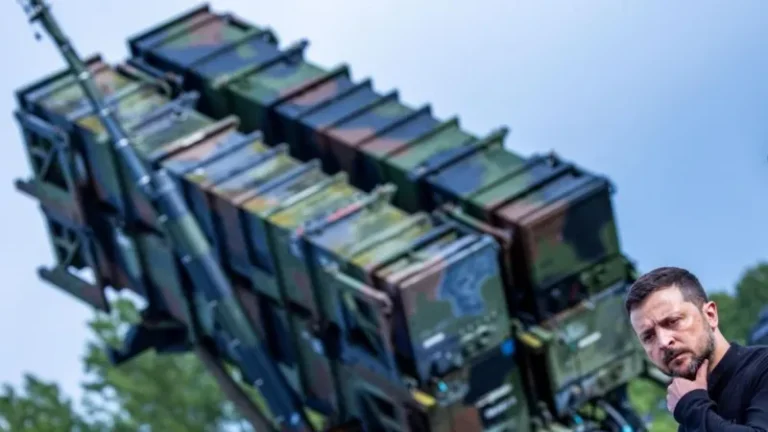
    US President Donald Trump has walked back his previous offer to grant Ukraine a license to domestically produce Patriot interceptor missiles, stating during a Cabinet meeting at Camp David that the United States has “not agreed” to share the technology. Trump expressed caution over transferring sensitive defense hardware, warning that “they can someday turn on you” and emphasising the need to safeguard advanced military systems. The reversal comes just three weeks after Trump publicly promised Ukrainian President Volodymyr Zelensky at a NATO summit in Ankara that Washington would grant Kyiv the manufacturing rights to build the air defense interceptors. Although Zelensky recently stated after a White House visit that the production licensing had been approved, Trump clarified that no final commitment has been made. The decision arrives as Kyiv faces intensified Russian drone and ballistic missile strikes, with Ukrainian military officials warning that critical shortages of Patriot interceptors are severely compromising their air defense capabilities.

  • | |

    English Football to trial new rule to eliminate go…

    English football will implement a trial this season aimed at eradicating the increasingly common practice of goalkeepers feigning injury to secure tactical timeouts, with teams required to temporarily remove an outfield player if their keeper receives treatment . The Football Association, Premier League, English Football League, National League, and Women’s Super League have agreed on the measure, with permission granted by the International Football Association Board (IFAB) . The first game to feature the trial will be the Carabao Cup preliminary round tie between Tranmere and Rochdale on Saturday . Under the new protocol, if a referee signals for a physio to treat a goalkeeper, the team’s coach will have 10 seconds to nominate an outfield player to leave the pitch for one minute after play restarts, informing the fourth official of their choice . If no player is selected within 10 seconds, the captain must leave the field . The tactic of goalkeepers going down for treatment allowing coaches to deliver instructions to outfield players gathered on the touchline has become increasingly controversial in recent seasons . Leeds United fans regularly booed opposing goalkeepers for such delays last season, and the practice has been used to disrupt momentum when opponents are on top . Pro Ref, led by chief refereeing officer Howard Webb, had been in discussions with the leagues to address the issue . English football opted for this trial because it follows the logic already applied to outfield players, who must leave the field for one minute if the physio comes on . The measure is intended as a proactive deterrent rather than a reactive punishment . There are several exemptions: no player will have to leave if the goalkeeper says they do not need treatment and have not stopped play, if the goalkeeper and an outfield player have collided, if the goalkeeper is fouled and needs immediate treatment, if the goalkeeper is bleeding, or if there is a serious injury requiring substitution or concussion . Match of the Day pundit Danny Murphy had previously suggested this exact solution, saying: “If a keeper goes down injured, instead of him having to go off, one of the outfield players should go off then it’s fair all round. It’s a little change that makes a world of difference.” The Australian A-League will trial a variation where the captain must always leave the field . The results of the trials will be assessed by IFAB throughout the season, potentially leading to a permanent global law change from the 2027-28 season .

Leave a Reply

Your email address will not be published. Required fields are marked *