nepal rescuers reach
| |

Nepal rescuers reach remote areas, electricity restored nearly a week after devastating floods

KATHMANDU, Nepal – Nepali rescuers built temporary bridges to reach remote areas and dug through the ruins of hydropower projects in the Himalayas to rescue close to 300 trapped workers, nearly a week after devastating floods left a trail of destruction across the country’s towns and valleys.

At least 639 people remain stuck in several devastated hydropower stations that have become the focus of rescue efforts, the country’s disaster management authority said on Tuesday, with the total death toll going up to 987. About 4,000 are still missing.

“Thousands of citizens have lost their homes, families, loved ones and property,” Prime Minister Balendra Shah said in a late-night social media post on Monday. “The government understands the immense pain they are enduring.”

Police official Bipin Regmi said a search team recovered 24 bodies from a house in Betrabati village in Nuwakot district.

“We are reaching new areas and recovering bodies,” Regmi told Reuters.

Foreign help flows in

In China, rescue teams worked through the night to reopen access to the Nepali border, on a steep mountain gorge with unstable cliffs on one side and fast-flowing river channels on the other.

Beijing will send DNA testing experts to disaster-hit areas at the Nepal-China border as well as a second batch of relief supplies later on Tuesday, its foreign ministry said, adding that equipment would include drones and water purification.

South Korea, nine of whose nationals were working at a hydropower project and are missing, also said it will send a 44-member emergency relief team to support search-and-rescue operations in the Rasuwa region.

Nepal last week turned down foreign involvement in general search and rescue but said it needed specialized services and advanced technological support in areas such as life-detecting machines, large refrigerators, Bailey bridges.

Giant neighbors India and China have led the foreign assistance, and the US, Japan, South Korea, Singapore, Australia, EU countries, and the UAE, have also contributed.

“Some of the support has already arrived,” foreign ministry spokesperson Lok Bahadur Chhetri told Reuters.

Aid worth more than $42 million had poured into the country after the disaster, Shah said, and the government expected the contributions to increase.

Rescue efforts focus on hydropower stations

Shah said 279 workers had been rescued from hydropower projects, with joint teams of Nepal, India, and China working on search and rescue operations.

Pictures and videos shared by rescue teams showed earth-moving equipment digging and shovelling mud and rocks under lights in the dark of the night as workers watched. Soldiers used torchlight in a big pit they had created to look for space to get into one tunnel.

“Our first rescue observation at Trishuli Hydro Power plant shows that it is not humanly possible to go into the tunnel,” Asish Gurung, a mountain guide helping in the tunnel rescue, told Reuters from Haku village in Rasuwa district.

“We need machines like bulldozers and excavators. There are two of them here now. One is not functioning and the other is being repaired. There may be about 500 people trapped inside,” he said.

There has been a boom in hydropower projects in Nepal since the turn of the century as the mountainous country sought to take advantage of its Himalayan water resources to address chronic domestic power shortages and exploit prospects for selling electricity to southern neighbor India.

Hydropower projects in Nepal’s mountains need tunnels to carry water through the steep terrain, allowing developers to exploit the sharp elevation drop between Himalayan rivers and powerhouses to generate electricity.

Nepal PM highlights climate change risks

A total of 583 foreign nationals were still missing, the disaster management authority said, as family members desperately pursued news of their loved ones.

An Australian hiker who went missing after the flood was located after she made contact with the Australian embassy on Saturday, Australian media reported.

Cara Severino, 26, was trekking in the Langtang area when the flood hit and said in a statement that she survived because of the “amazing people” she was with at a national park when the flood hit.

PM Shah said the catastrophic event signaled the growing risks that the Himalayan region faces.

“The region must therefore remain vigilant. The time has come for us to strongly raise before the international community the disasters we are experiencing as a consequence of climate change,” Shah said in his post.

Last week’s flood was “caused by glacier instability under the long-term effects of global warming”, China’s state broadcaster said on Monday. – Rappler.com
Similar Posts

  • |

    Coal drops below half of China’s power mix for first time ever

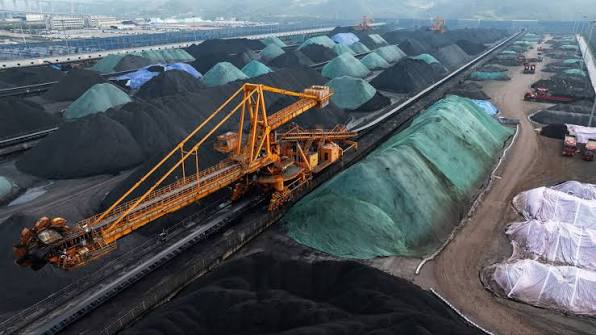
    China has reached a turning point in its energy story. For the very first time, coal supplied less than half the country’s electricity over a six-month stretch, according to officials who spoke on Thursday. Between January and June, coal made up 49.7 percent of total power generation. That figure came from Xing Yiteng, a senior official at the energy administration’s planning office. It marks a steep fall from 65.5 percent back in 2016, based on earlier government data. Clean energy sources picked up the slack. Renewables reached 41.2 percent of the total mix, crossing the 40 percent line for the first time ever. Wind and solar alone made up nearly a quarter of all power generated, a huge leap from just under 10 percent in 2020. The remaining share came from natural gas and nuclear plants. Despite this progress, experts warn that coal use in raw terms might actually increase this year. Electricity demand across China is rising quickly, driven by more electric vehicles on the road, a boom in AI-related data centers, and steady growth in exports. Beijing has pledged that coal use will peak no later than 2030, with wind and solar expected to reach 30 percent of the power mix by then. Gao Yuhe, who works as a project manager at Greenpeace East Asia, thinks that milestone might actually arrive two years early, by 2028. She credited this to the rapid spread of home solar systems paired with battery storage, along with more flexible electricity markets that make better use of renewable supply. China still burns far more coal than most major economies, mainly because it has large domestic reserves and limited natural gas access. For comparison, coal accounted for just 17 percent of America’s utility-scale power output last year, with natural gas covering 41 percent. China’s coal reliance, though, remains lower than India’s, where coal and lignite made up 69 percent of electricity generation last year. Interestingly, China still imported close to 500 million metric tons of coal last year, even with domestic output reaching 4.83 billion tons, mostly to supply power plants along the coast. If coal consumption keeps falling, major exporters like Indonesia, Mongolia, Australia, and Russia could feel the impact, depending on global price trends. Meanwhile, coal remains central to China’s coal-to-chemicals industry, where many facilities continue relying on cheap, locally produced coal to stay competitive.

  • |

    Russian missile enters polish airspace, NATO jets put on alert

    A Russian missile reportedly entered Polish airspace and exploded after crossing into the territory, prompting NATO and Polish forces to quickly deploy fighter jets and other surveillance aircraft. According to international media reports, the missile entered Polish airspace early Thursday as part of a large-scale Russian overnight attack on Ukraine involving ballistic missiles and drones. The wider strikes reportedly killed around eight civilians, including children, and injured more than 50 others. NATO officials said that allied forces immediately responded after detecting the unidentified object. Poland and other NATO members scrambled F-16 fighter jets, an aerial refueling aircraft and an early warning and surveillance plane to monitor the situation and protect allied airspace. A NATO spokesperson said the alliance would continue taking all necessary measures to safeguard its territory and maintain the security of its member states. Polish authorities reported that the missile exploded near the eastern village of Taranawa-Kolonia, leaving a large crater at the site. Officials said the incident caused no casualties or significant property damage. The incident has nevertheless raised fresh concerns over the potential expansion of the Russia-Ukraine war beyond Ukraine’s borders. European countries have repeatedly warned that continued attacks could increase the risk of the conflict spilling into NATO territory. The latest development is also likely to intensify tensions between Russia and NATO, particularly as Poland remains a key member of the alliance and a major logistical hub for international support to Ukraine. NATO has previously reinforced its eastern flank in response to security threats linked to the ongoing war.

  • | |

    Anas Sarwar joins UK Cabinet as Trade Minister

    Anas Sarwar has resigned as leader of the Scottish Labour Party after accepting the post of Minister of State for Trade in Prime Minister Andy Burnham’s government. The move ends his five-year leadership of the party and opens a new chapter in his political career at the national level. Sarwar confirmed that he will step down from the Scottish Parliament and will receive a life peerage, allowing him to take a seat in the House of Lords. From there, he will serve as a minister in the UK government and take responsibility for trade-related matters. In a statement, Sarwar said it was a great honour to be asked to join the government. He said public service has always been the driving force behind his political career. He added that serving the entire United Kingdom in the new role is a responsibility he accepts with humility and determination. Sarwar also reflected on Scottish Labour’s disappointing performance in the recent Scottish Parliament elections. The party won only 17 seats in the 129-member parliament, its worst result on record. He admitted that he shares responsibility for the defeat and said he was sorry that the party had failed to meet expectations. Despite the setback, Sarwar said the country faces serious political and economic challenges that require strong leadership. He warned that the rise of right-wing politics presents a major test for the United Kingdom. He said the Labour government must succeed in delivering stability, economic growth and better opportunities for people across the country. Following his resignation, Scottish Labour deputy leader Dame Jackie Baillie has taken over as acting leader. She thanked Sarwar for his leadership and praised his commitment to equality, fairness and public service. She said the party’s executive committee will soon announce the timetable for electing a new permanent leader. Sarwar’s departure from the Scottish Parliament will not trigger a by-election because he was elected through the regional list system. Under parliamentary rules, the next eligible Labour candidate on the Glasgow regional list is expected to replace him. His decision has sparked strong political debate. Opposition parties accused him of changing his position after previously supporting the abolition of the House of Lords. Critics also pointed to his earlier statements in which he said his main goal was to become Scotland’s first minister and remain focused on Scottish politics. Political leaders offered mixed reactions to the announcement. Some congratulated Sarwar on his new role and wished him success in government. Others argued that accepting a seat in the House of Lords contradicts his previous promises and could damage public confidence in politics.

Leave a Reply

Your email address will not be published. Required fields are marked *