marra lanot awardwinning
|

Marra Lanot, award-winning Filipina author, dies

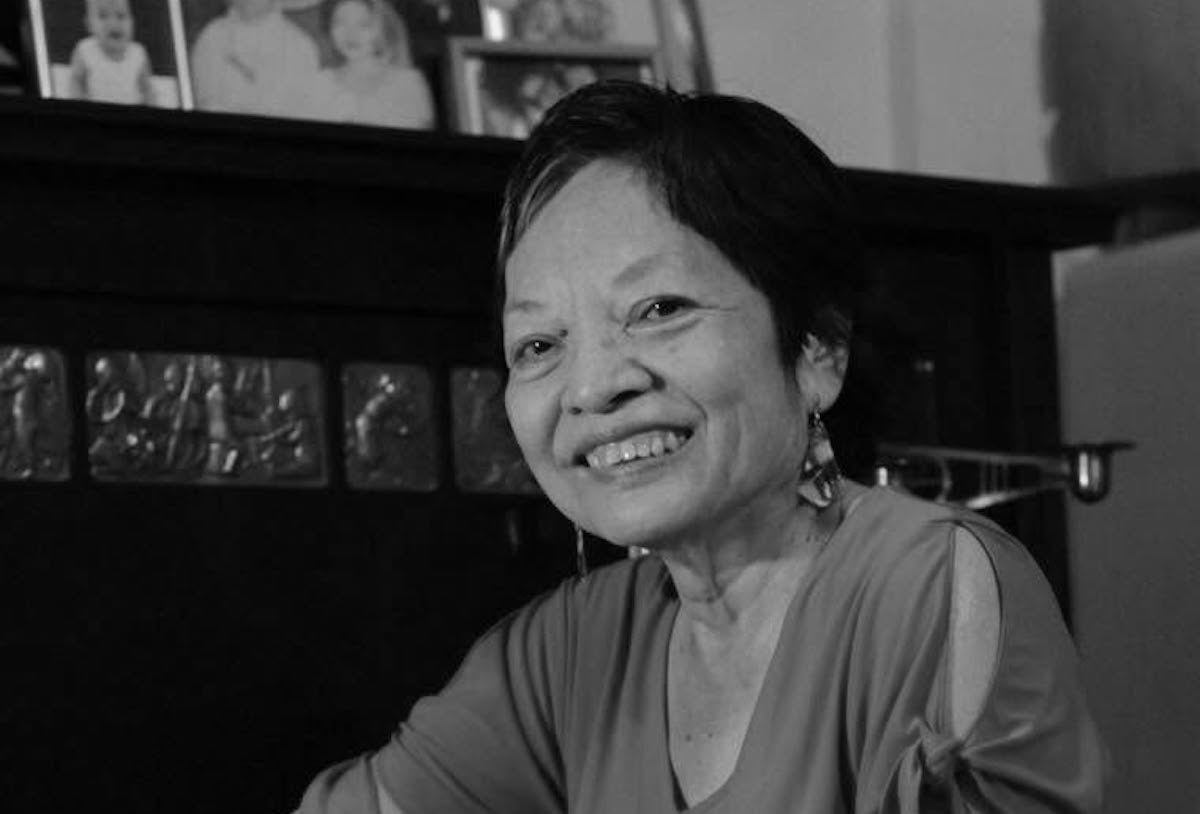
MANILA, Philippines – Award-winning Filipina author Marra PL. Lanot died on Sunday, August 16. She was 82.

No cause of death was disclosed, but Lanot’s family said her passing came after a “prolonged hospital stay.”

Lanot was a trilingual poet, essayist, and freelance journalist who wrote in Filipino, English, and Spanish. 

Her first collection of poetry, Sheaves of Things Burning, won second prize in poetry at the 1967 Palanca Awards. Thirteen years later in 1980, she won first prize in the essay category with Deja Vu In America: Or, One of the Songs.

She also received a Catholic Mass Media Award and, in 2020, the Gawad Pambansang Alagad ni Balagtas for her contributions to English poetry and essay.

Lanot’s other published works included Riding the Full Moon and Other Poems in Filipino and Spanish (2008), Passion and Compassion: Mga Tula sa Ingles at Pilipino (1981), and Cadena de Amor: New and Selected Poems in English, Filipino, and Spanish (2017). 

A graduate of the University of the Philippines Diliman, Lanot taught literature, creative writing, and film at her alma mater. She also held positions at the Cultural Center of the Philippines and the Movie and Television Rating and Classification Board.

Her literary expertise and decades of distinguished work earned her a place on the Palanca Awards’ panel of judges.

Beyond her literary career, Lanot is remembered as a devoted wife to award-winning screenwriter and journalist Jose “Pete” Lacaba and a loving mother and grandmother.

“She will always be remembered for her kindness, generosity, and sheer love for life. If she loved you, you would know it for sure — she wasn’t the type to hide it,” read a statement from Lanot’s family.  

“Please pray for the repose of her soul.” 

Lanot is survived by Lacaba, son Kris, her three grandchildren, and siblings Pfootsy and Xyrus. – Rappler.com

Similar Posts

  • |

    A portrait of the artist as a young man

    James Joyce published A Portrait of the Artist as a Young Man in 1916. He did far more than tell the story of a boy growing up in Dublin. He revolutionized the modern novel. As Joyce’s first published novel, Portrait serves as a crucial bridge between classical nineteenth-century storytelling and the radical experimentation of twentieth-century modernism. Over a century after its release, this intimate novel remains a timeless exploration of identity, intellectual rebellion and terrifying price of personal freedom. Sensory Stream of Consciousness The novel follows Stephen Dedalus who’s a thinly veiled avatar for Joyce himself from early childhood through his late adolescence and college years. The book opens not with traditional exposition, but with a sensory stream of consciousness. The baby talk, the texture of a bedsheet, the smell of oilcloth, and songs sung by his family. As Stephen grows, so too does the language of the book. Joyce evolves his prose style alongside his protagonist. He transforms the narrative voice from simple baby phrases into highly philosophical and poetic language as Stephen matures into a young scholar. Extreme Religious Devotion At its core, Portrait is a profound meditation on the heavy burdens of tradition. Growing up in a strictly Catholic, politically fractured Ireland at the turn of the twentieth century, Stephen finds himself trapped between competing pressures. He witnesses fierce family debates over Irish nationalism. He also suffers harsh physical punishments at strict Jesuit boarding schools. Ultimately, he struggles with agonizing guilt over his emerging teenage desires. A central turning point of the novel occurs during a harrowing religious retreat, where a priest delivers a vividly detailed sermon on the eternal torment of Hell. Paralyzed by fear, Stephen briefly attempts a life of extreme religious devotion, only to realize that spiritual conformity destroys his true self. Creative Freedom Over Compliance Stephen’s ultimate breakthrough doesn’t come from religiously pious self . It’s from art. In one of the most famous passages in modern literature, Stephen walks along the shore and catches sight of a young woman wading in the water. Stephen doesn’t see her through a lens of sinful desire or religious symbolism. Rather, he sees her simply as an embodiment of pure, mortal beauty. This aesthetic epiphany awakens his true calling. Now, he must break free from the traditional network of family, church, and nation that seek to hold him back. To become an artist, Stephen realizes he must embrace exile. Thus, he must chose solitude and creative freedom over compliance. Joyce’s genius lies in his ability to make Stephen’s internal struggles feel deeply universal. Anyone who has ever questioned the beliefs they were raised with, felt out of place in their own community. They strived to forge an independent identity will find a powerful reflection in Stephen’s journey. His famous declaration near the end of the book to forge in the smithy of my soul the uncreated conscience of my race is a bold rallying cry for personal independence. A Portrait of the Artist as a Young Man is not just the story of one young man’s transformation in turn-of-the-century Ireland, but a brilliant testament to the courage required to think for oneself and forge a truly unique voice in the world.  

  • | | |

    Reason, passion and desire

    We often like to view ourselves as unified, consistent individuals guided by singular motives. Yet, almost everyone has experienced an intense internal conflict. It’s wanting to spend on a impulse buy while knowing it defies financial logic. Or feeling overcome with regret immediately after giving in to a temptation. Over two millennia ago, the ancient Greek philosopher Plato set out to explain this psychological friction in Book IV of his masterwork, the Republic. Plato proposed that our psyche is composed of three distinct yet interacting forces rather than treating the human mind or psuche (soul) as a monolithic entity. Plato developed the concept of the tripartite soul. Further, he offered a framework that remains remarkably relevant to modern understandings of human behavior, self-control and moral choice. The Three Components of the Psyche Plato divides the human mind into three primary elements, each responsible for different aspects of our drives and behavior. 1. The Appetitive Element (To Epithumetikon) The appetitive part is the largest and most primal component of human nature. It encompasses our basic instinctual desires, including physical appetites for food, drink, comfort, and sensual pleasure, as well as material wants. Because these cravings are immediate and self-interested, the appetitive drive is inherently impulsive. Left unchecked, it seeks gratification regardless of long-term consequences. 2. The Spirited Element (To Thumoeides) The spirited element represents our emotional drive, passion, and sense of honor. It is the source of courage, pride, and righteous indignation when we witness or experience injustice. Unlike raw bodily appetite, the spirited part is closely tied to our moral identity and self-image. When functioning healthily, spirit acts as an ally to reason. It generates feelings of shame or self-directed anger when we surrender to harmful appetitive urges. 3. The Rational Element (To Logistikon) The rational element is the calculating and reflective mind. It seeks truth through logic, forethought, and critical reflection. What sets rationality apart from the other two components is its scope. While appetite and spirit focus on fulfilling specific, immediate goals, the rational mind evaluates what is best for the entire person in the long run. The Conflict Within: Why the Soul Divides To demonstrate that these three elements are truly distinct, Plato relies on an early formulation of the principle of non-contradiction: a single entity cannot simultaneously move in opposite directions in the exact same respect. Therefore, when a person experiences contradictory impulses such as feeling an intense thirst yet consciously choosing not to drink due to illness or health concerns, different parts of the mind must be in opposition. A classic illustration of this psychological war is the story of Leontius. While walking, Leontius felt a compulsive curiosity to look at execution corpses lying on the ground. Simultaneously, he felt disgust and moral repulsion. Eventually, his base appetite won out, causing him to rush over while angrily cursing his own eyes. This reaction demonstrates the spirited part of the soul becoming angry at the appetitive part for overriding rational judgment. From Conflict to Harmony Plato’s goal was not to suggest that humans should eradicate desire or emotion altogether. Instead, he argued that mental health and moral integrity, what he called justice of the soul, require a proper hierarchy. Reason must govern, serving as the wise leader that understands the big picture. Spirit must protect and enforce reason’s guidance with courage and conviction. Appetite must operate within temperate limits established by reason.   When these three components function in balance, an individual achieves psychological harmony. Conversely, when base desires or untamed emotions usurp the throne, inner turmoil and destructive behaviors follow. Plato’s tripartite framework ultimately serves as a timeless reminder that self-mastery is not about suppressing who we are, but about bringing our competing drives into a balanced, reason-guided unity.

Leave a Reply

Your email address will not be published. Required fields are marked *