north koreas kim
| |

North Korea’s Kim, Russia’s Putin reaffirm ties on Korean Liberation Day

North Korean leader Kim Jong-un reaffirmed the deepening of ties with Russia in a message to President Vladimir Putin as Pyongyang marked the anniversary of independence from Japan’s colonial rule, KCNA state news agency said on Sunday, August 16.

Kim was replying to a message of congratulations from Putin marking the 81st anniversary of Tokyo’s surrender in World War II. The Russian leader said the bond was forged as Soviet soldiers fought against Japan and that cooperation would continue “in all the sectors.”

The North Korean leader expressed hope for the future of ties that had “carried forward the history of common struggle for justice and precious traditions of friendship.”

Pyongyang and Moscow have grown closer since the reclusive state began deploying troops and weapons to support Russia’s war against Ukraine in what has been Pyongyang’s most significant involvement in a war since the 1950s.

The Russian ship Pallada arrived at Wonsan port for a goodwill visit on Saturday tied to the liberation anniversary, and was greeted by North Korean provincial officials and Russian embassy staff, KCNA said.

Also on Saturday, August 15, South Korean President Lee Jae Myung called for talks with the rival North aimed at peaceful coexistence, telling Seoul’s Liberation Day ceremony that the two Koreas need safeguards to prevent conflict and should work to replace their armistice with a “peace regime.”

Lee urged dialogue to formally end the 1950-1953 Korean War, which ended in a ceasefire but no peace treaty, and said the talks could explore ways to curb Pyongyang’s nuclear programme.

Pyongyang has rejected Lee’s overtures and criticized US-South Korean military exercises as provocations.

On Thursday, August 13, Putin drew Tokyo’s condemnation with a visit to an island off Hokkaido, claimed by Japan, that Moscow seized in the days after Japan’s 1945 surrender. – Rappler.com

Similar Posts

  • | | | |

    Two Chinese oil tankers safely cross Bab el-Mandeb…

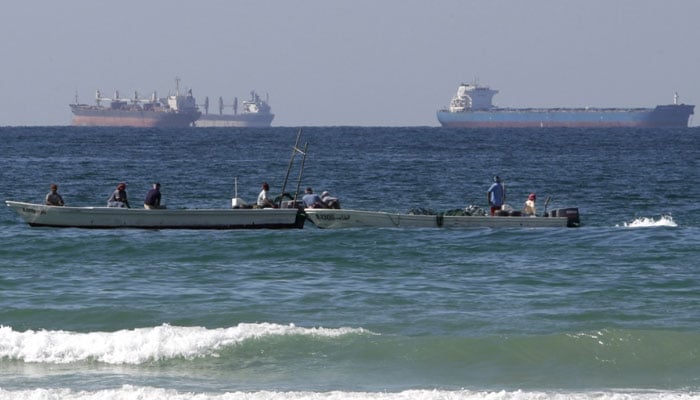
    RIYADH: Two Chinese supertankers carrying Saudi crude oil have safely passed through the Bab el-Mandeb Strait, despite growing security concerns following the Houthi movement’s recently announced naval blockade targeting Saudi-linked shipping. According to international media reports and shipping data, the vessels successfully navigated one of the world’s busiest maritime chokepoints, even as commercial shipping across the region faces mounting disruption due to escalating tensions in the Middle East. The two tankers departed earlier this week from Saudi Arabia’s Yanbu Port, transporting crude oil to China. Maritime tracking data indicated that both ships identified themselves as carrying Chinese crews, a detail analysts believe may have helped reduce the risk of interception while transiting the strategically important waterway. The successful voyage comes at a time when regional shipping routes are under increasing pressure. While the Bab el-Mandeb passage remained open for these vessels, traffic through the Strait of Hormuz has slowed significantly amid heightened geopolitical tensions and security threats. Industry monitoring organizations reported that only one oil tanker crossed the Strait of Hormuz on Thursday, marking the lowest daily traffic recorded since May 7. The sharp decline reflects growing concerns among shipping companies over the safety of vessels operating in the Gulf region. The latest developments follow the Houthis’ announcement of a naval blockade against Saudi shipping, raising fears of further disruptions to global energy supplies. The Red Sea and nearby waterways serve as vital corridors for international trade, with millions of barrels of crude oil passing through them every day. Maritime security experts say shipping companies are increasingly reassessing routes, insurance coverage, and operational risks as tensions continue to rise. Some firms have warned that insurance policies for vessels operating in high-risk conflict zones could become more expensive or even be withdrawn if security conditions deteriorate further. Although the two Chinese tankers completed their journey through Bab el-Mandeb without incident, analysts caution that the broader security situation remains highly volatile. Any escalation involving key maritime routes could have significant consequences for global oil markets, freight costs, and international supply chains. The safe passage of the vessels offers temporary reassurance for energy markets, but observers note that commercial shipping in the region remains vulnerable as geopolitical tensions persist. Governments, shipping operators, and energy traders are closely monitoring developments, with particular attention focused on the strategic waterways that connect the Gulf to global markets.

  • | | | | |

    Iran claims strike on Amazon data center in Bahrai…

    TEHRAN/MANAMA: Iran has claimed that it targeted an Amazon data center in Bahrain in what it described as part of its ongoing retaliatory campaign against the United States, marking a dramatic new allegation that could further heighten tensions across the Middle East. According to Iranian state media, the Islamic Revolutionary Guard Corps (IRGC) said the operation targeted an Amazon facility that it alleged was providing information and technological support to the US military. Iranian officials claimed the installation was successfully struck and destroyed during the operation. However, the statement was not accompanied by any evidence, satellite imagery, or operational details to substantiate the claim. As of Friday, no independent organization had verified that an attack had taken place or confirmed any damage to the reported facility. Neither Amazon, the Bahraini government, nor US officials had issued an official response by the time of publication. There has also been no confirmation from independent monitoring groups regarding the alleged strike or its potential impact. The claim comes amid rapidly escalating tensions between Iran and the United States, with both sides exchanging accusations over recent military operations in the region. Tehran has repeatedly warned that any military bases or strategic facilities used by Washington for operations against Iran would be considered legitimate targets for retaliation. Iranian officials reiterated that stance following the latest announcement, saying that infrastructure allegedly supporting US military activities could face further attacks if hostilities continue. Security analysts say the claim is particularly significant because it involves a major global technology company rather than a conventional military installation. If independently verified, it would represent one of the first publicly acknowledged cases in which Iran has declared a large international technology facility as the target of a military operation. Experts also cautioned that the absence of independent verification makes it impossible to determine whether the reported strike occurred or whether the alleged target sustained any damage. They noted that governments involved in conflicts often release competing narratives, making external confirmation essential before drawing conclusions. The latest claim underscores the growing overlap between military conflict and critical digital infrastructure, raising fresh concerns about the security of data centers and technology assets in regions experiencing geopolitical instability. For now, the reported attack remains an unverified Iranian claim, with the international community awaiting official responses and independent assessments to establish what, if anything, occurred on the ground.

  • |

    US fuel opens a capitalist crack in Cuba

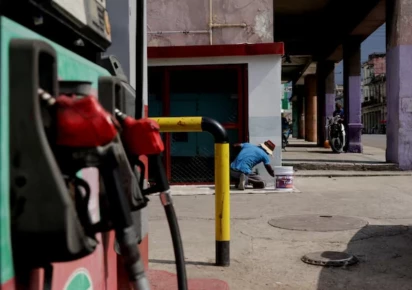
    HAVANA: Gasoline selling for as much as $38 a gallon, diesel advertised on social media and fuel stored inside cramped apartments are offering an unusual glimpse of private enterprise in communist Cuba, where the energy sector has long remained firmly under state control. A US policy allowing American companies to export fuel to private Cuban businesses has triggered an unexpected transformation. As Cuba struggles with shortages, blackouts and a weakened public transport system, imported fuel is creating a growing private market — while also exposing a sharp divide between those who can afford it and millions who cannot. The change follows the collapse of Cuba’s traditional fuel supplies from Venezuela and Mexico after the United States removed Venezuelan President Nicolas Maduro in January. With sanctions discouraging tankers from sailing toward the island, fuel shortages have increasingly affected transport, hospitals, schools and other essential services. Under an exception to Washington’s oil restrictions, however, private Cuban restaurants, retailers, taxi operators and other businesses have been allowed to import fuel. The impact has been striking. Between February and May, around 900,000 barrels of US fuel entered Cuba — enough to meet only about nine days of the country’s energy requirements. Yet those relatively small shipments have helped create a new network of legal wholesalers, private buyers and illegal resellers. Gasoline becomes a luxury For ordinary Cubans, the new fuel market has often brought frustration rather than relief. On a July afternoon in Havana, 53-year-old Amarilis Sanchez waited for hours at a bus stop after attending her daughter’s birthday celebration. Public buses, which normally cost only two pesos, were unreliable. Nearby, taxi drivers offered rides in vintage cars, but one driver quoted Sanchez 1,000 pesos for the journey — roughly 500 times the price of a bus ride. Unable to afford it, Sanchez considered spending the night at her daughter’s home and trying again for a bus the following day. Her experience illustrates how Cuba’s fuel crisis is creating two very different realities: one for people with access to private vehicles and imported fuel, and another for those dependent on the country’s struggling public transport network. Black-market gasoline prices reportedly reached $10 per litre, or about $38 per gallon, during the spring before falling as imports increased. Social media fuels a new market The emerging trade is increasingly visible online. WhatsApp groups and Facebook pages advertise gasoline and diesel, while some sellers store fuel in apartments and small shops despite the dangers posed by fire, explosions and toxic fumes. At one Havana convenience store, a shopkeeper reportedly kept around a dozen 20-litre fuel containers in a backroom, selling gasoline for approximately $5 per litre. Private companies are also moving into the newly emerging legal wholesale market. By late July, almost 200 Cuban businesses had received permission to distribute fuel wholesale to other private companies. One company, A Granel, advertises diesel through social media and charges $2.50 per litre for a 940-litre tank. The promotion reportedly features a model walking through a warehouse of diesel containers while Daddy Yankee’s famous song Gasolina plays in the background — an unusually flashy image for a country where the energy industry has historically been dominated by the state. Are Cuban gas stations next? The transformation could go further. Cuban lawmakers approved a broad package of economic reforms in June aimed at opening the energy sector to private and foreign investment. Prime Minister Manuel Marrero Cruz later announced that Cuba had approved its first foreign investment project focused on importing and selling fuel, although he did not name the company. The reforms have raised the possibility that private operators could eventually take control of some of Cuba’s familiar state-run Cupet petrol stations. For now, however, retail fuel sales remain largely under state control. Some state-owned stations are storing imported fuel but can distribute it only to vehicles belonging to authorised private businesses. Cuban authorities have defended the reforms while rejecting the idea that they represent a move toward large-scale privatisation. President Miguel Diaz-Canel has accused Washington of imposing a “genocidal siege” on Cuba and said economic changes were not being introduced to satisfy the United States. A lifeline with a heavy price The new fuel market has helped prevent some businesses from shutting down completely. During recent power outages, restaurants and shops with generators powered by imported fuel remained illuminated while much of Havana was plunged into darkness. But experts warn that the emerging system could deepen inequality. With the average government salary reportedly around $10 a month, imported gasoline remains unaffordable for most of Cuba’s roughly nine million residents. Cuban sociologist Mayra Espina said the limited fuel supplies had helped prevent “complete paralysis” but warned that the benefits were overwhelmingly concentrated among those able to pay. The result is an extraordinary contradiction: a small opening toward private enterprise is helping Cuba keep parts of its economy running, while simultaneously making access to basic mobility and energy increasingly dependent on wealth. For a country that has spent decades keeping fuel firmly within the state system, Cuba’s new gasoline economy may therefore prove to be more than a temporary response to shortage. It could become an early test of how far Havana is prepared to let capitalism into one of its most tightly controlled sectors.

  • |

    Iran denies holding talks with US

    Iran has dismissed reports of ongoing negotiations with the United States, saying there are currently no direct talks between the two countries, while confirming that discussions with Oman are focused solely on establishing a temporary maritime route through the Strait of Hormuz. Iranian Foreign Ministry spokesperson Esmaeil Baghaei said the consultations with Oman are aimed at ensuring safe navigation in the strategic waterway and should not be interpreted as an agreement to fully reopen the strait. He maintained that the security situation in the region remains unchanged and insisted that any broader decision regarding the Strait of Hormuz would depend on regional developments. Baghaei also said there are no plans for Iranian or American delegations to meet in the coming days, rejecting speculation that formal negotiations are currently underway. His remarks came after US President Donald Trump announced that Washington expected to begin talks with Iran and suggested that diplomatic efforts had prompted him to cancel a planned military operation. Trump said discussions involving Saudi Arabia, the United Arab Emirates, Qatar and Iran had encouraged the United States to pursue diplomacy instead of military action. The US president said he preferred reaching a negotiated settlement but warned that military options remained available if diplomacy failed. He expressed hope that an agreement could eventually address both navigation through the Strait of Hormuz and concerns over Iran’s nuclear programme. Meanwhile, regional tensions remain high despite renewed diplomatic efforts. Reports emerged that an explosion occurred near a commercial tanker off the coast of Oman. Maritime authorities said the vessel and its crew were safe, while an investigation into the incident is underway. In another development, Iraq’s state oil marketing company reportedly offered significant discounts on Basrah crude exports to encourage buyers to lift cargoes from facilities inside the Strait of Hormuz, reflecting continuing uncertainty in regional energy markets. Iran also announced the execution of two men convicted of spying for Israel’s intelligence agency, saying they had provided sensitive military information to foreign operatives. The uncertainty surrounding the Strait of Hormuz continues to affect global energy markets. The waterway handles a significant share of the world’s oil and liquefied natural gas shipments, making any disruption a major concern for international trade and energy security.

  • |

    Democrats select Crowley, Flanagan as Republicans back Demuth in key state races

    Democratic socialist Francesca Hong and moderate David Crowley are locked in an extraordinarily tight contest for Wisconsin’s Democratic gubernatorial nomination, while Minnesota voters selected progressive Peggy Flanagan for the US Senate and Republican Lisa Demuth for governor. With 80 per cent of the votes counted in Wisconsin, Milwaukee County Executive David Crowley held a narrow lead of just a few hundred votes over Hong. The outcome remains too close to call in a race widely seen as a major test of progressive policy appeal in a crucial battleground state. Hong, a state representative and former chef, ran on a platform advocating for the abolition of Immigration and Customs Enforcement (ICE), a temporary moratorium on data centres, and increased corporate taxes. Her campaign faced late scrutiny over past social media posts concerning Thanksgiving, which she subsequently clarified. The victor of the Democratic primary will face Republican nominee US Representative Tom Tiffany in November. In Wisconsin’s 3rd Congressional District, Democrats selected Rebecca Cooke to challenge Trump-aligned Republican incumbent Derrick Van Orden. Cooke, a former small business owner and waitress who has out-fundraised Van Orden, secured backing from the Democratic Congressional Campaign Committee’s “Red to Blue” programme. Across the state line in Minnesota, Democratic voters chose Lieutenant Governor Peggy Flanagan as their US Senate nominee over moderate Representative Angie Craig. Flanagan, who campaigned on dismantling ICE, will seek the seat being vacated by retiring Democratic Senator Tina Smith. In Minnesota’s Republican gubernatorial primary, State House Speaker Lisa Demuth secured the nomination, defeating former MyPillow chief executive Mike Lindell despite his high-profile endorsement from Donald Trump. Demuth now advances to challenge Democratic nominee Senator Amy Klobuchar in the general election.

Leave a Reply

Your email address will not be published. Required fields are marked *