icc members dismiss
|

ICC members dismiss prosecutor Khan over sexual misconduct allegation

Member states of the International Criminal Court (ICC) voted to dismiss prosecutor Karim Khan for serious misconduct, the ICC said on Friday, July 24.

Diplomats running the executive bureau of the court’s governing body said last month the British barrister had an inappropriate sexual relationship with a junior ICC lawyer and should be fired, documents seen by Reuters showed. On Friday, a large majority of the ICC’s 125 member states voted to follow that recommendation.

“The assembly decided by a majority of 82 states parties that the elected official, prosecutor, Karim Khan, committed serious misconduct and a serious breach of duty… and to remove… Karim Khan from office,” the president of the court’s governing body, Paivi Kaukoranta, said.

Khan, 56, denies any wrongdoing.

“Mr. Khan will challenge the lawfulness and fairness of the decision through all available legal mechanisms,” his lawyer, Tayab Ali, said after the vote.

Khan’s dismissal immediately triggers the election process for a new ICC prosecutor who is not expected to be voted in before next year.

“Members of the court acted swiftly and decisively to remove an embattled and discredited official so that the court can move forward with its important work in all the situations on its docket,” said Leila Sadat, professor of international criminal law at Washington University.

Dismissal follows renewed US pushback

Khan’s dismissal follows an announcement by the United States that it will launch a renewed diplomatic campaign to dismantle the ICC, which it says is a threat to its sovereignty.

During a visit to the Philippines on Thursday, US Secretary of State Marco Rubio said there were “lunatics and crazies involved in the ICC” and there was no way any US political or military officials would ever go on trial at the court, reiterating previous criticism.

State Department spokesperson Tommy Pigott welcomed Khan’s removal but said, “he is only one small cog in this irredeemably corrupt institution. Today’s outcome will have no impact on the United States’ plans to dismantle the ICC.”

The US, which is not a member, has imposed sanctions on 11 ICC judges and prosecutors, including Khan, citing ⁠the ICC’s ​arrest warrants against Israeli Prime Minister Benjamin Netanyahu and former defence minister Yoav Gallant, ​and a past probe into US troops in Afghanistan.

While removing Khan helps the ICC’s credibility by showing it has accountability for its own leadership, the court has more hurdles to overcome, said Kyra Wigard, assistant professor of law at Utrecht University.

“The bigger challenge going forward is whether the court can restore confidence internally and externally while maintaining the perception of independence amid intense geopolitical pressure,” she said.

Khan’s accuser spoke publicly for the first time last week in an interview with CNN in which she repeated her allegations that the prosecutor had a non-consensual sexual relationship with her.

Lawyers for Khan told Reuters he denied “any sexual relationship of any kind” with the junior lawyer.

Any active ICC warrants will remain in place because only ICC judges have the authority to withdraw warrants. – Rappler.com
Similar Posts

  • | | | | | |

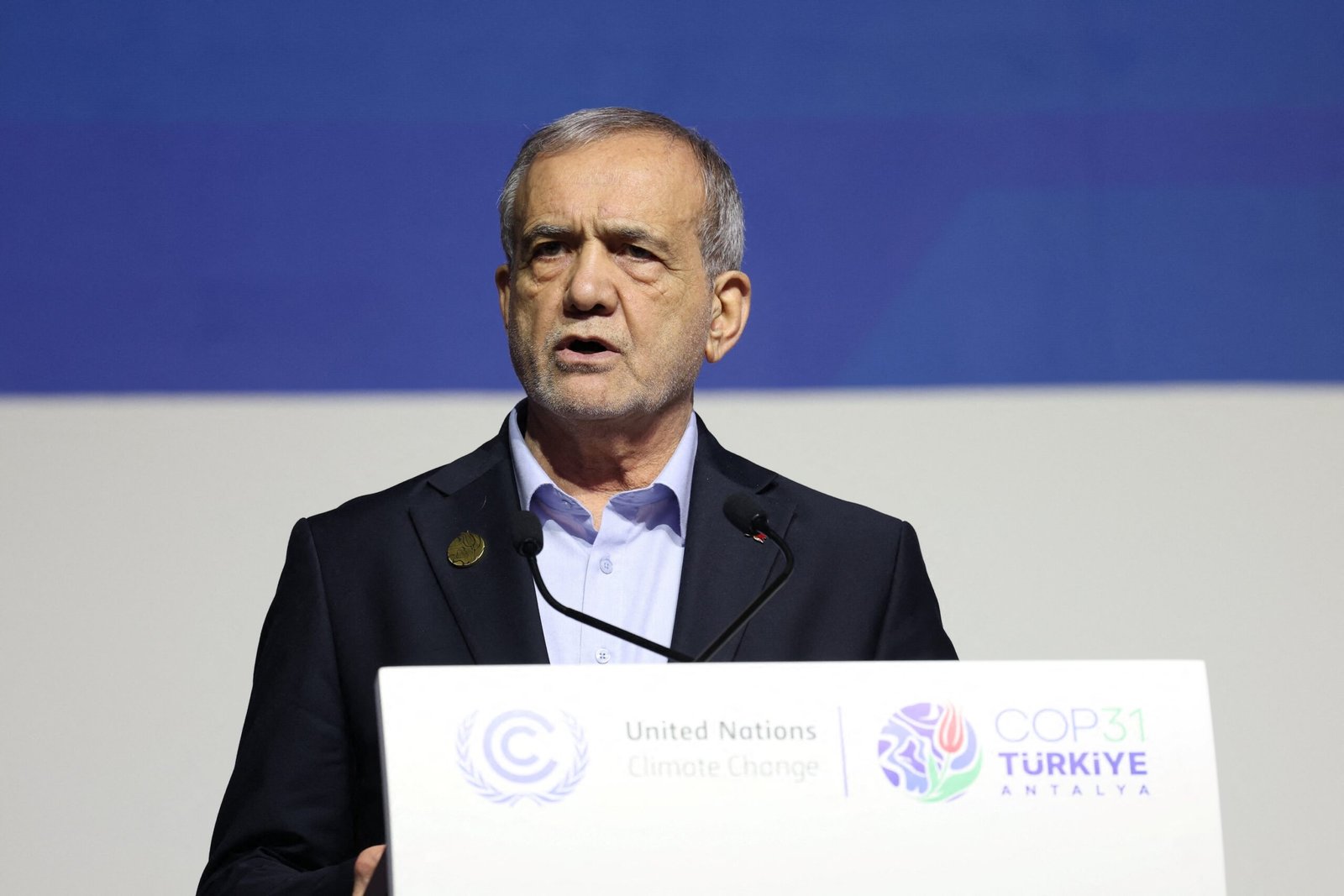
    COP31: Iran wants compensation for environmental damage from US-Israeli strikes

    ‘We expect the global community to establish a genuine and meaningful link between climate commitments in times of peace and responsibility in times of war,’ says Iran’s President Masoud Pezeshkian

  • |

    Japan unveils first spy agency since WWII

    Japan has launched its first centralized intelligence agency since the end of World War II. The move marks one of the country’s biggest security reforms in decades. It comes as Japan faces rising regional tensions and growing concerns over espionage, cyber threats, and global instability. The new body is called the National Intelligence Bureau (NIB). It officially began operations on Friday. It replaces the Cabinet Intelligence and Research Office (CIRO), which had served as Japan’s main intelligence office for years. However, experts often criticized the old system for lacking authority and coordination. Prime Minister Sanae Takaichi described the new agency as the first step in a broader intelligence reform plan. She said today’s security environment is changing rapidly. According to her, modern conflicts now involve cyberattacks, intelligence operations, and other non-traditional forms of warfare. She stressed that Japan must strengthen its intelligence capabilities to protect national security. The National Intelligence Bureau will collect, analyze, and coordinate intelligence gathered by various government departments. These include the ministries of defense, foreign affairs, justice, and the National Police Agency. Under the new system, government agencies will be required to share information with the bureau. Officials believe this will improve cooperation and eliminate delays caused by fragmented intelligence networks. The bureau will work under the newly created National Intelligence Council. The council will be chaired by the prime minister and include senior cabinet ministers. It will oversee national intelligence policy and coordinate responses to major security threats. The agency’s responsibilities will cover a wide range of issues. These include counterterrorism, emergency response, cybersecurity, foreign espionage, and efforts to detect covert influence operations carried out by hostile states. Security analysts have long argued that Japan’s intelligence system has been weaker than those of many other developed countries. Unlike several of its close allies, Japan does not have a dedicated foreign intelligence agency that operates overseas. The country also lacks a comprehensive anti-espionage law, making it more difficult to investigate and prosecute espionage activities. Experts say these weaknesses have raised concerns among Japan’s international partners. Countries sharing sensitive intelligence expect strong security measures to prevent leaks. A weak intelligence system can reduce confidence and limit intelligence cooperation. Calls for reform are not new. In the 1980s, former Prime Minister Yasuhiro Nakasone warned that Japan had become a “paradise for spies.” He proposed stronger anti-espionage laws, but the plan faced strong public opposition and was never approved. At the time, many Japanese feared that expanding intelligence powers could revive the surveillance and repression experienced before and during World War II. Today, the security situation is very different. Japan faces increasing military and strategic challenges from China, North Korea, and Russia. The country also hosts thousands of US military personnel, making it an important strategic partner in the Indo-Pacific region. Officials believe foreign intelligence services are actively seeking information about Japan’s defense systems, advanced technology, and military cooperation with its allies. Growing military cooperation among China, Russia, and North Korea has also increased concerns in Tokyo. Their joint military activities and closer political ties have reinforced the belief that Japan must strengthen its national security institutions. Prime Minister Takaichi has made defense and intelligence reform a key priority since taking office. With strong support in parliament, her government is expected to push for further changes. These may include introducing an anti-espionage law and creating a dedicated foreign intelligence service similar to those operated by other major democratic nations. Despite the government’s arguments, the reforms remain controversial. Opposition lawmakers and civil rights groups warn that expanding intelligence powers could threaten privacy and individual freedoms if proper safeguards are not introduced. They argue that stronger oversight, parliamentary scrutiny, and independent monitoring will be essential to prevent misuse of power.

  • |

    Indian student protest to continue after clashes in Delhi leave nearly 180 injured

    A youth led protest movement in India has vowed to continue demonstrations demanding the resignation of Education Minister Dharmendra Pradhan after violent clashes with police in New Delhi left nearly 180 people injured. The movement, known as the Cockroach Janta Party, cancelled plans for another march to parliament but said protests would continue at the Jantar Mantar demonstration site. Organisers said they wanted to avoid further injuries after Monday’s confrontation with security forces. The campaign began as an online satirical movement but has rapidly grown into one of the biggest public challenges facing Prime Minister Narendra Modi during his third term in office. It has attracted widespread support from young people angered by repeated examination paper leaks and allegations of corruption in India’s education system. Thousands of protesters from Delhi and nearby regions gathered outside parliament on Monday to demand accountability over a national medical entrance examination leak that affected more than two million students earlier this year. The exam had to be conducted again after question papers were leaked, while reports of several student suicides linked to the controversy intensified public outrage. Police used batons and tear gas to disperse demonstrators after violence broke out during the march. According to Delhi Police, more than 118 police and security personnel, along with around 60 protesters, were injured during the clashes. Most of those hurt received medical treatment and were later discharged from hospital. Authorities also detained around 70 protesters and said legal action would be taken against them. Police accused demonstrators of ignoring restrictions on public gatherings and behaving aggressively despite repeated warnings. On Tuesday, around 500 protesters gathered peacefully at Jantar Mantar despite light rain and heavy security across central Delhi. Paramilitary forces remained deployed while barricades were placed on several roads to prevent further unrest. CJP founder Abhijeet Dipke apologised to supporters for the violence they faced during Monday’s protest. He expressed particular concern over female demonstrators who he claimed were assaulted by male police officers during the clashes. Dipke announced that while the movement would continue its campaign, organisers would not attempt another march towards parliament because they feared more young people could be injured. The protest movement gained significant momentum after social activist Sonam Wangchuk joined the campaign with a hunger strike in late June. Wangchuk was later moved to hospital by authorities, a move that further fuelled criticism of the government among supporters. The group’s demands include the resignation of the education minister, the release of Wangchuk and financial compensation for the families of students who reportedly died by suicide following the examination leak. Government officials have indicated they are open to discussions. Health Minister JP Nadda recently met representatives of the movement and requested time to consider their demands. Parliamentary Affairs Minister Kiren Rijiju also called for calm and said ongoing talks should not be disrupted. Opposition parties criticised the government’s handling of the protests and accused authorities of using excessive force against peaceful demonstrators. Leaders of the ruling Bharatiya Janata Party rejected those claims and argued that the violence appeared to have been deliberately provoked. Political analysts believe that even if negotiations reduce immediate tensions, the wider frustration among India’s younger generation is unlikely to disappear. Concerns over unemployment, repeated examination scandals and growing distrust in public institutions continue to drive dissatisfaction, making youth unrest an increasingly important political issue for the government.

  • |

    Putin hails Pakistan on 79th Independence Day

    Russian President Vladimir Putin has extended warm greetings to President Asif Ali Zardari and Prime Minister Shehbaz Sharif on Pakistan’s Independence Day. In his message, Putin congratulated the Pakistani leadership and people on the national occasion and conveyed his wishes for peace, prosperity and continued progress for Pakistan. The Russian president said relations between Russia and Pakistan were developing successfully. He noted that the two countries were steadily expanding cooperation across several areas. Putin said Moscow and Islamabad maintained productive ties in political, trade, economic and humanitarian fields. He also highlighted their cooperation on important regional and international issues. According to the Russian president, continued engagement between the two countries is important for promoting stability in the region. He expressed confidence that bilateral cooperation would continue to grow in the years ahead. Putin reaffirmed Russia’s commitment to further strengthening the partnership with Pakistan across all areas of mutual interest. He said continued cooperation would serve the interests of both countries and their peoples. The Russian leader also expressed hope that the two countries would maintain constructive joint efforts to deepen their relationship and contribute to greater regional and international stability. The message comes as Pakistan marks its 79th Independence Day, with countries across the world extending greetings and reaffirming their ties with Islamabad.

  • |

    Thai teen’s shooting sparks school safety review

    Thai police said a 14-year-old boy accused of carrying out a deadly shooting near Bangkok had shown an interest in firearms for up to two years and had watched violent material online. The teenager allegedly killed his grandparents at their home on Friday before shooting six people at his school and taking his own life. More than 20 others suffered injuries in the attack, which became Thailand’s deadliest mass shooting since 2022. Deputy Commissioner of Provincial Police Region 1 Atthapol Anusit told reporters that investigators had questioned 17 witnesses so far. Police also found a knife in the teenager’s school bag, along with a firearm, spent cartridge cases and a personal computer. Investigators examining the computer found social media content involving violence. Police also said the boy had used social media to learn about firearms, although they have not yet found evidence that he regularly practised shooting. A teacher had confiscated a BB gun from the boy at school last year, according to police. The teenager had lived with his grandparents for about 12 years after his parents separated. In response to the tragedy, Thailand’s Ministry of Education said it would introduce new school safety measures within three months. The plan includes mental health screening, referrals for students considered at risk, emergency response drills, stronger anti-bullying measures and tighter checks to prevent weapons and other dangerous items from entering schools. The shooting has renewed calls for stronger firearm controls in Thailand, which has one of the highest rates of civilian gun ownership in Southeast Asia.

  • |

    OPEC+ expected to approve another oil output increase for September

    OPEC+ is widely expected to approve another increase in oil production when its members meet virtually on Sunday, as the alliance continues to adjust supply while global energy markets remain affected by ongoing geopolitical tensions. According to market analysts, Saudi Arabia, Russia and several other key members of the alliance are likely to raise their combined production target by around 188,000 barrels per day for September. If approved, the increase would continue a series of monthly production hikes introduced this year and is expected to mark the final step in the group’s current plan to gradually restore previously reduced output. OPEC+, which includes members of the Organization of the Petroleum Exporting Countries and allied producers, introduced major production cuts between late 2022 and 2023 after concerns that falling oil prices could weaken global energy markets. Those reductions removed nearly six million barrels of oil per day from the market in three separate phases. As demand gradually recovered, the group shifted its strategy by slowly increasing production, beginning in 2025, to balance supply while supporting market stability. A September increase would complete the reversal of the second package of production cuts introduced during that period. However, analysts note that higher production targets do not necessarily mean actual oil output will increase by the same amount. Several member countries are currently unable to reach their assigned quotas because of declining production capacity, ageing infrastructure or operational challenges. Energy analyst Giovanni Staunovo of UBS said many producers are already pumping below their official targets, making further quota increases less significant in practical terms. He noted that production capacity has declined in several member states, limiting their ability to take full advantage of higher output allowances. Regional tensions have also affected oil exports. Gulf producers continue to face challenges because shipping through the Strait of Hormuz has been disrupted during the conflict involving Iran. Although maritime traffic briefly improved after a memorandum of understanding between the United States and Iran was signed in June, transport through one of the world’s busiest oil routes remains uncertain. Russia is also dealing with production difficulties as repeated Ukrainian drone attacks have targeted parts of its energy infrastructure. Current Russian oil production remains close to nine million barrels per day, well below its official production target of 9.8 million barrels per day, highlighting the gap between quotas and actual output. Some OPEC+ members, including Iraq, have indicated they want to increase production significantly once conditions allow. At the same time, the alliance is reviewing the maximum sustainable production capacity of each member to help determine future output allocations. These discussions are expected to play an important role in setting production quotas for 2027 and beyond. Analysts believe negotiations over future production targets could become more challenging after the September meeting. While they say the alliance remains united for now, the departure of the United Arab Emirates from OPEC+ earlier this year has raised questions about the group’s long term cohesion. The UAE said its decision to leave was based on national interests and long term strategic goals, pointing to major investments aimed at expanding its oil production capacity beyond the limits previously set by the alliance. Despite these challenges, OPEC+ is expected to continue coordinating production policies in an effort to maintain stability in the global oil market as economic uncertainty and geopolitical tensions continue to influence energy demand and supply.

Leave a Reply

Your email address will not be published. Required fields are marked *