allies unite behind
|

Allies unite behind Saudi Arabia as Houthis step up attacks

Saudi Arabia, Turkey and Pakistan will hold an urgent, high-level meeting under a joint defense pact to discuss ways to support the kingdom amid attacks by Yemen’s Houthis, while Saudi’s top religious authority told troops to be ready to lay down their lives to fight their Iran-aligned enemy.

The Houthis have launched strikes on the Saudi-backed government in Yemen and repeatedly fired into Saudi Arabia, disrupting oil flows from the world’s largest energy exporter, as part of a wider Middle East war that began with US and Israeli strikes on Iran in February.

The Houthis said they had fired dozens of missiles and drones at Saudi targets on Thursday, September 24, while authorities in Saudi Arabia said they had intercepted six ballistic missiles fired by Houthi fighters.

Must Read

Houthis pushing to model Iran’s Hormuz control in Red Sea – Yemeni foreign chief


Houthis pushing to model Iran’s Hormuz control in Red Sea – Yemeni foreign chief

Saudi Arabia earlier had issued emergency alerts for areas including the holy city of Mecca, Jeddah and Yanbu, the main Saudi Red Sea oil port.

Saudi Arabia’s Grand Mufti, the kingdom’s top religious authority, called on soldiers to be ready to lay down their lives to fight the Houthis until the group is ousted from power, according to a statement posted by the Saudi state news agency late on Thursday.

Amid the fighting, the Saudi, Pakistani and Turkish foreign ministers met within the framework of the Mecca Joint Defense Agreement, according to a Saudi foreign ministry statement. They condemned the attacks targeting Mecca and other civilian sites, while affirming Saudi Arabia’s right to defend itself, the statement said.

“The ministers also discussed arrangements for holding an urgent meeting of the chiefs of staff of the three countries to discuss ways to support Saudi Arabia under the Mecca Joint Defense Agreement, which stipulates that an attack against any one of the parties constitutes an attack against all parties,” read part of the statement.

The meeting was announced shortly after Iranian President Masoud Pezeshkian sought to distance Iran from the Houthis in an American television interview on Thursday.

“The Houthis are responsible for their own actions,” Pezeshkian told the Fox News program “Special Report with Bret Baier” a day after he appeared before the UN General Assembly in New York.

Diplomacy attempts

The Pezeshkian interview and speech took place amid a pause in fighting between the US and Iran and a brief attempt at diplomacy in New York, with Qatar serving as intermediary between the warring parties.

Iran’s Foreign Minister Abbas Araqchi told reporters on Thursday that Tehran had conveyed a proposal to the United States via intermediaries under which the Strait of Hormuz would be reopened if Tehran’s conditions were met.

Under Iran’s proposal, hostilities would end on all fronts, including Lebanon, within seven days. The United States would lift its blockade on Iranian ports, release Iran’s frozen funds and waive its oil sanctions, he said.

“The Strait of Hormuz will be reopened on the last day,” Araqchi said, adding that talks with the United States on other issues, including Iran’s nuclear issue, would then start.

A senior Iranian official told Reuters on Wednesday, September 23, that Tehran was reviewing Washington’s response to its peace proposals.

Oil prices fell on Friday, September 25, as markets weighed the possibility of a truce, even as the number of ships transiting the Strait of Hormuz dropped to nine on Thursday, half the 10-day average.

The war, which US President Donald Trump launched alongside Israel in February, has killed thousands of people and disrupted global energy supplies.

While the US and Iran have largely stood down from direct combat, Iranian allies are engaged in the region with Hezbollah confronting Israel in Lebanon and the Houthis advancing in Yemen.

Iran and its allies have significantly pressured oil exports from Saudi Arabia, a US ally. The Houthis have disrupted ship traffic at the mouth of the Red Sea while Iran has effectively limited tanker traffic at the Strait of Hormuz, the conduit for 20% of the world’s oil exports before the start of the war. An attack by Iranian-backed militias in Iraq also temporarily knocked Saudi Arabia’s East-West Pipeline out of service.

Security experts have debated exactly how much Iran directly influences the Houthis, a Shi’ite Islamist movement that evolved from a local insurgency into a powerful armed group controlling much of northern Yemen.

However, Yemeni government, Iranian and regional sources have said the Houthis’ advance down Yemen’s Red Sea coast was carried out with direct guidance from Iran’s Islamic Revolutionary Guard Corps.

With the US-Israeli war against Iran largely stalemated for months on the battlefield, Washington has announced a shift in tactics to extend the reach of its financial sanctions by targeting companies from third countries that do business with Iranian firms, a practice known as “secondary sanctions.”

Iranian airlines were barred from neighboring countries including the UAE and Oman on Thursday in response to new US sanctions, the first big impact of a shift in US policy to target companies in third countries that do business with Iran.

A flight ban, if sustained, could deepen Iran’s isolation and worsen an economic crisis in the country, which is already facing a US blockade of its ports at sea.

“We are living in an open-air prison,” a retired teacher in Tehran told Reuters by text message on condition her name not be used. – Rappler.com

Similar Posts

  • | | | | |

    Hlun Solo’s Death Devastates Fans, We Explain Why He Was The Exact Opposite of Most Influencers and YouTubers and Why He Was So Beloved by Thais

    Thailand/Georgia His real name was Bowornthat Pengsuk, born in 1999 in Kalasin province in northeastern Thailand, he grew up in modest circumstances. After his father died, he was raised primarily by his grandmother, who focused on education and practical values. He attended local schools that offered scholarships and support, then worked factory jobs in Bangkok, […]

  • | |

    Adani group weighs entry into Indian aviation mark…

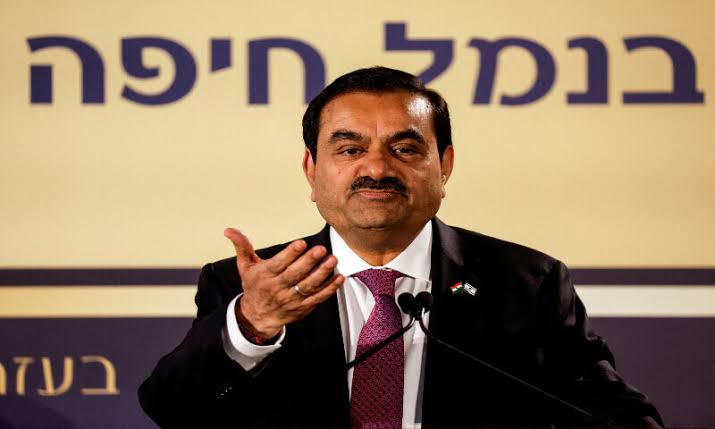
    Indian billionaire Gautam Adani’s conglomerate is exploring a possible entry into the airline business, a move that could disrupt an Indian aviation market currently controlled by just two major carriers, according to two people familiar with the discussions. The consideration marks a potential shift in direction for the group, which runs eight airports across India, including two serving Mumbai, and is midway through an expansion plan worth 11 billion dollars. The group had previously indicated it had no plans to enter the airline sector. According to one of the sources, who spoke on condition of anonymity because they were not authorized to discuss the matter publicly, no final decision has been reached and the idea remains under internal review, partly because the airline business is widely seen as difficult to run profitably. The source said Indian officials have privately encouraged large business groups, including Adani’s, to consider launching a carrier following heightened scrutiny of Air India after a fatal crash in Ahmedabad last year, along with operational breakdowns at market leader IndiGo that disrupted air travel nationwide in December. The source characterized Adani’s interest as motivated partly by a sense of national interest, noting that the government has grown concerned that the country needs another major airline given the troubles at both existing carriers. Shares of Adani Enterprises fell more than 3 percent on Thursday following the report. Internal talks about a possible airline venture remain in early stages, and the group has not set a timeline for a decision. Adani ranks as Asia’s second wealthiest individual, with a net worth of roughly 89 billion dollars, though entering the airline industry would represent one of the riskier moves of his business career. Several Indian carriers, including Kingfisher, Jet Airways and Go First, have collapsed into bankruptcy over the past fifteen years amid high taxes, intense competition and supply chain problems. While Adani has aggressively expanded his footprint in ports and airports, he has also spent time since 2024 contending with United States allegations that he paid bribes to secure a solar energy project. Those charges were dropped by American prosecutors earlier this month. India remains one of the fastest growing aviation markets in the world, but the sector has faced persistent concern over its lack of competition. IndiGo currently holds about 65.4 percent of the domestic market, while Air India controls roughly 25 percent, leaving little room for smaller players. The Indian government has said it wants to expand the country’s airport network to between 350 and 400 facilities by 2047, up from 74 in 2014, as passenger traffic climbs and airlines place record aircraft orders with Boeing and Airbus. Rajan Mehra, the former India head of Qatar Airways, said an Adani led entry into aviation could reshape the sector, though he added that regulators would need to ensure strong safeguards and a level playing field for all carriers going forward. One option under consideration is acquiring a stake in an existing airline rather than building a new one from scratch, according to the second source, who said the group is keeping all possibilities open. The government’s push for new entrants comes after it warned IndiGo in December that it could face regulatory action following a wave of flight cancellations triggered by a pilot shortage. That crisis stranded thousands of passengers and prompted officials to intervene to curb a sharp spike in airfares. The broader push toward breaking up India’s aviation duopoly reflects a pattern seen in other fast growing emerging markets, where regulators and governments have historically encouraged new entrants once dominant carriers show signs of strain, though such efforts have a mixed record of success given the industry’s notoriously thin margins and high capital requirements.

  • |

    Right-wing party proposes armed forces intervention to halt Channel crossings

    Reform UK has proposed an extensive military-led framework aimed at completely stopping small boat migration across the English Channel. The policy proposal outlines leveraging combined military and intelligence tracking technology to create a heavily monitored sea border, alongside granting emergency powers to armed forces to intercept vessels and push them back toward French territory. The plan includes expanding detention facilities to enable immediate offshore or domestic processing and deportation without eligibility for standard asylum routes. To facilitate these changes, the party stated it would pursue major legal shifts, including withdrawing the United Kingdom from the European Convention on Human Rights and replacing current national human rights legislation with a new domestic framework. Critics and legal scholars have questioned the feasibility of the measures, pointing out potential conflicts with international maritime agreements and international law. Meanwhile, Prime Minister Andy Burnham stated his administration would maintain a relentless focus on tackling immigration networks through increased enforcement and cross-border security cooperation.

  • | |

    Harper’s brisk knock powers Galle to strong total against Dambulla

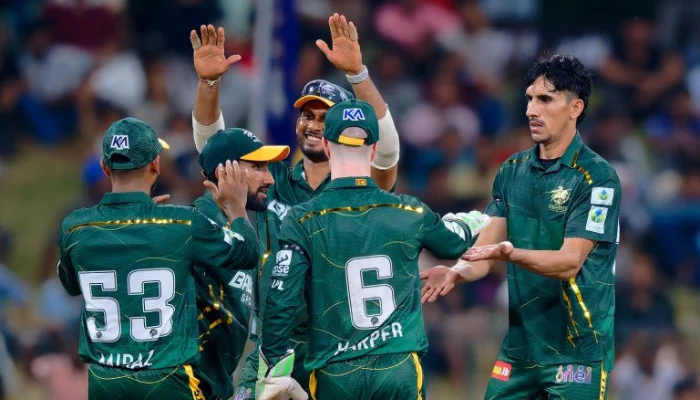
    Sam Harper struck a quickfire 40 off just 22 balls to lay the foundation for a strong total from Galle Gallants against Dambulla Sixers in the eighth fixture of the Lanka Premier League 2026 at the Rangiri Dambulla International Stadium on Wednesday. Batting first after winning the toss, Galle posted 178 for 8 across their full 20 overs, with Harper’s early aggression setting the tone for the innings. Dambulla Sixers named a playing eleven of Marques Ackermann, Niroshan Dickwella as wicketkeeper, Reeza Hendricks, Pavan Rathnayake, Gulbadin Naib, Vishva Lahiru, Sachitha Jayatillake, Ramesh Mendis, Maheesh Theekshana, captain Dushmantha Chameera and Fazalhaq Farooqi. Galle Gallants fielded Lasith Croospulle, Sam Harper as wicketkeeper, Mehidy Hasan Miraz, Charith Asalanka, captain Dasun Shanaka, Mohammad Nawaz, Chamika Karunaratne, Dinura Kalupahana, Sahan Arachchige, Akif Javed and Vijayakanth Viyaskanth. More details on the match are expected to follow as the innings progresses.

Leave a Reply

Your email address will not be published. Required fields are marked *