allies unite behind
|

Allies unite behind Saudi Arabia as Houthis step up attacks

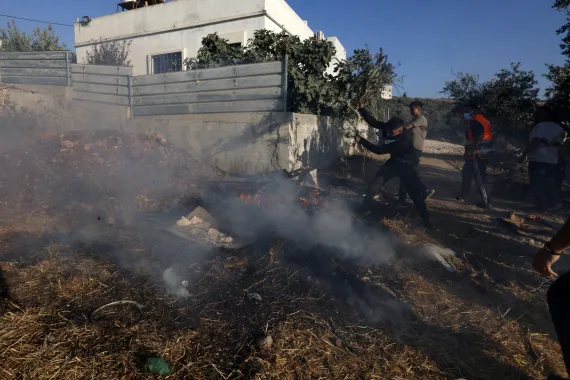
Saudi Arabia, Turkey and Pakistan will hold an urgent, high-level meeting under a joint defense pact to discuss ways to support the kingdom amid attacks by Yemen’s Houthis, while Saudi’s top religious authority told troops to be ready to lay down their lives to fight their Iran-aligned enemy.

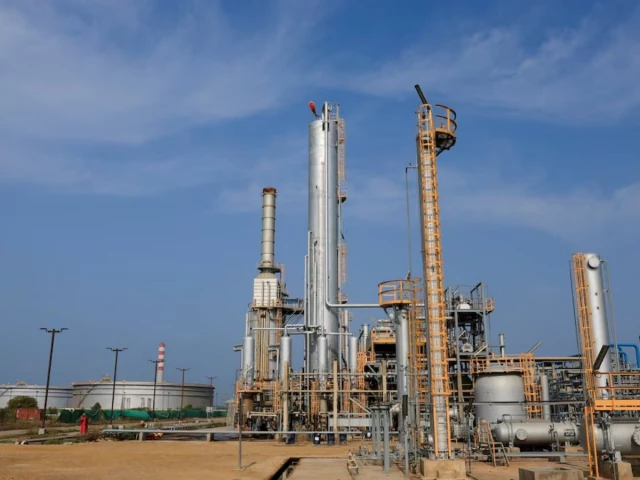
The Houthis have launched strikes on the Saudi-backed government in Yemen and repeatedly fired into Saudi Arabia, disrupting oil flows from the world’s largest energy exporter, as part of a wider Middle East war that began with US and Israeli strikes on Iran in February.

The Houthis said they had fired dozens of missiles and drones at Saudi targets on Thursday, September 24, while authorities in Saudi Arabia said they had intercepted six ballistic missiles fired by Houthi fighters.

Must Read

Houthis pushing to model Iran’s Hormuz control in Red Sea – Yemeni foreign chief


Houthis pushing to model Iran’s Hormuz control in Red Sea – Yemeni foreign chief

Saudi Arabia earlier had issued emergency alerts for areas including the holy city of Mecca, Jeddah and Yanbu, the main Saudi Red Sea oil port.

Saudi Arabia’s Grand Mufti, the kingdom’s top religious authority, called on soldiers to be ready to lay down their lives to fight the Houthis until the group is ousted from power, according to a statement posted by the Saudi state news agency late on Thursday.

Amid the fighting, the Saudi, Pakistani and Turkish foreign ministers met within the framework of the Mecca Joint Defense Agreement, according to a Saudi foreign ministry statement. They condemned the attacks targeting Mecca and other civilian sites, while affirming Saudi Arabia’s right to defend itself, the statement said.

“The ministers also discussed arrangements for holding an urgent meeting of the chiefs of staff of the three countries to discuss ways to support Saudi Arabia under the Mecca Joint Defense Agreement, which stipulates that an attack against any one of the parties constitutes an attack against all parties,” read part of the statement.

The meeting was announced shortly after Iranian President Masoud Pezeshkian sought to distance Iran from the Houthis in an American television interview on Thursday.

“The Houthis are responsible for their own actions,” Pezeshkian told the Fox News program “Special Report with Bret Baier” a day after he appeared before the UN General Assembly in New York.

Diplomacy attempts

The Pezeshkian interview and speech took place amid a pause in fighting between the US and Iran and a brief attempt at diplomacy in New York, with Qatar serving as intermediary between the warring parties.

Iran’s Foreign Minister Abbas Araqchi told reporters on Thursday that Tehran had conveyed a proposal to the United States via intermediaries under which the Strait of Hormuz would be reopened if Tehran’s conditions were met.

Under Iran’s proposal, hostilities would end on all fronts, including Lebanon, within seven days. The United States would lift its blockade on Iranian ports, release Iran’s frozen funds and waive its oil sanctions, he said.

“The Strait of Hormuz will be reopened on the last day,” Araqchi said, adding that talks with the United States on other issues, including Iran’s nuclear issue, would then start.

A senior Iranian official told Reuters on Wednesday, September 23, that Tehran was reviewing Washington’s response to its peace proposals.

Oil prices fell on Friday, September 25, as markets weighed the possibility of a truce, even as the number of ships transiting the Strait of Hormuz dropped to nine on Thursday, half the 10-day average.

The war, which US President Donald Trump launched alongside Israel in February, has killed thousands of people and disrupted global energy supplies.

While the US and Iran have largely stood down from direct combat, Iranian allies are engaged in the region with Hezbollah confronting Israel in Lebanon and the Houthis advancing in Yemen.

Iran and its allies have significantly pressured oil exports from Saudi Arabia, a US ally. The Houthis have disrupted ship traffic at the mouth of the Red Sea while Iran has effectively limited tanker traffic at the Strait of Hormuz, the conduit for 20% of the world’s oil exports before the start of the war. An attack by Iranian-backed militias in Iraq also temporarily knocked Saudi Arabia’s East-West Pipeline out of service.

Security experts have debated exactly how much Iran directly influences the Houthis, a Shi’ite Islamist movement that evolved from a local insurgency into a powerful armed group controlling much of northern Yemen.

However, Yemeni government, Iranian and regional sources have said the Houthis’ advance down Yemen’s Red Sea coast was carried out with direct guidance from Iran’s Islamic Revolutionary Guard Corps.

With the US-Israeli war against Iran largely stalemated for months on the battlefield, Washington has announced a shift in tactics to extend the reach of its financial sanctions by targeting companies from third countries that do business with Iranian firms, a practice known as “secondary sanctions.”

Iranian airlines were barred from neighboring countries including the UAE and Oman on Thursday in response to new US sanctions, the first big impact of a shift in US policy to target companies in third countries that do business with Iran.

A flight ban, if sustained, could deepen Iran’s isolation and worsen an economic crisis in the country, which is already facing a US blockade of its ports at sea.

“We are living in an open-air prison,” a retired teacher in Tehran told Reuters by text message on condition her name not be used. – Rappler.com

Similar Posts

  • |

    Rubio warns Iran’s Hormuz demands could threaten global trade and regional security

    US Secretary of State Marco Rubio has warned that Iran’s demand to control shipping through the Strait of Hormuz could create a dangerous international precedent with serious consequences for global trade and economic stability. Speaking at a meeting of Southeast Asian foreign ministers in Manila, Rubio said allowing any country to control an international waterway and impose tolls through force would undermine international law and encourage similar actions in other regions. Rubio addressed ministers from the Association of Southeast Asian Nations at the start of their annual gathering, where concerns over renewed fighting in the Middle East dominated discussions. He assured regional partners that despite Washington’s focus on the conflict with Iran, the United States remains fully committed to its relationship with ASEAN and its security partnerships in Asia. He warned that if Iran is allowed to demand payment from ships passing through the Strait of Hormuz while threatening attacks against those that refuse, it could encourage other countries to adopt similar tactics in strategic waterways around the world. Rubio said such a development would pose a serious threat not only to the Middle East but also to the Indo Pacific region, where global shipping routes are equally vital. The US secretary also accused Iran of backing away from commitments made under an earlier ceasefire arrangement. He said Tehran has contacted Washington through both direct and indirect channels to discuss possible negotiations. While the United States remains open to a diplomatic solution, Rubio said it would not tolerate attacks on commercial shipping or American personnel in the region. The ASEAN meeting has brought together senior diplomats from major global powers including the United States, China, Russia, India, Japan, and Australia. Many participating countries expressed concern over the impact of the Iran conflict on energy supplies and international markets. Russian Foreign Minister Sergey Lavrov said Moscow hopes for a quick resolution to tensions between Washington and Tehran. He stated that continued conflict hurts the global economy and affects Russia as well. Lavrov added that stable energy prices are important for long term economic planning and said Russia supports efforts to end the crisis peacefully. Australian Foreign Minister Penny Wong also called for an immediate ceasefire and renewed negotiations. She warned that the security situation in the Middle East could worsen without warning and stressed that the reopening of the Strait of Hormuz is essential for restoring stability in global energy markets. The International Energy Agency has described the current situation as a major warning for Southeast Asia’s energy security. The region depends heavily on oil and liquefied natural gas transported through the Strait of Hormuz. According to the agency, Asian countries imported about 80 percent of the crude oil and nearly 90 percent of the liquefied natural gas passing through the waterway last year. Any prolonged disruption could increase energy prices and place additional pressure on economies across the region. On the sidelines of the summit, Rubio also met foreign ministers from the Quad partnership, which includes the United States, Australia, India, and Japan. The group reaffirmed its commitment to maintaining maritime security and ensuring freedom of navigation while expressing concern over China’s growing influence in regional waters. Japanese Foreign Minister Toshimitsu Motegi criticised attempts to change the regional balance through force, referring to disputes in the South China Sea and East China Sea. Penny Wong echoed those concerns, saying that actions increasing regional instability must be addressed through dialogue and international cooperation. Rubio also held talks with Chinese Foreign Minister Wang Yi. The two discussed a recent confrontation between Chinese and Philippine forces in disputed waters. Rubio described the incident as an escalation and said disagreements between Washington and Beijing must be managed carefully to avoid wider conflict. He added that both sides also discussed trade issues ahead of a planned meeting between US President Donald Trump and Chinese President Xi Jinping later this year. Rubio is expected to meet Russian Foreign Minister Sergey Lavrov again to discuss the war in Ukraine and explore whether there is an opportunity to revive diplomatic efforts aimed at ending the conflict. Officials said the meetings in Manila highlight the growing connection between security challenges in Europe, the Middle East, and the Indo Pacific as world leaders seek ways to prevent further instability.

  • | | |

    Iran unleashes drone barrage on US bases

    The conflict between Iran and the United States intensified on Friday as Iranian military officials claimed to have carried out drone attacks on several military facilities used by US forces in Kuwait, Bahrain and Jordan. The developments came after fresh US airstrikes on Iranian targets, signalling another major escalation in the months-long regional confrontation. According to Iranian military statements, “Arash” attack drones targeted US military warehouses and troop positions at Camp Udairi, Camp Doha and Camp Arifjan in Kuwait. Iranian officials said the attacks focused on weapons storage sites, military equipment and logistical facilities. They warned that further military action would continue if attacks against Iran persisted. Iran also claimed responsibility for drone strikes on Sheikh Isa Air Base in Bahrain and Al-Azraq Air Base in Jordan. Iranian state media reported that fuel storage areas, aircraft hangars, maintenance facilities and accommodation used by US personnel were among the intended targets. However, there was no immediate confirmation from the United States, Bahrain, Jordan or Kuwait regarding the reported attacks. Officials in those countries also did not immediately report casualties or significant damage. Meanwhile, US forces reportedly carried out fresh airstrikes on an Islamic Revolutionary Guard Corps (IRGC) naval headquarters in the northern Iranian town of Zibakenar. Iranian authorities said the facility was hit but added that initial assessments showed no casualties. In Iraq, several explosions were reported near Erbil International Airport, where US-led coalition forces are stationed. Witnesses reported hearing air defence systems in operation while drones were seen flying over the area. Smoke was later observed rising near the airport complex. Iranian Foreign Minister Abbas Araghchi warned that any country assisting the United States in military operations against Iran would be held responsible under international law. He said Tehran reserved the right to respond with measures permitted under self-defence. Araghchi also criticised Washington over comments suggesting frozen Iranian assets could be used to compensate for damage caused to commercial shipping. He warned that confiscating another country’s assets would create a dangerous international precedent and undermine global financial stability. The military escalation has also affected global energy markets. Concerns over security in the Strait of Hormuz and the Red Sea have sharply reduced tanker traffic through key shipping routes. Shipping data indicated that only one oil tanker crossed the Strait of Hormuz on Thursday, the lowest daily figure in more than two months. The situation worsened after attacks on Saudi oil tankers in the Red Sea increased fears of further disruption to global energy supplies. Rising tensions pushed international oil prices above $100 per barrel, raising fresh concerns about inflation and the global economy. US President Donald Trump warned that Iran and the Iran-backed Houthi movement would face severe military consequences if attacks on commercial shipping continued. He said Washington was prepared to respond forcefully to any further threats against regional security and international maritime trade.

  • | | | |

    US ‘locked and loaded’ as Iran talks continue

    US President Donald Trump has said Washington is engaged in direct talks with Iran, signalling that diplomacy remains active despite rising tensions in the Middle East. However, he warned that the United States remains fully prepared for military action if negotiations fail. Speaking at the White House, Trump said discussions with Tehran are ongoing and described Iranian officials as becoming “very serious” in the negotiations. He stressed that while the US is not rushing to reach an agreement, preventing Iran from acquiring a nuclear weapon remains a top priority. The US president also stated that a previously mentioned “massive” military strike against Iran may not be necessary if diplomatic efforts produce results. Nevertheless, he made it clear that American forces remain on high alert and are fully prepared to respond if required. Trump said senior administration officials, including Secretary of State Marco Rubio and Vice President JD Vance, are involved in the ongoing diplomatic contacts with Iran. He did not provide further details about the negotiations or any possible timeline for an agreement. Iranian Foreign Minister Abbas Araghchi responded by saying Tehran would not be intimidated by threats or external pressure. Speaking during a regional meeting in Kyrgyzstan, he said Iran would continue defending its national interests and would not change its policies under pressure. Meanwhile, regional tensions remain high. Air raid sirens were reported in Bahrain as Iran claimed it continued targeting US military bases in Bahrain, Kuwait and Jordan. The situation has added to concerns over a wider conflict in the Gulf region. The Saudi-led coalition also announced military operations against Houthi positions in Yemen. Coalition officials said the strikes targeted military sites, while Houthi media reported damage to telecommunications and port facilities in Hodeidah and claimed that one civilian was injured. Violence also escalated in the occupied West Bank, where clashes involving Israeli settlers and Palestinians left several people dead. Rights groups have urged the international community to take immediate steps to prevent further violence and protect civilians.

  • | |

    Pakistan’s Cnergyico ramps up US crude purch…

    Cnergyico, Pakistan’s largest oil refiner, has increased its purchases of US crude as the federal government works to diversify the country’s energy supply following disruptions tied to the war in Iran that exposed how heavily Pakistan depends on Gulf shipping routes. The government is also pushing to expand imports from the United States as part of a broader effort to narrow its trade surplus with Washington and secure relief from tariffs imposed by President Donald Trump. Cnergyico, which made its first purchase of US crude last year, is now weighing spot purchases alongside longer term supply contracts with Vitol and other suppliers, basing those decisions on pricing, reliability and supply security, Vice Chairman Usama Qureshi said. The refiner imported roughly 8.1 million barrels of US crude over a nine month stretch, including 7.1 million barrels worth about $750 million during the fiscal year that ended in June, according to Qureshi. Central bank data showed Pakistan’s payments for US imports climbed by $914 million to reach $3.27 billion during that fiscal year, meaning Cnergyico’s crude purchases accounted for roughly 80 percent of that overall increase. Qureshi said the refiner could expand its US crude purchases further if Pakistan’s proposed EXIM Bank trade finance facility gets extended to Cnergyico. Islamabad pitched that facility last month as a mechanism allowing Pakistani buyers to delay payments to US exporters for as long as three years. Pakistan has traditionally sourced most of its oil from Saudi Arabia and the United Arab Emirates, with roughly 90 percent of its oil and liquefied natural gas imports passing through the Strait of Hormuz before the war disrupted that route. Rising fuel costs have added pressure on Islamabad to respond, particularly as fresh protests over inflation and fuel prices broke out this week. The government has also pursued alternative supply routes, including Saudi crude delivered via the Yanbu port on Saudi Arabia’s Red Sea coast. Qureshi said Cnergyico is evaluating construction of a second offshore mooring facility linked to its existing storage network, which would allow the company to import and export refined products using large tankers outside Karachi’s congested ports. That project forms part of a broader $1.2 billion upgrade aimed at meeting Euro V fuel standards, reducing furnace oil output and expanding refining capacity to around 200,000 barrels per day. Fawad Basir, head of research at KTrade Securities, said the disruptions in the Middle East have underscored the risks of relying on a single supply corridor. He said using Very Large Crude Carriers to import US oil could reduce freight costs by 25 to 30 percent, while adding a second Single Point Mooring facility would speed up vessel turnaround times. Cnergyico currently processes 156,000 barrels of crude per day and operates Pakistan’s only single point mooring terminal near Karachi, giving it the unique ability among the country’s refiners to handle large tankers directly. The company plans to build a second offshore terminal to accommodate larger or more frequent shipments and intends to upgrade its refinery over the next five to six years. The refiner, which has been running at an average utilization rate of just 30 to 35 percent amid weak domestic demand, is betting that demand for refined oil products will strengthen in the years ahead.

  • |

    Former Turkish PM Davutoglu quits politics

    ISTANBUL: Former Turkish prime minister Ahmet Davutoglu has announced his decision to step away from politics and dissolve his Future Party, ending a decades-long political career that saw him rise as one of President Recep Tayyip Erdogan’s closest allies before becoming a vocal critic. Davutoglu announced the decision this week, saying he wanted to distance himself from what he described as a “dirty political climate” in Turkiye. He said the move was not a surrender but a step taken on moral grounds and a call for a broader rethink of politics. The former premier criticized issues including corruption, favouritism and weak accountability, saying these challenges had damaged public trust. He also raised concerns over the country’s presidential system introduced in 2018, arguing that it weakened checks and balances. Davutoglu began his career as an academic before entering politics. Born in Konya in 1959, he studied political science and international relations at Bosphorus University and later earned a doctorate in the same field. Before joining government, he worked as a professor and wrote several books on foreign policy. His academic reputation helped him become a key figure in shaping Turkiye’s international strategy. After the Justice and Development Party (AKP) came to power in 2002, Davutoglu joined the party and became a close adviser to Erdogan. He played an influential role in developing the “zero problems with neighbours” foreign policy approach, which aimed to improve relations with regional countries. He served as Turkiye’s foreign minister from 2009 to 2014 and became prime minister after Erdogan moved to the presidency in 2014. However, relations between the two leaders gradually weakened due to differences over governance, foreign policy and the distribution of political power. In 2016, Davutoglu resigned as prime minister and was replaced by Binali Yildirim. Three years later, Davutoglu left the AKP and launched the Future Party, presenting it as a conservative alternative focused on democracy and reforms. However, the party struggled to gain major public support and received a small share of votes in the 2024 elections.

Leave a Reply

Your email address will not be published. Required fields are marked *