white house reinstates
|

White House reinstates access to CNN, MS NOW and Politico following judge’s order

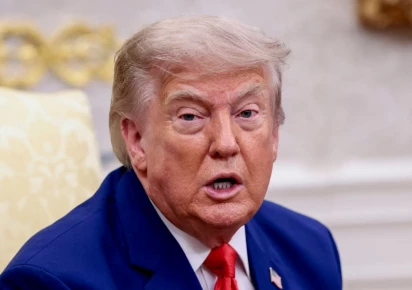
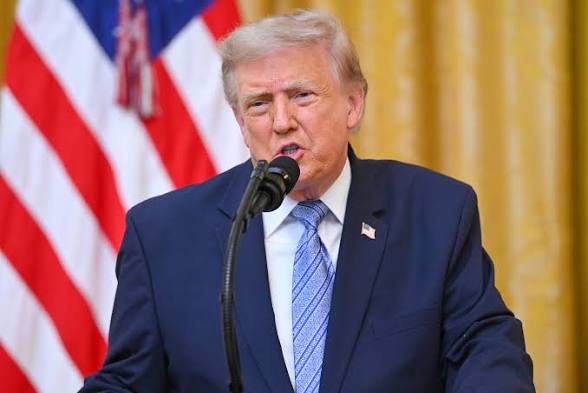
WASHINGTON, DC, USA – The White House said on Thursday, September 24, it has reinstated journalists from CNN, MS NOW and Politico after a federal judge deemed US President Donald Trump’s ban of the three news outlets likely unconstitutional and ordered their access immediately restored.

The midday reinstatement came after a chaotic few hours earlier on Thursday when the journalists continued to be blocked from entering the White House grounds. That prompted the three news organizations to request an immediate hearing before US District Judge Tim Kelly, who issued his decision overnight.

Kelly, acting in a lawsuit brought by CNN, MS NOW and Politico on Monday, September 21, ordered a halt to Trump’s ban for 14 days in a press freedom case that has played out over the past week in the courtroom and White House grounds.

Kelly found that the revocation of the White House credentials of the journalists “likely violated their constitutional due process rights.”

The judge, who Trump appointed in 2017 during his first presidential term, also raised doubts about the US Justice Department’s national security arguments for justifying the ban, noting that Trump himself had said the action was due to what the president alleged was false or negative coverage.

Hours after Kelly issued his order, CNN, MS NOW and Politico told the judge they remained barred, and asked for the emergency hearing. Politico said its reporter’s credentials were confiscated. An MS NOW reporter said she was blocked from the White House. CNN said some of its staff members were denied entry onto the grounds.

In response, Micah Stopperich, the director of press operations at the White House, said in a court filing that the White House began the process of reinstating press badges for affected reporters at 7:25 am, and that the “White House press team dropped badges at the entry gate for members of the press to pick up around 9:55 am.”

After receiving Stopperich’s declaration, the judge denied the request by the news organizations for an emergency hearing but gave them an opportunity to inform him of any factual developments later in the day.

The sharpest conflict yet between Trump and the press played out during a key diplomatic moment for the US president: his appearance at the United Nations General Assembly in New York and his hosting of Chinese President Xi Jinping on Thursday.

A source familiar with the White House television press pool said its members would not reinstate their coverage until the White House formally reinstates CNN to the pool. Earlier this week, they had suspended pooled coverage in solidarity with CNN.

There were no TV pool cameras set up for Xi’s arrival on the White House’s South Lawn on Thursday morning, and FOX News, MS NOW and CNN did not air the two leaders’ arrival ceremony live.

During Trump’s welcome of Xi to the White House, the president made a joke to photographers in the Oval Office about the Chinese having the friendliest press corps.

CNN is one of the five news organizations — along with ABC, CBS, FOX News and NBC — that make up the primary White House television pool. They share the costs of covering the president, take turns organizing coverage and provide footage to other outlets.

CNN had been scheduled to cover Trump’s trip to New York for the General Assembly ​on Monday, but was not able to ​provide a pool feed.

National security concerns

Trump announced the ban on Friday, September 18, on his social media platform, saying those news organizations “shouldn’t be able to constantly write or report FICTION and LIES when they’re covering the President of the United States.” Trump framed their reporting as a threat to US national security.

The three outlets sued Trump and other members of his administration, saying the ban violated the US Constitution’s First Amendment protections for free speech and a free press, as well as their due process rights. A coalition of press freedom groups and dozens of news organizations, including Reuters, later filed a legal brief supporting the three news outlets.

Kelly ordered the Trump administration to immediately return the outlets’ press passes and stop enforcing the ban for two weeks. The judge rejected the administration’s stated national security concerns.

“The record lacks factual support for defendants’ contention that the revocation of plaintiffs’ hard passes will in fact protect national security or that national security will be endangered if the court orders their passes reinstated while this litigation proceeds,” Kelly wrote.

In a filing on Tuesday, September 22, the Justice Department accused the outlets of threatening national security with their coverage, citing stories about US missile stockpiles, construction of Trump’s White House ballroom and turnout at the recent Republican midterm convention.

Theodore Boutrous, an attorney for the three outlets, welcomed the judge’s decision in a statement, saying: “This is a strong ruling vindicating freedom of the press, due process and the rule of law. We greatly appreciate the court’s swift action.”

Tensions with the press

Although other presidential administrations have battled with the press, Trump’s campaign against the media has been unprecedented. Upending decades of tradition, his White House had denied basic access to many major news organizations, launched personal attacks on journalists and filed multiple lawsuits against news organizations.

Kelly’s ruling came a day after Trump experienced another legal setback.

On Wednesday, an Iowa judge dismissed Trump’s 2024 ‌lawsuit against the Des Moines Register newspaper and pollster J. Ann Selzer. Trump sued the Register, its parent company Gannett and Selzer ‌over a ⁠poll published ahead of the November 2024 US election that showed Democratic presidential candidate Kamala Harris leading him in Iowa. Trump accused the newspaper and its longtime pollster of fraudulently misleading readers.

In his ruling Wednesday, Iowa District Judge Scott Beattie said the poll was legally protected speech. – Rappler.com

Similar Posts

  • | |

    Evergrande founder handed life sentence as court s…

    The founder of Evergrande, the Chinese property giant whose collapse triggered a nationwide housing market crisis, has been sentenced to life in prison and stripped of all personal property. Hui Ka Yan pleaded guilty in April to multiple charges, including embezzling assets and corporate bribery. The Shenzhen Intermediate People’s Court also imposed fines totaling 15.82 billion yuan, roughly £1.73 billion or $2.35 billion, on his former companies over a range of offenses that included falsifying financial records and concealing debt. The sentencing marks a major turning point in the fallout from Evergrande’s collapse, which shook China’s property sector and inflicted heavy losses on investors and domestic banks alike. The court said Hui and his businesses seriously disrupted the Chinese property market, causing significant economic damage. Other former Evergrande executives, including Hui’s two sons Xu Zhijian and Xu Tenghe, received jail terms ranging from 22 months to 18 years, according to Chinese state media. Once ranked as Asia’s richest man, Hui has watched his fortune and influence collapse alongside his company. Also known as Xu Jiayin, he grew up in rural China raised by his grandmother before entering the property industry and founding Evergrande in 1996. He guided the company through a period of rapid expansion fueled by heavy borrowing, eventually building Evergrande into China’s largest real estate developer with a stock market valuation exceeding $50 billion, roughly £36.7 billion. At his peak, Hui held the distinction of being Asia’s wealthiest individual. The company suffered a major setback when Beijing introduced new measures in 2020 aimed at curbing debt across the property sector. As Evergrande struggled to keep up with interest payments, it began selling properties at steep discounts to stay afloat before ultimately collapsing in 2021. Court proceedings in April revealed that the company had taken in millions of dollars in pre sale funds from prospective homebuyers that were never used for the construction they were intended to finance. Instead, that money was redirected toward new development projects, leaving hundreds of housing projects unfinished. In March 2024, Hui was separately fined $6.5 million and banned for life from China’s capital markets after regulators found the company had overstated its revenue by $78 billion. Evergrande’s stock market value shrank by 99 percent before the company’s shares were delisted from the Hong Kong exchange in August 2025, ending more than fifteen years of trading. The company’s implosion is widely seen as a key trigger for the broader downturn in China’s property market that continues to weigh on the country’s economy. At its peak, Evergrande stood as the largest firm in an industry that accounted for roughly a third of China’s gross domestic product, serving as both a major driver of economic growth and a critical revenue source for local governments. The sector’s ongoing troubles have continued to pressure the world’s second largest economy, with several other major developers facing their own financial distress in the years since Evergrande’s fall.

  • | | | |

    Three powers, one shield? What the pact means

    Pakistan, Saudi Arabia and Türkiye have formalised their long-standing strategic and defence ties through the newly signed Makkah Joint Defence Agreement, establishing a framework for closer military coordination and collective security. The agreement was signed during a trilateral summit in Makkah attended by Prime Minister Shehbaz Sharif, Saudi Crown Prince Mohammed bin Salman and Turkish President Recep Tayyip Erdogan. The pact has attracted comparisons with established military alliances. However, analysts say its stated purpose is not to create a new military bloc or target any particular country. Instead, it provides an institutional structure for defence cooperation that has developed between the three nations over several decades. A formal structure for longstanding ties Pakistan and Türkiye have maintained close political and military relations for decades, while Islamabad and Riyadh have developed extensive defence, diplomatic and economic cooperation. The new agreement is viewed as an attempt to bring these existing relationships under a formal trilateral framework. It is designed to provide a more structured mechanism for consultations, military coordination and strategic cooperation. Why the agreement was signed now The agreement comes amid growing security challenges across the Middle East and wider region. Analysts say conflicts, changing military technologies and emerging security threats have encouraged countries with shared strategic interests to strengthen their defence coordination. The trilateral arrangement is intended to improve collective preparedness and provide a coordinated response to potential threats while supporting regional stability. What the defence pact provides A central element of the agreement is the principle of collective security. Under the framework, aggression against one member is to be treated as a threat to all three countries. The arrangement is expected to encourage greater military coordination, intelligence cooperation, strategic consultations and defence planning. Closer institutional links could also allow the three countries to coordinate their military capabilities and improve their ability to respond to security challenges. Different strengths, shared security interests Each country brings different capabilities to the partnership. Pakistan contributes a large and experienced military, operational expertise and extensive experience in counterterrorism and conventional defence. Saudi Arabia brings significant economic resources, regional influence and political weight. Türkiye adds its growing defence industry, military technology and manufacturing capabilities. Analysts believe these complementary strengths could make the partnership more effective while allowing the three countries to develop greater strategic self-reliance. Pakistan’s diplomatic role The agreement also comes as Pakistan seeks to strengthen its role as a regional diplomatic actor. Islamabad maintains relations with Saudi Arabia, Türkiye, Iran, China and the United States, giving it channels of communication with several major regional and global powers. Analysts argue that Pakistan’s diplomatic engagement, alongside its military capabilities, could help it contribute to regional crisis management and dialogue. What the pact does not mean Despite comparisons with NATO and other military alliances, analysts stress that the agreement is not described as an offensive alliance. It is also not presented as a pact directed against a particular country, a so-called “Muslim NATO”, a nuclear deterrence arrangement or a religious military bloc. Instead, the three countries have presented it as a defensive framework focused on collective security, deterrence, military cooperation and regional stability. The long-term effectiveness of the agreement will depend on sustained political coordination and the willingness of all three governments to implement its commitments.

  • |

    Trump warns Iran of fresh strikes as nuclear talks continue

    US President Donald Trump said on Tuesday that discussions between the United States and Iran have been encouraging, but warned that Washington is prepared to launch additional strikes if Tehran fails to reach a new agreement. Trump said he would prefer to avoid further military action, particularly attacks on Iran’s civilian infrastructure such as bridges and power plants. However, he stressed that military action remains an option if diplomatic efforts collapse. “It’s a very delicate balance,” Trump said, adding that Iran understands the consequences of refusing to negotiate. According to the US president, the current position of the United States is strong, and Tehran is aware that Washington is prepared to act if no agreement is reached. Despite the warnings, Trump described the recent diplomatic contacts with Iran as “very good talks.” Trump’s comments came ahead of his scheduled meeting with Israeli Prime Minister Benjamin Netanyahu at the White House. The meeting follows joint US-Israeli military operations against Iranian targets earlier this year and is expected to focus on regional security and Iran’s nuclear programme. During the interview, Trump addressed reports that Netanyahu intends to discuss intelligence concerning Pickaxe Mountain, an underground fortified site believed to be connected to Iran’s nuclear activities. The facility is located near one of the country’s major nuclear installations and has drawn increasing international attention. Trump dismissed suggestions that he needed Netanyahu’s briefing on the matter, saying he was already fully informed about developments at the site. Referring to Netanyahu by his nickname “Bibi,” Trump said the Israeli leader wanted the United States to remain actively engaged. He added that if negotiations with Iran fail, the US would have no hesitation in targeting the facility, claiming it could be destroyed “very easily.” Meanwhile, Israeli Defence Minister Israel Katz claimed that US military aircraft have been operating from Israeli bases during recent strikes on Iran. In comments reported by Al Jazeera, Katz said American aircraft and refuelling planes departed from Israel to carry out attacks. He also accused Iran of directing its missile attacks at multiple countries while avoiding direct strikes against Israel. On the same day, Iran announced that Bushehr Airport in the country’s southwest has been rendered inoperable following US airstrikes. Government spokesperson Fatemeh Mohajerani said officials visited the airport and found extensive destruction, including a newly refurbished aircraft that was reportedly destroyed by a direct missile strike. She described the airport as effectively out of service. Mohajerani also said that airports in Iranshahr, Semnan and Bandar Abbas sustained damage during the attacks. In addition, the Bushehr Meteorological Centre was reportedly hit, while widespread destruction affected civilian infrastructure, including fishing boats, tourism businesses and other private property. According to the Iranian government, the strikes damaged 12 bridges, two tunnels, the main railway station in Bandar Abbas and several additional bridges in southern and northeastern Iran. Mohajerani further claimed that 350 government employees were killed during the conflict. Separately, Iranian Foreign Minister Abbas Araghchi held telephone conversations with Saudi Foreign Minister Prince Faisal bin Farhan and Omani Foreign Minister Badr Albusaidi on Monday evening. According to a statement released by Iran’s Foreign Ministry, the discussions focused on regional developments, the security of the Strait of Hormuz and the importance of strengthening diplomatic cooperation to promote stability in the Gulf. The talks came shortly after Saudi Arabia announced it had intercepted drones launched by Iran-backed groups operating in Iraq.

  • | |

    US imposes 10 per cent tariff on Pakistan over forced-labour enforcement

    The United States has levied a 10 per cent tariff on Pakistani goods under a broader Section 301 trade action targeting 60 economies for their failure to adequately prohibit and enforce bans on imports produced with forced labour. According to the Office of the U.S. Trade Representative (USTR), the final action followed investigations directed by President Donald Trump in March, encompassing public hearings and consultations with numerous governments. Ambassador Jamieson Greer stated that trading partners must match the enforcement standards the United States has upheld, noting that decades of moral persuasion have failed to eradicate forced labour from global supply chains. Pakistan is grouped in the 10 per cent tariff bracket alongside nations such as India, Bangladesh, Mexico, and the United Kingdom. These countries either imposed a prohibition on forced-labour imports, committed to one through a trade agreement, or introduced a partial restriction regime, while other investigated economies face tariffs of up to 12.5 per cent. The new duties arrive at a critical juncture for Islamabad. Pakistan has recently positioned itself as a key mediator in the US-Iran conflict and deepened its security partnership with Saudi Arabia, including the deployment of air-defence assets. However, the conflict has already strained Pakistan’s economy, with shipping disruptions in the Strait of Hormuz driving up domestic petroleum prices amid high inflation. Textiles and apparel, a primary focus of the USTR’s forced-labour investigation, represent a significant portion of Pakistan’s exports to the US. Industry groups are expected to evaluate the impact of these tariffs on market competitiveness in the coming days. The USTR noted that product exemptions will apply in limited cases, including critical raw materials and goods that cannot be sourced reasonably from elsewhere. Islamabad has yet to issue a formal response to the tariff imposition.

  • | |

    Ukraine targets mid-2027 for prototype of new Euro…

    Ukraine is pushing to have a working prototype of a European anti-ballistic missile system, codenamed Freyja, ready by the middle of next year, as Kyiv presses its allies to accelerate development of a weapon capable of intercepting Russian ballistic missiles. Davyd Aloian, deputy secretary of Ukraine’s National Security and Defence Council and the official overseeing the Freyja project, said an international steering committee responsible for estimating research and development costs is set to meet for the first time soon. The project was formally launched two weeks ago at a summit in Paris, where leaders from ten European nations, including Ukrainian President Volodymyr Zelenskiy, joined roughly a dozen defense manufacturers to establish the anti-ballistic coalition. Aloian said the tight timeline reflects an ambitious target. He described the goal as producing a minimum viable product within the first half of next year, meaning a prototype capable of demonstrating early practical results. Ukraine currently relies heavily on American made Patriot systems, which remain the only weapon in its arsenal able to reliably shoot down Russia’s ballistic missiles, capable of traveling at multiple times the speed of sound. Deliveries of Patriot systems have been hampered by shifting political circumstances, limited stockpiles and lengthy manufacturing timelines. Russia has intensified ballistic missile strikes this month on Kyiv and the southern port city of Odesa, launching dozens of missiles that Ukraine was largely unable to intercept due to a shortage of interceptor missiles. Ukraine has offered to contribute a launcher and an interceptor missile to the Freyja project, which Zelenskiy said this month essentially needs testing at this stage. He has said he hopes to see the system operational within a year. Kyiv is counting on its allies to supply key technology, including modern radar systems, sensors and expertise in missile guidance and control electronics. Defense companies that have joined the initiative so far include Eurosam, maker of the SAMP-T interceptor, along with Leonardo, Thales and Saab. Ukrainian missile and drone manufacturer Fire Point, known for developing the Flamingo cruise missile, has said it will serve as the lead industrial partner on the project and recently struck a deal with German firm Hensoldt to supply radar technology. The Freyja system is designed as a lower cost alternative to the Patriot, a system many European nations also depend on. Other existing air defense platforms, including the Franco Italian SAMP/T and Germany’s IRIS-T, have not yet demonstrated the ability to down ballistic missiles. Zelenskiy has compared the Freyja coalition to a Lego set, describing it as a system built by combining components supplied by different defense industry leaders. Aloian said manufacturers have been asked to build a framework that allows interchangeable parts from different countries. He explained that the system’s open architecture means individual nations can select their preferred components, whether that means Denmark opting for a Danish made Weibel radar or Sweden choosing Saab’s technology. Organizers are also considering setting up a dedicated body, potentially structured as a fund, to manage contributions and ensure the project receives stable financing over time. Aloian said involving private companies directly alongside governments should help cut through bureaucratic delays, adding that the coalition is meant to function as a practical effort rather than a political one. The push for a homegrown European missile defense capability reflects a broader shift underway across the continent, as governments reassess their reliance on American weapons systems amid growing pressure to build independent defense industrial capacity in the face of a prolonged war on Europe’s eastern border.

Leave a Reply

Your email address will not be published. Required fields are marked *