trump warns iran
|

Trump warns Iran of fresh strikes as nuclear talks continue

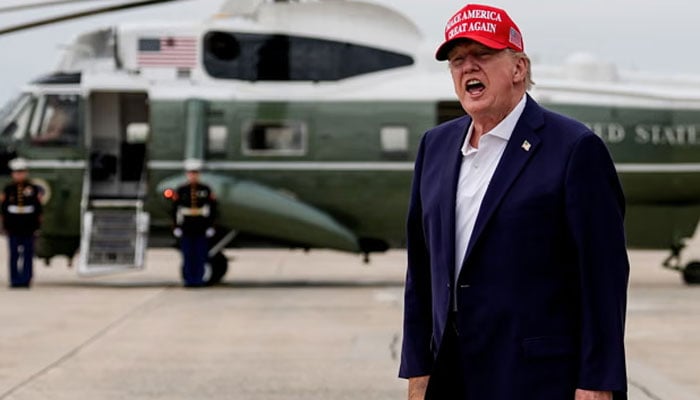
US President Donald Trump said on Tuesday that discussions between the United States and Iran have been encouraging, but warned that Washington is prepared to launch additional strikes if Tehran fails to reach a new agreement.

Trump said he would prefer to avoid further military action, particularly attacks on Iran’s civilian infrastructure such as bridges and power plants. However, he stressed that military action remains an option if diplomatic efforts collapse.

“It’s a very delicate balance,” Trump said, adding that Iran understands the consequences of refusing to negotiate. According to the US president, the current position of the United States is strong, and Tehran is aware that Washington is prepared to act if no agreement is reached. Despite the warnings, Trump described the recent diplomatic contacts with Iran as “very good talks.”

Trump’s comments came ahead of his scheduled meeting with Israeli Prime Minister Benjamin Netanyahu at the White House. The meeting follows joint US-Israeli military operations against Iranian targets earlier this year and is expected to focus on regional security and Iran’s nuclear programme.

During the interview, Trump addressed reports that Netanyahu intends to discuss intelligence concerning Pickaxe Mountain, an underground fortified site believed to be connected to Iran’s nuclear activities. The facility is located near one of the country’s major nuclear installations and has drawn increasing international attention.

Trump dismissed suggestions that he needed Netanyahu’s briefing on the matter, saying he was already fully informed about developments at the site. Referring to Netanyahu by his nickname “Bibi,” Trump said the Israeli leader wanted the United States to remain actively engaged. He added that if negotiations with Iran fail, the US would have no hesitation in targeting the facility, claiming it could be destroyed “very easily.”

Meanwhile, Israeli Defence Minister Israel Katz claimed that US military aircraft have been operating from Israeli bases during recent strikes on Iran. In comments reported by Al Jazeera, Katz said American aircraft and refuelling planes departed from Israel to carry out attacks. He also accused Iran of directing its missile attacks at multiple countries while avoiding direct strikes against Israel.

On the same day, Iran announced that Bushehr Airport in the country’s southwest has been rendered inoperable following US airstrikes. Government spokesperson Fatemeh Mohajerani said officials visited the airport and found extensive destruction, including a newly refurbished aircraft that was reportedly destroyed by a direct missile strike. She described the airport as effectively out of service.

Mohajerani also said that airports in Iranshahr, Semnan and Bandar Abbas sustained damage during the attacks. In addition, the Bushehr Meteorological Centre was reportedly hit, while widespread destruction affected civilian infrastructure, including fishing boats, tourism businesses and other private property.

According to the Iranian government, the strikes damaged 12 bridges, two tunnels, the main railway station in Bandar Abbas and several additional bridges in southern and northeastern Iran. Mohajerani further claimed that 350 government employees were killed during the conflict.

Separately, Iranian Foreign Minister Abbas Araghchi held telephone conversations with Saudi Foreign Minister Prince Faisal bin Farhan and Omani Foreign Minister Badr Albusaidi on Monday evening. According to a statement released by Iran’s Foreign Ministry, the discussions focused on regional developments, the security of the Strait of Hormuz and the importance of strengthening diplomatic cooperation to promote stability in the Gulf. The talks came shortly after Saudi Arabia announced it had intercepted drones launched by Iran-backed groups operating in Iraq.

Similar Posts

  • |

    Pralhad Joshi appointed India’s Education Mi…

    Pralhad Joshi has been appointed as India’s new education minister following the resignation of Dharmendra Pradhan, who stepped down on Saturday after weeks of youth-led protests over a major exam leak scandal . The 63-year-old Joshi, who already serves as minister of new and renewable energy and consumer affairs, food and public distribution, will now also handle the education portfolio a task political analysts say is likely to prove challenging amid heightened public scrutiny over the country’s education system . Pradhan’s departure was one of the central demands of the student demonstrations that erupted after allegations surfaced that the National Eligibility cum Entrance Test (NEET) medical entrance exam paper had been leaked . Nearly 2.3 million test takers across India, as well as at examination centers in Doha, Dubai, Singapore, and Kathmandu, appeared for the NEET on May 3, competing for fewer than 130,000 spots in medical colleges . After the leak allegations, the Indian government announced on May 12 that the examination was voided and that a new test would be held. The decision left thousands of students disillusioned and frustrated, sparking protests that spread across the country and evolved into a major challenge for Prime Minister Narendra Modi and his Bharatiya Janata Party (BJP) . Joshi, one of the Modi government’s longest-serving ministers, is seen as close to the powerful prime minister . Following his appointment to lead the Ministry of Education, Joshi wrote on social media that he was “grateful” to Modi “for placing his faith” in him and “entrusting” him with responsibility . “I accept it with humility and a deep sense of duty,” he said . On Sunday, Joshi held his first meeting as education minister to assess the situation and implement new schemes aimed at restoring trust in the examination system . The move signals the government’s urgency to address the grievances of students and parents who have demanded greater transparency and accountability . The NEET scandal has exposed broader concerns about the integrity of India’s competitive examination system, which determines access to coveted professional seats. With millions of students’ futures hanging in the balance, Joshi’s appointment represents both a test of his crisis management skills and a pivotal moment for educational reform in the world’s most populous nation .

  • |

    Ancient Roman shipwreck found off Sicily carrying hundreds of 2,000-year-old amphorae

    Italian authorities have uncovered an ancient Roman merchant ship off the coast of Sicily, dating back to the 2nd or 1st Century BC. The vessel was discovered lying 46 metres underwater roughly three nautical miles off Mazara del Vallo. Measuring 21 metres long and 6 metres wide, the vessel’s cargo holds remain piled with hundreds of well-preserved amphorae, primarily Dressel 1A ceramic jars used during the late Roman Republic to transport commodities such as wine, olive oil, and grain. Italian Culture Minister Alessandro Giuli described the site as “one of the most important underwater archaeological discoveries of recent years”. Local fisherman and free-diver Giacomo De Mola first flagged the site after detecting an anomaly on his sonar scanner that resembled a massive reef or rock. Upon diving down to investigate, he encountered the intact cargo mound surrounded by marine life. Following De Mola’s report, specialist divers from the Carabinieri Command for the Protection of Cultural Heritage (Carabinieri Art Squad), working alongside the Sicilian Region’s Superintendency of the Sea, were dispatched to survey and document the seabed. Archaeologists also identified two lead anchor stocks alongside the vessel’s structure. Italian maritime authorities have implemented security measures to safeguard the wreckage from illicit looting while further documentation and cargo analysis take place.

  • | | | |

    Iran warns US forces face regional expulsion

    Senior Iranian officials on Wednesday issued fresh warnings against the United States, declaring that American forces could eventually be forced out of the Middle East while linking any future reopening of the Strait of Hormuz to changes in Washington’s policies. Ebrahim Azizi, chairman of the Iranian parliament’s National Security Committee, said the removal of US military forces from the region and from countries hosting American bases was only a matter of time. In a post on X, he claimed the US would eventually have to focus its resources on securing its own territory instead of maintaining military installations abroad. The remarks came as Iranian media reported that ongoing discussions between Tehran and Oman over future navigation arrangements in the Strait of Hormuz would not automatically lead to the reopening of the strategic shipping route. According to Iranian state media, negotiations are being conducted solely between Iran and Oman, with officials insisting that the process is independent of the United States. Iranian sources maintained that even if an agreement is reached with Muscat, the waterway will remain closed unless Washington changes what Tehran describes as its hostile policies and interference. The Strait of Hormuz is one of the world’s most critical energy corridors, carrying a significant share of global oil shipments. Any disruption to traffic through the strait has the potential to affect international energy markets and regional security. Meanwhile, the United Nations expressed concern over a sharp increase in executions in Iran. UN High Commissioner for Human Rights Volker Türk said at least 56 people had been executed on national security-related charges since March, including dozens connected to protest-related cases. He warned that the growing use of capital punishment appeared aimed at creating fear within society. Regional tensions also escalated after Yemen’s Houthi movement claimed responsibility for a missile attack on the Saudi oil tanker Wafaa in the northern Red Sea. The group said the vessel was struck by ballistic missiles as part of its campaign targeting Saudi shipping. Houthi spokesman Yahya Saree claimed the movement had targeted eight Saudi oil tankers since launching its maritime blockade in late July and said dozens of other vessels had either been prevented from passing or forced to change course. Saudi authorities had not commented on the claims at the time of reporting. Separately, Iranian lawmaker Esmail Kowsari criticised US President Donald Trump’s approach toward Tehran, describing Washington’s negotiating strategy as inconsistent and unreliable. He accused the US administration of issuing conflicting statements regarding the Strait of Hormuz and Iran’s regional position. Iranian officials also blamed what they described as continued US pressure and military threats for slowing negotiations with Oman over navigation in the Strait of Hormuz, insisting that Tehran would not conclude any agreement under external pressure.

  • | | | |

    Trump warns Oman over Strait of Hormuz

    US President Donald Trump has warned Oman that Washington could launch an attack if Muscat interferes with US efforts in the Strait of Hormuz, according to comments he made in an interview with US media. Trump said the United States would take military action if Oman obstructed American operations in the strategically important waterway. His remarks mark another escalation in Washington’s warnings toward Oman, following a similar threat he reportedly made in May. The US president also said his administration had established a direct, behind-the-scenes communication channel with Iran’s Islamic Revolutionary Guard Corps (IRGC). He did not provide further details about the nature or purpose of those contacts. Trump also sought to underline the scale of America’s military capabilities, saying the United States still has extensive weapons stockpiles. He claimed that the amount of weaponry the US has used so far represents only a small fraction of its available reserves. “We have a lot of weapons left,” Trump said, while indicating that Washington still possesses large quantities of medium-range weapons. The Strait of Hormuz remains a critical global energy route, making any potential military confrontation in the area a major concern for international markets and regional security. Any disruption to shipping through the strait could affect global oil supplies and trigger wider economic and geopolitical repercussions.

  • |

    Spain declares national emergency

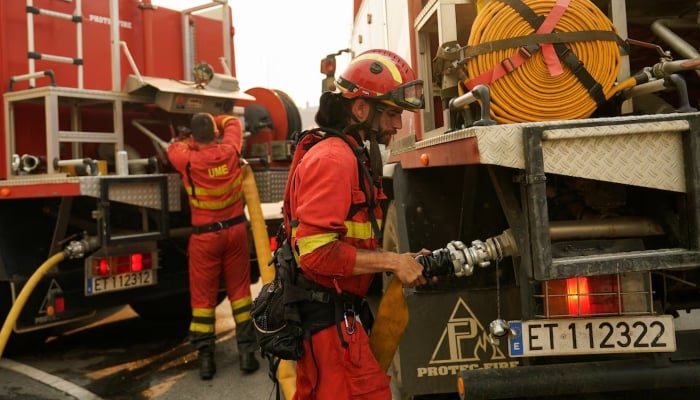
      MADRID: Spain has declared a national emergency after a series of fast-moving wildfires spread across areas near Madrid and the neighboring province of Ávila, forcing more than 10,000 residents to flee their homes. The fires, fueled by extreme heat and dry conditions, have overwhelmed emergency services and prompted one of the country’s largest wildfire responses in recent years. The Spanish Interior Ministry announced the emergency declaration late Thursday, citing the simultaneous outbreak of multiple wildfires, challenging weather conditions, and the need to coordinate large-scale resources from various government agencies. Officials said the combination of several active fire fronts had significantly complicated firefighting operations and civil protection efforts. Authorities explained that placing the situation under a national emergency allows the central government to take direct control of the response. Under Spain’s National Civil Protection System, the Interior Minister now oversees the coordination of firefighting teams, emergency services, and military support. Officials noted that this is the first time a wildfire has led to such a declaration under the current emergency framework. The regional government of Madrid described the situation as one of “extreme gravity” and requested immediate assistance from the national authorities. Officials warned that active wildfires burning in Villa del Prado, San Martín de Valdeiglesias, and Almorox, located in the neighboring region of Castilla-La Mancha, were spreading rapidly and could exceed the current firefighting capacity. Another major blaze in Burgohondo, in the province of Ávila, was also moving toward the Madrid region due to strong winds and unfavorable weather conditions. As a precaution, more than 10,000 people have been evacuated from several communities, including Villa del Prado, San Martín de Valdeiglesias, Pelayos de la Presa, and Aldea del Fresno. Emergency shelters have been established to accommodate displaced residents, while authorities continue to monitor the movement of the fires and issue evacuation orders where necessary. To combat the crisis, more than 270 emergency personnel and at least 40 ground firefighting units have been deployed across the affected regions. Specialized teams from Spain’s Military Emergency Unit (UME) have also joined the operation, providing additional manpower, equipment, and logistical support to local firefighters battling the flames. Spain, along with many other countries in southern Europe, has experienced increasingly severe wildfire seasons in recent years. Scientists attribute the growing intensity of these fires to climate change, which has contributed to prolonged heatwaves, drought conditions, and unpredictable weather patterns. Experts also note that unusually heavy rainfall during the spring encouraged abundant vegetation growth. As temperatures soared during the summer, this vegetation dried out, creating vast amounts of highly combustible fuel that has allowed fires to spread rapidly. The environmental impact has already been devastating. More than 100,000 hectares of land have burned across Spain so far this year, roughly matching the country’s average annual burned area over the past decade. The current wildfire season has also become one of the deadliest in recent history, with 13 people losing their lives. Authorities have urged residents in high-risk areas to follow evacuation orders and remain alert as firefighters continue working around the clock to contain the blazes. Weather conditions remain challenging, raising concerns that the fires could continue to spread in the coming days despite the large-scale emergency response.

  • Nigel Farage reclaims Clacton seat in party-boycotted by-election

    Nigel Farage has won back his parliamentary seat after Reform UK triumphed in the Clacton by-election. The contest was notably boycotted by every other major Westminster party. Farage regained the seat by defeating his closest challenger, satirical candidate Count Binface, in an election he himself triggered by resigning last month. A Survation poll released Monday had projected Farage taking around 75% of the vote, with Binface trailing at 20%. The Reform UK leader declared victory even before the final vote count was completed. According to the Guardian, Farage secured 22,239 votes, while Binface followed with 9,455 votes. Voter turnout for the by-election stood at 44%. Despite the win, the final result wasn’t quite as dramatic as some earlier polling had suggested it might be. Farage and Binface ultimately topped a crowded field that included several joke candidates, independents and minor party representatives. With every major political party sitting the race out, the contest largely became a two-way face-off between the pair. The vacancy stemmed from a deepening scandal involving a £5 million gift Farage received from cryptocurrency billionaire Christopher Harborne. Facing mounting scrutiny, Farage resigned his seat in July and called the by-election himself. As results came in, Farage described the outcome as a convincing and overwhelming win. He said he wanted the people of Clacton, rather than Britain’s mainstream media, to serve as his judge in the matter. He added that voters in the constituency had firmly rejected the broader political establishment through their decision. Despite the win, Farage skipped the official vote count and cancelled a planned victory speech altogether. Addressing the allegations tied to the gift earlier, Farage maintained he had done nothing wrong and broken no laws. Many political observers continue to view him as a potential future contender for prime minister. Farage has pledged tougher migration policies if he gains greater power, including deploying the British navy to intercept asylum seekers arriving by boat. He was first elected to the Clacton seat in 2024, winning with 46.2% of the vote and an 8,400-vote majority.

Leave a Reply

Your email address will not be published. Required fields are marked *