dfa yes delegation
| |

DFA: Yes, PH delegation joined walkout during Netanyahu’s UN speech

MANILA, Philippines – The Philippines joined dozens of delegations that walked out of the United Nations General Assembly hall during Israeli Prime Minister Benjamin Netanyahu’s speech on Thursday, September 24, in New York, the Department of Foreign Affairs (DFA) said.

“Yes, the Philippines joined the walk out, in global solidarity for peace in the Middle East and the call for all parties to desist from unilateral actions that erode the conditions of peace and undermine the visibility of a future Palestine state,” DFA spokesperson Analyn Ratonel told Rappler on Sunday, September 27.

Reports showed that several delegates left the UN hall as Netanyahu took the podium — in protest over Israel’s actions in Gaza and the occupied West Bank.

Netanyahu continued his address to a largely emptied chamber, where he defended Israel’s military operations and rejected accusations that Israel was committing genocide in Gaza. He also took aim at New York Mayor Zohran Mamdani, Western European leaders, Qatar, and Turkey, accusing them of backing or spreading what he described as false and hostile claims against Israel.

The walkout came as international scrutiny of Israel’s policies in the Palestinian territories intensified. A September 24 UN report highlighted settler violence, settlement expansion, displacement, and movement restrictions that continued to undermine prospects for a viable Palestinian state.

One focus has been Israel’s E1 settlement plan in the occupied West Bank. UN Secretary-General António Guterres said that advancing the E1 plan would deal a “deathblow” to the prospect of a contiguous and viable Palestinian state.

The DFA said the Philippines remains concerned about Israel’s actions in both Gaza and the West Bank.

“These actions are detrimental to finding a just, lasting and comprehensive solution to the Middle East conflict,” Ratonel said. “The Philippines has always supported the two-state solution as the viable path to peace in the region.” – Rappler.com
Similar Posts

  • |

    China, Indonesia deepen security and economic ties

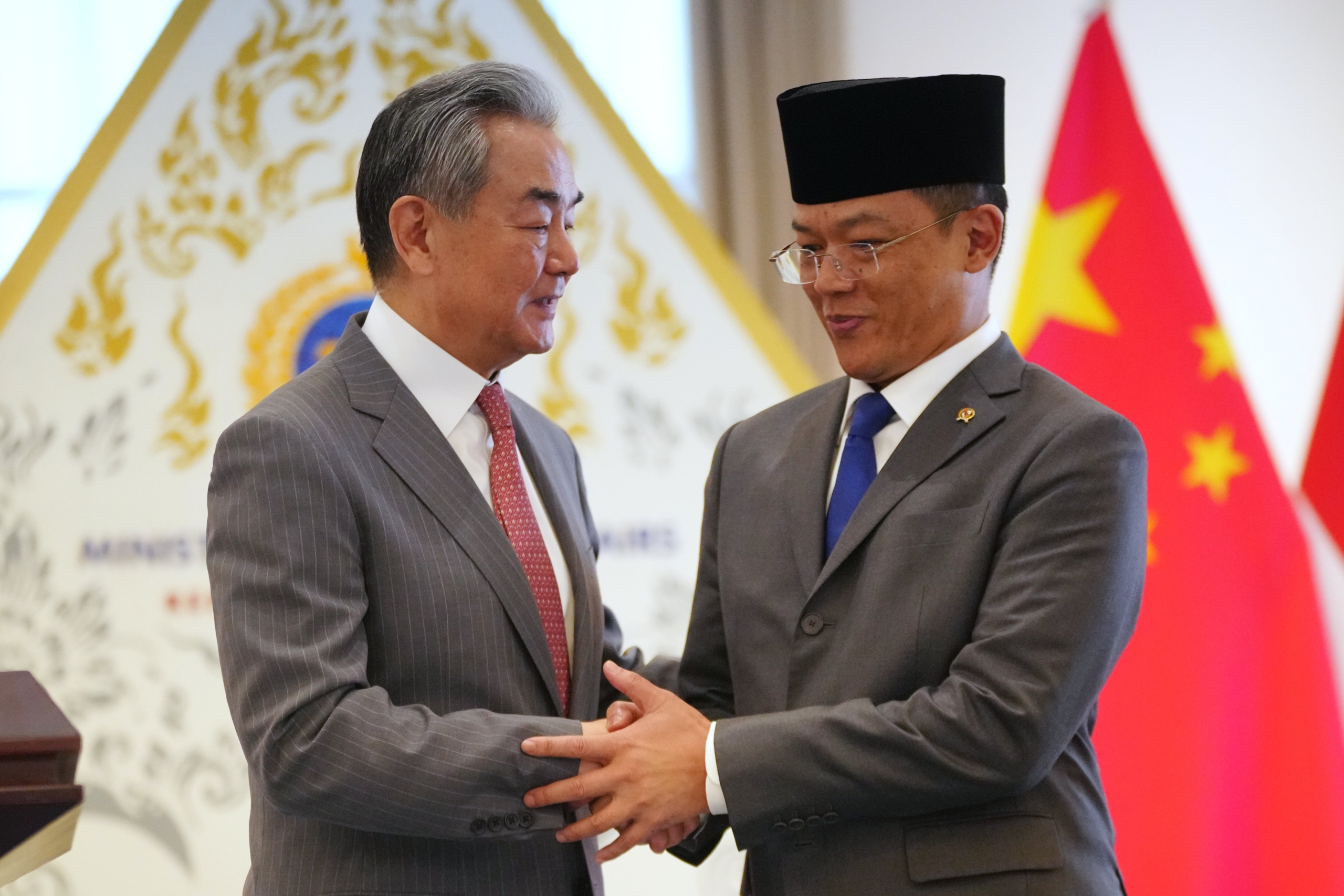
    JAKARTA: China and Indonesia opened a new round of high-level talks on Friday, with defence cooperation, regional security, political relations and trade expected to dominate discussions as Jakarta seeks to maintain strong ties with Beijing while preserving its relationship with Washington. Chinese Foreign Minister Wang Yi, visiting Jakarta for the first time in two years, met his Indonesian counterpart Sugiono before joining a “2+2” dialogue involving the two countries’ defence ministers. The talks come at a sensitive moment for Southeast Asia, where tensions in the South China Sea, competition between China and the United States and growing economic interdependence are putting pressure on regional governments to carefully balance their relationships with major powers. Wang said the new dialogue mechanism was timely as the world faced increasingly complex challenges. “Unilateralism and hegemonic acts bring serious impact on global cooperation and stability,” he said, adding that China aimed to build cooperation with Indonesia at a high level. Indonesian officials said economic issues and political relations would be among the foreign ministers’ priorities, while China said the discussions would also cover defence cooperation and international and regional affairs. Defence Cooperation Expands Chinese Defence Minister Dong Jun was welcomed with a military honour guard at Indonesia’s defence ministry, where he said the two armed forces had significant room to strengthen cooperation. “The prospects for cooperation between the two militaries are broad,” Dong said, describing the relationship as increasingly effective and higher in quality. Indonesia’s Defence Minister Sjafrie Sjamsoeddin said the countries planned to expand military activities, including joint exercises, officer exchanges and cooperation in the defence industry. He described the move as an important step in strengthening Indonesia’s defence capabilities. The discussions follow a joint naval exercise between China and Indonesia last week that drew attention because of its location east of Taiwan. Taiwan, which Beijing claims as part of China, expressed concern over the exercise. Indonesia’s navy said the activity was routine and noted that it conducts exercises not only with China but also with Japan and the United States. Defence analyst Curie Maharani said the episode highlighted how military diplomacy could serve broader strategic purposes. Indonesia, she said, had gained an important lesson about how major powers can use defence cooperation to project influence. Balancing China and Washington Jakarta’s approach reflects its long-standing “free and active” foreign policy. President Prabowo Subianto has repeatedly said Indonesia intends to remain non-aligned while maintaining friendly relations with all countries, including China and the United States. That balancing act is becoming more complicated as competition between Washington and Beijing intensifies. Indonesia also has differences with China over developments in the South China Sea. Beijing claims almost the entire disputed waterway, while Indonesia has sought to avoid becoming directly involved in broader territorial disputes between China and the Philippines, Malaysia and Vietnam. Jakarta has generally maintained a measured position, prioritising diplomacy and economic cooperation while protecting its own interests. Billions at Stake Economic ties provide another major reason for Indonesia to maintain close relations with Beijing. China contributed $3.9 billion in foreign direct investment to Indonesia during the first half of 2026, according to Indonesian figures. Chinese companies have invested heavily in industries ranging from nickel processing and steel to electric-vehicle batteries. Indonesia possesses the world’s largest nickel reserves, making it strategically important to China’s rapidly expanding electric-vehicle supply chain. Among major investors are Contemporary Amperex Technology, one of the world’s largest electric-vehicle battery makers, and Tsingshan Group, which operates nickel and steel facilities in Indonesia. However, the growing investment relationship has not been free of tension. In May, Chinese companies operating in Indonesia urged Jakarta to introduce more business-friendly policies, arguing that higher taxes and a new nickel pricing formula were increasing costs and threatening investment. The China Chamber of Commerce in Indonesia also complained of what it described as excessive regulation and enforcement, while raising allegations of corruption and extortion. The concerns underline the challenge facing both countries: expanding economic cooperation while managing disagreements over regulation, investment conditions and strategic interests. For Indonesia, Friday’s talks therefore carry significance beyond bilateral diplomacy. Jakarta is trying to strengthen its economy and defence capabilities without becoming overly dependent on either Beijing or Washington. In For China, deeper engagement with Indonesia offers an opportunity to strengthen its influence in one of Southeast Asia’s largest economies while expanding defence and economic partnerships in a strategically important region.

  • |

    Macron calls crisis meeting as wildfires threaten bordeaux

    French President Emmanuel Macron has called an emergency cabinet meeting to coordinate the response to massive wildfires sweeping through southwestern France, as firefighters work to stop the flames from reaching Bordeaux. The meeting comes amid forecasts of another heatwave later this week, raising concerns that high temperatures could further worsen the situation. Firefighters battled the blaze overnight, while authorities in Gironde, the wine-producing region that includes Bordeaux, described the situation as “broadly stable.” Bordeaux Mayor Thomas Cazenave said Sunday that the fire remained “at the gates of the metropolitan area.” At its closest point, the blaze was around 15 kilometres (9 miles) from the Bordeaux metropolitan area, which is home to roughly 850,000 people. Wildfires across France and Spain have caused widespread disruption and forced more than 300,000 people to evacuate their homes. The fires have intensified as Europe faces record-breaking temperatures, with scientists warning that extreme heat is leaving the continent increasingly dry and vulnerable to wildfires. Europe has already endured three heatwaves this summer, fuelling fires across several countries and contributing to new temperature records.

  • |

    Youth protests challenge Modi’s image ahead of key state elections

    A growing youth protest movement in India has delivered one of the biggest political setbacks to Prime Minister Narendra Modi’s government in recent years, raising questions about the ruling Bharatiya Janata Party’s appeal among younger voters ahead of crucial state elections. What began as demonstrations over alleged examination paper leaks has developed into a wider expression of frustration over unemployment, education and economic uncertainty. The protests were led by the Cockroach Janta Party, or CJP, a youth movement that quickly gained massive attention on social media. Within days of launching its campaign in May, the group attracted around 22 million followers on Instagram, most of them from Generation Z. The movement demanded the resignation of Education Minister Dharmendra Pradhan after allegations that a medical entrance examination had been compromised. As protests spread across India, thousands of students gathered in central Delhi despite heavy police action. In an effort to calm public anger, Prime Minister Modi posted a rare selfie video on Instagram, saying he understood the concerns of young people and promising action to address their grievances. However, the message failed to ease the demonstrations. Days later, Education Minister Pradhan resigned, fulfilling the protesters’ main demand and handing the movement a significant political victory. The resignation is considered unusual because Modi’s government has generally resisted removing senior ministers in response to public pressure. Political observers say the outcome has encouraged many young Indians who believe their voices can influence government decisions. Analysts say the protests extend far beyond the issue of examination leaks. Many young people are increasingly worried about unemployment, rising competition for limited jobs and the possible impact of artificial intelligence on employment opportunities, particularly in India’s large information technology and business services sectors. While the exam controversy sparked the demonstrations, experts believe it exposed much deeper concerns among the country’s youth. Political analyst Amitabh Tiwari said the paper leak became a symbol of wider frustration felt by many young Indians who are anxious about their future. He noted that disappointment over employment prospects and economic opportunities has created growing dissatisfaction that cannot be ignored. Senior government officials have acknowledged these concerns. Defence Minister Rajnath Singh said the government remains committed to understanding students’ problems and ensuring that their concerns are addressed. However, critics argue the ruling party has struggled to connect with younger generations, particularly on social media platforms where political discussions are rapidly evolving. Demographic trends also highlight the challenge facing India’s political establishment. People between the ages of 18 and 40 make up roughly 40 percent of the country’s population but hold only a small share of seats in the lower house of Parliament. The average age of members of the federal cabinet remains above 60, leading some analysts to argue that younger voices are underrepresented in national decision making. Although the CJP is not officially a political party, opposition groups have openly supported the student protests and attempted to capitalize on growing public dissatisfaction. The first major political test could come during next year’s state elections in Uttar Pradesh, Punjab and Gujarat. The BJP currently governs both Uttar Pradesh and Gujarat, making those contests particularly important. Some analysts believe the movement could have an even greater impact if it eventually enters electoral politics before the 2029 national election. CJP founder Abhijeet Dipke has said no decision has been made about transforming the movement into a political party, but its rapid popularity has already attracted widespread attention across the political spectrum. Observers also believe political campaigning in India is changing. For years, the BJP built a strong digital presence on platforms such as X and Facebook. However, younger audiences have increasingly shifted to Instagram, where authenticity and informal communication often attract greater engagement than carefully managed political messaging. While the BJP has around 10 million Instagram followers, the CJP gained more than twice that number in only a few days. Modi personally continues to command a much larger audience across multiple social media platforms, but analysts say younger users are responding differently to newer forms of political communication. Writers and political commentators argue that Generation Z is less influenced by traditional political authority and more willing to openly question established leaders. They believe successful politicians will increasingly need to engage directly with young voters rather than relying on conventional campaign strategies. For Modi, the protests represent a reminder that public expectations are changing. During much of his time in office, he built a reputation as a decisive leader who rarely reversed government decisions. Political analysts now say that demonstrating a willingness to listen and respond to public concerns may become increasingly important as India moves toward another cycle of state and national elections.

  • |

    Modi’s Education Minister quits as Indian yo…

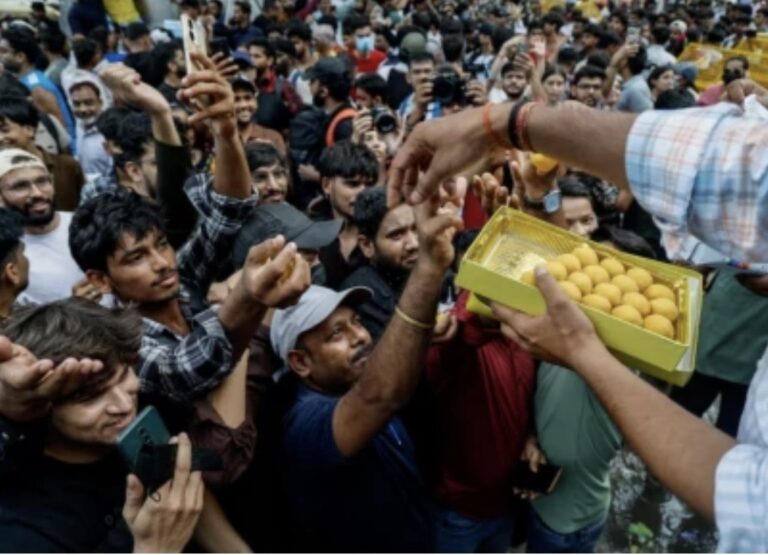
    Indian youth protesters called off weeks of demonstrations and celebrated in the streets on Saturday after Education Minister Dharmendra Pradhan resigned and Prime Minister Narendra Modi’s government bowed to demands including calls to fix a cheating-prone exam system. The worst political crisis of Modi’s third term had peaked this week when thousands of protesters marched on parliament, with police using tear gas to control them. Young voters form a critical base of Modi’s Bharatiya Janata Party. But youths calling themselves “cockroaches” had taken to the streets since late June, after national exam papers were leaked forcing a resit which affected 2 million students and galvanised anger about the lack of prospects for young Indians. The resignation of Pradhan, the students’ primary demand, came as a surprise because Modi’s government had refused to fix the exam system. Celebrations erupted at the Jantar Mantar protest site in the capital Delhi, with thousands of youngsters chanting victory slogans and dancing. The youth-led Cockroach Janta Party movement, which spearheaded the demonstrations, said it would end its protests. “We have done it,” said Abhijeet Dipke, CJP’s founder, to loud cheers at the site. Youngsters shouted “Jai Hind” as the national anthem played on loudspeakers and sweets were distributed. Roads around the central business district of Connaught Place near the protest site were shut amid celebrations and a swelling crowd of thousands of protesters. Delhi Metro rail stations in and around the area that were closed for much of four days this week were also opened. “Young generation is here. This is a win for the constitution,” protester Tluanga Ralte said, walking with a copy of the Indian constitution at the protest site after Pradhan’s resignation. “We are not a lazy generation.” Pradhan, 57, a senior member of Modi’s BJP and the son of a veteran party leader, had been education minister since 2021. He is only the second minister to resign following a scandal since Modi came to power in 2014. Pradhan said he resigned to prevent anti-national forces from exploiting the situation. His resignation marks a significant victory for the youth-led movement, which has highlighted the systemic failures in India’s education system and the broader challenges facing young people in the country. The protests and their resolution reflect the growing political consciousness and mobilisation of India’s youth, who are increasingly demanding accountability and transparency from their leaders. The government’s concession to the protesters’ demands signals a recognition of the power of youth activism in shaping the country’s political landscape. The movement, which began as a response to exam paper leaks, has grown into a broader critique of the government’s education policies and its approach to addressing the concerns of young Indians. The victory at Jantar Mantar has inspired other youth movements across the country, with activists hoping that this momentum will lead to further reforms. The resignation of Pradhan represents a turning point in the relationship between the government and the younger generation, offering a glimmer of hope for a more responsive and accountable governance system in India. The celebrations in Delhi serve as a reminder of the power of peaceful protest and the importance of listening to the voices of the youth, who are the future of the nation. The coming months will be critical in determining whether the government will follow through on its promises to fix the exam system and address the broader concerns of India’s young population. The youth-led movement has shown that collective action can bring about change, and its legacy is likely to inspire future generations to continue fighting for their rights and aspirations. The resignation of Pradhan is a significant milestone, but the journey towards a more equitable and just education system in India is far from over. The country’s youth remain hopeful that this victory will pave the way for meaningful reforms and a brighter future for all.

  • |

    North Korea issues fresh warning to US allies

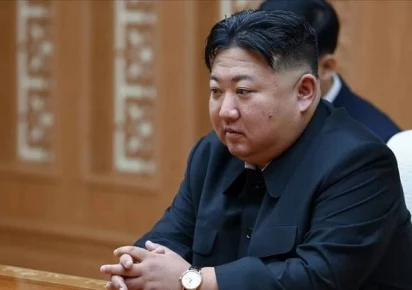
    PYONGYANG: North Korea has accused the United States, Japan and South Korea of creating a new security crisis in the Asia-Pacific, claiming their expanding military cooperation is increasing regional tensions and threatening stability. In a commentary published by the state-run Korean Central News Agency (KCNA), a military commentator alleged that the three allies are strengthening their joint combat capabilities through large-scale military exercises and closer defence coordination. The statement specifically criticized the recently concluded Rim of the Pacific (RIMPAC) naval exercise, describing it as a rehearsal for military aggression rather than a routine multinational drill. According to North Korean officials, the exercise involved more than 30,000 personnel, over 30 warships, five submarines and nearly 190 aircraft. Pyongyang claimed the United States is attempting to strengthen its military influence across the Asia-Pacific with the support of Japan and South Korea. It also objected to recent US-South Korea air force and logistics exercises, plans to expand American military command structures in Japan and the deployment of advanced US missile systems in the region. North Korea warned that it would respond to what it described as growing military threats by further strengthening its own deterrence capabilities. Officials said any increase in external pressure would be met with corresponding defensive measures. Separately, North Korea’s Foreign Ministry rejected recent accusations by the United States and its allies that Pyongyang poses a growing cyber threat. The ministry dismissed the allegations as politically motivated and without evidence. A foreign ministry spokesperson argued that the United States has been expanding military activities in cyberspace through cyber commands, joint cyber exercises and the use of artificial intelligence in defence operations. The spokesperson claimed Washington, rather than Pyongyang, was contributing to rising tensions in the cyber domain. North Korea reaffirmed that it would continue taking measures to safeguard its national security and protect its development interests against what it described as increasing pressure from Western countries.

Leave a Reply

Your email address will not be published. Required fields are marked *