
unemployment eases august
| |

Unemployment eases to 5.3% in August 2026 as agriculture adds jobs

MANILA, Philippines – The Philippines’ unemployment rate eased to 5.3% in August 2026 as more Filipinos found work, particularly in the agriculture sector.

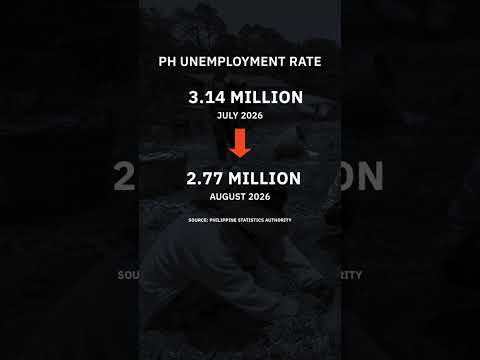
Around 2.77 million Filipinos were unemployed in August, down from 3.14 million in July, according to preliminary data from the Philippine Statistics Authority (PSA).

Unemployment eases to 5.3% in August 2026 as agriculture adds jobs

The unemployment rate likewise fell from 6% in July, when it hit its highest level in more than four years. However, the August figure is worse than the 3.9% unemployment rate recorded in the same month of 2025.

National Statistician Dennis Mapa said the improvement from July was partly because fewer new entrants joined the labor force after the surge of fresh graduates looking for jobs the previous month.

Around 897,000 Filipinos joined the labor force for the first time in August, down from 1.5 million in July. Of these new entrants, around 470,000 were employed while 427,000 were unemployed, according to Mapa.

Agriculture and forestry accounted for the biggest month-on-month increase in employment, adding around 847,000 workers. Construction added another 390,000 jobs, while wholesale and retail trade gained 227,000.

Mapa said much of the agriculture increase came from rice and sugarcane production.

Manufacturing, however, continued to weaken. Employment in the sector fell to 3.16 million in August from 3.43 million in July and 3.46 million in June. Mapa said the electronics industry was among those affected, citing challenges in the global market, although seasonality may also be a factor.

Must Read

[READOUT] Where businesses can plug into the Luzon Corridor


[READOUT] Where businesses can plug into the Luzon Corridor

Underemployment also improved month-on-month, falling to 11.9% in August from 12.9% in July. This meant around 5.9 million employed Filipinos still wanted additional working hours or another job. The rate, however, was higher than the 10.7% recorded in August 2025.

Bad weather also affected the quality of work during the month. Average hours worked fell to 39.2 hours a week from 40.6 hours in July, with millions of workers reporting bad weather as a reason for working fewer hours.

Mapa said shorter working hours could also translate to lower incomes for some workers, particularly the self-employed and those paid according to the amount of time they work.

The PSA expects employment to pick up toward the end of the year as businesses hire more seasonal workers ahead of the Christmas period. – Rappler.com
Similar Posts

  • | | |

    SBP reserves climb to $17.26bn

    Pakistan’s foreign exchange reserves held by the State Bank of Pakistan (SBP) posted a slight increase during the week ending July 17. However, the country’s overall liquid reserves recorded a small decline as commercial banks’ holdings decreased. According to the latest figures released by the central bank, SBP’s foreign exchange reserves increased by $33 million, taking the total to $17.26 billion. The increase reflects a gradual improvement in the country’s external financial position. Despite the rise in the central bank’s reserves, Pakistan’s total liquid foreign exchange reserves slipped by $5.9 million to $22.67 billion. The decline was caused by a fall in the reserves held by commercial banks. Commercial banks’ net foreign exchange reserves dropped by $38.7 million, bringing their total holdings to $5.41 billion. As a result, Pakistan’s total foreign reserves now provide import cover for nearly 2.5 months, highlighting the need for further improvement in external inflows. The Pakistani rupee remained stable in the interbank market. It closed at Rs277.90 against the US dollar, compared with Rs277.91 a day earlier. The slight gain came as the US dollar also remained mostly steady in global markets despite continued geopolitical tensions. Meanwhile, gold prices in Pakistan declined sharply after international bullion prices fell by more than two percent. The price of 24-karat gold per tola dropped by Rs1,800 to Rs432,036. The price of 10 grams of gold fell by Rs1,543 to Rs370,401. Silver prices also moved lower, with the per tola rate declining by Rs33 to Rs6,370. The decline followed a strong rally in the previous trading session when gold prices had increased significantly in the domestic market. Internationally, gold prices fell after investors shifted their focus to rising oil prices and expectations that the US Federal Reserve may continue raising interest rates to control inflation. Spot gold traded near $4,047 per ounce, while US gold futures also recorded noticeable losses. Global energy markets remained under pressure as Brent crude oil climbed to around $100 per barrel. Rising tensions in the Middle East and concerns over disruptions to oil supplies supported higher crude prices. Analysts believe that increasing oil prices could push inflation higher around the world. This may encourage central banks, particularly the US Federal Reserve, to maintain a tighter monetary policy. Higher interest rates generally reduce the appeal of gold because the precious metal does not provide any interest or fixed return to investors. As borrowing costs increase, investors often shift towards interest-bearing assets.

  • | |

    Pakistan seeks $10b in US backstop facility

    Pakistan has formally requested a 10 billion dollar exchange stabilisation facility from the United States to boost its foreign exchange reserves and stabilise its economy, according to a source familiar with the development. The request, addressed to US Treasury Secretary Scott Bessent, seeks a Bilateral Exchange Stabilisation Support Facility with a maturity period of up to five years. This move follows Pakistan’s involvement in facilitating negotiations regarding the Iran war, an effort that elevated the country’s diplomatic standing and fueled expectations of economic support from Washington and international partners. If approved, the 10 billion dollar facility would help replenish Pakistan’s central bank reserves, reduce downward pressure on the rupee, and decrease dependency on multilateral lenders. It would also provide financial flexibility as Islamabad continues implementing strict fiscal and monetary measures mandated under its 7 billion dollar International Monetary Fund programme. These IMF-guided measures have required politically challenging tax hikes, spending cuts, and structural reforms to ensure fiscal discipline. Neither the Pakistani Ministry of Finance nor the US Treasury immediately responded to requests for comment regarding the proposal. US Exchange Stabilisation Facilities, typically administered through the Exchange Stabilisation Fund, are rare financial mechanisms that provide foreign governments with dollars, currency swaps, or guarantees. These backstops differ from the Federal Reserve’s permanent standing swap lines with major foreign central banks. A 2025 financial package provided to Argentina represented the first new exchange stabilisation facility granted to a foreign government since Uruguay in 2002, alongside Mexico’s long-standing swap agreement dating back to the 1940s. Pakistan narrowly avoided a debt default in 2023 by securing a 3 billion dollar IMF standby arrangement, which was later succeeded by the current 7 billion dollar Extended Fund Facility. However, its foreign reserves remain heavily dependent on official loans, debt rollovers, and financial deposits from bilateral partners like Saudi Arabia and China. This reliance leaves the country vulnerable to delays in IMF disbursements and shifts in bilateral support, as demonstrated in April when Pakistan repaid approximately 3.5 billion dollars to the United Arab Emirates, representing a fifth of its reserves, while receiving 3 billion dollars in fresh backing from Saudi Arabia. Despite these vulnerabilities, Pakistan’s central bank projected in January that its foreign exchange reserves could approach their 2021 historical high, reaching 20 billion dollars by the close of 2026. In April, rating agency Fitch noted that compliance with the IMF programme has enhanced Pakistan’s funding capacity, while rebuilt foreign exchange buffers offer a cushion against economic shocks stemming from Middle East instability. However, Fitch cautioned that escalating global energy costs and potential supply disruptions could rapidly erode these reserve buffers. Furthermore, foreign direct investment in Pakistan remains constrained due to recurring external account crises, policy shifts, security concerns, historical restrictions on profit repatriation, and a narrow export base. The nation’s credit rating remains firmly in speculative-grade territory, limiting access to international capital markets and keeping borrowing costs high. To navigate these economic pressures, Islamabad has sought deeper engagement with the Trump administration through various commercial and investment initiatives. These efforts include signing a stablecoin agreement for cross-border transactions with an affiliate of World Liberty Financial, advancing a memorandum of understanding to redevelop the Pakistan International Airlines-owned Roosevelt Hotel in New York with the US government, and encouraging US investment in the domestic mining sector, where the US Export-Import Bank announced 1.2 billion dollars in financing for the Reko Diq project.

  • | | | | | | | | | | | | |

    [OPINION] Understanding the Gen Z audience: Hollywood doesn’t own Homer

    A Broadway-loving teenager, an ancient Greek epic, and the surprising return of collaborative storytelling

Leave a Reply

Your email address will not be published. Required fields are marked *